
 Lisa Mariana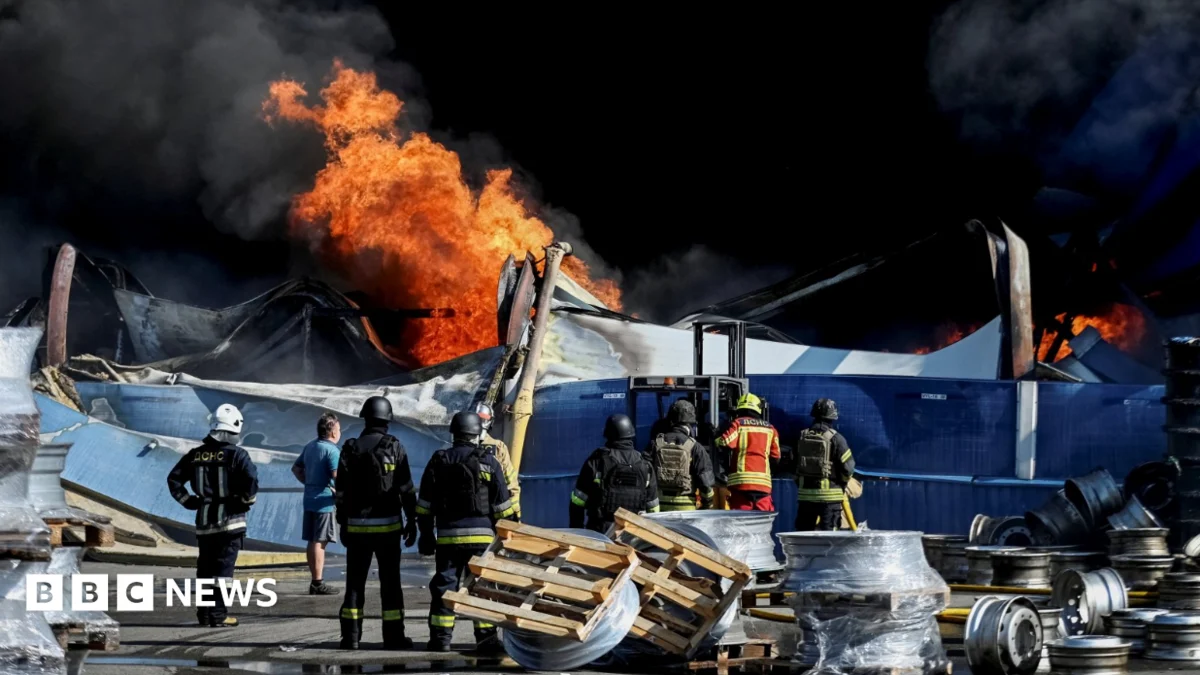
A devastating nocturnal assault on a storage facility in Ukraine’s Kyiv region has resulted in the tragic deaths of at least thirty-seven individuals and necessitated the urgent evacuation of hundreds, underscoring the relentless human cost and expanding operational complexities of the protracted conflict.
Late on Friday, a Russian unmanned aerial vehicle (UAV) strike precipitated a catastrophic series of explosions at a large warehouse complex situated in the Myla village within the Bucha district, approximately 20 kilometers west of the Ukrainian capital. The immediate aftermath was characterized by widespread destruction, with the powerful blasts causing significant damage to nearby residential structures and a critical care facility housing elderly and disabled residents. The incident rapidly escalated into a major humanitarian crisis, prompting a large-scale emergency response and triggering a rigorous investigation into the circumstances that led to such profound civilian casualties.
Ukrainian President Volodymyr Zelenskyy promptly addressed the nation, highlighting the unacceptable proximity of military-related materiel to civilian habitations. His remarks, disseminated through official channels, emphasized the imperative for rigorous adherence to safety protocols concerning the storage of volatile materials in conflict zones. "Ammunition must not be stored near homes or other residential buildings," President Zelenskyy stated, signaling that "appropriate conclusions will certainly be drawn" from the ongoing inquiry. This statement underscored a growing internal concern within Ukraine regarding the operational security and placement of strategic assets, particularly when such locations become targets for adversary forces.
The regional administration reported a grim casualty count, confirming forty-two injured individuals, including four children, a stark reminder of the indiscriminate nature of modern warfare. Tymur Tkachenko, the head of the regional authority, detailed the extensive rescue operation, which saw the deployment of over 300 emergency service personnel working tirelessly through the night and into Saturday. Their efforts were concentrated on the devastated site, where the care home for vulnerable populations had suffered direct impact, adding another layer of tragedy to the event. The scale of the humanitarian response required to manage the displaced population, many of whom lost their homes or were forced to abandon them, placed immense strain on local resources and support networks.
In response to the incident’s severe implications, Ukrainian prosecutors swiftly initiated criminal proceedings. The focus of their investigation centers on allegations of "official negligence" and specifically targets the "legality of the placement and storage of explosive objects" within the targeted warehouse, particularly given its proximity to civilian infrastructure. The Prosecutor General’s office explicitly stated its intent to scrutinize the "actions of officials who made the relevant decisions" concerning the site’s operational parameters and safety clearances. This judicial process signifies a critical internal examination of wartime logistical practices, reflecting a commitment to accountability and potentially setting precedents for future military and civilian coordination in high-risk areas. The outcome of this investigation could have far-reaching consequences for how military supplies are managed and stored across Ukraine, especially as the conflict continues to evolve and urban areas remain vulnerable to attack.
Conversely, Russia’s Ministry of Defence offered a distinct narrative, asserting that its forces had precisely targeted "an ammunition depot" in Myla. The Russian statement claimed the facility housed "components and launch boosters for FP-1/FP-2 long-range unmanned aerial vehicles," implying the strike was a legitimate military operation aimed at degrading Ukraine’s drone capabilities. This divergence in accounts—Ukrainian authorities emphasizing civilian harm and potential negligence, while Russian officials maintain a focus on military targets—is characteristic of information warfare prevalent in the conflict, where each side seeks to control the narrative surrounding significant events. The veracity of each claim remains subject to independent verification, a task complicated by the active conflict environment and restricted access.
Beyond the catastrophic events in the Kyiv region, the broader conflict landscape witnessed a cascade of hostilities across Ukrainian territory. Regional head Tkachenko reported the death of a 14-year-old in a separate strike in the Boryspil district, while Kyiv Mayor Vitaliy Klitschko confirmed the demise of a two-year-old following a Russian drone impact in the Obolonskyi district of the capital. These isolated but equally tragic incidents underscore the pervasive danger to non-combatants throughout Ukraine. Fresh assaults on Kyiv on Saturday morning resulted in five additional injuries, including an 18-year-old female, adding to the grim tally of civilian suffering. Local officials across the nation reported a total of five fatalities over the preceding twenty-four hours, illustrating the widespread nature of the kinetic activity. President Zelenskyy further detailed overnight strikes affecting the regions of Odesa, Dnipropetrovsk, Sumy, and Zaporizhzhia, indicating a broad-spectrum aerial offensive by Russian forces. In response, the Ukrainian armed forces claimed to have successfully intercepted an impressive 233 Russian drones, highlighting the intensity of the aerial combat and the persistent challenge posed by Russia’s extensive drone arsenal.
The reciprocal nature of the conflict was equally evident, with Ukrainian forces conducting their own strikes against targets within Russian territory. Officials in Russia confirmed two fatalities and twenty-five injuries in the Belgorod and Rostov regions over the past day, underscoring the escalating cross-border dimension of the conflict. In occupied Ukrainian territory, specifically the Zaporizhzhia region, the Moscow-appointed governor reported four injuries after a Ukrainian strike impacted a shopping center, further illustrating the targeting of civilian infrastructure, whether intentional or collateral.
A significant development in Ukraine’s strategy has been the deliberate targeting of Russian economic infrastructure. The prominent Russian online retailer Ozon disclosed that one of its logistics centers had been struck by a Ukrainian drone overnight, leading to the suspension of operations at a second facility and the evacuation of personnel "due to the danger in the area." This incident is not isolated; Ozon’s facilities in Krasnodar, Dagestan, Stavropol, and Adygea had previously been targeted earlier in the week, resulting in multiple injuries and substantial damage. This pattern of strikes aligns with Ukraine’s stated objective of disrupting Russia’s economic capacity and logistical networks. For weeks, Ukrainian forces have also targeted sites belonging to Wildberries, Russia’s largest online retailer, asserting that the company constitutes a legitimate military target due to its alleged involvement in supplying components to the Russian military—a claim vehemently denied by Moscow. This strategic shift reflects Ukraine’s efforts to exert pressure on the Russian home front, degrade its war economy, and potentially foster domestic dissent by demonstrating the tangible costs of the ongoing conflict.
Background Context and Strategic Analysis:
The ongoing full-scale invasion, now in its third year, has witnessed a notable evolution in military tactics from both belligerents. Initially characterized by large-scale ground maneuvers, the conflict has increasingly shifted towards attritional warfare, with a heavy reliance on long-range precision strikes, artillery duels, and, significantly, unmanned aerial systems. The widespread deployment of drones by both sides has fundamentally altered the battlefield, offering capabilities for reconnaissance, targeting, and direct engagement at relatively lower costs compared to traditional manned aviation. Ukraine’s ability to intercept 233 Russian drones within a short period underscores the sheer volume of these aerial assaults and the persistent strain on Ukrainian air defense systems, which rely heavily on Western assistance.
The incident in the Kyiv region, with its high civilian casualty count stemming from a strike on a warehouse allegedly storing military materiel near residential areas, brings into sharp focus critical aspects of international humanitarian law (IHL). IHL mandates that parties to an armed conflict must distinguish between civilian objects and military objectives, and direct attacks only against military objectives. While military objectives may include facilities storing ammunition, the principle of proportionality requires that the anticipated military advantage gained from an attack must not be excessive in relation to the incidental loss of civilian life, injury to civilians, or damage to civilian objects. Furthermore, the practice of placing military assets within or near densely populated civilian areas can raise complex legal and ethical questions regarding responsibility for civilian harm, potentially constituting a violation of the principle of precaution in attack or even the use of human shields, depending on intent and circumstances. The Ukrainian prosecutor’s investigation into the "legality of the placement" of explosives is thus a crucial internal inquiry with significant implications for accountability and adherence to IHL.
Ukraine’s recent emphasis on targeting Russian economic infrastructure, particularly logistics centers of major retailers like Ozon and Wildberries, represents a calculated strategic shift. This approach aims to achieve several objectives:
- Degrade War Economy: By disrupting supply chains and causing economic losses, Ukraine seeks to diminish Russia’s capacity to sustain its military operations.
- Create Domestic Pressure: Strikes on civilian economic targets within Russia can serve to increase the war’s tangible costs for the Russian populace, potentially eroding public support for the conflict.
- Disrupt Logistics: Even if not directly military, large logistics hubs are critical for the movement of goods, some of which may indirectly support military efforts or free up military logistics for other purposes.
- Symbolic Impact: These strikes demonstrate Ukraine’s ability to project power deep into Russian territory, challenging Moscow’s narrative of invulnerability and control.
This strategy is not without its risks and controversies, particularly concerning the targeting of dual-use infrastructure and the potential for civilian casualties. However, Ukraine views it as a necessary measure to balance the asymmetry in conventional military power and to exert leverage in a protracted conflict.
Implications and Future Outlook:
The recent intensification of hostilities, marked by devastating strikes on both sides of the front lines, signals a dangerous escalation in the conflict, with profound implications for the civilian populations and the broader geopolitical landscape.
Domestic Impact (Ukraine): The Kyiv warehouse incident, in particular, poses a complex challenge for Ukrainian authorities. While rallying public support against Russian aggression remains paramount, the internal investigation into potential negligence regarding the placement of military assets near civilians could strain public trust if mismanagement is confirmed. The resilience of the Ukrainian population continues to be tested by relentless aerial bombardments, necessitating sustained psychological support and robust emergency response mechanisms. Reconstruction efforts, even in areas not directly on the front line, face immense challenges due to ongoing threats and resource constraints.
Domestic Impact (Russia): The increasing frequency and impact of Ukrainian strikes on Russian territory, especially targeting economic infrastructure, are beginning to expose the Russian population to the direct consequences of the war. While state media largely controls the narrative, damage to major retailers and industrial sites is difficult to conceal, potentially leading to growing awareness and, over time, increased domestic pressure on the Kremlin. The economic costs of these disruptions, coupled with international sanctions, are placing a significant strain on the Russian economy.
Military Strategy: Both sides are likely to refine their drone warfare strategies. Ukraine will continue to prioritize air defense capabilities and offensive drone development, seeking to counter Russia’s numerical superiority and expand its reach into Russian territory. Russia, in turn, will likely adapt its strike tactics, potentially increasing the sophistication of its drone swarms and attempting to evade Ukrainian air defenses. The targeting of logistics remains a critical aspect for both, aiming to cripple the adversary’s ability to wage war effectively. The controversy over the Kyiv warehouse may prompt Ukraine to review its protocols for storing sensitive materials, potentially moving them further from civilian areas, although this could introduce new logistical challenges.
International Response: Incidents like the Kyiv warehouse strike, with their high civilian toll, are likely to intensify international calls for adherence to IHL and accountability for war crimes. Western allies will face renewed pressure to bolster Ukraine’s air defense capabilities, providing more advanced systems to protect critical infrastructure and civilian populations. The targeting of Russian economic assets by Ukraine, while viewed by some as a legitimate response, may also prompt discussions about the potential for wider economic destabilization and unintended consequences.
Path Forward: The current trajectory suggests a prolonged and brutal conflict, characterized by continued cycles of escalation and retaliation. Prospects for a diplomatic resolution remain distant, as neither side appears willing to concede significant territorial or strategic objectives. The emphasis on degrading economic capabilities and the increasing vulnerability of civilian areas underscore the deeply entrenched nature of the hostilities. The long-term security implications for Eastern Europe and global stability are profound, necessitating sustained international engagement to mitigate humanitarian suffering and prevent further catastrophic escalation. The ongoing investigations into the Kyiv warehouse incident, alongside the broader pattern of attacks, will serve as crucial data points for future analyses of wartime conduct and the imperative of protecting civilian lives amidst armed conflict.




 Aura Kasih
 Ayu Aulia

 Safa Marwah