
 Lisa Mariana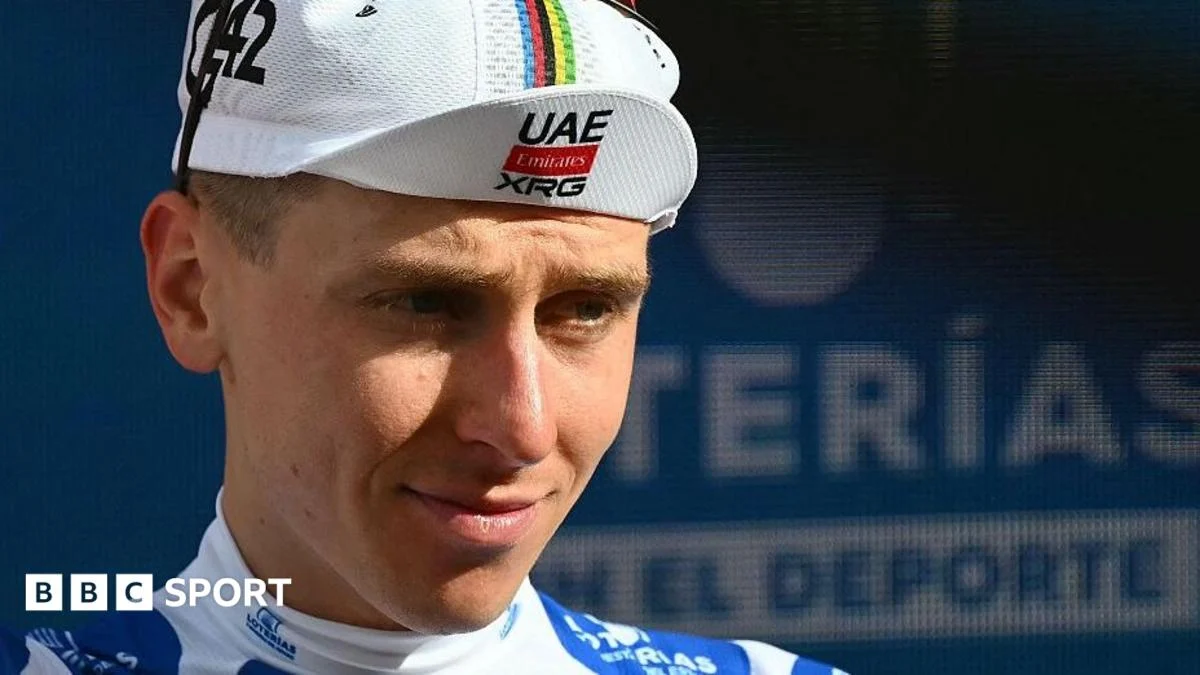
Tadej Pogačar, the prodigious Slovenian cyclist and current world champion, has been forced to withdraw from the Vuelta a España and will undergo surgery for a fractured collarbone, among other injuries, sustained during a significant incident on the eighth stage. This unforeseen setback abruptly halts Pogačar’s ambitious pursuit of completing a career Grand Tour sweep and casts a shadow over his immediate racing calendar, including the upcoming Road World Championships.
The critical incident unfolded approximately 33 kilometers from the conclusion of Saturday’s stage. Pogačar, then commanding the general classification and widely considered the overwhelming favorite to secure victory in the three-week Spanish tour, was navigating the peloton when a sudden maneuver led to a collision with another competitor. The chain reaction saw multiple riders impact Pogačar from behind, resulting in a severe fall. Eyewitness accounts described the rider’s immediate attempt to remount his bicycle, swiftly followed by a gesture of resignation and sitting roadside, clearly indicating the severity of his condition. He was subsequently transported to a medical facility, marking his first-ever retirement from a Grand Tour event.
A comprehensive medical update issued later that evening by Dr. Adrian Rotunno, medical director for UAE Team Emirates, confirmed a diagnosis of a broken left clavicle, a concussion, a stable fracture in the neck region, and numerous superficial abrasions. Dr. Rotunno emphasized that, fortunately, no other major internal injuries or neurological deficits were identified. The protocol for concussion management dictates a delay in surgical intervention for the clavicle, with Pogačar remaining under the close supervision of his medical team. The exact timeline for his return to competition will be contingent upon the success of his surgery and subsequent rehabilitation, particularly given the concurrent concussion.
The fractured clavicle, a common injury in professional cycling due to the nature of falls, typically necessitates a recovery period that can range from several weeks to a few months, depending on the complexity of the fracture and the athlete’s individual healing process. However, the presence of a concussion introduces a layer of complexity, demanding a cautious and phased return to activity to prevent long-term neurological complications. A stable neck fracture, while concerning, generally indicates that the bone fragments are not displacing or posing an immediate threat to the spinal cord, but it nonetheless requires careful management and monitoring.
Pogačar’s ambition to conquer all three Grand Tours—the Tour de France, Giro d’Italia, and Vuelta a España—positions him among an elite echelon of cyclists. Only a select group of nine riders in the sport’s history have achieved this monumental feat, underscoring its rarity and the immense talent required. Having already secured five victories in the Tour de France and a triumph at the Giro d’Italia, Pogačar arrived at the Vuelta as the undisputed protagonist, poised to etch his name into cycling’s pantheon. His dominance in recent years has been extraordinary, characterized not only by his multi-stage race successes but also by an unparalleled record in one-day Monument classics. He boasts an impressive tally of 13 Monument victories, including three Tour of Flanders titles, one Milan-San Remo, five Il Lombardia wins, and four Liege-Bastogne-Liege triumphs. His second-place finish at Paris-Roubaix in 2025 further highlights his versatile prowess across varied terrains and racing disciplines, a testament to his comprehensive skill set and strategic acumen.
His presence in the Vuelta had significantly elevated the race’s profile and viewership, drawing widespread attention to what many observers had predicted would be a processional victory. Prior to his departure, Pogačar held a commanding lead of three minutes and 50 seconds over his closest rival, Spain’s Enric Mas. Such was his form that analysts projected a potential winning margin exceeding ten minutes, a testament to his current supremacy in the sport. His perceived invincibility, often attributed to his exceptional bike handling skills and tactical intelligence, made the sight of him crashing and abandoning all the more shocking. The incident serves as a stark reminder of the inherent dangers and unpredictability that define professional cycling, where even the most accomplished athletes are vulnerable to the caprices of the road and the peloton.
The dramatic shift in the general classification has now transformed the Vuelta a España into a fiercely contested battle. With Pogačar’s exit, the race for the coveted red jersey has been thrown wide open, injecting an unforeseen level of suspense and opportunity for a cadre of riders who previously faced an insurmountable deficit. Enric Mas of Movistar now leads the general classification, holding a one-minute and 11-second advantage over Felix Gall of Decathlon CMA CGM. Mas’s assumption of the lead marks the first time a Spaniard has led the Vuelta since Jesus Herrada in 2018. In a gesture of sportsmanship and respect for his fallen competitor, Mas chose not to wear the red jersey on the podium, instead holding it in front of him, expressing hopes for Pogačar’s swift recovery and return to the peloton. This sentiment reflects the broader camaraderie within the sport, even amidst intense competition.
The stage itself, an eventful day for the peloton, also witnessed another significant crash in the finishing straight, underscoring the chaotic nature of elite-level racing. Amidst this disarray, France’s Bryan Coquard claimed his inaugural Grand Tour stage victory, edging out Lidl-Trek rider Mads Pedersen in a photo finish. Coquard, a veteran rider, expressed his profound relief and satisfaction, highlighting the culmination of 13 years of relentless effort and numerous near-misses. His victory, achieved through tactical positioning and explosive power, provided a momentary focal point amidst the broader drama of Pogačar’s withdrawal.
Looking ahead, Pogačar’s primary focus will undoubtedly be on a comprehensive and carefully managed recovery. The timing of the Road World Championships, scheduled for the following month in Canada, presents a significant challenge. Defending his rainbow jersey, a symbol of his world champion status, would require an exceptionally rapid and unblemished rehabilitation. Given the nature of his injuries, particularly the concussion, prioritizing full recovery over an immediate return to competition will be paramount to ensure his long-term health and sustained career trajectory.
This incident, while a personal setback for Pogačar, also serves as a potent narrative point for the sport of cycling. It underscores the physical demands, the constant risks, and the fine margins between triumph and tribulation that characterize elite competition. For a rider of Pogačar’s caliber, who rarely experiences such profound misfortune, this experience will undoubtedly contribute to his mental fortitude and perspective. While the immediate future holds a period of recuperation, his immense talent and unwavering determination suggest that this interruption will ultimately be a temporary pause in a career destined for further historic achievements. The cycling world will eagerly anticipate his return, hopeful that this setback will not diminish his formidable pursuit of excellence.



 Aura Kasih
 Ayu Aulia

 Safa Marwah