
 Aura Kasih
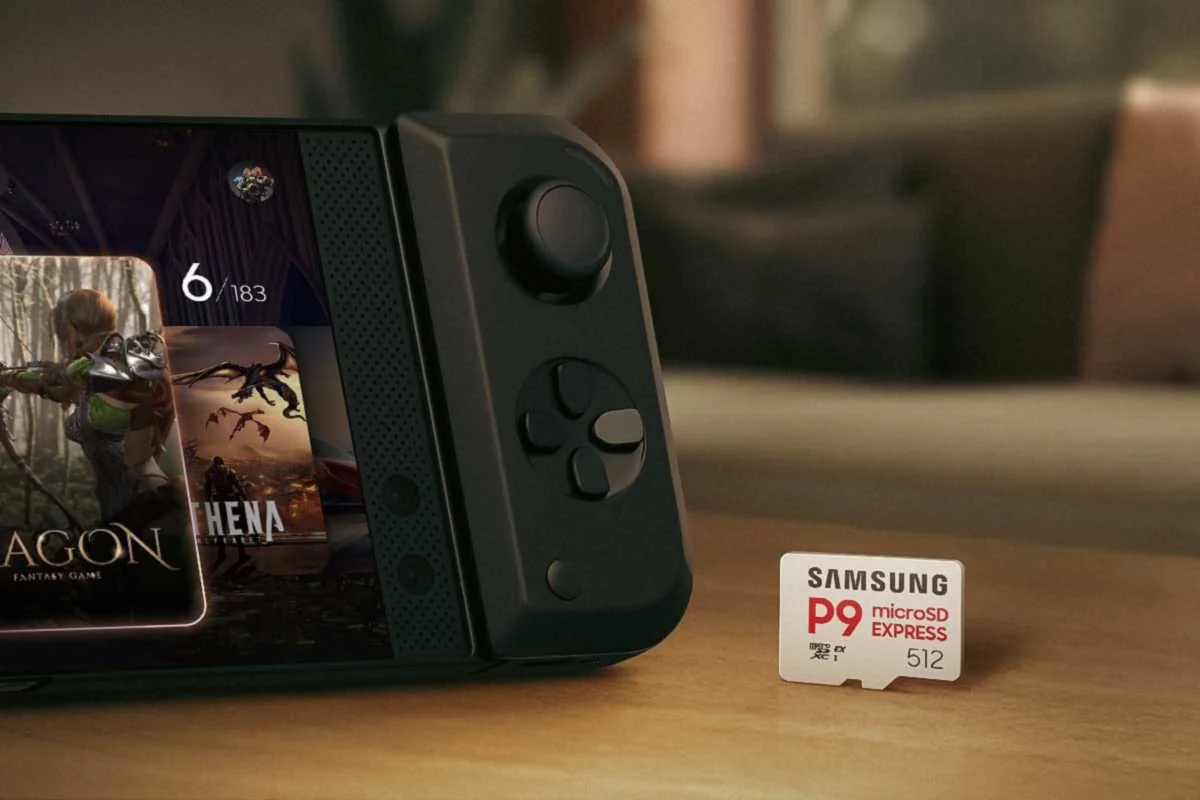
A substantial price drop on Samsung’s P9 MicroSD Express card, a cutting-edge storage medium poised to redefine the gaming experience on devices like the upcoming Nintendo Switch 2, has been announced, making its advanced capabilities more accessible to a broader consumer base.
The advent of the Nintendo Switch 2 is anticipated to usher in a new era of mobile gaming, demanding more robust and faster storage solutions to accommodate increasingly sophisticated game titles. In response to this burgeoning need, Samsung’s P9 MicroSD Express card, a product designed to meet the stringent requirements of next-generation consoles and other high-performance devices, is now available at significantly reduced prices across multiple retail channels. This development is particularly noteworthy given the recent global shortages impacting the memory market, which have driven up the cost of such components.
The 256GB variant of the Samsung P9 MicroSD Express card can now be acquired for a competitive $47.99, a considerable markdown from its typical market value. Similarly, the larger 512GB version is being offered at $99, presenting a compelling value proposition for gamers and content creators alike. These reduced prices, available through prominent retailers such as Amazon and B&H Photo, represent a significant opportunity for consumers to upgrade their device’s storage capacity without incurring the premium typically associated with high-speed, high-capacity memory solutions. The original pricing for these cards often hovered around $80 for the 256GB model and between $150 to $200 for the 512GB option, making the current discounts exceptionally attractive.
This strategic price adjustment is particularly timely. The memory market has experienced considerable volatility, with supply chain disruptions and increased demand for advanced storage technologies contributing to inflated prices. Samsung’s decision to offer the P9 MicroSD Express at these lower price points suggests a concerted effort to capture market share and encourage early adoption of the MicroSD Express standard, especially in anticipation of the Switch 2’s launch.
Understanding MicroSD Express: A Leap in Data Transfer Speeds
The P9 MicroSD Express card is not merely an incremental upgrade; it represents a significant technological advancement in removable storage. The MicroSD Express standard leverages the PCIe Gen 3.0 interface, enabling sequential read speeds of up to a remarkable 800MB/s. This dramatically eclipses the capabilities of traditional MicroSD cards, which are typically limited by the slower UHS-I interface, often capping out at around 100MB/s.
The implications of these enhanced speeds are profound, particularly for gaming. Game loading times, a perennial frustration for many players, can be drastically reduced. The time it takes to launch a game, load new levels, or access large in-game assets can be cut down significantly, leading to a more seamless and immersive gaming experience. For a console like the Nintendo Switch 2, which is expected to support larger and more graphically intensive titles, this speed boost is not just a convenience but a necessity.
Furthermore, the P9 card’s high transfer rates are not limited to gaming consoles. Devices such as high-end cameras, professional drones, and advanced tablets that are equipped with a compatible MicroSD Express slot can also benefit from these accelerated data transfer speeds. This makes the P9 a versatile storage solution for professionals and enthusiasts across various fields who require rapid data offloading and access, such as videographers capturing 4K or 8K footage, or photographers working with large RAW files.
The Gaming Landscape and Storage Demands

The evolution of video games has seen a consistent increase in file sizes and complexity. Modern AAA titles, even on current-generation hardware, can easily consume tens of gigabytes of storage. For instance, an upcoming title like The Legend of Zelda: Ocarina of Time remake for the Switch 2 is slated to be 27GB, a substantial amount for a portable gaming device. Third-party games, often with more intricate environments and higher-resolution textures, can demand even more space, with titles like Cyberpunk 2077 reaching up to 60GB.
The Nintendo Switch 2 is expected to build upon the success of its predecessor, likely featuring more powerful hardware and supporting a broader range of game genres, including more demanding AAA titles. To fully leverage the console’s capabilities and provide a fluid gaming experience, adequate and fast storage is paramount. The P9 MicroSD Express card, with its substantial capacities and blazing-fast speeds, is perfectly positioned to meet these demands.
Beyond the Switch 2, the MicroSD Express standard is beginning to see adoption in other portable computing devices. The Asus ROG Ally X20, a recently released Windows 11-powered handheld gaming device, also features support for MicroSD Express. This growing ecosystem of compatible devices signals a broader industry trend towards embracing faster, more capable removable storage solutions. The versatility offered by devices like the ROG Ally X20, which can run a full desktop operating system and a vast library of PC games, further underscores the importance of high-speed storage for demanding applications.
Strategic Pricing and Market Dynamics
The current pricing strategy for Samsung’s P9 MicroSD Express cards is a clear indicator of market anticipation and strategic positioning. By offering these cards at a significantly reduced price, Samsung is likely aiming to:
- Accelerate Adoption of MicroSD Express: Lowering the barrier to entry encourages consumers to invest in devices and accessories that support the newer standard, thereby building a stronger ecosystem.
- Gain Market Share: In a competitive memory market, aggressive pricing can be a powerful tool for capturing consumer attention and loyalty, especially when coupled with a technologically superior product.
- Mitigate Impact of Memory Shortages: While the article notes ongoing memory shortages, the reduced pricing suggests Samsung may have secured sufficient supply or is prioritizing market penetration over immediate profit margins for this particular product line. This could also be a move to preemptively address potential price hikes by competitors.
- Cater to the Anticipated Switch 2 Launch: The timing of these discounts strongly suggests a deliberate strategy to align with the expected release of the Nintendo Switch 2, ensuring that a high-performance storage option is readily available and affordably priced for early adopters of the new console.
The P9’s performance characteristics, such as its sequential read speeds, are crucial for optimizing the gaming experience. However, it is important to note that the full benefits of the MicroSD Express interface are only realized when used in devices equipped with a corresponding MicroSD Express slot. While many modern devices still rely on the older UHS-I standard, the increasing integration of MicroSD Express into new hardware indicates a future where these faster speeds will become more commonplace.
Future Outlook and Consumer Benefits
The availability of Samsung’s P9 MicroSD Express card at these reduced prices presents a significant boon for consumers, particularly gamers and power users. It allows for:
- Expanded Game Libraries: The larger capacities (256GB and 512GB) enable users to store dozens of games, alleviating the constant need to delete and redownload titles due to storage limitations.
- Reduced Loading Times: The inherent speed of the MicroSD Express interface translates directly into faster game loading and overall system responsiveness.
- Enhanced Productivity: For professionals utilizing compatible devices, the rapid data transfer capabilities can streamline workflows, saving valuable time.
- Future-Proofing: Investing in a MicroSD Express card now ensures compatibility with future devices that adopt this advanced storage standard.
As the consumer electronics industry continues to push the boundaries of performance and capability, the demand for efficient and high-speed storage solutions will only grow. Samsung’s proactive approach with the P9 MicroSD Express card, marked by this significant price reduction, positions it as a leader in providing these essential components. This move not only benefits consumers by making advanced technology more accessible but also signals a broader trend towards faster, more capable storage solutions becoming the norm across a wide range of electronic devices. The implications for the gaming industry, in particular, are substantial, promising a future where storage limitations are no longer a significant impediment to experiencing the most immersive and graphically rich games.



 Lisa Mariana

 Ayu Aulia