
 Lisa Mariana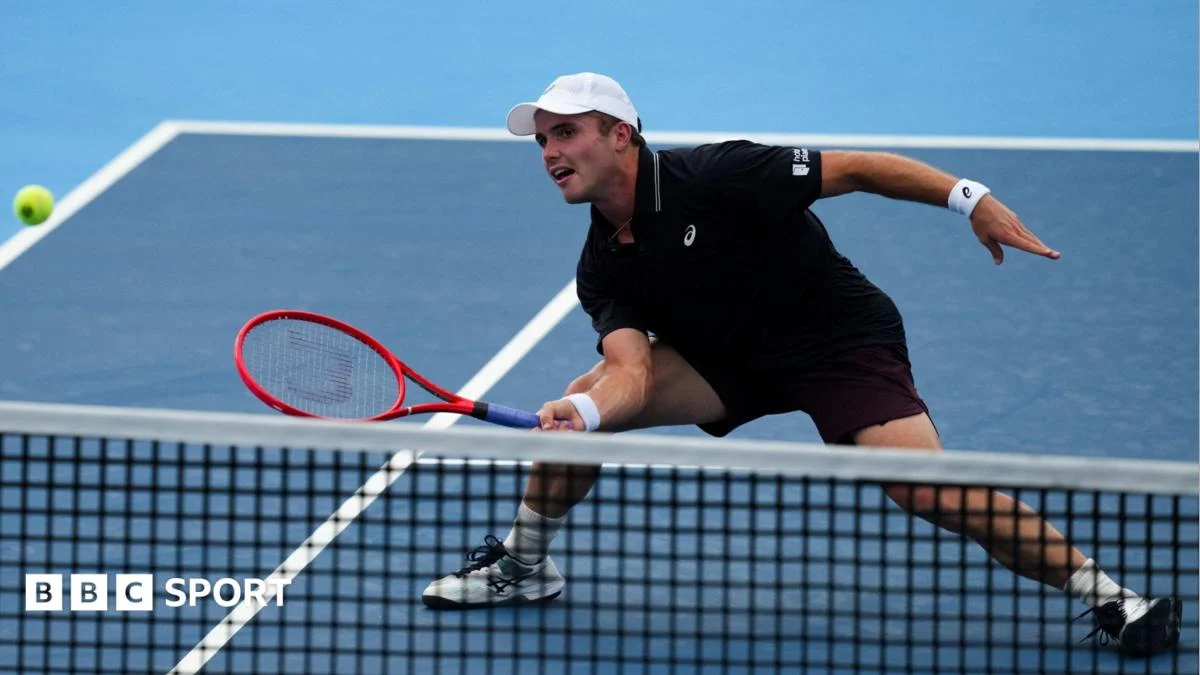
Ignacio Buse secured a significant victory at the Winston-Salem Open, defeating Arthur Fery in straight sets, a result that nonetheless underscores Fery’s remarkable trajectory as he assumes the mantle of British number one ahead of the forthcoming US Open. This decisive final, contested on the hard courts of North Carolina, served as a pivotal pre-Grand Slam warm-up, offering both players a critical platform for asserting their form and competitive readiness. While the Peruvian talent celebrated a career milestone, the British contender’s journey to the final represented a profound statement of intent and a testament to his rapid ascent within the professional tennis ranks.
The championship encounter, held on a Saturday, culminated in a 6-3, 6-2 victory for Buse, a performance characterized by clinical execution and strategic acumen. The initial phases of the contest saw a tightly contested exchange, with both athletes demonstrating a high level of play and an unwillingness to concede ground easily. However, the equilibrium was disrupted in the latter half of the first set when Buse capitalized on an opportunity, securing a crucial break of serve to love. This decisive moment propelled him to a 5-3 advantage, from which he confidently served out the set, establishing a psychological and scoreboard lead. This shift in momentum proved to be a turning point, as Buse carried his assertive play into the second set.
The commencement of the second set witnessed Buse extending his dominance, swiftly establishing a double-break cushion that significantly hampered Fery’s prospects of engineering a comeback. Despite Fery’s resilience, which saw him retrieve one of the breaks, the momentum remained firmly with the Peruvian. Buse responded with unwavering focus, reeling off three consecutive games to unequivocally seal the match and secure the title. His performance was notable for its efficiency on serve, consistent depth in groundstrokes, and effective court coverage, all contributing to his ability to dictate play and neutralize Fery’s offensive attempts. The final scoreline, while indicating a comfortable victory for Buse, belied the underlying intensity and the moments of high-quality tennis exchanged between the two emerging talents.
For Arthur Fery, despite the disappointment of falling short in his inaugural ATP Tour final, the Winston-Salem campaign represents an extraordinary chapter in his burgeoning career. The 24-year-old’s journey to the championship match marked him as the first British male player to reach the final of the ATP 250 tournament in its history, an achievement that significantly enhances his profile and standing. More consequentially, his performance in North Carolina has catalysed a dramatic surge in his global ranking, elevating him to an unprecedented position within the top 35. This ascent positions him at world number 33, a remarkable leap that sees him surpass compatriot Cameron Norrie to claim the coveted status of British number one. This transition in national tennis leadership is not merely symbolic; it reflects a profound shift in Fery’s competitive trajectory.
Only a mere eight weeks prior to his Winston-Salem heroics, Fery was positioned outside the top 100 in the ATP rankings. His remarkable transformation began with an astonishing run to the semi-finals of Wimbledon in July, an unexpected surge that captivated the tennis world. As a relatively unheralded wildcard entry, Fery navigated a challenging draw, demonstrating a blend of aggressive baseline play, tactical intelligence, and unwavering mental fortitude. His deep run at the All England Club not only garnered him significant ranking points but also instilled a profound sense of self-belief, fundamentally altering his perception of his capabilities on the global stage. The experience of competing in the latter stages of a Grand Slam, particularly on home soil, provided invaluable exposure to high-pressure environments and validated his potential to compete with the sport’s elite. This Wimbledon momentum, rather than being a fleeting peak, has evidently served as a launchpad for sustained performance, culminating in his strong showing at Winston-Salem.
Ignacio Buse’s triumph, at just 22 years of age, is equally significant, etching his name into the tournament’s record books as the youngest ever winner of the Winston-Salem Open. This victory is not an isolated success but rather a powerful affirmation of his burgeoning talent, marking his second career title. Earlier in May, Buse demonstrated his capabilities on a different surface, defeating American Tommy Paul at the ATP 500 event in Hamburg, Germany. These back-to-back successes at distinct levels of the ATP Tour underscore his versatility and adaptability, critical attributes for sustained success in professional tennis. Buse’s playing style is characterized by a potent forehand, strategic court positioning, and a calm demeanor under pressure, traits that suggest a formidable future on the tour. His consistent performance against established players and his ability to close out crucial matches indicate a player with a mature understanding of the game, belying his relatively young age. For Peruvian tennis, Buse’s emergence represents a significant boost, providing a national figurehead and inspiring a new generation of players.
The rapid conclusion of the Winston-Salem Open leaves little room for extensive reflection for Fery, as the demanding ATP calendar dictates an immediate transition to the year’s final Grand Slam: the US Open. The intensity of professional tennis demands a swift mental and physical reset, a challenge Fery must now confront as he prepares for his debut at Flushing Meadows. The quick turnaround from a championship final to a Grand Slam main draw poses unique challenges, including managing fatigue, maintaining peak physical condition, and recalibrating tactical approaches for a different opponent and atmosphere.
Fery’s draw at the US Open presents an immediate and formidable challenge in the form of Italian 13th seed Lorenzo Musetti. Musetti, a highly regarded talent known for his elegant one-handed backhand, all-court game, and clay-court prowess, has also demonstrated increasing effectiveness on hard courts. This opening tie will serve as a significant litmus test for Fery, requiring him to deploy his full array of skills against a top-tier opponent in the high-stakes environment of a Grand Slam. The experience of competing on such a grand stage for the first time will undoubtedly add another layer of pressure and excitement for the British player, whose trajectory suggests he is well-equipped to meet such challenges. His performance against Musetti will provide crucial insights into his current competitive ceiling and his readiness to contend at the highest level of the sport.
Fery is part of a substantial British contingent set to feature in the main draws at the US Open, reflecting the current health and depth of British tennis. In the men’s singles draw, he is joined by the aforementioned Cameron Norrie, Jan Choinski, and qualifiers Toby Samuel and Harry Wendelken, who navigated the arduous qualification rounds to earn their places. Jacob Fearnley also secured a spot as a lucky loser, further bolstering the British representation. On the women’s side, Katie Boulter leads the charge, supported by qualifiers Fran Jones and Harriet Dart. The presence of multiple qualifiers underscores the competitive strength developing within the British ranks, indicating a wider pool of talent capable of competing at Grand Slam level.
However, the British challenge at Flushing Meadows will be notably impacted by the absence of two prominent figures: Jack Draper and Emma Raducanu. Both players, having demonstrated significant potential in recent years, are sidelined due to injuries. Draper’s powerful game and Raducanu’s previous Grand Slam triumph at the US Open itself (in 2021) mean their absence creates a void in British hopes for deep runs in the singles draws. Their unavailability highlights the physical rigors of the professional tour and the constant battle against injury, which can significantly alter the landscape of major tournaments. Despite these notable absences, the strong presence of other British players, particularly the ascendant Fery, provides ample reason for optimism regarding their collective performance in New York.
The Winston-Salem Open final, therefore, serves as a microcosm of the dynamic shifts occurring within men’s professional tennis. It showcased the continued emergence of young talents like Ignacio Buse, who are challenging established hierarchies and setting new records. Simultaneously, Arthur Fery’s remarkable journey, culminating in a first ATP final and the British number one ranking, signifies a profound personal breakthrough and a potential reshaping of the British tennis landscape. As the tour now shifts its focus to the demanding courts of Flushing Meadows, the narratives forged in Winston-Salem will undoubtedly carry forward, setting the stage for compelling contests and further insights into the evolving competitive order of the sport. The performances of Buse and Fery offer a glimpse into the future, a future characterized by fierce competition, unexpected surges, and the relentless pursuit of Grand Slam glory.



 Aura Kasih
 Ayu Aulia

 Safa Marwah