 Lisa Mariana
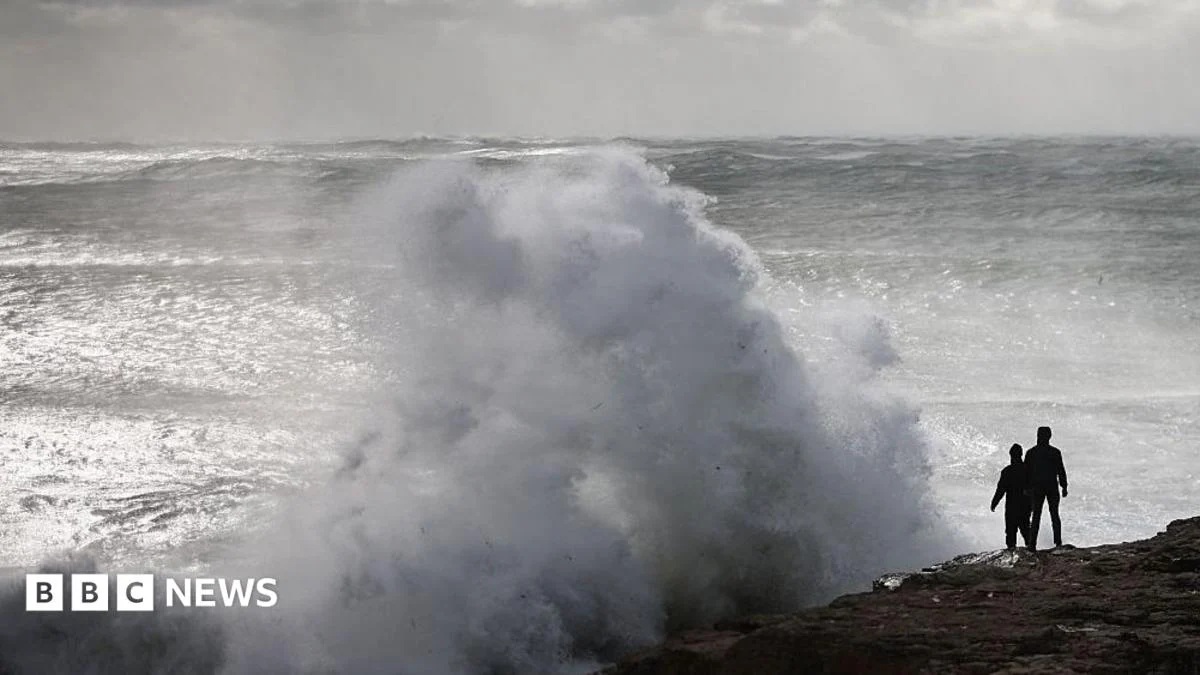
The United Kingdom is currently grappling with the formidable impact of an intense Atlantic weather system, designated Storm Boelo, which has prompted the activation of severe amber weather warnings across significant northern regions, with wind velocities reaching dangerous levels and precipitating extensive disruption. This powerful cyclonic event is forecast to deliver peak gusts potentially exceeding 80 miles per hour in exposed coastal zones, alongside widespread strong winds and substantial precipitation, posing considerable risks to public safety, vital infrastructure, and daily operations throughout the affected territories.
The meteorological genesis of such a powerful depression typically lies in the dynamic interplay between the polar jet stream and the temperature differentials across the North Atlantic. Storm Boelo represents a rapidly deepening low-pressure system that has accelerated across the ocean basin, drawing considerable energy from these atmospheric conditions. Its trajectory and intensity are indicative of the complex weather patterns frequently observed during the autumnal and winter months in the North Atlantic region, where sequential cyclonic systems can often impact the British Isles with varying degrees of severity. The naming convention, a joint initiative by the Met Office, Met Éireann, and KNMI, serves to enhance public communication and preparedness for these significant weather occurrences.
As the storm progresses, the elevated threat level is underscored by the issuance of amber wind warnings, signifying a substantial potential for adverse consequences. These warnings, primarily concentrated over Scotland, Northern Ireland, and parts of northern England, highlight an increased likelihood of widespread structural damage, significant travel impediments, and a tangible risk to human life. Such alerts are not issued lightly, representing a critical assessment by meteorological agencies that the anticipated conditions have the capacity to inflict considerable harm and necessitate heightened vigilance and pre-emptive action from both the public and emergency services.
The projected wind speeds are particularly concerning, with inland areas bracing for gusts in the range of 60-70 miles per hour, escalating to potentially devastating velocities of 80 miles per hour along exposed coastlines. These extreme wind forces are capable of inflicting extensive damage, including the uprooting of mature trees, the destabilization of temporary structures, and the dislodgement of building components, transforming them into dangerous projectiles. Beyond direct physical damage, the sheer power of these winds, especially when coupled with large oceanic swells, poses a severe maritime hazard, generating colossal waves that can inundate coastal defenses and imperil those in proximity to the shoreline.
Adding a layer of complexity to the current situation is the fact that Storm Boelo arrives hot on the heels of Storm Austen, another significant weather event that recently battered the UK. This sequential assault by powerful storms places considerable strain on national resilience, particularly concerning critical infrastructure. Power distribution networks, already under pressure from prior storm-related damage, face renewed challenges. The compounding effect of back-to-back extreme weather events amplifies the difficulty of recovery operations, extending restoration timelines and exacerbating the impact on communities already grappling with outages.
The vulnerability of the national power grid is acutely exposed during such events. Overhead power lines, prevalent across vast swathes of the UK, are particularly susceptible to damage from high winds and falling debris. While Distribution Network Operators (DNOs) maintain robust emergency response protocols, the sheer scale of the disruption caused by storms like Boelo and Austen can overwhelm resources. Restoration efforts involve complex logistical challenges, including identifying faults in remote or inaccessible areas, mobilizing specialized engineering teams, and ensuring their safety in hazardous conditions. The prolonged absence of electricity can have cascading socio-economic effects, disrupting businesses, compromising heating and communication systems in homes, and impacting essential public services.
The transportation sector is experiencing profound operational challenges across air, rail, road, and maritime domains. Railway operators have been compelled to implement speed restrictions and, in some instances, suspend services entirely, particularly on routes traversing regions under amber warnings, to mitigate the risk of trains encountering fallen trees or damaged overhead lines. Road networks face widespread closures due to debris, localized flooding, and the danger of falling objects, making travel perilous. Airports are contending with significant operational disruptions, leading to numerous flight cancellations and delays, as aircraft are unable to safely take off or land in extreme crosswinds. Maritime traffic, especially across the Irish Sea, has been severely affected, with major ferry operators preemptively canceling multiple crossings, impacting both passenger travel and vital supply chains reliant on these sea lanes.
Public safety remains a paramount concern, and meteorological agencies have issued stringent advisories urging citizens to exercise extreme caution. The Met Office has explicitly warned against unnecessary outdoor exposure, emphasizing that individuals are considerably more susceptible to injury in high wind conditions. Recommendations include remaining indoors wherever possible and, if venturing out, to actively avoid proximity to buildings, which can shed debris, and trees, which are prone to collapse. Emergency services, including police, fire, ambulance, and coastguard, are on high alert, coordinating their responses to potential incidents ranging from rescue operations in coastal areas to assisting with structural damage and managing traffic incidents. The effectiveness of these advisories hinges on public adherence, which plays a critical role in mitigating casualties.
Beyond the core amber warnings, a broader tapestry of yellow alerts has been issued across various regions, indicating widespread, though less severe, impacts. Yellow wind warnings extend across much of northern England and Scotland, persisting throughout Sunday, while Northern Ireland also maintains a yellow wind warning for a substantial period. Concurrently, yellow rain warnings have been activated for the south-west, north-west, and south-east of England, the West Midlands, and Wales. These rainfall warnings highlight the risk of localized flooding and surface water accumulation, further compounding the challenges faced by road users and potentially increasing the vulnerability of saturated ground to wind damage. This layered approach to warnings reflects the multifaceted nature of the storm’s impact.
The socio-economic repercussions of Storm Boelo are immediately evident in the cancellation of numerous public events and the closure of leisure facilities. Planned outdoor gatherings, markets, and cultural festivals across the affected regions have been called off, leading to financial losses for organizers and vendors, and disappointment for attendees. High-profile cancellations include the "River of Light" event in Merseyside, which was halted for a second consecutive day, and the temporary closure of Knowsley Safari Park, citing safety concerns due to the intense wind. These disruptions extend beyond immediate inconvenience, impacting local economies that rely on weekend tourism and community engagement, underscoring the broader societal cost of severe weather.
The cross-border nature of this Atlantic depression means that its influence is not confined solely to the UK. The Republic of Ireland has also experienced significant meteorological impacts, particularly affecting its air and sea links. Dublin Airport has reported multiple cancellations of both inbound and outbound flights, creating ripple effects for international travel. The extensive cancellations by major ferry providers operating in the Irish Sea – including StenaLine, Irish Ferries, and P&O Ferries – underscore the shared vulnerability of maritime transport across the Celtic Sea and Irish Sea basins to such powerful weather phenomena. This necessitates close coordination between meteorological agencies and transport authorities across both nations to manage the unfolding situation effectively.
In light of the unfolding situation, the Met Office’s chief forecaster has reiterated a critical mandate for preparedness. Public advisories emphasize the imperative for individuals and businesses to undertake proactive measures: securing any loose outdoor items, meticulous planning for essential travel, and diligently monitoring the latest forecasts and warnings specific to their localities. This emphasis on pre-emptive action is crucial for minimizing potential harm and disruption, empowering communities to respond more effectively to the immediate threats posed by the storm’s progression.
As the immediate threat begins to subside, the focus will inevitably shift towards comprehensive post-event analysis and recovery. Damage assessments will be initiated to quantify the full extent of the storm’s impact on infrastructure, property, and natural environments. Utility companies will redouble their efforts to restore power to remaining affected properties, navigating the logistical complexities of fault identification and repair in potentially damaged areas. Transport networks will undergo inspections and necessary repairs to ensure safe resumption of services. This phase is critical for understanding the storm’s true cost and for identifying areas where resilience can be enhanced for future events.
Looking further ahead, the increasing frequency and intensity of such extreme weather events globally prompt a broader discussion on climate resilience and future adaptation strategies for the UK. While attributing any single storm directly to climate change is scientifically complex, the observed patterns are consistent with projections of a changing climate, which suggest an increased likelihood of more volatile weather systems. This necessitates a strategic national focus on hardening critical infrastructure, refining early warning systems, and developing comprehensive community-level preparedness plans. Investment in robust infrastructure, such as undergrounding power lines where feasible and strengthening coastal defenses, along with continuous public education campaigns, will be vital in safeguarding the nation against the evolving challenges of a less predictable climate.
In conclusion, Storm Boelo represents a significant meteorological challenge for the United Kingdom, delivering a powerful surge of destructive winds and heavy rainfall that has triggered widespread amber warnings and extensive disruption. Its immediate impact is profoundly felt across northern regions, affecting critical infrastructure, transportation networks, and public safety. As the nation navigates this severe weather event, the emphasis remains on robust emergency response, effective public communication, and a collective effort towards resilience in the face of an increasingly dynamic climate. The lessons learned from this and preceding storms will undoubtedly inform future strategies for safeguarding lives and livelihoods against the relentless force of nature.



 Aura Kasih

 Safa Marwah