
 Lisa Mariana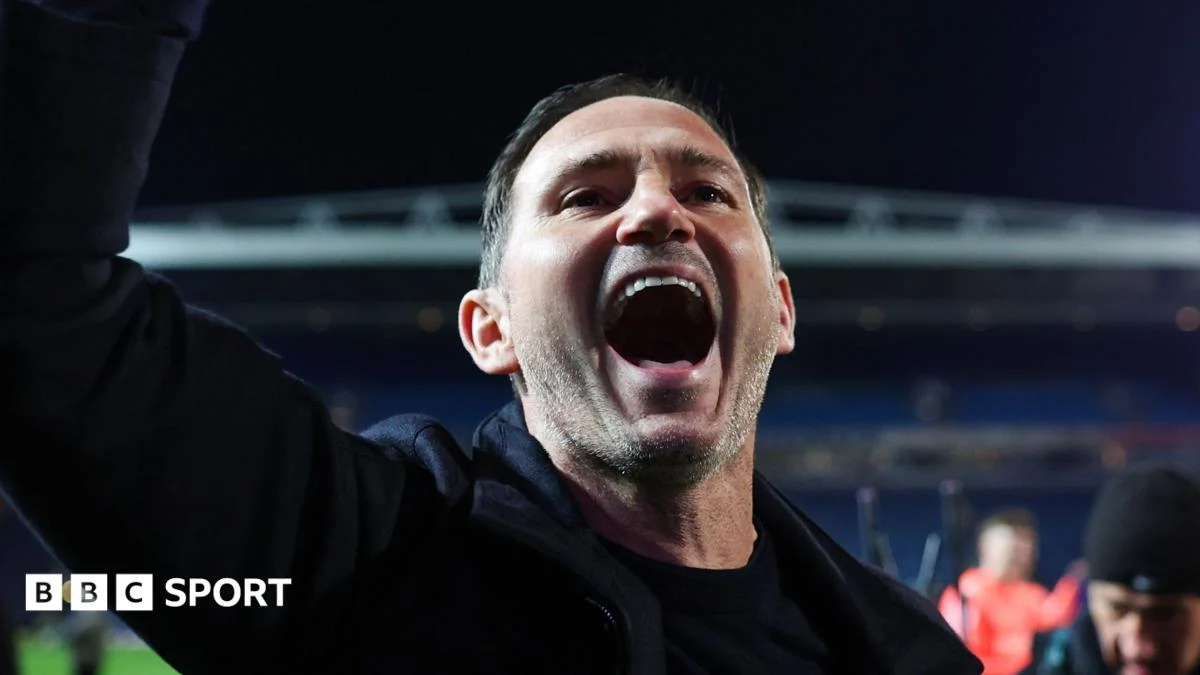
Coventry City manager Frank Lampard recently offered a profound introspection into the foundational influences shaping his leadership philosophy, drawing critical lessons from his distinguished playing career under football’s most iconic figures, while articulating a nuanced approach to navigating the intense scrutiny inherent in modern football management as his club embarks on its return to the Premier League. Lampard’s reflections reveal a manager who has meticulously distilled the contrasting methodologies of his former mentors into a personalized strategy, acknowledging both the psychological demands of the dugout and the complex human element within a high-performance team environment. These insights arrive at a pivotal moment, as the Sky Blues prepare to challenge the elite tiers of English football following a remarkable promotion campaign.
Throughout his illustrious playing career, Lampard had the unique privilege of operating under some of the sport’s most formidable managerial minds. Luminaries such as Jose Mourinho, Carlo Ancelotti, Guus Hiddink, and Rafael Benitez, alongside his formative years under his uncle Harry Redknapp, each contributed to a rich tapestry of footballing education. Now, eight years into his own tenure as a manager, Lampard identifies Mourinho and Ancelotti as the primary architects of his current leadership paradigm, viewing their distinct styles as complementary forces rather than opposing ideologies. He describes them as "two sides of the same coin," a metaphor that encapsulates the duality he strives to embody.
Mourinho’s approach, as perceived by Lampard, was characterized by an intense, almost confrontational directness. "Jose was very on you," Lampard recounted, highlighting the Portuguese manager’s ability to project his own unwavering self-confidence onto his players. This assertive style cultivated a fierce winning mentality, but also carried an implicit threat: any deviation from expectations or performance standards would be met with the full force of his disciplinary strength. It was an environment of high pressure and explicit demands, where accountability was paramount and the manager’s authority absolute. Mourinho’s psychological warfare, both within the dressing room and externally, was a defining feature, instilling a belief system that bordered on invincibility.
In stark contrast, Ancelotti presented a more serene and trusting environment. Lampard observed Ancelotti as "chilled and calm," fostering an atmosphere where players felt empowered and respected. The Italian’s managerial philosophy often revolved around building strong personal relationships and granting significant autonomy, trusting his experienced squad members to manage themselves and perform their roles without incessant micromanagement. This created a "nice environment to work in," as Lampard described it, where individual judgment was valued and stress levels were intentionally mitigated. The core of Ancelotti’s success lay in his ability to de-escalate tension and create a harmonious collective, allowing talent to flourish organically.
Lampard’s experience under both at Chelsea, where he secured Premier League and FA Cup titles with each, provided a unique vantage point to observe these divergent philosophies in action. His current endeavor at Coventry necessitates a synthesis of these methodologies. He admits to oscillating between "being Jose" and "being Carlo," a testament to his evolving understanding of situational leadership. This dynamic approach reflects a maturity gained through experience, moving beyond a rigid adherence to one school of thought. The challenge lies in discerning when to apply the motivational intensity of a Mourinho and when to adopt the empathetic calm of an Ancelotti, a delicate balance crucial for contemporary football management.
This adaptive philosophy stems from a deeper realization about the human element in professional sport. Lampard noted that "young managers" often feel compelled to adopt a hard-line stance, believing that constant criticism or swift punishment for minor infractions is the path to control and respect. However, his journey has taught him that players are "all humans," each with their own personal contexts and challenges. This insight underscores the importance of emotional intelligence in leadership. A player arriving late might have an unseen "back story," warranting a "more Carlo" approach of understanding and support rather than immediate, punitive action. Conversely, if players are demonstrably failing to execute their roles on the pitch, a "bit more Jose" might be necessary to re-establish focus and accountability. This nuanced perspective highlights a sophisticated understanding of motivational psychology, acknowledging that different individuals and situations demand different leadership responses.
Beyond the tactical and motivational aspects of management, Lampard also articulated a profound perspective on external validation. Having guided Coventry back to the Premier League after a quarter-century absence, a monumental achievement for the club, he remains wary of allowing public opinion to dictate his trajectory. He acknowledges the volatile nature of "modern-day football," where acclaim can swiftly turn to criticism. "You’re brilliant one minute, you might not be brilliant the next," he mused, recognizing the futility of attempting to appease every detractor. The relentless pursuit of proving "every doubter wrong" is, in his view, an impossible and ultimately self-defeating endeavor.
This philosophical stance is deeply rooted in his own managerial history, which prior to Coventry, presented a "mixed bag" of experiences. His initial foray into management with Derby County in 2018 saw him lead the club to the Championship play-off final, narrowly missing out on promotion. This promising start was followed by emotionally charged and ultimately abortive spells in the Premier League. His return to Chelsea, a club where he remains a legend, lasted 18 months before his dismissal in January 2021. A subsequent challenge at Everton saw him at the helm for less than a year, culminating in his sacking in January 2023. These high-pressure environments, marked by intense scrutiny and rapid turnover, undoubtedly shaped his current resilience.
These experiences, rather than deterring him, appear to have fortified his resolve and refined his internal compass. While a "personal ambition to prove any doubters wrong is sort of always there," he consciously strives to prevent it from becoming his primary "driver." Lampard understands the immense challenges of the Premier League from both a player’s and manager’s perspective. His focus remains intrinsically motivated, anchored by the conviction that external validation is a fickle mistress. To "succumb" to the pressures of the "outside world" would be to compromise his decision-making and potentially deviate from his core principles. This psychological fortitude is arguably as crucial as tactical acumen when navigating the unforgiving landscape of top-flight football.
The emotional resonance of Coventry’s promotion offers a compelling counterpoint to his storied playing career. As a player, Lampard’s trophy cabinet gleams with three Premier League titles, the UEFA Champions League in 2012, four FA Cups, two League Cups, and the Europa League. Yet, he equates the achievement of leading Coventry to promotion with some of these monumental successes. He candidly described the Champions League triumph in Munich as "the best footballing night of my life as a player by far," acknowledging its unparalleled status. However, the promotion with Coventry carries a different, perhaps deeper, kind of significance.
This distinction lies in the unique context of Coventry City Football Club. The Sky Blues have endured a tumultuous period, marked by financial difficulties, stadium issues, and a prolonged absence from the top flight. To steer a club "that’s been through what it’s been through" back to the Premier League is a testament to collective endeavor and a profound emotional connection to a community. Lampard emphasized the exceptional bond within his squad, noting, "I’ve never experienced, especially as a coach, to have such a good group." This profound camaraderie and shared purpose culminated in a "rush of pure emotion" during the promotion-clinching victory against Blackburn, an experience he places "right up there" among his greatest achievements. It speaks to the unique satisfaction derived from building something from the ground up, fostering a positive culture, and delivering joy to a deserving fanbase.
Looking ahead, the Premier League presents an entirely new set of strategic and tactical challenges for Coventry. Lampard is acutely aware that the successful formula from the Championship will require significant adaptation. While emphasizing the desire to "keep hold of the good things from last year," he cautions against complacency. "We’d be fools to think that we’d just go and play like we did in the ‘Champ’ every week when we dominated a lot of games," he stated, highlighting the stark difference in quality and intensity. The Premier League demands defensive solidity, clinical efficiency, and a heightened level of tactical discipline, particularly against superior opposition. Coventry will likely transition from a team that frequently dictates play to one that must be more pragmatic, resilient, and opportunistic.
In terms of specific ambitions for the season, Lampard’s message to his players is one of courage and self-belief. While acknowledging that merely "staying in the league" would constitute "success" given the magnitude of the challenge, he encourages a bolder mentality. His directive is clear: "Let’s stick our chests out and let’s be brave about it." This embodies a philosophy of proactive engagement rather than passive survival. The players have "earned where they’ve got to," and this inherent merit should fuel an assertive approach. Despite the "lot to lose," the imperative is to "go and show yourselves," to demonstrate their capabilities on the grandest stage of English football.
The opening match of the season, a 3-0 defeat against reigning champions Arsenal, provided an immediate and stark illustration of the Premier League’s unforgiving nature. This initial test, while challenging, will undoubtedly serve as a crucial learning experience. Coventry’s true mettle will be further tested in their first home game of the campaign, where they host fellow promoted side Hull City. This fixture against a direct rival presents an early opportunity to establish their Premier League credentials and demonstrate the adaptive courage Lampard champions. The coming season will be a rigorous examination of Lampard’s evolving managerial blueprint, his ability to blend diverse leadership styles, and the resilience of a club determined to re-establish itself among the footballing elite.



 Aura Kasih
 Ayu Aulia

 Safa Marwah