Lisa Mariana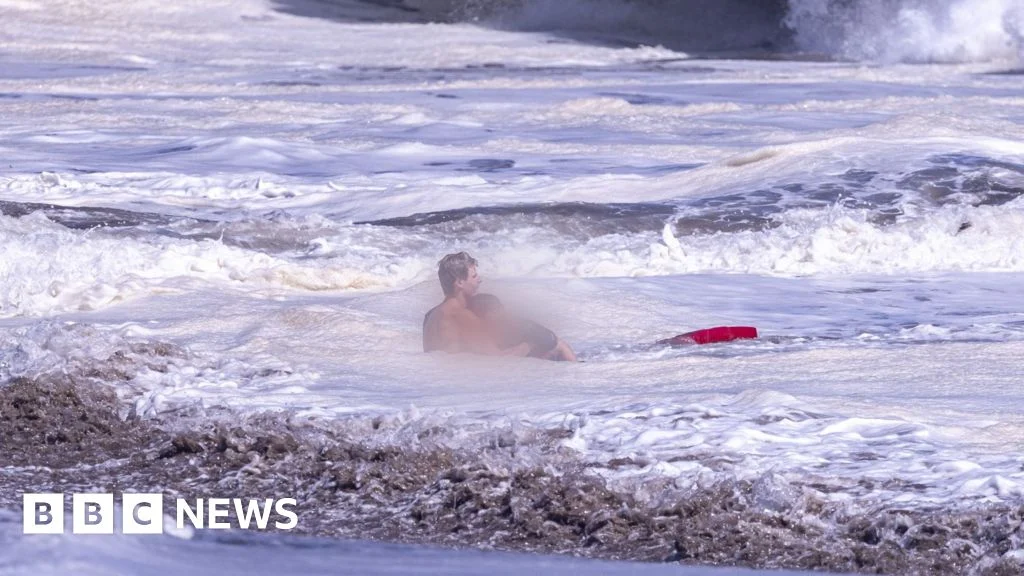
In an exceptional display of professional aptitude and courage, a sixteen-year-old probationary lifeguard recently executed a critical deep-water rescue at a prominent California coastline, an event that was independently recorded and swiftly brought to national attention, culminating in an anticipated commendation from the nation’s highest office. This incident, unfolding rapidly at Seabright State Beach in Santa Cruz, California, highlights the indispensable role of trained aquatic safety personnel and the profound impact of immediate, decisive action in mitigating potential maritime fatalities. The young lifeguard, Ryder Williams, in his inaugural season of service, successfully retrieved a ten-year-old child who had been carried a significant distance from shore by dynamic ocean currents, a perilous situation that drew the collaborative efforts of several beachgoers and concluded successfully within minutes.
The specifics of the rescue, documented by an observant member of the public, provide a compelling testament to Williams’s training and instinct under pressure. The child, experiencing acute distress, had drifted approximately forty-five feet into the open ocean, a distance that can quickly become life-threatening, particularly for a juvenile unaccustomed to strong swells and undertows. Upon identifying the unfolding crisis, Williams initiated an immediate response, demonstrating the rapid assessment and physical prowess expected of a certified lifeguard. His swift entry into the water, followed by a powerful swim to reach the struggling swimmer, was critical. Concurrently, several civilian individuals present on the beach, recognizing the gravity of the situation, also entered the water to provide support, forming an impromptu collaborative effort that underscored community vigilance. The entire intervention, from initial identification of the emergency to the safe return of the child to shore, transpired in a window of just over 120 seconds, a timeframe indicative of the urgency and efficiency with which the crisis was managed.
Seabright State Beach, while a popular recreational destination, is inherently subject to the dynamic and often unpredictable conditions characteristic of the Pacific coastline. Its proximity to the Santa Cruz Harbor entrance can influence wave patterns and current strengths, creating zones where swimmers, especially children, can be unexpectedly pulled offshore. Rip currents, powerful channels of water flowing away from the shore, are a persistent hazard along many coastlines, and even experienced swimmers can find themselves in precarious situations if caught unaware. The presence of a vigilant and well-trained lifeguard corps at such locations is therefore not merely a convenience but a fundamental component of public safety infrastructure. The incident at Seabright serves as a stark reminder of these environmental realities and the continuous need for professional oversight.
The role of a lifeguard, particularly a "rookie" such as Williams, entails a demanding set of qualifications and responsibilities. Lifeguard certification programs are rigorous, encompassing extensive physical conditioning, advanced first aid, cardiopulmonary resuscitation (CPR), automated external defibrillator (AED) operation, and specialized water rescue techniques. Candidates must demonstrate exceptional swimming ability, stamina, and the capacity to remain calm and decisive in high-stress scenarios. For a sixteen-year-old to meet these stringent requirements and then execute a rescue of this magnitude in their first season speaks volumes about their dedication, training, and inherent aptitude for emergency response. The term "rookie" in this context does not imply inexperience in fundamental skills but rather signifies an initial phase of applying learned competencies in live operational environments, often under the mentorship of more seasoned professionals. Williams’s actions exemplify a successful transition from theoretical training to practical, life-saving application.
An expert analysis of the rescue dynamics reveals several critical elements contributing to its successful outcome. Firstly, Williams’s rapid identification of the distressed swimmer was paramount. In aquatic emergencies, seconds can differentiate between a successful rescue and a tragic outcome. Drowning is often silent, making visual vigilance the primary detection method. Secondly, his immediate and unhesitating entry into the water, without apparent delay, minimized the time the child spent in peril. This swift initiation of the rescue sequence is a hallmark of effective lifeguard protocols. Thirdly, the physical exertion required to swim against potentially strong currents while simultaneously managing a panicked or exhausted individual demands exceptional strength and technique. The successful retrieval of the child underscores Williams’s physical readiness. Finally, the involvement of multiple beachgoers, though not always part of formal lifeguard procedure, in this instance provided valuable supplementary support, potentially by directing Williams, helping to calm the child, or assisting with the final stages of bringing the child to shore. This ad-hoc teamwork, spurred by collective concern, demonstrates a community’s capacity to rally in an emergency.
The documentation of this event through bystander video footage played a significant role in its widespread recognition. In an era dominated by ubiquitous mobile recording devices, critical incidents are frequently captured and disseminated through digital platforms. This footage served not only to validate the heroic actions of Williams but also to provide an invaluable visual record for public awareness and potentially for future training simulations. The immediate and visceral nature of the video allowed the incident to transcend local news, rapidly gaining national traction and drawing attention to the often-unseen daily acts of vigilance performed by lifeguards. Such documentation humanizes emergency services and fosters greater appreciation for the individuals who undertake these vital roles.
The subsequent invitation from the nation’s highest office to Ryder Williams, accompanied by the promise of a high civilian honor, elevates this incident beyond a local news item to a matter of national recognition for exceptional bravery and service. Presidential commendations for civilian acts of heroism are reserved for individuals who demonstrate extraordinary courage and selflessness in saving lives or preventing harm. This acknowledgment not only honors Williams directly but also serves as a powerful affirmation of the entire lifeguard profession. It sends a clear message about the value placed on vigilance, preparedness, and the willingness to act decisively in moments of crisis. Such high-profile recognition can significantly influence public perception of public safety roles, potentially inspiring a new generation to consider careers in emergency services.
Beyond the individual recognition, this incident precipitates broader discussions concerning public safety protocols and preventative measures at beaches. It underscores the critical importance of parental and guardian supervision of children near water, regardless of the presence of lifeguards. Educational campaigns on ocean safety, including understanding rip currents, recognizing distress signals, and adhering to posted warnings, become even more pertinent. The event serves as a powerful case study for community preparedness, demonstrating how professional training, combined with alert public participation, forms a robust safety net. It reinforces the notion that while lifeguards are the primary defense, individual responsibility and collective awareness are equally vital in preventing aquatic tragedies.
Looking ahead, the impact of Williams’s actions and subsequent national recognition could have far-reaching implications for lifeguard programs across the country. It may serve as a potent recruitment tool, attracting more young individuals to a profession that demands significant commitment but offers profound rewards. Training methodologies might also benefit from analyzing such real-world scenarios, incorporating lessons learned into advanced simulations. For Ryder Williams himself, this singular act of heroism marks a remarkable beginning to what could be a distinguished career in public service, potentially inspiring him to pursue further training in emergency response, marine safety, or related fields. As technology continues to evolve, future beach safety might also integrate advanced surveillance systems, such as drones equipped with AI for early detection of distressed swimmers, further enhancing the capabilities of human lifeguards. However, the fundamental human element of courage, empathy, and immediate physical intervention, as demonstrated by Williams, will remain irreplaceable.
In conclusion, the swift and courageous actions of teenage lifeguard Ryder Williams at Seabright State Beach represent a pivotal moment that transcends a simple rescue. It stands as a powerful emblem of professional diligence, the critical role of youth in public service, and the enduring value of human courage in the face of peril. The national attention and presidential recognition bestowed upon Williams not only celebrate his individual heroism but also cast a vital spotlight on the dedication of lifeguards nationwide, reinforcing the imperative of robust safety protocols and fostering a collective commitment to preventing future aquatic tragedies along our invaluable coastlines.




 Aura Kasih
 Safa Marwah
 Ayu Aulia