Lisa Mariana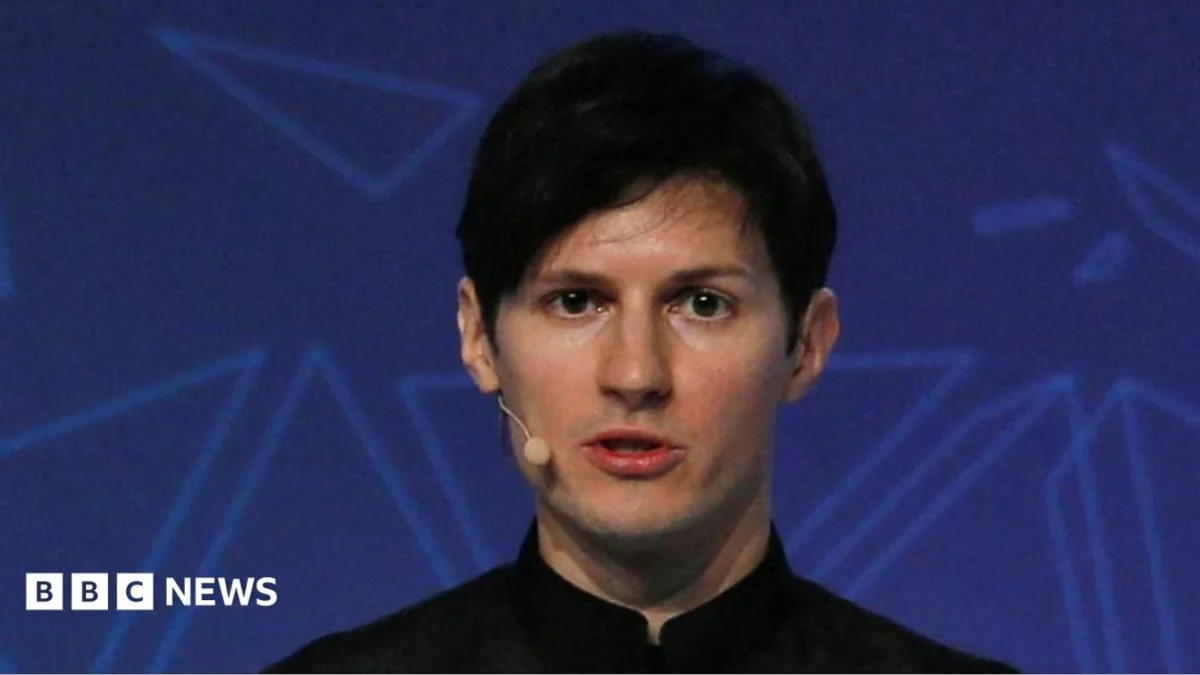
The Russian Federation has initiated criminal proceedings against Pavel Durov, the visionary behind the widely used messaging application Telegram, on grave allegations of complicity in terrorist activities and the propagation of extremist content. This development marks a significant escalation in Moscow’s ongoing efforts to assert control over digital communications, particularly platforms that resist state surveillance and censorship, and carries profound implications for global internet freedom and the operation of tech enterprises within authoritarian jurisdictions.
Russia’s Federal Security Service (FSB), the nation’s primary domestic intelligence agency, formally accused Durov of facilitating the organization and coordination of acts of sabotage and terrorism within Russian territory. The accusations specifically cite Telegram’s alleged use by Ukrainian intelligence services for recruitment and the orchestration of illicit operations. The FSB contends that the platform has demonstrably failed to remove channels, discussion groups, and automated accounts identified as being utilized for these purposes by entities hostile to the Russian state. Concurrently with the announcement of these charges, an international arrest warrant has been issued for Durov, a Russian-born entrepreneur who has resided outside his native country for many years.
This legal offensive by the Kremlin against one of the world’s most prominent tech figures underscores a deepening rift between state control ambitions and the principles of digital privacy and open communication. Durov, known for his staunch advocacy of user privacy and encryption, has previously voiced concerns regarding what he described as Moscow’s fabricated pretexts to restrict access to Telegram for Russian citizens. His public response to the charges, disseminated through Telegram’s official X account, conveyed a defiant posture, signaling an unwillingness to yield to Russian demands.
Telegram holds a considerable user base within Russia, serving as a critical communication channel for tens of millions of individuals, including government officials, independent media, opposition figures, and ordinary citizens. Its resilience against past attempts by Russian authorities to block its services has solidified its position as a quasi-indispensable tool in the country’s information ecosystem. However, this popularity has simultaneously rendered it a consistent target in Moscow’s broader campaign to tighten its grip on internet access and information flow, a campaign that has intensified dramatically following geopolitical shifts and domestic policy realignments.
Pavel Durov’s personal journey is intricately linked with the narrative of digital freedom and state interference. Having founded VKontakte, Russia’s largest social network, in 2006, he famously clashed with Russian authorities over demands for user data and censorship. His refusal to comply with these directives ultimately led to his ousting from VKontakte in 2014 and his subsequent departure from Russia. Since then, Durov has adopted an itinerant lifestyle, operating Telegram from various international bases, and holds dual citizenship with France and the United Arab Emirates. This transnational status complicates any potential enforcement of an arrest warrant issued by Russia, raising significant questions about the extent of Moscow’s legal reach and the willingness of other sovereign nations to cooperate in such politically charged cases.
Strategic Importance of Telegram and Russia’s Digital Sovereignty Agenda
The current charges against Durov are not an isolated incident but rather a culmination of years of tension between Telegram and Russian authorities. Since its launch in 2013, Telegram has differentiated itself through its robust encryption protocols and a stated commitment to user privacy, principles that have consistently put it at odds with governments seeking to monitor and control online discourse. In 2018, Russia attempted a widespread block of Telegram after Durov refused to provide the FSB with encryption keys. Despite these efforts, which caused widespread disruption but largely failed to cripple the app, Telegram continued to operate, often accessed via VPNs, demonstrating its critical role in facilitating uncensored communication.
The ongoing conflict in Ukraine has further amplified Telegram’s strategic significance. Both Ukrainian and Russian forces, as well as civilian populations, utilize the platform extensively for disseminating information, coordinating activities, and sharing real-time updates. For Ukraine, Telegram serves as a vital channel for rallying support, sharing intelligence, and communicating with citizens. For Russia, while state-controlled media heavily utilize Telegram for propaganda, the platform also hosts a significant amount of independent and critical reporting, making it a persistent challenge to Moscow’s tightly controlled information narrative. The accusation that Telegram facilitates "Ukrainian secret services" for recruitment and sabotage directly links the platform to the ongoing conflict, providing a convenient, if legally contentious, justification for the current charges.
This aggressive posture aligns with Russia’s long-term objective of achieving "digital sovereignty," a doctrine that seeks to insulate the Russian internet from foreign influence and control. This includes measures such as the "sovereign internet" law, mandating the routing of Russian internet traffic through state-controlled infrastructure, and persistent pressure on foreign tech companies to localize data storage and comply with content removal requests. The move against Durov signals a heightened resolve to extend this control even to platforms whose founders operate beyond Russia’s physical borders.
Legal and Geopolitical Implications of an International Warrant
The issuance of an international arrest warrant for Pavel Durov introduces a complex array of legal and geopolitical challenges. While Russia is a member of Interpol, the international police cooperation organization, Interpol’s constitution prohibits it from undertaking any intervention or activities of a political, military, religious, or racial character. Given the highly politicized nature of the charges—facilitating terrorism in the context of a state-level conflict—it is highly probable that Interpol would decline to issue a Red Notice, which is a request to law enforcement worldwide to locate and provisionally arrest a person pending extradition. Even if a Red Notice were issued, many countries would likely refuse to act on it if they deem the charges to be politically motivated or lacking in sufficient legal merit under international standards.
Durov’s French and UAE citizenships further complicate the matter. France, a democratic nation with a strong commitment to civil liberties, would almost certainly scrutinize any Russian extradition request rigorously, particularly if there are concerns about the political nature of the charges or the fairness of the Russian judicial process. The UAE, while having a less adversarial relationship with Russia, also operates under its own legal frameworks and sovereign interests. Extradition treaties are specific agreements between countries, and the decision to extradite an individual is ultimately a political one, weighed against human rights considerations, the nature of the alleged crime, and bilateral relations. It is highly improbable that any Western nation, or indeed most countries, would comply with an extradition request from Russia for charges widely perceived as an attempt to silence a critic or control a communication platform.
The "facilitating terrorism" charge itself is a potent legal tool often employed by authoritarian regimes to target dissent or exert pressure on entities perceived as threats. Its broad interpretation within Russian law allows for its application in cases that, in other jurisdictions, might be considered freedom of speech or legitimate journalistic activity. This legal tactic highlights the weaponization of judicial processes for political ends, a trend observed in various countries seeking to suppress opposition or assert state control over information.
Expert Analysis: Why Now? And What Next?
The timing of these charges is a subject of considerable analytical interest. Several factors could contribute to Moscow’s decision to act now. Firstly, it could represent a culmination of frustration over Telegram’s continued operational independence and its perceived role in supporting Ukrainian narratives and operations. As the conflict grinds on, Russia may be seeking to eliminate any perceived vulnerabilities or uncontrolled information channels. Secondly, it could serve as a stark warning to other tech platforms operating within or accessible from Russia, signaling that the Kremlin is prepared to pursue legal action against their leadership, regardless of their international residence. Thirdly, it might be an attempt to delegitimize Telegram within Russia itself, painting it as a tool of hostile foreign powers and thus justifying further restrictions or even another attempt at a complete ban.
The implications for Pavel Durov are significant. While direct physical arrest may be unlikely given his international residences, the warrant will severely restrict his travel to a large number of countries that might honor Russian legal requests or those with less robust protections against politically motivated arrests. This could impede his ability to manage Telegram’s global operations effectively and limit his public engagement.
For Telegram as a platform, the charges present a reputational challenge and a potential operational headache. While its user base, particularly outside Russia, is unlikely to be immediately deterred, the allegations could be leveraged by rival platforms or governments seeking to exert their own influence. Internally, the charges reinforce the narrative that Telegram operates under constant threat, potentially strengthening its resolve to maintain its privacy-centric approach, but also potentially leading to more sophisticated attempts by Russia to disrupt its service or compromise its infrastructure.
Looking forward, the legal battle is likely to unfold as a protracted diplomatic and legal chess match. Russia will likely continue to press its case through Interpol and bilateral channels, though with limited success. Telegram, under Durov’s leadership, will almost certainly double down on its commitment to end-to-end encryption and user privacy, positioning itself as a bastion against state overreach. This episode further solidifies Telegram’s image as a critical, albeit controversial, player in the global information landscape, continually navigating the complex nexus of technology, geopolitics, and human rights. The broader trend of digital authoritarianism, where states increasingly seek to control the digital public sphere, will undoubtedly continue, with the case of Pavel Durov serving as a stark illustration of the high stakes involved in this ongoing struggle for digital freedom.



 Aura Kasih
 Safa Marwah
 Ayu Aulia