Lisa Mariana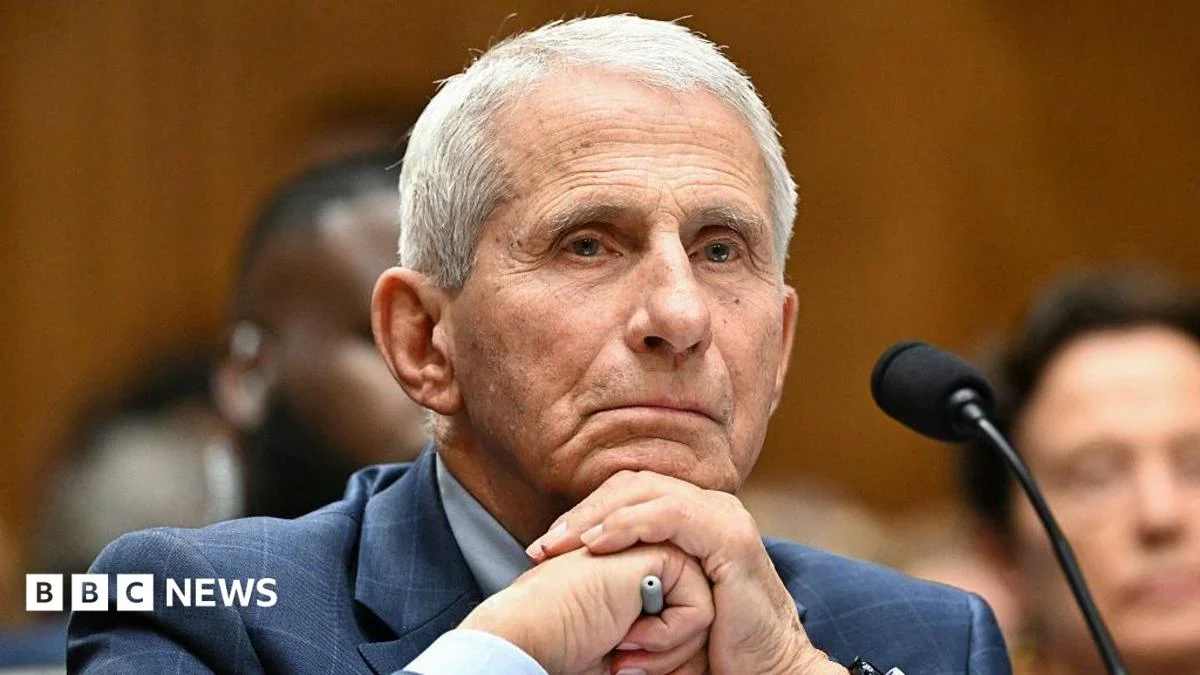
In a highly charged session before a United States Senate committee, Dr. Anthony Fauci, the former director of the National Institute of Allergy and Infectious Diseases (NIAID), repeatedly declined to answer questions regarding the COVID-19 pandemic, citing his constitutional protection against self-incrimination. The veteran public health official, aged 85, invoked the Fifth Amendment of the U.S. Constitution over 100 times during Wednesday’s hearing, signaling a profound escalation in the political and legal scrutiny surrounding his tenure and the origins of the global health crisis. This unprecedented move underscores the deep partisan divisions and lingering controversies that continue to define the nation’s response to the pandemic, transforming a legislative oversight function into a dramatic legal standoff.
The core of the confrontation revolved around accusations from Republican lawmakers, who have persistently alleged that Dr. Fauci either concealed crucial information from the public, provided misleading guidance, or misrepresented the origins of the SARS-CoV-2 virus. Dr. Fauci, through his actions and previous statements, has vehemently denied any wrongdoing, characterizing the allegations as baseless and politically motivated. His decision to invoke the Fifth Amendment, while legally permissible and not an admission of guilt, reflects a calculated strategy to avoid potential perjury charges, particularly given the intricate and often contradictory public discourse surrounding the pandemic’s early days and the evolving scientific understanding.
Understanding the Fifth Amendment and Its Implications
The Fifth Amendment to the U.S. Constitution is a cornerstone of American jurisprudence, designed to protect individuals from governmental overreach. Specifically, its "privilege against self-incrimination" stipulates that no person "shall be compelled in any criminal case to be a witness against himself." This constitutional right is fundamental, allowing individuals to refuse to answer questions that might lead to criminal prosecution. Its application extends beyond courtrooms to congressional hearings, where testimony given under oath can carry severe legal consequences, including perjury.
In Dr. Fauci’s case, his legal counsel advised this course of action due to the perceived risk of inadvertently offering testimony that could be interpreted as inconsistent with previous statements made under oath, potentially exposing him to charges of perjury. Given the multitude of public appearances, congressional testimonies, and media interviews Dr. Fauci has given since the pandemic’s onset, the sheer volume of his prior sworn statements creates a complex evidentiary landscape. Any perceived deviation, however minor, could be seized upon by adversaries as grounds for legal action. Therefore, invoking the Fifth Amendment serves as a legal shield, preventing his words from being used to build a case against him, regardless of the veracity of his past assertions. It is a procedural safeguard, not a confession, aimed at protecting an individual from the burden of proving innocence in a potentially hostile legal environment.
The Intensity of the Senate Hearing
The Senate Committee on Homeland Security hearing quickly devolved into a heated exchange, primarily driven by Senator Rand Paul of Kentucky, who chaired the proceedings. Senator Paul, a vocal critic of Dr. Fauci throughout the pandemic, made no secret of his intentions, having publicly pledged to see Dr. Fauci held accountable, even "behind bars." This explicit animosity, according to Dr. Fauci’s prepared statement, was the primary motivation behind his refusal to answer questions. He asserted that the hearing was not an genuine attempt at legislative oversight but a targeted effort to elicit statements that could be used to prosecute him, underscoring the deeply personal and politicized nature of the confrontation.
Despite Dr. Fauci’s invocation of his constitutional right, Senator Paul persisted in his questioning, repeatedly inviting Dr. Fauci to "apologize" for his actions during the pandemic. This tactic highlights the committee’s intent to pressure and publicly condemn Dr. Fauci, even without obtaining direct testimony. The senator further indicated that the committee would vote in the coming week on a resolution to hold Dr. Fauci in contempt of Congress, a move that could lead to criminal charges if approved by the full Senate.
The procedural friction intensified when David Schertler, one of Dr. Fauci’s attorneys, attempted to intervene during Senator Paul’s questioning. Schertler was subsequently removed from the hearing room, a move he later condemned as "outrageous" and further evidence of Senator Paul’s "baseless and vindictive" personal vendetta. This incident underscored the highly irregular and adversarial atmosphere of the hearing, raising questions about due process and the fairness of the proceedings.
The Contested Origins of COVID-19 and Fauci’s Shifting Views
A central theme of the Republican questioning, and a point of enduring public debate, was the origin of the COVID-19 virus. Senator Paul, a prominent proponent of the "lab-leak" theory, suggested that Dr. Fauci publicly promoted the natural origin theory while privately entertaining the possibility of a laboratory accident, specifically from China’s Wuhan Institute of Virology. This narrative posits that Dr. Fauci may have contributed to downplaying or obscuring a potentially more damning origin story.
Recent revelations, including the public release of Dr. Fauci’s pandemic-era diary entries by Senator Paul’s office, have offered a glimpse into his evolving perspective. These entries, dating back to early 2020, reflect an initial openness to both natural origin and lab-leak theories. For instance, an entry from February 2020 noted that scientists on a conference call did not have "total agreement" on the virus’s source. However, later entries show a progression towards greater conviction in the natural origin theory, with Dr. Fauci writing that he was "almost certain that the virus evolved naturally from a species jump," while still maintaining an "open mind about the possibility of a lab leak." He also posited that "just because two alternatives are possible that does not mean that they are equally probable."
This internal deliberation, now public, is being leveraged by critics to argue that Dr. Fauci’s public pronouncements did not fully reflect the scientific uncertainties present at the pandemic’s outset. The World Health Organization (WHO) last year stated that the natural-origin theory, involving zoonotic spillover from animals to humans, remains the "best supported" by available evidence, though it acknowledged the matter remains "inconclusive" pending further information. The ongoing debate over the virus’s origins continues to fuel distrust and conspiracy theories, making it a fertile ground for political contention.
Legal Protections, Political Reactions, and Future Scrutiny
The legal landscape surrounding Dr. Fauci is multifaceted. While former President Joe Biden granted him a pre-emptive pardon, shielding him from federal prosecution for actions taken between 2014 and 2025, this protection is not absolute. The pardon specifically covers federal offenses, leaving open the possibility of state or local charges, or even federal charges for actions occurring outside the specified timeframe or related to his testimony before the Senate committee. This legal nuance creates a continued vulnerability for Dr. Fauci, making his invocation of the Fifth Amendment a pragmatic legal defense.
The political fallout from the hearing was immediate and polarized. Beyond Senator Paul’s accusations, former President Donald Trump took to social media to label Dr. Fauci "crazy," reiterating his long-held belief that the virus originated from the Wuhan laboratory and accusing Dr. Fauci of attempting to "protect China." This aligns with the historical sparring between Trump and Fauci during the pandemic, particularly over recommended health policies and unproven treatments.
Other Republicans joined the chorus of criticism. Senator Ron Johnson indicated his intention to push for a subpoena to compel Dr. Fauci’s testimony, escalating the legal pressure. Following the hearing, Florida’s Attorney General, a Republican, announced an investigation into Dr. Fauci’s conduct, signaling a multi-jurisdictional pursuit of accountability. Conversely, several Democrats rallied to Dr. Fauci’s defense, with Senator Maggie Hassan characterizing the hearing as "designed to entrap" him, highlighting the partisan lens through which these proceedings are viewed.
Fauci’s Enduring Legacy and the Erosion of Public Trust
Dr. Fauci’s career has been marked by decades of dedicated public service, particularly his leadership during the AIDS epidemic. During the initial phases of the COVID-19 pandemic, he emerged as one of the most visible and trusted figures in the U.S. government, guiding the nation through an unprecedented public health crisis. However, his prominent role also made him a target for intense criticism and personal attacks, including death threats, which ultimately led to the removal of his security protection by the Trump administration.
The complexities of his relationship with political figures are further illustrated by the fact that, in 2021, President Trump awarded Dr. Fauci a presidential commendation for his contributions to Operation Warp Speed, the initiative that accelerated COVID-19 vaccine development. This seemingly contradictory recognition underscores the shifting political allegiances and the transactional nature of public service in an era of hyper-partisanship.
The current legal and political battles surrounding Dr. Fauci extend beyond his individual actions; they reflect a broader societal struggle over scientific authority, governmental transparency, and the integrity of public institutions. The repeated invocation of the Fifth Amendment by a high-profile public health official, once revered for his scientific leadership, risks further eroding public trust in both scientific expertise and the legislative process. As the U.S. continues to grapple with the aftermath of the pandemic, the unresolved questions and the deeply entrenched political divisions surrounding its origins and management ensure that figures like Dr. Fauci will remain at the center of contentious debate for years to come, shaping the discourse on future public health crises and the role of scientific leadership in a polarized society.



 Aura Kasih
 Safa Marwah
 Ayu Aulia