Lisa Mariana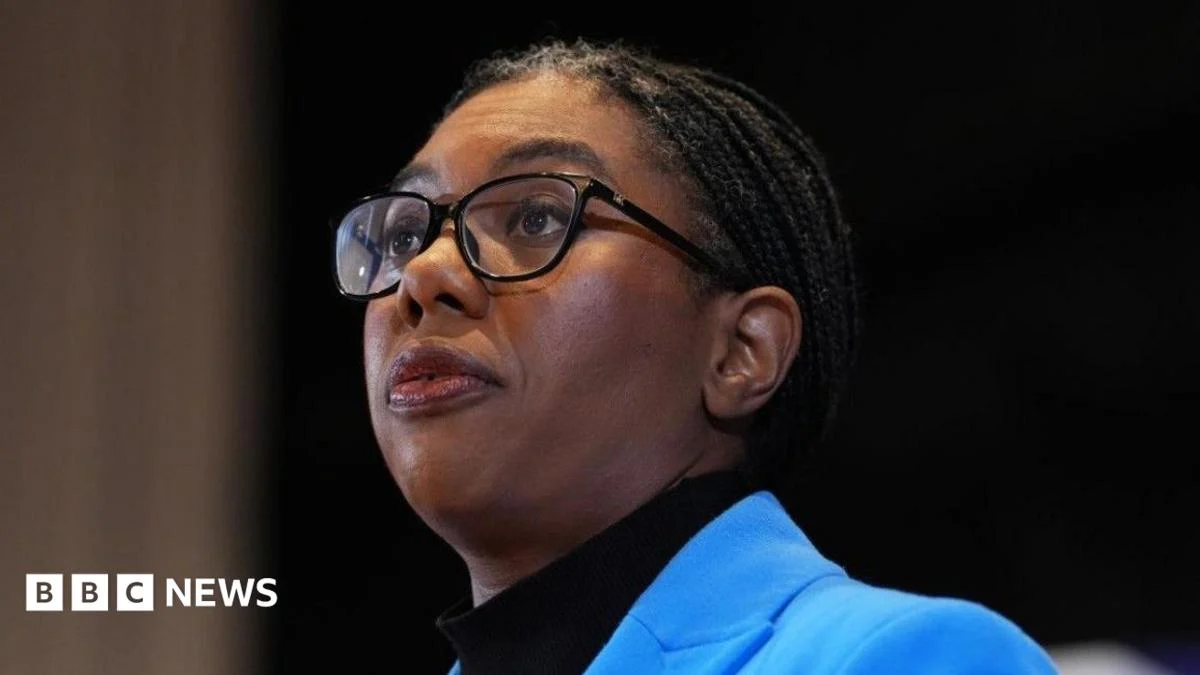
The United Kingdom’s justice system is bracing for a potential legislative confrontation as Conservative leader Kemi Badenoch demands immediate parliamentary action to prevent the early release of thousands of incarcerated individuals, a scheme currently under review by Prime Minister Andy Burnham’s administration. This urgent call for emergency legislation underscores deep divisions over how to address an acute and long-standing crisis in prison capacity, pitting public safety concerns against the operational realities of an overburdened correctional infrastructure.
Prime Minister Burnham had previously announced a temporary suspension of the early release program, which was projected to see approximately 700 prisoners granted freedom in its initial phase, slated for September. This pause followed significant public outcry and condemnation from victim support groups and families, who expressed profound distress at the prospect of offenders serving reduced sentences. Despite this governmental halt, the Conservative opposition maintains that a mere review is insufficient to avert the imminent release of potentially dangerous individuals and insists on robust legislative intervention to permanently block the most serious offenders from benefiting from such schemes.
The genesis of this contentious policy lies in the critical and unprecedented levels of overcrowding plaguing the nation’s correctional facilities. Labour, now in power, vehemently asserts that this systemic failure is a direct consequence of consecutive Conservative governments’ inability to adequately invest in and expand the prison estate over the past decade and a half. A spokesperson for the Labour Party articulated this position, stating, "It is the current administration that is diligently rectifying the profound deficiencies inherited from the previous Tory government."
Speaking on the unfolding situation, Prime Minister Burnham acknowledged the gravity of the challenge, remarking, "This is undeniably a difficult predicament, and as a nation, we ought not to be in this position. Nevertheless, we must confront the existing reality." He further affirmed his commitment to public protection, adding, "My paramount objective is to mitigate any risk to the public, which is precisely why I am re-evaluating the situation and have deferred the September release schedule. Further announcements will be made in due course."
The practice of early prisoner release is not novel to the UK’s criminal justice landscape. Indeed, the preceding Conservative government itself implemented similar measures in 2023 to alleviate prison overcrowding, initially allowing for releases 18 days early, subsequently extending to 70 days. By June 2024, before the Labour Party assumed office, an estimated 10,000 prisoners had already been released under these provisions. The severity of the capacity issue was starkly highlighted when Sir Keir Starmer’s government took office in July 2024, finding fewer than 100 available places across the entire adult male prison estate. This dire situation directly precipitated the drafting of the Sentencing Act, which proposed the early release of an additional 6,000 prisoners commencing in September.
While the Sentencing Act explicitly excludes certain categories of the most egregious and high-risk offenders, such as murderers serving life sentences or individuals on extended determinate sentences, a critical flaw identified by critics is that eligibility for early release is predicated on the length of a fixed sentence rather than the specific nature of the crime committed. This structural characteristic implies that some individuals convicted of serious sexual or violent offenses, who have established fixed release dates, could be discharged from custody earlier than anticipated. Although such individuals would remain subject to rigorous monitoring and the risk of recall to prison, the prospect has ignited widespread public and political consternation.
Kemi Badenoch’s urgent appeal centers on compelling Prime Minister Burnham to expedite legislative changes designed to ensure that serious offenders remain incarcerated for the entirety of their original sentences. Addressing a press conference, where she was flanked by victims whose lives could be directly impacted by these changes, the Conservative leader conveyed her assessment of the situation: "It is abundantly clear that the Prime Minister recognizes the severity of this issue, but I do not believe he possesses a clear strategy for addressing it." She voiced profound skepticism regarding the efficacy of a mere pause, expressing concern that it would devolve into "another instance of reassuring rhetoric without substantive action."
Badenoch’s alarm is amplified by the looming parliamentary schedule. She asserts that without the immediate enactment of emergency legislation, dangerous offenders will begin to be released on September 2nd, the day following the return of Members of Parliament from their summer recess. Her proposed course of action is twofold: first, that Burnham revokes the legislation slated to come into effect on September 2nd; and second, that Parliament be recalled if necessary to explicitly exempt the most violent and sexual offenders from any early release provisions.
When confronted with the historical context of prison overcrowding and whether it represented a failure of the preceding Conservative administration, Badenoch acknowledged the systemic nature of the "crisis," stating it had been "a long time coming." She offered a qualified admission of past shortcomings: "We did take steps, but they proved insufficient, and for that, I express regret." However, she quickly pivoted to the present and future, asserting, "I cannot alter the past; what I can do is present viable solutions." Beyond immediate legislative fixes, Badenoch proposed long-term strategies for alleviating the overcrowding crisis, including the necessity for local communities to accept the construction of new correctional facilities within their vicinities. Additionally, she urged the government to explore the feasibility of securing prison places overseas, a concept previously considered by successive UK governments, including potential arrangements with Estonia, though deemed too expensive in 2025.
Earlier in the month, the Conservative front bench had already intensified pressure on the government to reconsider its original early release proposals, specifically highlighting the implication that some individuals convicted of rape could be released ahead of schedule. At that time, the government defended its stance, characterizing the scheme as a pragmatic choice to manage offenders under stringent community conditions, thereby preventing a complete collapse of the prison system, which could otherwise leave serious offenders, including sex offenders, to act with impunity.
The Prime Minister’s decision to pause the scheme was significantly influenced by impassioned criticism from the family of PC Andrew Harper, a Thames Valley Police officer tragically killed in Berkshire in 2019 while on duty. Two of PC Harper’s killers, both sentenced to 13 years, stood to benefit from the early release scheme starting in June 2027, when the longest fixed sentences would have been factored into the early release calculations. PC Harper’s widow, Lissie Harper, condemned the proposals as "deplorable," accusing politicians of "making decisions from behind a desk that will have real and lasting consequences" for victims’ families. Her powerful testimony undoubtedly contributed to the government’s decision to review the policy.
In a robust defense of the announced review of the Sentencing Act, a Labour Party spokesperson retorted, "The Conservatives exhibit considerable audacity. During their 14 years in power, they presided over the closure of 23 prisons, managed to create a mere 482 new jail places, and authorized the early release of 10,000 prisoners – thereby pushing the criminal justice system to the brink of systemic failure." The spokesperson reiterated the government’s commitment to remediation: "It is this government that is diligently rectifying the chaos left by the Tories. We have already delivered over 3,000 new prison places and are investing billions to secure thousands more."
The debate has also drawn comment from other political factions. Jess Brown-Fuller MP, the Liberal Democrat justice spokesperson, articulated a fundamental principle: "In a properly functioning justice system, no victim or their loved ones should ever be confronted with the news that their perpetrator is being released earlier than anticipated." However, she also acknowledged the historical context, asserting, "Regrettably, the Conservatives bequeathed our prisons in a state of near collapse, thereby instigating a capacity crisis that necessitated emergency measures to maintain the system’s functionality and safeguard the public." Brown-Fuller concluded by identifying an opportunity for the current administration: "Now that the government claims to have augmented prison capacity, there exists a clear window for Prime Minister Burnham to rectify some of the shortcomings inherited from his predecessors with this scheme."
Reform UK’s Home Affairs spokesperson, Zia Yusuf, was even more scathing, branding the early release policy as "disastrous" and pointing out that Badenoch herself had, in 2024, supported efforts to expand it. Yusuf asserted, "It is unequivocal that only one party has consistently opposed early release and consistently advocated for robust law and order reforms designed to ensure that hardened criminals are incarcerated for the full duration of their sentences." He concluded with a strong party pledge: "Only Reform UK possesses the resolve to rectify lawless Britain."
The current impasse highlights a deeply entrenched and complex challenge within the UK’s criminal justice system. The immediate demand for emergency legislation reflects profound public and political anxieties about safety and justice, while the underlying issue of prison overcrowding remains a testament to decades of underinvestment and policy inertia. The government’s decision to pause the early release scheme signals an acknowledgment of these concerns, yet the path forward remains fraught with political contention and the urgent need for sustainable, long-term solutions that reconcile the imperative of public protection with the practicalities of managing a burgeoning prison population. The legislative battle lines are drawn, and the coming weeks are set to determine the immediate trajectory of justice policy in the United Kingdom.




 Aura Kasih
 Safa Marwah
 Ayu Aulia