Lisa Mariana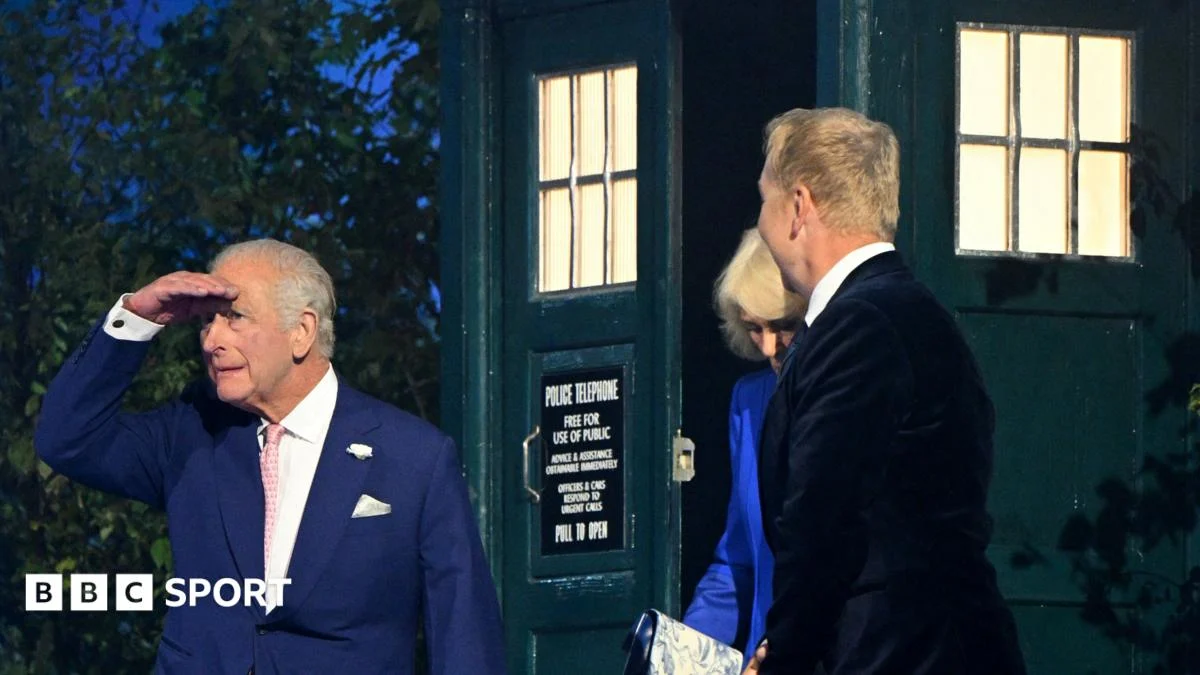
The Commonwealth Games 2026 commenced in Glasgow with an electrifying opening ceremony, a vibrant fusion of Scottish heritage and global unity, highlighted by a dramatic entrance from King Charles III and a resounding reaffirmation of the city’s capacity to host a major international sporting spectacle under challenging circumstances. The event, held indoors before an enthusiastic audience of approximately 10,000, underscored Glasgow’s resilience and its deep commitment to the Commonwealth movement, particularly after stepping in at short notice to salvage the quadrennial competition.
The evening’s proceedings were meticulously orchestrated to celebrate both Scottish identity and the diverse tapestry of the Commonwealth nations. A moment of particular emotional resonance occurred with the fervent applause that greeted the delegation from the Falkland Islands, a poignant demonstration of solidarity that resonated deeply with historical memory, especially in the wake of recent high-profile sporting events that had rekindled discussions surrounding Anglo-Argentinian relations. Shortly thereafter, the Samoan contingent captivated the arena with a powerful rendition of their traditional haka, a display of cultural strength and pride that commanded the attention and respect of the dignitaries and assembled spectators alike.
However, the most thunderous ovation of the night was unequivocally reserved for the host nation’s own team. The Scottish athletes, resplendent in their distinctive white shirts and traditional kilts, were the final procession to enter the arena, their appearance eliciting an almost visceral roar that propelled many in the capacity crowd to their feet. This crescendo of national fervour was further amplified by the majestic appearance of a large, symbolic representation of the Loch Ness Monster, an iconic emblem of Scottish folklore, followed by the stirring, melancholic strains of bagpipes and drums, culminating in a powerful choral performance of "Flower of Scotland," a moment of collective pride that visibly moved many.
The ceremonial aspects seamlessly transitioned into a series of theatrical performances, collectively billed as "a heartfelt tribute to Glasgow and the Commonwealth." This segment commenced with a captivating performance by Scottish folk and country artist Nathan Evans, whose musical contribution was accompanied by an intricate dance sequence performed beneath a meticulously crafted replica of the iconic clock that graces Glasgow Central Station. The phrase "Meet me under the clock" holds a significant place in the city’s vernacular, symbolising rendezvous and the beating heart of urban connection, and its inclusion served as a powerful homage to local culture. Further energising the atmosphere, singer Callum Beattie delivered a dynamic interpretation of Baccara’s 1970s disco classic, "Yes Sir, I Can Boogie." This particular track, having recently been informally adopted as an anthem by Scottish football supporters, ignited an infectious energy that saw the nation’s athletes dancing spiritedly in their seats, reflecting a joyous and uninhibited celebration. Later in the evening, the vibrant atmosphere was sustained by Scottish singer KT Tunstall’s rendition of "No Scotland No Party," another contemporary anthem frequently embraced by the ‘Tartan Army,’ perfectly encapsulating the celebratory spirit of the occasion. Prior to this, the King’s Baton, a symbol of the Games’ journey and unity, was ceremonially brought into the arena while singer Nina Nesbitt performed a timeless Scottish classic, The Proclaimers’ "I’m Gonna Be (500 Miles)," its lyrics of enduring commitment resonating with the spirit of the Commonwealth.
King Charles III, in his official address, delivered a message of profound importance, emphasising the urgent necessity of global efforts to combat plastic pollution in the world’s oceans and waterways. His Majesty underscored the shared responsibility of Commonwealth nations in environmental stewardship, stating, "I extend my warmest gratitude to the city of Glasgow and all those who have made this event possible. As we share our love of sport and our planet, let us build a harmonious future for our families and each other." This focus on environmental sustainability aligned with contemporary global priorities and positioned the Games not merely as a sporting event but as a platform for critical ecological advocacy. The King’s personal appearance, a moment of regal gravitas, was, according to the spirit of the event’s promotional materials, framed by a dramatic, almost cinematic entrance. While not a literal manifestation, the presentation surrounding his arrival conceptually evoked a journey through time and space, perhaps through sophisticated projection mapping and light installations, creating a sense of emergence from a ‘Tardis-like’ vortex, underscoring the timeless nature of the monarchy and the enduring spirit of the Games, traversing history to inaugurate a new chapter.
The decision for Glasgow to host the 2026 Commonwealth Games came about under extraordinary circumstances. The city’s immediate predecessor as host, the Australian state of Victoria, withdrew its commitment in 2023, citing escalating costs and logistical complexities. This abrupt cancellation plunged the future of the Commonwealth Games into significant uncertainty, raising existential questions about the viability and format of future editions. The Games, already grappling with a diminished profile and fewer host city bids in recent cycles, faced a genuine crisis. It was at this critical juncture that Glasgow, with its proven track record and robust infrastructure from the highly successful 2014 Games, stepped forward. This intervention was not merely a matter of convenience but a testament to Glasgow’s civic pride, its established expertise in hosting large-scale events, and its strategic positioning as a global city. The city’s willingness to undertake such a monumental task with limited preparation time underscored a deep-seated belief in the values and importance of the Commonwealth movement.
The expedited planning timeline, spanning just 18 months, necessitated a more streamlined approach compared to the extensive preparations typical of major international sporting events. Consequently, the 2026 Games feature eight fewer sports than the 2014 edition, a pragmatic adjustment to accommodate the abbreviated build-up. Furthermore, many of the venues utilised for the current Games have been strategically repurposed from those employed 12 years prior, showcasing a commitment to sustainability and cost-efficiency. This adaptive strategy stands in contrast to the typical cycle of new venue construction, offering a model for future hosts operating under similar constraints.
Donald Rukare, the President of Commonwealth Sport, eloquently articulated the significance of Glasgow’s intervention. Donning a tartan kilt adorned with the colours of his home country, Uganda, he remarked that this edition of the Games had been made possible by the "extraordinary legacy of 2014 and by a city that once again welcomes us with warm hearts and open arms." His statement not only acknowledged Glasgow’s past successes but also highlighted the continuity and the enduring spirit of welcome that defines the city. George Black, the chair of Glasgow 2026, further elaborated on the city’s proactive stance. He stated, "When the future of these Games was uncertain, Glasgow didn’t ask: ‘Can we?’ We asked: ‘When do we get started?’" This assertive declaration encapsulated the city’s immediate and decisive response to the crisis. Black commended the collective effort, noting, "People across this city should be incredibly proud of what has been achieved over the past 18 months. Venues opened their doors. Communities opened their hearts. Businesses, artists, schools, volunteers, partners, neighbours and the people of Glasgow came together with one shared belief: that the Commonwealth Games matter and that the world deserves to experience them." This sentiment underscored the pervasive community engagement and collaborative spirit that underpinned the rapid organisation of the event.
The successful launch of Glasgow 2026 carries significant implications for the future trajectory of the Commonwealth Games. The challenges faced by previous bidding cities, coupled with Victoria’s withdrawal, have prompted a re-evaluation of the traditional hosting model. Glasgow’s ability to deliver a robust event on a condensed timeline and with repurposed infrastructure may well set a precedent for more sustainable, adaptable, and cost-effective future Games. This "leaner and greener" approach could revitalise interest in hosting, making the event more accessible to a broader range of Commonwealth nations. The Games, in this context, serve as a vital platform for soft power projection, cultural exchange, and fostering international goodwill among the 72 nations and territories of the Commonwealth.
Beyond the immediate sporting competition, Glasgow 2026 aims to leave a multifaceted legacy. Economically, the Games are anticipated to provide a significant boost to the local hospitality, tourism, and service sectors, further cementing Glasgow’s reputation as a premier destination for major international events. Socially, the extensive community involvement and volunteerism will likely foster a renewed sense of civic pride and cohesion. Environmentally, King Charles III’s focus on plastic pollution sets a precedent for integrating critical global issues into the discourse of large-scale sporting events, potentially inspiring greater environmental consciousness among participants and spectators alike.
The sporting action is scheduled to unfold over the next ten days, culminating in the closing ceremony on Sunday, 2 August, which will once again take place at the Hydro. The first medals of the Games are slated to be awarded in Para-powerlifting during the early evening on Friday, spotlighting inclusivity and the remarkable achievements of athletes across diverse disciplines. Glasgow 2026, against all odds, has commenced not merely as a sporting contest but as a powerful testament to collective resolve, community spirit, and the enduring relevance of the Commonwealth Games in a rapidly evolving global landscape.


 Aura Kasih
 Safa Marwah