
 Safa Marwah
A sophisticated and widespread cyberattack campaign is actively exploiting the remote access and support platform ScreenConnect, primarily targeting Managed Service Providers (MSPs) to gain illicit entry into numerous client environments. This concerted offensive represents a significant supply chain threat, as threat actors leverage the trusted relationship between MSPs and their customers to propagate malicious payloads and establish persistent access. The ramifications of such breaches extend far beyond individual organizations, potentially undermining critical infrastructure and eroding confidence in essential IT service providers.
The campaign’s insidious nature was first brought to light by cybersecurity researchers, who identified a coordinated effort to compromise cloud-hosted ScreenConnect instances. Initial telemetry revealed at least six distinct MSPs had fallen victim, leading to the compromise of over 286 endpoints across 47 diverse organizations. These figures, however, were not static and continued to escalate rapidly, underscoring the dynamic and expanding scope of the threat. The attackers’ strategy involves weaponizing legitimate ScreenConnect functionalities, transforming a tool designed for efficient IT management into a conduit for widespread malicious deployment.
At the core of the attack mechanism is the abuse of ScreenConnect’s "Run Command" capability. This feature, typically used by MSPs to execute commands or deploy software updates across managed client devices, is being subverted by attackers. Once inside a compromised MSP’s ScreenConnect environment, threat actors utilize this command execution functionality to push their own rogue ScreenConnect client installers onto customer endpoints. This effectively establishes an unauthorized, parallel remote access channel that operates independently of the legitimate MSP-controlled ScreenConnect environment. This rogue client provides the attackers with persistent and clandestine access to client devices, allowing them to conduct further reconnaissance, exfiltrate data, or deploy additional malware. The insidious nature of this tactic lies in its ability to blend malicious activity with legitimate system processes, making detection inherently challenging for traditional security measures that might whitelist ScreenConnect components.
Beyond the direct deployment of rogue clients, researchers have also cautioned about a potentially more perilous technique identified during the ongoing investigation: a "reverse-pivot" attack. This hypothetical scenario suggests that an attacker, having compromised a client device, could potentially leverage a ScreenConnect session initiated by an MSP technician to pivot back and compromise the technician’s workstation. The precise mechanics of this reverse-pivot remain under active investigation; it is yet to be determined whether it exploits an undiscovered software vulnerability within ScreenConnect or if it abuses existing, legitimate functionalities in an unforeseen manner. Should this technique prove viable, it would represent a severe escalation, granting attackers direct access to an MSP’s internal network and tools, which could then be used to compromise an even larger array of clients or extract sensitive operational data. The implications for MSP security postures would be profound, demanding immediate re-evaluation of network segmentation and session management protocols.

ConnectWise, the developer of ScreenConnect, has officially acknowledged the ongoing malicious activity and is collaborating closely with security firms to investigate the scope and origin of the attacks. In response to the emerging threat, ConnectWise has issued urgent advisories to its partner network, emphasizing critical precautions. MSPs are strongly urged to refrain from initiating interactive remote sessions via ScreenConnect with any device suspected of compromise. Instead, they are advised to utilize independent security tools and processes for incident investigation and remediation. Further recommendations include comprehensive reviews of account activity, immediate revocation of active sessions, resetting credentials from trusted devices, and rigorous verification of multi-factor authentication (MFA) across all accounts. ConnectWise has committed to providing continuous updates and guidance through its official Trust Center, serving as a centralized resource for affected partners.
The initial access vector for these sophisticated attacks remains a critical area of ongoing inquiry. While definitive conclusions are still pending, current intelligence points towards compromised credentials and hijacked MSP support sessions as probable entry points. This suggests that attackers might be exploiting weak passwords, phishing successful login details, or leveraging session hijacking techniques to gain initial unauthorized access to MSP ScreenConnect environments. The significance of this finding cannot be overstated, as it underscores the perennial importance of robust credential management, strong, unique passwords, and universal adoption of MFA across all administrative interfaces.
Further complicating the investigative landscape, researchers have identified sequential identifiers used by the attackers, which strongly suggest that this campaign is not an isolated incident. These sequential tags imply a broader, possibly ongoing series of compromises, indicating that other MSPs may have been targeted and breached prior to the current wave of disclosures. This discovery necessitates a proactive approach from all ScreenConnect users, even those who have not yet received specific alerts. A thorough review of their "Run Command" history within ScreenConnect environments is highly recommended to identify any anomalous or unauthorized command executions that might indicate a prior compromise.
To aid in detection and mitigation, cybersecurity researchers have disseminated a comprehensive set of Indicators of Compromise (IOCs). These include specific rogue ScreenConnect client IDs and details pertaining to the malicious infrastructure leveraged by the attackers. These IOCs are vital for organizations to scan their networks and endpoints for signs of compromise, enabling them to identify and isolate infected systems effectively. Proactive threat hunting using these IOCs is an essential step for both MSPs and their clients to determine their exposure and initiate appropriate incident response procedures.

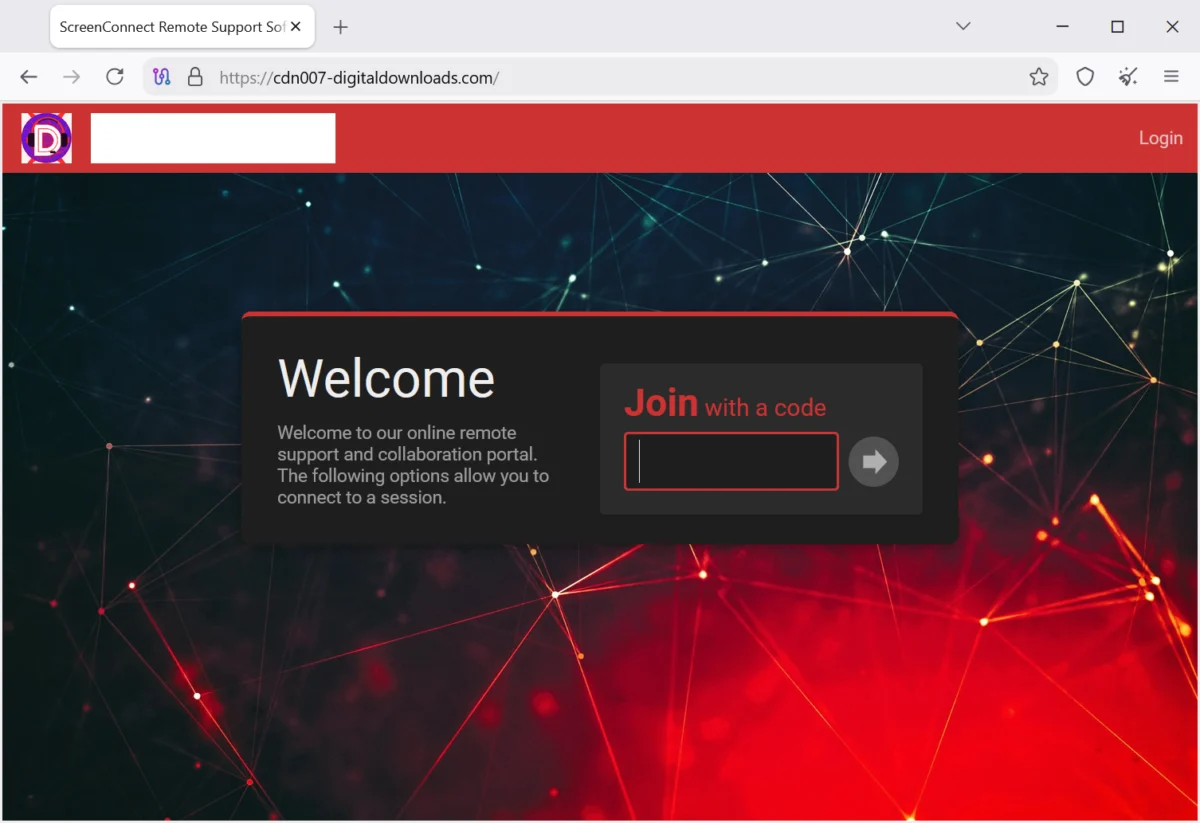
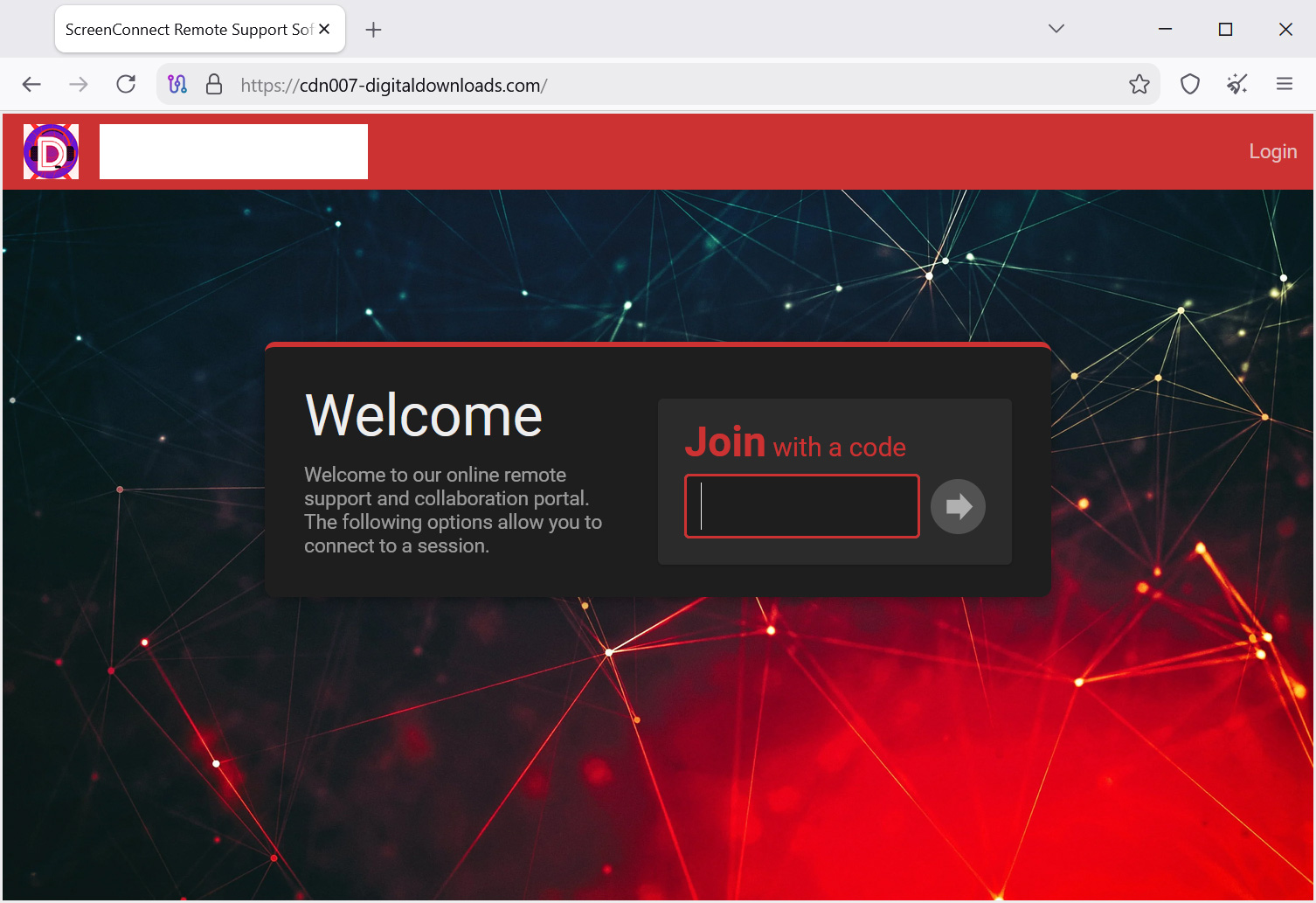
Intriguing connections to earlier malicious activity have also emerged during the investigation. Analysis revealed a malicious batch script, SSA-2026-STATEMENT-15518787.bat, which surfaced months prior to the current campaign’s disclosure. This script, first uploaded to VirusTotal in July 2026, references one of the rogue ScreenConnect client IDs now associated with the active attacks. Impersonating a Social Security Administration statement, the batch file is designed to establish persistence on compromised systems by adding Microsoft Defender exclusions and creating entries in the Windows Startup folder and Run registry key. It then attempts to contact amexsafekeyupdate.com to download and execute additional installers. VirusTotal sandbox analysis of this script revealed downloads of ScreenConnect MSI installers from cdn007-digitaldownloads[.]com and cyberrexdesign.screenconnect[.]com, with digitaldownloads[.]com explicitly listed as a potential IOC in the current campaign. The script’s subsequent actions include using PowerShell to search for the specific rogue ScreenConnect client ID (ed630cc2c873b091) and, upon successful identification, notifying the attackers via Telegram. While the July activity, with its phishing-oriented filename, suggests a different initial distribution vector, the shared rogue ScreenConnect identifier strongly implies a potential link, possibly indicating a precursor or a related operational facet of the same overarching threat actor group. The precise relationship between these earlier activities and the current widespread MSP compromises remains a subject of ongoing forensic analysis.
The targeting of MSPs represents a strategic shift by threat actors, recognizing that compromising a single MSP can grant access to an extensive network of client organizations. This ‘supply chain attack’ methodology offers a force multiplier for attackers, allowing them to bypass direct defenses of numerous downstream entities by exploiting a trusted vendor. MSPs, by their very nature, possess elevated privileges and extensive access across their clients’ IT environments, making them incredibly attractive and high-value targets. The ripple effect of such breaches can be catastrophic, leading to widespread data theft, deployment of ransomware, or disruption of critical services across multiple sectors.
The broader implications for the cybersecurity landscape are significant. This incident underscores the urgent need for enhanced security hygiene not just within individual enterprises but throughout the entire digital supply chain. It highlights the critical importance of rigorous third-party risk management, continuous monitoring of privileged access, and the implementation of robust incident response plans that account for sophisticated supply chain compromise scenarios. Trust, a cornerstone of the MSP-client relationship, is severely tested during such events, necessitating transparent communication and demonstrable commitment to security best practices.
Moving forward, both MSPs and their clientele must adopt a heightened state of vigilance. Proactive measures are paramount, including the mandatory enforcement of multi-factor authentication for all administrative accounts, regular security audits of remote access platforms, network segmentation to limit lateral movement, and continuous employee training on phishing awareness. Implementing advanced endpoint detection and response (EDR) solutions and engaging in proactive threat hunting activities can help identify and neutralize threats that bypass initial defenses. Furthermore, robust backup and disaster recovery strategies are essential to mitigate the impact of successful breaches. The evolving threat landscape demands a collective and adaptive approach to security, recognizing that the weakest link in the supply chain can become the entry point for widespread compromise.
In conclusion, the active ScreenConnect attacks targeting MSPs represent a critical and evolving cybersecurity threat. The strategic exploitation of trusted remote access platforms to gain access to a multitude of client networks demonstrates a dangerous escalation in threat actor tactics. The immediate priority remains detection, containment, and eradication of the current threats, while the long-term imperative involves a fundamental re-evaluation of supply chain security, privileged access management, and incident readiness across the entire digital ecosystem. The ongoing investigation and the collaboration between security researchers and platform vendors are vital to understanding the full scope of this campaign and developing comprehensive defenses against future, similarly sophisticated attacks.




 Lisa Mariana

 Aura Kasih