
 Safa Marwah

A prominent French cooperative banking group, Crédit Mutuel Arkéa, has become the victim of a significant cyberattack that facilitated unauthorized financial transfers totaling an estimated €118 million, approximately $133 million. The complex intrusion reportedly exploited vulnerabilities within a third-party service provider’s infrastructure, allowing perpetrators to manipulate the bank’s internal accounts for illicit transactions before rapidly converting the stolen capital into stablecoins across various cryptocurrency exchanges. This incident underscores the escalating threat of supply chain attacks targeting critical financial infrastructure and highlights the agility of cybercriminals in leveraging digital currencies for rapid money laundering.
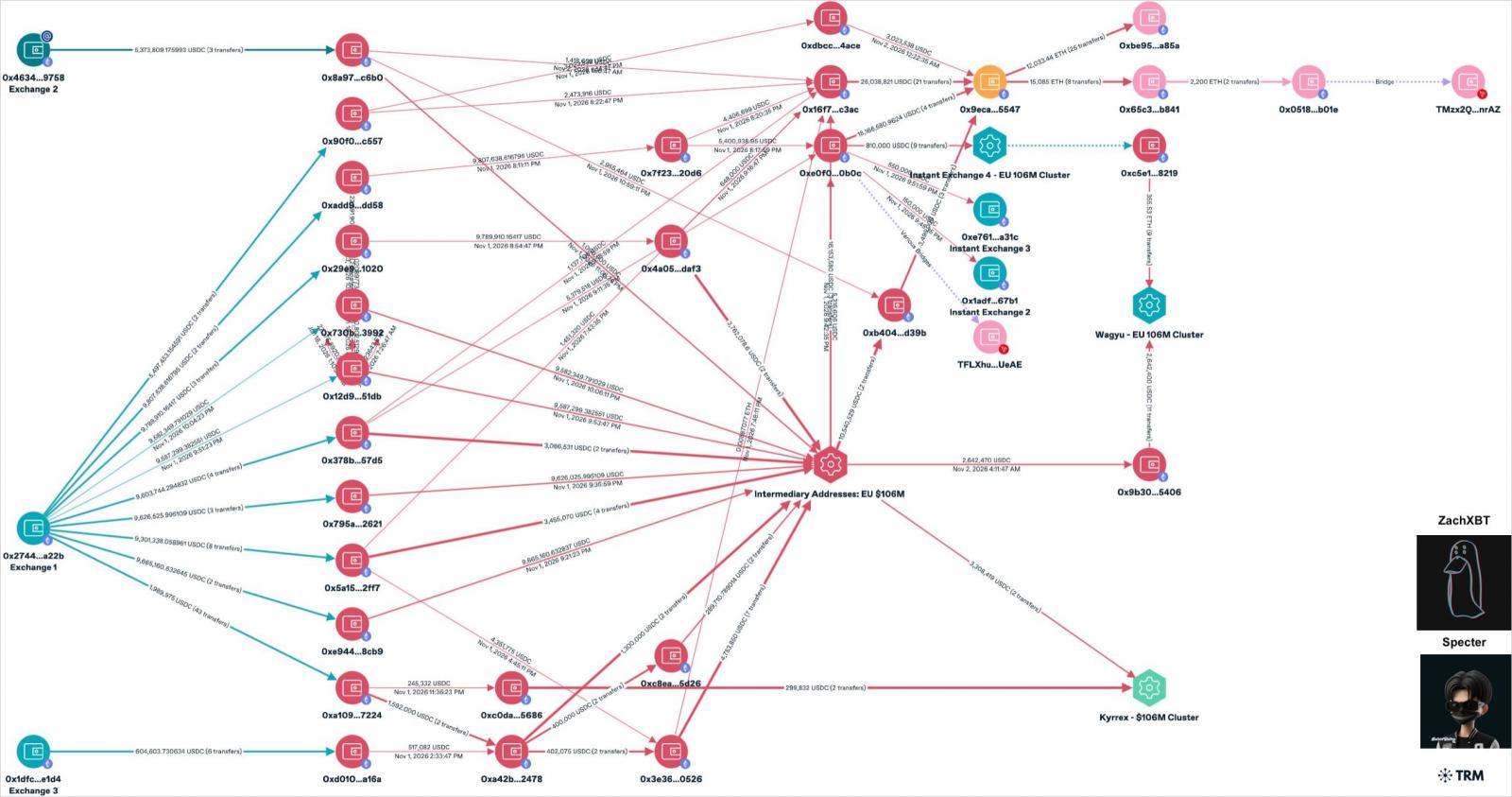
The precise chronology and methodology of the breach reveal a meticulously planned operation. Initial intelligence regarding large-scale unauthorized withdrawals from centralized exchange accounts began circulating on November 1st, preceding any official disclosure. This early alert, disseminated by independent blockchain investigators, indicated a substantial outflow of funds, specifically in USDC and USDT stablecoins. The rapid pace of the illicit activity was particularly alarming, with reports suggesting that a significant portion of the stolen funds, estimated at $30 million, had already been laundered through various channels by November 3rd, potentially hindering law enforcement’s ability to freeze assets.

Crédit Mutuel Arkéa, a financial behemoth boasting over 5.8 million members and assets exceeding €211.5 billion, formally acknowledged the cyber intrusion on November 4th. The institution moved swiftly to reassure its clientele, affirming that the security incident had been contained and was under control, with operations progressively stabilizing. Crucially, the bank emphasized that customer assets remained entirely unaffected by the breach, and the primary consequence for clients was a temporary delay in the execution of certain transfer transactions. This distinction, between the compromise of institutional funds versus individual accounts, is vital for maintaining public trust following such a high-profile attack.
Further details provided by Crédit Mutuel Arkéa clarified the vectors of the attack. The perpetrators gained unauthorized access to the bank’s network not through a direct breach of its primary systems, but rather indirectly through a platform operated by one of its service providers. While specific details of the compromised service provider were not disclosed, the bank explicitly ruled out Fortuneo, one of its well-known subsidiaries, as the entry point. This confirms a classic supply chain attack scenario, where a less secure link in the operational chain serves as a gateway to the primary target. Once inside, the attackers exploited the bank’s own operational accounts to initiate a series of fraudulent transfers to other banking entities, a critical step before the conversion into untraceable digital assets.
The conversion of the substantial sum into stablecoins like USDC and USDT is a hallmark of sophisticated financial cybercrime. Stablecoins, cryptocurrencies pegged to a stable asset like the U.S. dollar, offer a degree of price stability while retaining the anonymity and speed of traditional cryptocurrencies. This makes them an attractive vehicle for illicit money movement, allowing criminals to rapidly move funds across borders and through multiple wallets, obfuscating their tracks and making recovery exceedingly difficult. The decentralized nature of blockchain technology, while offering transparency in transaction records, simultaneously presents significant challenges for traditional law enforcement agencies accustomed to centralized financial systems.

The incident underscores a pervasive vulnerability within the modern financial ecosystem: the intricate web of third-party vendors and service providers. Financial institutions increasingly rely on a vast array of external partners for everything from IT infrastructure and payment processing to software development and data analytics. While this outsourcing can enhance efficiency and reduce costs, it simultaneously introduces an expanded attack surface. Each third-party vendor represents a potential weak point, and a compromise within a service provider’s environment can cascade, providing attackers with a pathway into the primary institution’s systems. Effective third-party risk management, including rigorous security assessments, contractual clauses mandating robust cybersecurity standards, and continuous monitoring of vendor security postures, is paramount. However, the sheer complexity of these relationships makes comprehensive oversight a daunting task.
From a regulatory perspective, this breach will undoubtedly draw scrutiny. The European Union has been actively fortifying its cybersecurity framework for the financial sector through initiatives like the Digital Operational Resilience Act (DORA) and the revised Network and Information Security Directive (NIS2). DORA, in particular, places significant emphasis on third-party risk management, mandating that financial entities assess and manage the ICT third-party risk more comprehensively. While the full impact of these regulations is still unfolding, incidents such as the Arkéa heist serve as stark reminders of the urgent need for stringent adherence to and proactive implementation of these cybersecurity standards. Regulatory bodies will likely scrutinize Crédit Mutuel Arkéa’s third-party risk assessment protocols and its incident response mechanisms to ensure compliance and identify areas for systemic improvement across the sector.
The bank’s characterization of the event as a "sophisticated attack" and its ruling out of "human error" within its own ranks points to the advanced capabilities of the threat actors involved. Such sophistication typically implies a high level of planning, technical expertise, and potentially significant resources, often associated with organized cybercrime syndicates or even state-sponsored actors. These groups often employ zero-day exploits, advanced persistent threat (APT) tactics, and social engineering at scale to achieve their objectives. The ongoing collaboration between Crédit Mutuel Arkéa, judicial authorities, and law enforcement agencies will be crucial in dissecting the full modus operandi, identifying the origin of the attack, and potentially bringing the perpetrators to justice. The challenges in tracing funds laundered through cryptocurrencies, however, remain a significant hurdle for investigators globally.
For financial institutions broadly, the Crédit Mutuel Arkéa incident offers several critical lessons. Firstly, it reinforces the imperative for a "assume breach" mentality, where organizations operate under the premise that an intrusion is inevitable and focus intensely on detection, containment, and rapid recovery. Secondly, it highlights the need for robust internal network segmentation, limiting lateral movement for attackers even if an initial foothold is gained. Thirdly, continuous threat intelligence sharing within the financial sector is vital. Rapid dissemination of information about emerging attack vectors and methodologies can provide a crucial early warning system for other institutions. Lastly, proactive customer education on phishing and social engineering remains a perpetual necessity, especially as attackers often capitalize on news of such incidents to launch opportunistic scams. The bank’s warning of increased phishing risk post-incident is a direct acknowledgment of this secondary threat.
The future outlook for cybersecurity in the financial sector is one of perpetual escalation. As financial institutions invest more in advanced defenses, threat actors continue to innovate, seeking new vulnerabilities and refining their attack methodologies. The increasing convergence of traditional banking with digital assets and blockchain technology, while offering new opportunities, also introduces novel risks and complexities. Regulators worldwide are grappling with how to effectively oversee and secure this evolving landscape, particularly concerning the use of cryptocurrencies for illicit financial activities. International cooperation between law enforcement, financial intelligence units, and cybersecurity agencies will become even more critical in dismantling cross-border cybercrime syndicates and recovering stolen assets.
In conclusion, the sophisticated cyber heist against Crédit Mutuel Arkéa serves as a sobering reminder of the persistent and evolving threat landscape facing global financial institutions. The incident underscores the critical importance of holistic cybersecurity strategies that extend beyond an organization’s immediate perimeter to encompass its entire supply chain. While Crédit Mutuel Arkéa successfully protected customer assets and swiftly moved to contain the breach, the significant financial loss and operational disruption highlight the immense costs associated with such attacks. As the financial sector continues its digital transformation, continuous vigilance, proactive defense, and robust collaboration will be indispensable in safeguarding the integrity and security of the global financial system against an increasingly formidable adversary.




 Ayu Aulia
 Lisa Mariana

 Aura Kasih