
 Ayu Aulia
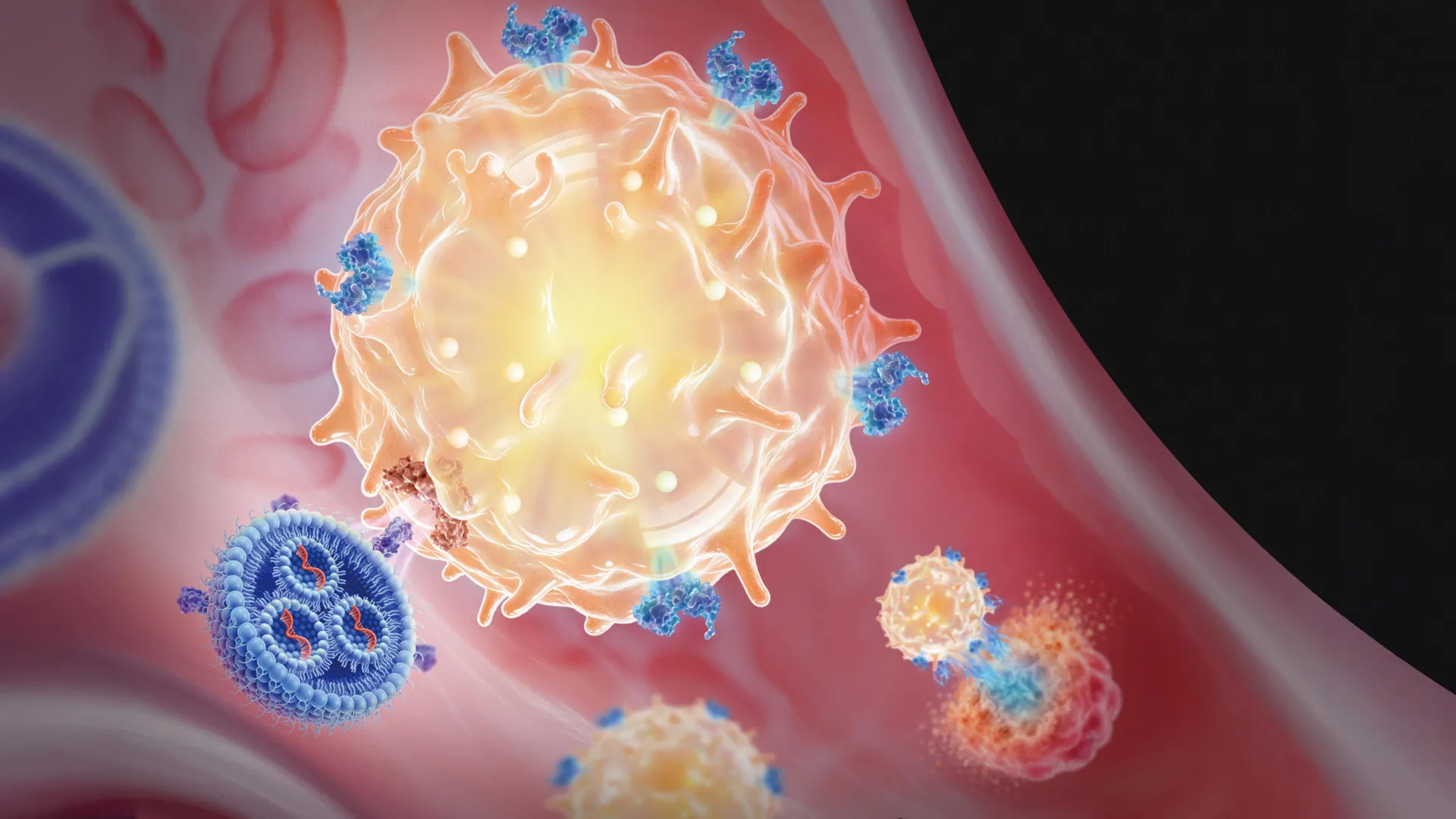
A groundbreaking scientific advance from researchers at the Massachusetts Institute of Technology heralds a new era in precision medicine, demonstrating a novel technique that can genetically re-engineer a patient’s own immune cells directly within the body to effectively combat malignancies and autoimmune conditions, promising to dramatically streamline and democratize access to advanced cellular therapies.
For over a decade, the landscape of cancer treatment has been profoundly altered by the advent of chimeric antigen receptor (CAR) T-cell therapies. These sophisticated treatments involve extracting a patient’s T-cells, genetically modifying them in a laboratory to express specialized receptors that recognize specific cancer markers, expanding these modified cells, and then reinfusing them into the patient. The engineered CAR T-cells then seek out and destroy cancer cells with remarkable efficacy, particularly against certain blood cancers such as B-cell lymphomas, leukemias, and multiple myeloma. This ex-vivo (outside the body) approach, while life-saving for many, is notoriously complex, time-consuming, and exceptionally expensive. The intricate manufacturing process necessitates highly specialized facilities, meticulous quality control, lengthy production cycles that can span weeks, and a logistical chain to transport biological materials and finished products, collectively contributing to significant patient wait times and treatment costs often exceeding half a million dollars per dose.
A critical limitation of CAR T-cell therapy arises when targeting T-cell related cancers or autoimmune diseases where T-cells are the primary aggressors. If CAR T-cells are designed to attack other T-cells, a phenomenon known as "fratricide" can occur, where the engineered T-cells mistakenly target and destroy each other, severely compromising the treatment’s effectiveness and safety. This inherent challenge has spurred extensive research into alternative immune cell types that could be engineered to overcome these obstacles.
The Emergence of Natural Killer Cells as a Therapeutic Powerhouse
Natural killer (NK) cells represent a distinct and highly promising subset of the immune system’s innate arm. Unlike T-cells, NK cells possess an intrinsic ability to identify and eliminate stressed or abnormal cells, including cancer cells and virally infected cells, without prior sensitization. Their inherent targeting mechanisms make them attractive candidates for therapeutic engineering. Crucially, because NK cells are distinct from T-cells, engineering CAR receptors onto NK cells to target harmful T-cells (as seen in T-cell lymphomas or T-cell mediated autoimmune diseases like autoimmune hepatitis) circumvents the fratricide problem that plagues CAR T-cell approaches in such scenarios. This allows for a broader therapeutic window for NK cell-based interventions.
However, the conventional development of CAR NK cell therapies still largely mirrors the ex-vivo manufacturing challenges of CAR T-cells. The process typically involves isolating NK cells, genetically modifying them in a lab, expanding them to therapeutic numbers, and then reintroducing them into the patient. While potentially offering a safer profile with fewer instances of severe side effects like cytokine release syndrome or graft-versus-host disease compared to CAR T-cells, the logistical and economic hurdles remained substantial.
In-Vivo Reprogramming: A Paradigm Shift
The recent breakthrough from the MIT team offers a revolutionary solution to these manufacturing complexities by shifting the entire engineering process from the laboratory bench directly into the patient’s body. The core of this innovation lies in the development of sophisticated lipid nanoparticles (LNPs) designed to deliver genetic instructions, in the form of messenger RNA (mRNA), precisely to natural killer cells.
These specially formulated LNPs are microscopic spheres composed of fatty molecules, carefully constructed to encapsulate and protect the delicate mRNA payload. The mRNA carries the blueprint for a chimeric antigen receptor (CAR) – the very same type of receptor used in ex-vivo CAR therapies. Upon successful delivery, this mRNA instructs the NK cells to synthesize the CAR proteins on their surface, thereby endowing them with the ability to specifically recognize and eliminate targeted diseased cells.
A critical component of the LNP design is the inclusion of antibody fragments on their exterior. These fragments act as molecular homing beacons, specifically recognizing and binding to unique receptors found on the surface of NK cells. This targeted delivery mechanism ensures that the genetic instructions are preferentially ferried to the intended immune cell population, minimizing off-target effects and maximizing the efficiency of NK cell reprogramming. Once inside the NK cell, the mRNA is translated into the specified CAR protein, effectively transforming the cell into a precision cancer or autoimmune fighter without ever leaving the body.
The flexibility of this LNP-mRNA platform is a significant advantage. The genetic instructions can be tailored to produce CAR receptors that recognize various antigens, enabling the system to target a wide array of diseases. For instance, the researchers demonstrated successful targeting of CD19, a protein prevalent on B-cells (relevant for B-cell lymphomas), and CD3, a marker found on T-cells (crucial for T-cell malignancies and autoimmune T-cell attacks). This adaptability underscores the broad therapeutic potential of this in-vivo engineering approach.
Preclinical Validation: Robust Efficacy in Murine Models
The initial preclinical studies conducted in mice yielded highly encouraging results, providing compelling evidence for the efficacy and feasibility of this in-vivo reprogramming strategy.
The researchers first assessed the efficiency of NK cell modification following nanoparticle injection. They observed that approximately 80% of the targeted NK cells successfully integrated the genetic instructions and began expressing the desired CAR receptor. This high transfection rate is crucial for achieving a therapeutic effect, demonstrating the precision and potency of the LNP delivery system.
Next, the team investigated the cancer-fighting capabilities of these in-vivo engineered CAR NK cells. In models of aggressive melanoma, a notoriously difficult-to-treat skin cancer, three out of five animals that received the nanoparticles designed to arm NK cells against the cancer achieved complete and lasting remission. This outcome is particularly significant, highlighting the potent anti-tumor activity generated by the locally reprogrammed immune cells.
Further experiments were conducted using humanized mice models of T-cell lymphoma. These specialized mice are engrafted with human immune cells, allowing for a more accurate assessment of how the therapy might perform in humans. In this model, the in-vivo engineered CAR NK cells demonstrated substantial tumor destruction. Following a series of five nanoparticle injections, the T-cell lymphomas were completely eradicated, mirroring the impressive results seen in the melanoma model.
Crucially, the anti-tumor efficacy achieved through this in-vivo method was found to be comparable to that observed with CAR NK cells manufactured through the more traditional, laborious ex-vivo process. This direct comparison provides strong evidence that generating CAR NK cells directly inside the body can deliver equivalent therapeutic benefits while bypassing the substantial logistical and financial burdens associated with conventional cell therapies.
A New Frontier for Autoimmune Disease
Beyond oncology, the researchers explored the potential of their technology in addressing autoimmune disorders, where the immune system erroneously attacks healthy tissues. They focused on autoimmune hepatitis, a severe condition characterized by autoreactive T-cells targeting and damaging liver cells. By designing nanoparticles to instruct NK cells to specifically recognize and eliminate these harmful T-cells, the team aimed to interrupt the pathological autoimmune response.
The results were remarkable. A single injection of the targeted nanoparticles led to the successful elimination of the autoreactive T-cells in the affected mice. Even more profoundly, the damaged liver tissue in these animals subsequently demonstrated significant healing and recovery following the removal of the aberrant immune cells. This powerful demonstration of therapeutic potential with a single, non-invasive intervention opens up vast possibilities for treating a spectrum of autoimmune conditions.
Implications and Future Trajectory
The implications of this MIT research are profound, potentially reshaping the landscape of personalized medicine for both cancer and autoimmune diseases. By transforming a complex, multi-week laboratory manufacturing process into a direct, in-vivo delivery of genetic instructions via nanoparticles, the technology could dramatically enhance the accessibility, affordability, and scalability of advanced immune cell therapies. This shift could democratize access to treatments currently available only at highly specialized medical centers, making them deployable in a broader range of clinical settings.
The potential applications extend far beyond the diseases directly tested in these preclinical studies. The researchers envision targeting other T-cell mediated autoimmune conditions such as multiple sclerosis and rheumatoid arthritis, where dysfunctional T-cells play a central role in disease pathogenesis. The ability to precisely reprogram a patient’s own NK cells to neutralize these rogue immune components offers a tantalizing new therapeutic avenue.
While the findings are exceptionally promising, it is imperative to acknowledge that these studies were conducted in animal models. The transition from preclinical murine data to human clinical trials involves rigorous scrutiny of safety, long-term efficacy, potential immune responses to the nanoparticles themselves, and the stability of the CAR expression in human NK cells. Regulatory hurdles will also need to be navigated meticulously.
Nevertheless, this breakthrough represents a significant leap forward in the field of gene and cell therapy. By simplifying the creation of engineered immune cells, this in-vivo approach offers a compelling vision for the future of medicine – one where advanced, personalized treatments are not just effective, but also widely accessible, heralding a new era of therapeutic intervention against some of humanity’s most challenging diseases.



 Lisa Mariana

 Aura Kasih

 Safa Marwah