
 Lisa Mariana
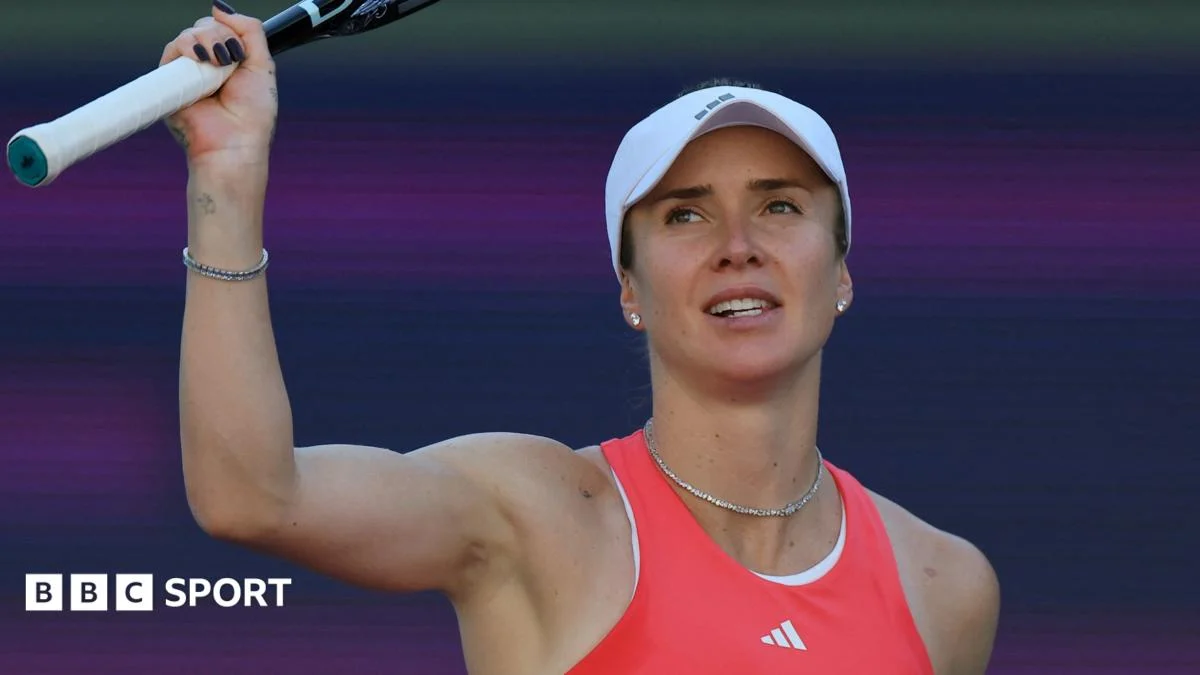
Elina Svitolina, the tenacious Ukrainian competitor, staged a remarkable resurgence at the WTA Finals, converting a challenging initial setback into a crucial three-set triumph over Karolina Muchova, a victory ignited by her own self-directed frustration and instrumental in maintaining her semi-final aspirations.
The WTA Finals, an exclusive invitation-only tournament, represents the pinnacle of the professional tennis season, bringing together the eight most accomplished singles players and doubles teams of the year. Held annually, this championship offers not only substantial prize money and ranking points but also serves as a definitive statement of a player’s dominance and resilience over a grueling season. Its round-robin format introduces a unique strategic dimension, where every set and even every game can influence qualification for the knockout stages, demanding consistent high-level performance and acute tactical awareness from the sport’s elite.
Elina Svitolina’s qualification for this prestigious event marked a significant milestone in her extraordinary return to the professional tour following maternity leave. Her journey back to the sport’s highest echelons has been nothing short of inspiring, characterized by a series of impressive performances throughout the year that underscored her unwavering dedication and exceptional talent. Having previously lifted the WTA Finals trophy in 2019, Svitolina arrived in California with a proven pedigree at this specific event, suggesting an innate understanding of its demands and pressures. Her season-long narrative of comeback and consistent top-tier results provided a rich context for her performance, highlighting her ability to compete with and defeat the world’s best.
Facing her second group stage match, Svitolina was under considerable pressure, having experienced a decisive defeat in her opening encounter against the rising star Mirra Andreeva. This prior loss meant that her match against Karolina Muchova, the formidable Czech and recent Wimbledon finalist, was not merely important but existential for her tournament longevity. Muchova herself has enjoyed a career renaissance, showcasing a diverse skillset characterized by powerful groundstrokes, deft touch, and exceptional athleticism, qualities that had propelled her to significant success, including her deep run at SW19. Her versatile game posed a complex challenge, requiring Svitolina to not only elevate her own play but also to strategically dismantle Muchova’s varied approach.
The initial stages of the contest mirrored Svitolina’s struggles from her opening group match. The first set saw her grappling for rhythm, committing a higher-than-desired number of unforced errors, and appearing somewhat tentative in her shot selection. Muchova, seizing the initiative, capitalized on these early inconsistencies, displaying the assertive, all-court game that has become her hallmark. The momentum appeared firmly in the Czech’s favor as she comfortably secured the first set, leaving Svitolina in a precarious position, both on the scoreboard and, seemingly, in terms of her confidence.
A pivotal moment occurred after the conclusion of the first set when Svitolina requested a medical timeout for a right hip injury. While ostensibly for physical treatment, such breaks in elite tennis often serve a dual purpose, offering a crucial window for mental regrouping and strategic recalibration. For a player of Svitolina’s experience, this pause likely transcended mere physical attention, providing an opportunity to reset her emotional state, reassess her tactical approach, and mentally prepare for the uphill battle ahead. The immediate challenge following this break underscored its criticality: Svitolina faced an early break point in the second set, a moment that could have decisively swung the match further out of her reach. Saving this point, however, proved to be a psychological turning point, signaling a shift in her resolve.
It was during this critical juncture that Svitolina’s candid self-assessment, admitting she "got a bit angry at myself," provided profound insight into the psychology of elite athletic performance. The transmutation of negative emotion, such as frustration or anger, into a constructive force is a hallmark of mentally tough competitors. For Svitolina, this anger was not destructive; instead, it was channeled with precision, directed "towards the ball," sharpening her focus and intensifying her aggression. This controlled release of emotion allowed her to shed the tentativeness that plagued her early play and embrace a more assertive, confident demeanor. The delicate balance between allowing frustration to derail performance and harnessing it as a catalyst for elevated play is a fine line that only seasoned athletes can consistently navigate, and Svitolina demonstrated this mastery.
Following this emotional and strategic recalibration, Svitolina’s game underwent a noticeable transformation. Her depth of shot improved significantly, pushing Muchova further behind the baseline and limiting her angles. Crucially, Svitolina began to relentlessly target Muchova’s forehand, a wing that, while powerful, proved to be a consistent source of unforced errors for the Czech as the match progressed. Svitolina’s defensive prowess, already a cornerstone of her game, reached new heights, forcing Muchova into more difficult shot selections and extending rallies until errors inevitably crept into the Czech’s play. The statistics vividly illustrated this shift: Muchova accumulated a staggering 39 unforced errors throughout the match, a substantial majority originating from her forehand, indicating Svitolina’s tactical success in exploiting this vulnerability.
Conversely, Muchova’s performance progressively deteriorated under the relentless pressure. Her unforced error count mounted, and critical moments were punctuated by untimely double faults – eight in total – betraying a growing mental fatigue and a struggle to maintain composure. Giving up an early break in the third set proved insurmountable for Muchova, who found herself unable to stem the tide of Svitolina’s renewed intensity and strategic precision. The Ukrainian’s unwavering consistency and defensive brilliance effectively ground down her opponent, showcasing a masterclass in attrition tennis. The final point, secured with conviction, saw Svitolina tip her head back and unleash a triumphant roar, a powerful expression of relief and vindication after navigating such a challenging encounter.
This victory was not just a mere match win; it represented Svitolina’s ninth triumph over a top-10 player this year, a testament to her consistent ability to compete at the highest level. More specifically, it marked her first victory at the WTA Finals since her championship-winning run in 2019, reinforcing her capacity to perform under the unique pressures of the season-ending tournament. The implications for her tournament standing were immediate and complex. While the win kept her semi-final hopes alive, the round-robin format dictated that her qualification would remain contingent upon the outcome of other matches within her group, specifically the impending clash between Aryna Sabalenka and Mirra Andreeva. This scenario introduces an additional layer of psychological challenge, as players must maintain readiness and focus while their fate rests, in part, on external results.
Beyond the immediate drama of the WTA Finals, the broader tennis landscape continues to unfold with compelling narratives. In concurrent ATP Tour action, Britain’s Cameron Norrie experienced a setback at the Stockholm Open, falling to world number 10 Taylor Fritz in straight sets. Norrie’s season, characterized by flashes of brilliance interspersed with periods of inconsistency, underscores the immense challenge of consistently competing against the sport’s top-tier talent. Meanwhile, the Stockholm Open also provided a poignant moment of resilience with Denmark’s Holger Rune reaching the quarter-finals. This achievement was particularly significant given that Rune was returning to the tournament a year after suffering a debilitating Achilles injury at the very same event. His arduous 12-month recovery and subsequent return to the ATP Tour in October highlight the immense physical and mental fortitude required to overcome significant injuries in professional sports. Rune’s ability to swiftly regain competitive form, culminating in his victory over Miomir Kecmanovic, serves as a powerful testament to his unwavering determination and prodigious talent, signaling his potential to once again challenge at the sport’s highest levels.
In conclusion, Elina Svitolina’s victory over Karolina Muchova at the WTA Finals stands as a compelling demonstration of mental fortitude and strategic adaptability under duress. Her ability to channel frustration into a constructive force, coupled with precise tactical adjustments, allowed her to reverse an early deficit and secure a vital win. This performance not only keeps her semi-final aspirations alive but also reaffirms her status as one of the most resilient and experienced competitors on the women’s tour. As the WTA Finals progresses, Svitolina’s journey will serve as a powerful reminder that success at the elite level often hinges not just on physical prowess, but on the unwavering strength of the mind and the capacity to convert adversity into advantage. The intricate interplay of mental resolve, tactical acumen, and the high stakes of a season-ending championship continues to define the compelling narratives within professional tennis.




 Aura Kasih