
 Lisa Mariana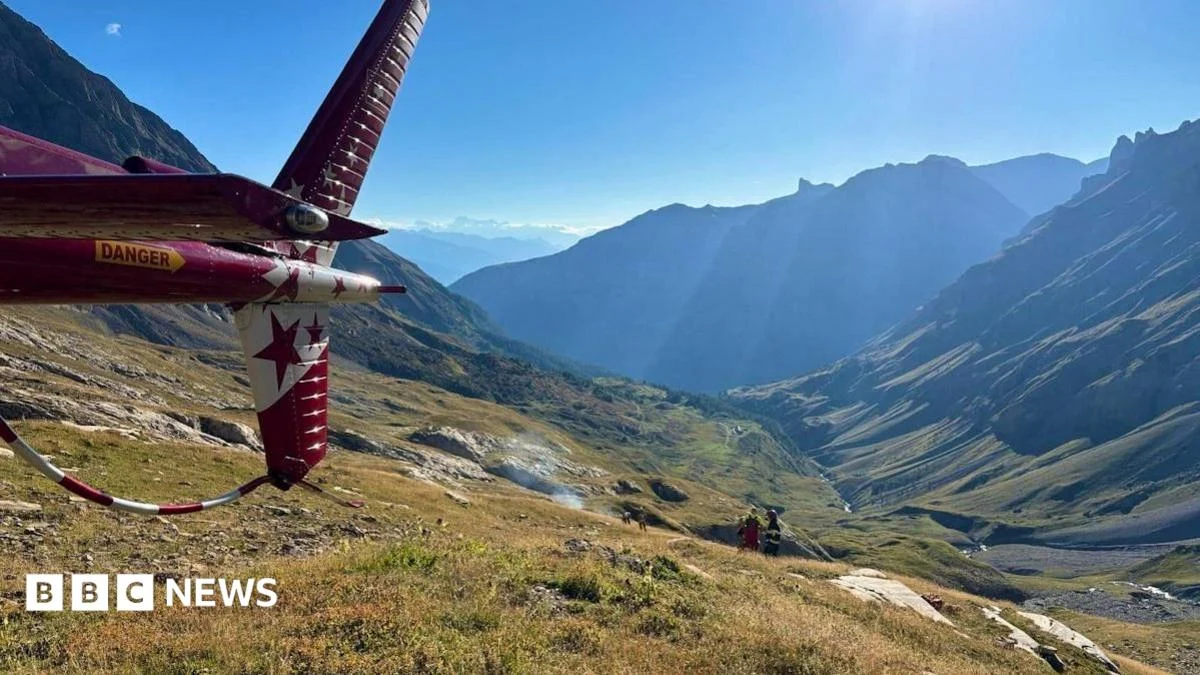
A devastating aviation incident in the rugged Swiss Alps has claimed the lives of three individuals, two of whom have been confirmed as British citizens, following the calamitous descent of a light aircraft in the southern canton of Valais. The single-engine Cirrus SR22T, having departed from Sion aerodrome, encountered high-altitude topography with fatal consequences approximately ten minutes into its flight on a recent Tuesday, impacting a mountain slope in the vicinity of Leukerbad. This profound tragedy has initiated a comprehensive, multi-agency investigation to ascertain the precise sequence of events leading to the crash.
The ill-fated flight originated from Sion Airport, a significant regional hub nestled in the Rhône Valley, before embarking on its perilous journey. Initial reports indicate that shortly after its ascent, the aircraft, for reasons yet to be determined, deviated from its intended flight path and collided with the challenging alpine terrain. Eyewitness accounts from the ground described a scene of visible combustion and a subsequent smoke plume, underscoring the severity of the impact. The immediate aftermath prompted a rapid and extensive emergency response, mobilizing specialized teams from the Valais Rescue Organisation, local police forces, and fire departments, supported by three aerial assets for search and recovery operations in the difficult mountainous environment.
In the wake of such a severe incident, a rigorous investigative process is imperative. The Swiss Transportation Safety Board (STSB) has promptly launched a comprehensive technical inquiry, a standard procedure for all aviation accidents within Swiss territory. Concurrently, the Valais Police and the Office of the Attorney General have initiated a parallel criminal investigation. These two distinct but complementary inquiries aim to meticulously reconstruct the events, analyze all contributing factors, and ultimately provide definitive answers regarding the cause of the disaster. Formal identification procedures for the victims are currently underway, a process that often requires meticulous forensic work, particularly in high-impact aviation events. The Foreign, Commonwealth and Development Office (FCDO) has acknowledged its involvement, confirming that consular assistance is being extended to the grieving families of the two British nationals, maintaining close liaison with the pertinent Swiss authorities during this exceptionally difficult period.
The inherent risks associated with general aviation, particularly when operating in complex topographical environments such as the Alps, are well-documented. Light aircraft operations, while offering flexibility and access to remote locations, are subject to a unique set of challenges that distinguish them from commercial airline travel. Factors such as weather variability, intricate navigational demands, and the physiological effects of altitude can significantly impact flight safety. The Cirrus SR22T, a popular choice among private pilots for its performance and advanced avionics, is equipped with a Cirrus Airframe Parachute System (CAPS), a ballistic parachute designed to bring the entire aircraft and its occupants safely to the ground in an emergency. The fact that this system was either not deployed or proved ineffective in this specific scenario will undoubtedly form a critical component of the STSB’s technical examination.
Mountain flying presents an elevated degree of complexity for aviators, even those with considerable experience. The European Alps, renowned for their breathtaking vistas, simultaneously pose formidable meteorological and navigational hurdles. Pilots must contend with rapid and often unpredictable weather changes, including sudden shifts in wind patterns, the formation of localized cloud banks, and the potential for severe turbulence caused by orographic lift and lee waves. These atmospheric phenomena can create hazardous conditions, drastically reducing visibility and subjecting aircraft to extreme stresses. Furthermore, navigation in high-altitude, rugged terrain requires exceptional skill in terrain awareness, precise altimeter settings to avoid controlled flight into terrain (CFIT), and an acute understanding of the aircraft’s performance limitations at varying altitudes and temperatures. The thin air at higher elevations reduces engine power and propeller efficiency, impacting climb rates and overall maneuverability, thereby necessitating meticulous flight planning and adherence to conservative operational parameters.
Switzerland, despite its challenging geography, maintains an exemplary record in aviation safety, underpinned by stringent regulations and a robust oversight framework managed by institutions such as the Federal Office of Civil Aviation (FOCA) and Skyguide, the air navigation service provider. All flights, whether commercial or general aviation, are subject to comprehensive regulations designed to minimize risk. However, even within such a rigorous system, incidents can occur, often highlighting the confluence of multiple factors ranging from meteorological conditions and technical malfunctions to human factors and operational decisions. The STSB’s investigation will meticulously analyze all available data, including flight plans, air traffic control communications, meteorological reports, maintenance records of the aircraft, and the pilot’s qualifications and experience. The wreckage itself will be subjected to forensic examination for any signs of mechanical failure, material fatigue, or other anomalies. The ultimate objective is not merely to assign blame but to identify systemic issues or specific contributing factors that can inform future safety recommendations and prevent similar occurrences.
The implications of this tragic event extend beyond the immediate loss of life. For the general aviation community, it serves as a stark reminder of the inherent dangers of operating in complex environments and the paramount importance of continuous training, thorough pre-flight planning, and adherence to established safety protocols. For the families of the deceased, the incident represents an unimaginable personal tragedy, compounded by the international dimension of the accident. The FCDO’s involvement underscores the intricate process of international consular support, which includes assisting with victim identification, facilitating communication with foreign authorities, providing guidance on legal procedures, and ultimately aiding in the repatriation of remains, all while navigating sensitive diplomatic channels and respecting local legal frameworks.
Looking ahead, the investigation is likely to be a protracted process, potentially spanning several months, given the complexity of aviation accident analysis. Preliminary findings may be released sooner, but a comprehensive final report, detailing all contributing factors and issuing any relevant safety recommendations, will require extensive data collection and analysis. Such reports are invaluable for informing regulatory bodies, aircraft manufacturers, and pilot training organizations, thereby contributing to the ongoing evolution of aviation safety standards globally. The ultimate goal of these inquiries is to transform tragedy into knowledge, ensuring that lessons learned from such devastating events are integrated into future practices to enhance safety for all those who take to the skies. The focus remains on understanding the full circumstances of this alpine catastrophe and providing clarity to those profoundly affected by the loss of life in the Valais mountains.




 Aura Kasih
 Ayu Aulia

 Safa Marwah