
 Lisa Mariana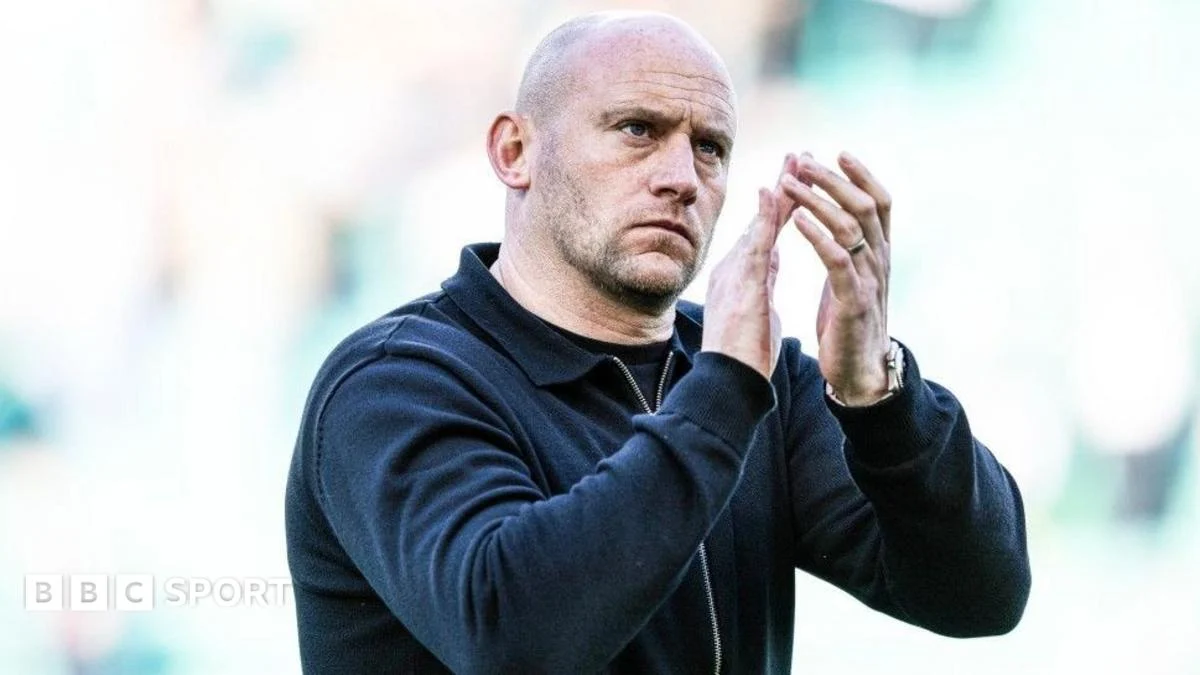
The recent parting of ways between David Gray and Hibernian Football Club marks not a triumphant conclusion, but a somber capitulation, reflecting a deeper malaise within the Easter Road institution that extends far beyond a single managerial tenure. Gray’s exit on Wednesday evening, following a comprehensive career spanning player, club icon, coach, interim manager, and ultimately, the first-team manager for the past two and a half seasons, was met not with animosity, but with a collective sigh of weary relief from a fanbase grappling with persistent underperformance. The nature of his departure, tinged with respect for his legendary status yet underscored by an undeniable necessity for change, encapsulates the complex emotional landscape surrounding Hibs’ current predicament.
Gray’s journey at Hibernian is a narrative deeply interwoven with the club’s modern history. As a player, his indelible goal in the 2016 Scottish Cup final cemented his place in club folklore, breaking a 114-year jinx and delivering one of the most significant triumphs in Hibs’ existence. This achievement bestowed upon him an almost mythical status, earning him the moniker "Sir David Gray" among the faithful. Transitioning from the pitch to the coaching staff, and eventually ascending to the top managerial role, Gray embodied continuity and a deep understanding of the club’s ethos. His ascent, however, placed him in a uniquely challenging position, where his historical reverence sometimes clashed with the harsh realities of contemporary football management. The desire to avoid criticising a club legend created a difficult environment for both Gray and the supporters, leading to a "painful endgame" for all involved.
Unlike many of his recent predecessors—a list including Nick Montgomery, Lee Johnson, and Shaun Maloney, all dismissed with varying degrees of acrimony—Gray’s departure carried a different weight. He was perceived as a figure of unwavering dedication, honesty, and passion, qualities that resonated deeply with the Hibernian support. His candour regarding the team’s struggles, often brutally self-aware, spoke to a genuine commitment to improvement. Yet, even these admirable traits could not ultimately counteract the mounting evidence of systemic issues and a troubling decline in on-field performance.
From a strategic perspective, Gray’s managerial record presents a complex duality. On one hand, he achieved notable milestones. He became the first Hibernian manager since the revered Eddie Turnbull in the early 1970s to guide the club to consecutive European qualifications. This accomplishment alone underscores a period of relative success in an era often characterised by underachievement. Furthermore, Gray holds the distinction of being the only Hibs manager to secure victories at Ibrox in three consecutive seasons, a testament to his team’s capacity for significant away performances. A victory at Celtic Park last season further highlighted this occasional ability to defy expectations against formidable opponents.
However, the counter-narrative of decline is equally stark and ultimately proved decisive. A grim club record of six successive home league defeats, matching a low point last seen in 1920, exposed a profound vulnerability at Easter Road. The financial and sporting implications of twice failing to progress through the European Conference League play-offs were substantial, representing missed opportunities for significant revenue generation and profile enhancement. These failures were particularly galling, described as "self-harming" in their nature, suggesting a lack of resilience or strategic acumen at crucial junctures.
The immediate factors precipitating Gray’s dismissal included a dismal return of six points from six league games, placing Hibernian ninth in the table. A particularly damaging loss to lowly Kilmarnock exacerbated the sense of drift and aimlessness that had begun to permeate the squad. Even an impending League Cup semi-final against fierce rivals Hearts, typically a high-stakes fixture that might buy a manager more time, proved insufficient to avert the inevitable. The tactical approach under Gray was frequently criticised for its lack of aesthetic appeal, with a discernible absence of energy and entertainment becoming a growing concern. The team often appeared "stale" and "rudderless," their moments of brilliance too fleeting to build sustained momentum or galvanise the fanbase.
In contrast, other Scottish Premiership clubs have demonstrated a clear stylistic identity and a burgeoning sense of purpose. Jens Berthel Askou’s impact at Fir Park and his successor Alfred Johansson’s efforts to build upon that foundation, along with Wouter Vrancken’s compelling project at Hearts, illustrate how coherent strategic direction can foster fan engagement and on-field progress. These examples highlight a growing disparity, suggesting that Hibernian supporters increasingly yearn for a similar sense of vibrancy, tactical innovation, and a clear vision for the future. The prevailing sentiment is that Hibs possess a squad with considerable talent, yet one that consistently underperforms. The notion that, if a league table existed for under-performance, Hibernian would be challenging for the top spot, speaks volumes about the disconnect between potential and reality.
A critical aspect of this underperformance extends beyond the manager, implicating the playing squad itself. While a manager and his assistants are often the most immediate casualties of failure, the "largely protected species" of players must shoulder significant accountability. Many within the squad are perceived as weak-willed and unreliable, lacking the mental fortitude and consistency required at this level. The practical impossibility of overhauling an entire dressing room in a single day often necessitates the managerial change as the most expedient, albeit often superficial, solution.
Consequently, Gray’s departure compels a broader introspection among the club’s hierarchy. Sporting Director Malky Mackay, Chairman Ian Gordon, and Chief Executive Dan Barnett – whose low-key presence has sometimes been a point of contention – must all critically evaluate their roles in the club’s current trajectory. The responsibility for identifying and appointing Gray’s successor falls primarily to Gordon, a decision of paramount importance that will be scrutinised intently by a fanbase whose trust in the club’s leadership to make the right call is, by many accounts, precariously low.
Gray’s initial managerial season saw a remarkable turnaround, moving the team from bottom of the league in November to a third-place finish. This achievement, alongside a fifth-place finish in his second season, arguably provided a case for granting him more time. However, the context of Hearts’ resurgence, threatening to challenge for the league title in Gray’s second season, intensified pressure on Hibs to deliver comparable success, a burden that now weighs heavily on any incumbent.
A recurring and ultimately ruinous theme throughout Gray’s tenure was the team’s pervasive capacity to concede late goals, an Achilles’ heel that consistently undermined momentum and shattered hopes of consistency. A statistical analysis reveals a pattern of costly concessions: in one recent season alone, points were dropped against Kilmarnock, Ross County, Hearts, Dundee (twice), and Dundee United (twice) due to goals conceded in the 88th, 90th, 90th, 90th, 86th, 90th, 87th, and 90th minutes. This unfortunate habit extended to European competitions and the previous season, with damaging goals conceded against Midtjylland, Legia Warsaw, Livingston, Dunfermline, Dundee, and Hearts (thrice) in similarly critical late stages of matches. Even in the current season, pivotal goals were shipped in the 85th, 84th, and 90th minutes against Motherwell and Gent, leading to exits from the Conference League. While there were instances where Hibs salvaged points, the ledger of late concessions consistently weighed against them, leaving Gray and his players with a myriad of "what-might-have-beens" and "if onlys."
The persistent inability to hold leads or prevent late collapses points to a deeper systemic flaw within the squad: a missing ingredient of steel, mental resilience, leadership, or perhaps a lack of tactical nous in game management. Despite possessing a roster of decent-to-good players, the collective often failed to exhibit the fortitude required to navigate high-pressure situations. Gray, by all accounts, poured his heart and soul into the role, a manager who "lived and breathed the job," and was visibly "terribly cut up" when plans unravelled. Like many sacked managers, he likely believes he could have steered the team out of its current slump, drawing parallels to his first season’s impressive recovery. However, that opportunity has now been irrevocably withdrawn.
Hibernian, therefore, finds itself back at the drawing board, a state of affairs that has become, ironically, one of its most consistent attributes. The quest for a new manager represents not merely a change of personnel, but a critical juncture for the club to address its deep-seated issues. Meanwhile, David Gray, undoubtedly strengthened by the brutal education of football management, will embark on a new chapter, leaving behind a legacy at Easter Road that is simultaneously iconic and, in its final act, profoundly melancholic. The challenge for Hibernian now is to break free from this cycle of managerial churn and find a path towards sustainable success that honours its rich history without being constrained by it.



 Aura Kasih
 Ayu Aulia

 Safa Marwah