Ayu Aulia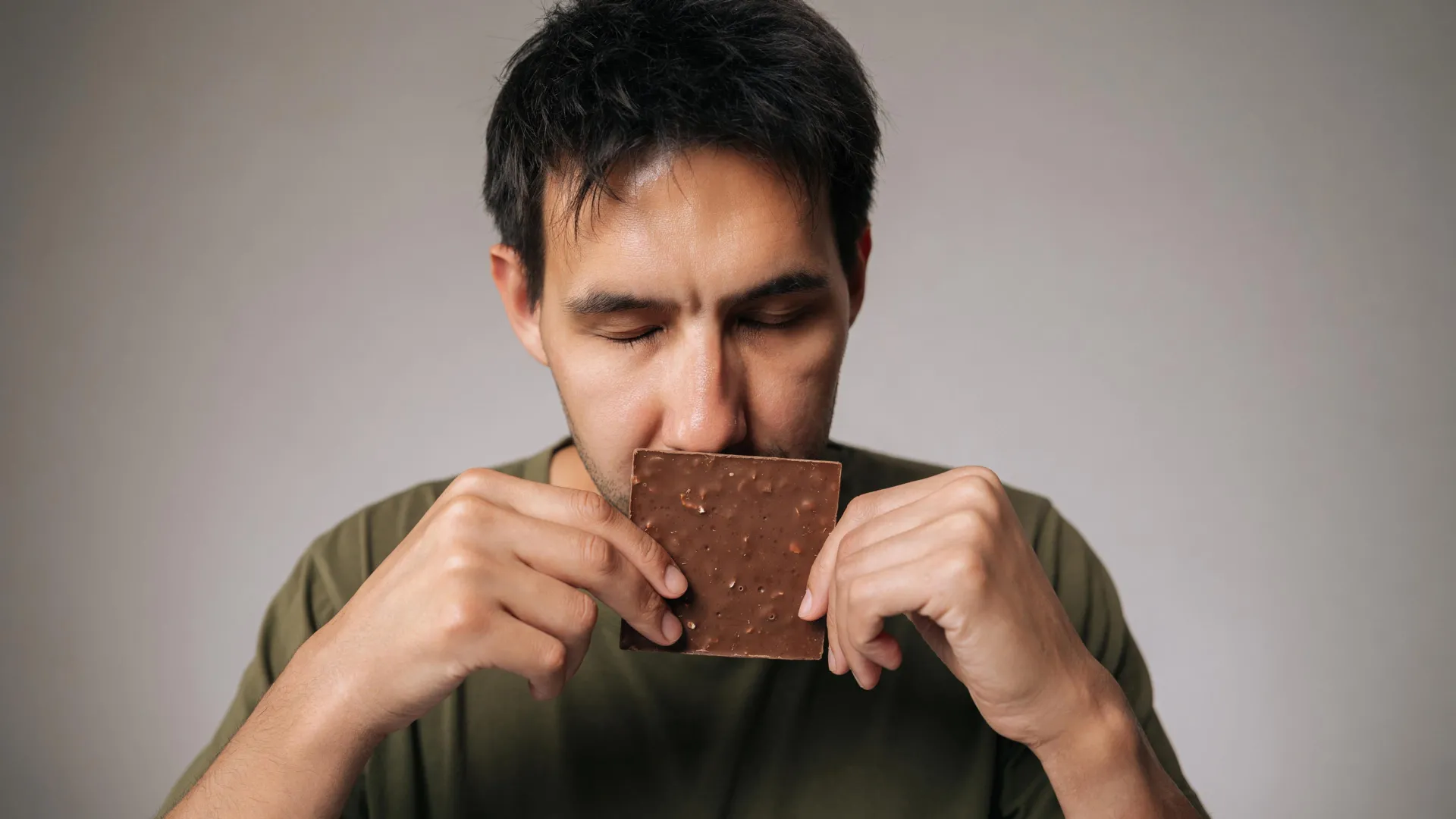
A recent scientific inquiry has uncovered a remarkable connection between the sense of smell and physical endurance, revealing that exposure to specific aromas, particularly that of chocolate, can significantly augment an individual’s capacity for resistance exercise without increasing the subjective perception of effort. This pioneering research suggests that sensory stimuli, traditionally associated with appetite and pleasure, possess an unexpected influence on psychobiological states crucial for athletic performance and recovery.
The investigation, published in a leading physiological journal, meticulously explored the impact of chocolate fragrances on exercise performance and appetite regulation. Dr. Mohamed Nashrudin bin Naharudin, a principal investigator from a distinguished academic institution, highlighted the intriguing discovery: "The deliberate introduction of chocolate aromas to moderately trained men, both prior to and during resistance exercise intervals, resulted in a notable increase in their overall training volume, critically, without any corresponding rise in their perceived exertion levels." This outcome underscores a fascinating psychobiological phenomenon where the body’s physical output can be enhanced through non-pharmacological, sensory interventions, challenging conventional understandings of fatigue and motivation in athletic contexts.
Methodology and Experimental Design
To systematically examine this olfactory-performance nexus, researchers recruited 23 healthy male participants, all within their early to mid-twenties and possessing a moderate level of physical training. The cohort was strategically divided into three distinct experimental groups, each exposed to a specific sensory stimulus. These stimuli included the aroma of a highly concentrated dark chocolate (90% cocoa content), a more palatable milk chocolate (60% cocoa content), or a neutral control of distilled water, which was inherently odorless. The selection of chocolate as the primary olfactory agent was deliberate, leveraging its universal recognition as a powerful food cue imbued with strong reward and satiety associations.
The underlying premise for this exploration stemmed from the established neurobiological pathways connecting olfaction directly to the brain’s appetite and emotion networks. Despite this profound linkage, a noticeable void existed in the scientific literature concerning the intricate, tripartite interaction among smell, appetite, and the tangible capacity for resistance exercise. This study aimed to bridge that gap, providing empirical data on how olfactory inputs might modulate physiological and psychological responses during strenuous physical activity.
Participants adhered to a strict fasting regimen for at least ten hours preceding the exercise sessions, ensuring a baseline state of hunger and minimizing confounding variables related to recent food intake. The exercise protocol involved performing leg extensions, a common resistance exercise designed to isolate and strengthen the quadriceps muscles. This exercise was chosen for its controlled mechanics and reproducibility, allowing for precise measurement of performance metrics.
Before initiating the exercise, participants underwent an assessment of their baseline appetite states, rating their levels of hunger, fullness, desire to eat, and future eating intentions. During the exercise sets, these appetite parameters were re-evaluated after each 30-second exposure to the assigned scent sample, allowing for real-time monitoring of olfactory-induced shifts in appetite perception. Performance in leg extensions was rigorously quantified both before and throughout the training session, providing a comprehensive dataset on the impact of the olfactory stimuli.
Divergent Effects of Dark and Milk Chocolate Aromas
The experimental findings revealed a nuanced and differential impact of the two chocolate aromas on appetite regulation. The scent of dark chocolate, characterized by its high cocoa content and typically more bitter profile, consistently correlated with a significant reduction in hunger, a diminished desire and intention to eat, and an amplified sense of fullness prior to the exercise regimen. This suggests that the dark chocolate aroma primarily modulated appetite by effectively decreasing hunger signals and concurrently enhancing the perception of satiety.
Conversely, the milk chocolate aroma, while generally rated as more pleasant by the participants compared to both dark chocolate and the water control, did not elicit a statistically significant alteration in either hunger levels or overall appetite. This distinction hints at divergent psychobiological mechanisms at play, with the two chocolate variants triggering different responses within the brain’s intricate network of appetite and reward centers.
Beyond appetite modulation, a pivotal discovery concerned the direct influence of these aromas on physical performance. The data demonstrated a tangible increase in the number of repetitions participants could complete. Specifically, individuals exposed to the 90% dark chocolate odor managed approximately 18 additional leg extension repetitions, while those exposed to the 60% milk chocolate odor completed around nine extra repetitions, both compared to the water control group. This quantifiable enhancement in exercise volume, achieved without an increase in perceived exertion, represents a significant breakthrough in understanding the non-physical determinants of athletic capability.
Neurological and Psychobiological Underpinnings
The researchers posit that the observed effects are likely mediated through learned associations between specific food aromas and their subsequent physiological and psychological consequences. From early developmental stages, humans repeatedly encounter particular scents in conjunction with the act of eating. Over time, these olfactory cues become deeply ingrained signals, prompting the brain and body to anticipate the typical cascade of events that follow food consumption. This anticipatory state can, in turn, exert a powerful influence, even shifting an individual’s perception from hunger towards satiety before any actual caloric intake has occurred.
In the context of dark chocolate, the aroma appears to function as a conditioned cue for a food item that is inherently rich, often bitter, and highly satiating. This olfactory signal, according to the research team, "essentially tricks the system into an anticipatory state of fullness," thereby attenuating hunger signals and potentially redirecting mental focus away from the discomfort associated with physical exertion. The perceived reduction in hunger, even in a fasted state, could free up cognitive resources otherwise dedicated to managing food cravings, allowing for greater concentration on the physical task.
The milk chocolate aroma, with its sweeter and generally more palatable profile, seems to operate through a different psychobiological pathway. Rather than fundamentally altering basic metabolic hunger signals, it functions more as a hedonic reward cue. By creating a highly pleasant sensory environment, the milk chocolate scent potentially enhances training volume through improved mood, reduced stress, or a subtle distraction from the burgeoning discomfort of exercise. This "feel-good" factor, driven by the activation of reward pathways in the brain, could indirectly boost motivation and endurance.
The implications of these findings are particularly intriguing given that the participants were in a fasted state. This suggests that the brain’s anticipatory mechanisms, triggered by powerful olfactory cues, are robust enough to induce psychological and physiological shifts resembling those typically associated with actual food consumption, even in the absence of ingested nutrients. These shifts could involve preparing the digestive system for an upcoming meal or producing broader systemic changes that influence energy mobilization and pain perception.
Limitations and Future Research Directions
While groundbreaking, the study acknowledges several important limitations. The proposed biological explanations for the observed phenomena remain speculative, as the research did not involve direct measurements of blood hormone levels (e.g., ghrelin, leptin, insulin, cortisol) or detailed neural activity (e.g., fMRI, EEG). Consequently, the precise biological pathways responsible for the changes in appetite and exercise performance could not be definitively elucidated. This represents a critical area for future investigation, employing advanced neuroimaging and biochemical analyses to unravel the intricate mechanisms at play.
Methodological considerations also warrant attention. The researchers noted that the intensity of the dark and milk chocolate aromas might not have been perfectly identical across trials, potentially introducing a minor confounding variable. Furthermore, the use of odorless water as the control sample meant that participants might have become aware when they were in the control condition, potentially introducing an element of expectation bias. Future studies could employ more sophisticated control conditions, such as a neutral but non-food-related pleasant aroma, to better isolate the specific effects attributable to food-associated olfactory cues.
The generalizability of the findings is another crucial aspect for future exploration. The current study was relatively small, involving only 23 healthy, moderately trained young men. To determine the broader applicability of these results, research involving larger and more diverse populations is imperative. This includes studies on women, older adults, individuals with different fitness levels (e.g., elite athletes, sedentary individuals), and those with specific metabolic conditions or eating disorders. Understanding how these olfactory interventions might vary across demographics and physiological states will be critical for developing practical applications.
Beyond Chocolate: The Potential of Other Food Aromas
A compelling unanswered question is whether chocolate possesses uniquely potent properties or if other familiar food aromas could elicit similar performance-enhancing effects. While chocolate is undeniably a powerful food cue with strong, universally recognized reward associations, the researchers do not believe it is entirely unique in its potential.
The critical determinant for an odor’s effectiveness appears to be its familiarity and appeal to the individual, or at least its non-repulsive nature. An aroma strongly associated with feelings of satisfaction or reward after eating is more likely to trigger the necessary psychological shift in appetite and motivation required for a performance boost. This opens avenues for exploring a diverse range of food scents, from savory aromas like freshly baked bread or a hearty meal, to other sweet and comforting fragrances such as vanilla or coffee. Cultural background and individual preferences would undoubtedly play a significant role in determining which specific aromas are most effective for different populations.
Future research could delve into characterizing the specific attributes of effective food aromas, such as their complexity, intensity, and their learned associations with different physiological states (e.g., satiety, energy, comfort). This could lead to the development of personalized olfactory interventions tailored to individual preferences and specific performance goals.
Broader Implications and the Future of Sensory Science
The findings of this study transcend the immediate realm of sports performance, offering profound implications for various fields. In sports, the strategic deployment of specific aromas could become a novel, non-pharmacological strategy to enhance training adaptation, optimize competition performance, and even aid in recovery by modulating perceived exertion and hunger. Athletes might incorporate pre-workout olfactory cues into their routines, or even utilize discreet aroma diffusers during prolonged events.
Beyond athletics, the insights into appetite modulation through olfaction hold promise for dietary management and weight control strategies. If certain aromas can effectively reduce hunger and increase feelings of fullness, they could potentially serve as adjunctive tools for individuals managing caloric intake or struggling with cravings. This could involve the development of "olfactory diets" or sensory aids to support healthier eating habits.
Furthermore, in clinical settings, understanding the psychobiological impact of aromas could inform rehabilitation programs, helping patients improve adherence to exercise regimens by making workouts feel less arduous. The broader field of sensory science is poised for a renaissance, with increasing recognition of the profound and often subconscious influence of sensory inputs on human physiology, psychology, and behavior. This research marks a significant step towards harnessing the power of our senses to optimize human potential and well-being, opening an exciting new frontier in psychobiological research. The integration of olfactory cues into daily routines, from fitness to nutrition, may offer simple yet powerful ways to enhance human performance and quality of life.



 Aura Kasih
 Safa Marwah