Ayu Aulia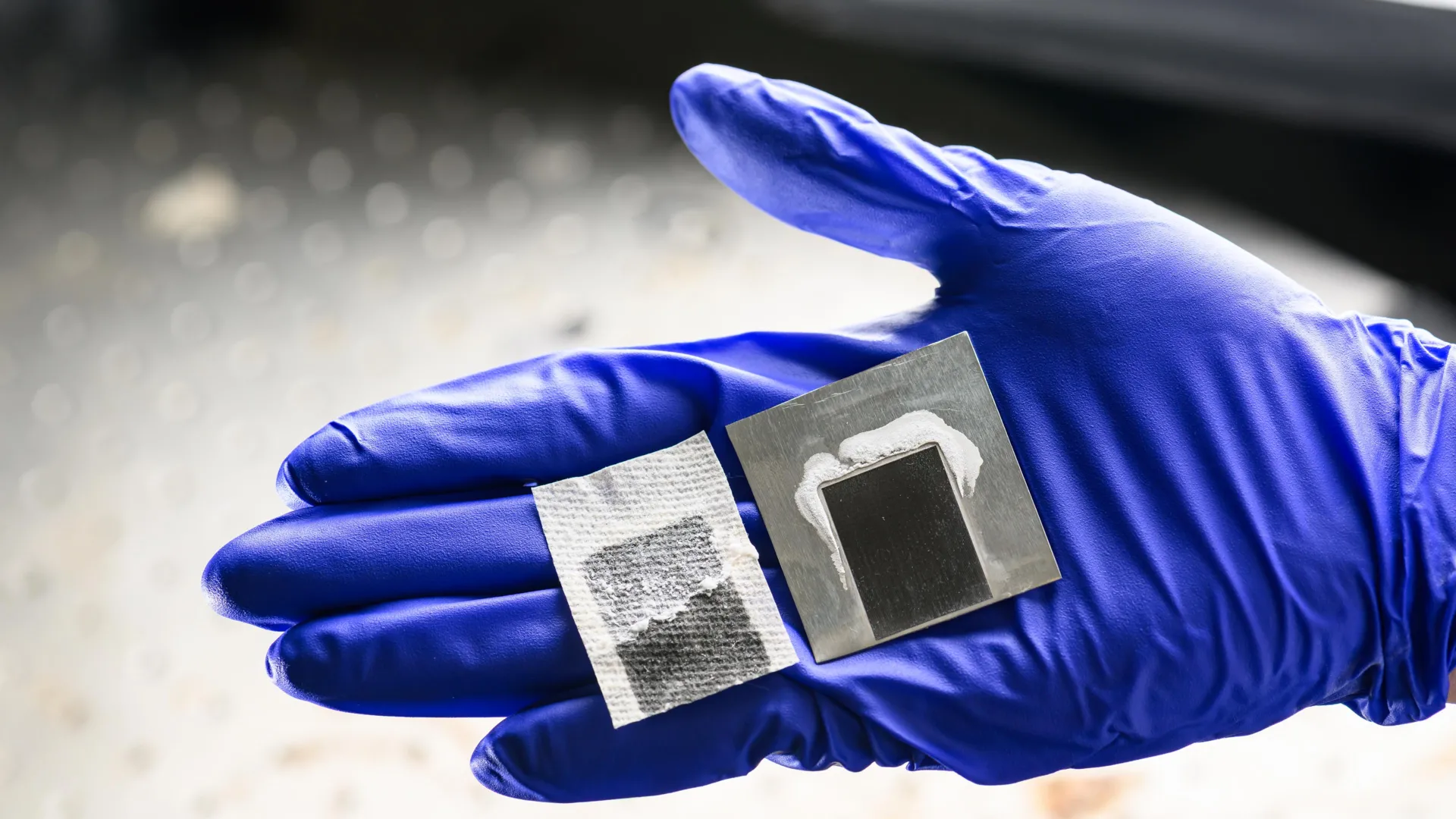
Global water scarcity represents one of the most pressing challenges of the 21st century, affecting billions of individuals and driving significant geopolitical and environmental concerns; however, a novel solar thermal desalination system developed by researchers at a prominent university now offers a potentially transformative solution, capable of converting seawater into potable freshwater without producing harmful liquid brine and simultaneously recovering commercially valuable minerals.
Access to safe, reliable drinking water remains a fundamental human right yet an elusive reality for a substantial portion of the global population. Current estimates from international organizations indicate that over two billion people worldwide lack safely managed drinking water services, a figure exacerbated by climate change, population growth, and increasing industrial demands. Regions spanning arid stretches of California to the water-stressed nations of the Middle East are increasingly turning to desalination as a vital strategy to augment their freshwater supplies. This process, which removes salt and other minerals from seawater or brackish water, is crucial for sustaining burgeoning populations and agricultural needs in areas with limited natural freshwater sources.
Despite its critical role, conventional desalination technologies present considerable environmental and economic drawbacks. The two predominant methods, reverse osmosis and thermal distillation, both carry significant operational burdens. Reverse osmosis, while energy-efficient compared to older thermal methods, relies on immense pressure to force water through semi-permeable membranes, which can degrade over time and require frequent replacement. Thermal distillation, conversely, employs heat to vaporize water, separating it from dissolved solids before condensing it back into liquid form. Both processes are notably energy-intensive, often powered by fossil fuels, thereby contributing to carbon emissions. Furthermore, they typically necessitate extensive pre-treatment of incoming water and post-treatment of the effluent, adding to the operational complexity and cost.
Perhaps the most significant environmental challenge associated with traditional desalination is the generation of highly concentrated saline wastewater, commonly referred to as brine. This byproduct, often twice as salty as the ocean water from which it originated, is typically discharged back into marine environments. Such discharges can have profound ecological consequences, increasing local salinity levels, reducing dissolved oxygen concentrations, and altering the chemical balance of coastal ecosystems. These changes can be detrimental to marine flora and fauna, disrupting habitats, stressing organisms, and potentially leading to localized biodiversity loss. The sheer volume of brine produced globally underscores the urgency of developing more sustainable desalination practices.
Against this backdrop, a groundbreaking innovation from the University of Rochester’s Institute of Optics introduces a solar thermal desalination system that directly addresses these long-standing issues. The research, spearheaded by Professor Chunlei Guo, focuses on an approach that efficiently produces freshwater while entirely eliminating liquid brine production and obviating the need for chemical pre-treatment of source water. This methodology, detailed in the scientific journal Light: Science & Applications, represents a significant departure from conventional techniques and holds the potential to redefine the future of water purification.
At the core of this advanced system are specially fabricated solar panels crafted from black metal, meticulously treated with femtosecond lasers. A femtosecond, an unimaginably brief unit of time equivalent to one quadrillionth of a second, denotes the duration of the ultra-fast laser pulses employed. These precision lasers are capable of inducing profound structural alterations on a material’s surface at the microscopic and nanoscopic scales. This intricate surface modification fundamentally changes the material’s interaction with both light and water, endowing it with unprecedented properties crucial for efficient desalination.
The laser treatment renders the metal extraordinarily effective at absorbing solar radiation, approaching the efficiency of a perfect black body. Simultaneously, it imparts superwicking characteristics to the surface. Superwicking refers to the phenomenon where a liquid spreads rapidly and completely across a surface due to strong capillary forces, rather than forming discrete droplets. This combination of high solar absorptance and superwicking properties is foundational to the system’s operational efficacy.
Each panel incorporates an active region, precisely engineered through laser treatment, which draws a remarkably thin film of seawater across its surface. The dark, textured metal efficiently captures nearly all incident solar energy, converting it into thermal energy that rapidly heats the overlying water layer. This elevated temperature drives the swift evaporation of the water, leaving behind dissolved salts and other minerals. Crucially, the system is designed to prevent the accumulation of these solid residues within the active evaporation zone. Instead, the panel intelligently directs these precipitated materials towards untreated areas situated along its periphery, designated as the passive region.
This directed movement of salt is a pivotal aspect of the technology, addressing one of the most persistent challenges in solar desalination: salt fouling. In conventional solar evaporators, as water evaporates, salts tend to crystallize directly on the active surface, forming a hard, impermeable layer. This mineral buildup not only impedes the free flow of water but also drastically reduces the system’s efficiency by blocking sunlight absorption and hindering further evaporation, ultimately leading to system failure. The Rochester team’s innovation circumvents this critical limitation.
The researchers’ understanding of the complexities of real seawater, as opposed to simplified laboratory solutions, was instrumental in their design. Previous solar thermal desalination systems, while demonstrating promise in controlled experiments using artificial seawater (primarily sodium chloride solutions), often struggled when confronted with the heterogeneous composition of natural ocean water. When sodium chloride crystallizes, it typically forms a relatively grainy and porous structure, which can still permit some water movement and allow for easier cleaning.
However, genuine seawater is a far more intricate chemical soup. Beyond sodium chloride, it contains a diverse array of dissolved ions, including magnesium, calcium, potassium, and sulfates, among many others. Many of these compounds, particularly calcium and magnesium salts, crystallize into dense, tenacious deposits that are significantly less porous and much harder to remove. This phenomenon is analogous to the mineral scale that accumulates inside household kettles or showerheads, but on a dramatically amplified scale, given that seawater contains hundreds of times more dissolved salts than typical tap water. Such hard, non-porous deposits rapidly clog desalination systems, severely diminishing their efficiency and operational lifespan.
To overcome this formidable challenge, Professor Guo’s team meticulously engineered microscopic grooves into the black metal surface. These precisely patterned textures, combined with the superwicking properties, create specific flow dynamics that actively push salts and minerals away from the primary evaporation zone. The design cleverly leverages a common physical phenomenon known as the "coffee ring effect."
The coffee ring effect is a familiar sight to anyone who has observed a spilled coffee droplet dry: as the liquid evaporates, suspended particles migrate towards the edge of the droplet, leaving behind a darker, concentrated ring. In the context of the desalination panel, the same principle is harnessed. As water evaporates from the active region, the localized variations in evaporation rates and surface tension gradients drive the dissolved salts towards the untreated, passive edges of the panel. This directed transport ensures that minerals do not accumulate where evaporation is most active, but rather crystallize in designated collection areas.
The efficacy of this self-cleaning mechanism was rigorously validated using authentic seawater samples procured from the Pacific, Atlantic, and Indian Oceans. In these demanding tests, the panels consistently produced freshwater while effectively self-cleaning, channeling the residual salts into the passive regions where they could be easily collected in solid form. Significantly, this controlled mineral accumulation did not compromise the panel’s desalination efficiency over extended operational periods.
Beyond the production of freshwater, a truly revolutionary aspect of this technology lies in its management of the desalination byproduct. Instead of generating concentrated liquid brine, which necessitates costly and environmentally problematic disposal or treatment, the system extracts nearly 100 percent of the dissolved salts in a solid, manageable form. This transformation turns what was once a waste product into a potential resource. The collected solid salts could find applications ranging from common table salt to the recovery of more valuable industrial minerals.
One particularly compelling target for recovery is lithium, a critical element indispensable for modern technology. Lithium is a key component in lithium-ion batteries, which power everything from electric vehicles and grid-scale energy storage systems to smartphones and laptops. The global demand for lithium is surging, and conventional mining methods are often energy-intensive, environmentally disruptive, and geographically concentrated. The ability to extract lithium directly from seawater, a vast and ubiquitous source, presents a profound opportunity to diversify supply chains and mitigate the environmental footprint of mineral extraction.
In a related investigation published in the Journal of Materials Chemistry A, Guo and his collaborators demonstrated the potential to adapt these superwicking solar panels for selective lithium extraction. By embedding hydrogen titanate nanoparticles within the microscopic grooves of the black metal surface, the researchers created a selective adsorbent. These nanoparticles are engineered to preferentially isolate lithium ions from the complex mixture of salts and minerals collected during the desalination process.
Using samples sourced from the Great Salt Lake, a naturally lithium-rich body of water, the team successfully recovered approximately 50 percent of the lithium contained within the post-desalination salts. This proof-of-concept result suggests a future where desalination facilities could evolve beyond mere water production, becoming integrated hubs for both freshwater generation and the sustainable recovery of commercially vital materials that would otherwise be discarded in waste streams. This represents a significant step towards a circular economy model for water and mineral resources.
While the technology remains in its early stages of development, having been demonstrated in proof-of-concept experiments with relatively small-scale devices, its inherent design principles suggest considerable scalability. Professor Guo emphasizes that the basic architecture is amenable to expansion, potentially contributing substantially to both expanding global access to freshwater and establishing more sustainable sources for valuable minerals.
The successful scaling and widespread adoption of this approach could simultaneously address two monumental global challenges: augmenting freshwater supplies for a rapidly expanding global population and significantly reducing the environmental burden associated with both conventional desalination waste and traditional mineral extraction. Such an integrated solution offers a compelling vision for a more resource-efficient and environmentally responsible future, underpinned by innovative materials science and solar energy utilization. The research received vital support from diverse organizations, including the National Science Foundation, the Bill & Melinda Gates Foundation, and the Worldwide Universities Network, underscoring its broad scientific and humanitarian implications.




 Aura Kasih
 Safa Marwah