Lisa Mariana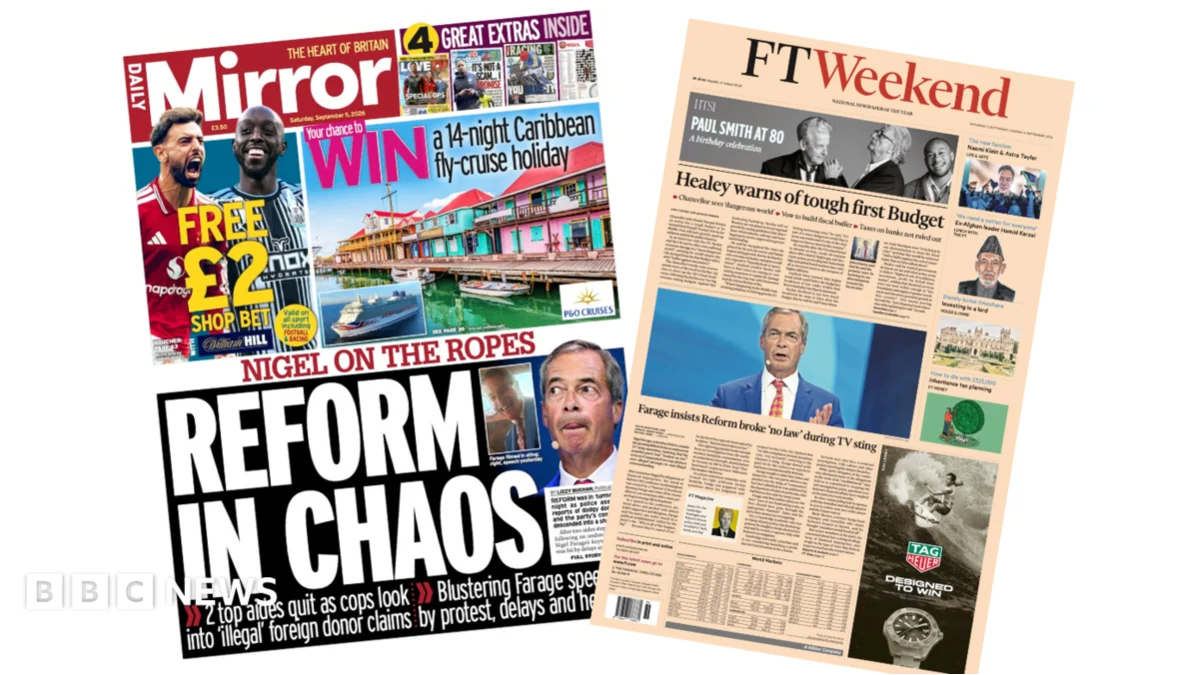
The national political landscape is currently defined by a confluence of challenges, ranging from internal party turmoil and the formidable task of fiscal management to resurgent geopolitical flashpoints. Recent events have cast a critical spotlight on the internal dynamics of emerging political movements, the delicate balancing act facing the nation’s financial leadership, and the enduring complexities of historical territorial disputes, all against a backdrop of ongoing cultural preservation efforts and reflections on national heritage. This period of heightened scrutiny underscores the intricate interplay between domestic governance, economic stability, and international relations, demanding a sophisticated understanding of the forces shaping the country’s immediate future.
The Reform UK party, an ascendant force in the political spectrum, finds itself grappling with significant internal disarray following its recent conference. Public discourse and media analyses have highlighted a series of revelations concerning political donations, which reportedly overshadowed the party leader’s keynote address. These disclosures, brought to light by an investigative media outlet, have ignited a debate about transparency and accountability within political financing. The leader, Nigel Farage, has publicly acknowledged the necessity for the party to enhance its operational professionalism, conceding that substantial improvements are required. This admission comes amidst widespread reports of the party being in a state of considerable flux, with some commentators characterizing the situation as outright "chaos."
The unfolding narrative suggests a critical juncture for Reform UK, a party that has sought to position itself as a disruptive alternative to established political entities. The allegations of impropriety regarding donations not only challenge the party’s image but also raise fundamental questions about its internal governance structures and adherence to regulatory standards. Such controversies often test the resilience of nascent political movements, particularly those built on a platform of anti-establishment sentiment and a promise of cleaner politics. The leader’s assertion that the investigative reporting constituted a "prolonged exercise in entrapment" signals a combative approach to external criticism, yet it simultaneously underscores the intense pressure the party is now under. This response, coupled with a defiant message that "they’re scared of us," indicates an attempt to galvanize its base and frame the challenges as external attacks rather than internal failings. The efficacy of this strategy in the long term, particularly in maintaining public trust and attracting broader support, remains a subject of considerable political analysis. The requirement for greater professionalization within the party, as articulated by Farage himself, points to a recognition that populist enthusiasm alone may not suffice in navigating the rigorous demands of national politics and public scrutiny. The ability of Reform UK to address these foundational issues will be crucial in determining its trajectory and its potential to translate its populist appeal into sustained political influence.
Concurrently, the nation’s financial leadership is bracing for a challenging fiscal announcement. The Chancellor of the Exchequer, John Healey, is reportedly acutely aware of the formidable economic headwinds that severely constrain his policy options for the forthcoming October budget. In a recent high-profile interview, Chancellor Healey candidly acknowledged the pervasive financial strain impacting both households and businesses across the country. This recognition reflects a deep understanding of the current economic climate, characterized by persistent inflationary pressures and elevated operational costs. The Chancellor’s position is further complicated by his recent departure from the role of Defence Secretary, a move that has left him politically vulnerable. This vulnerability stems from his predecessor’s, Rachel Reeves’s, reluctance to commit to a specific defence spending target – specifically, allocating three percent of GDP to defence by 2030. This internal disagreement within the governing party regarding a significant spending commitment highlights a broader tension between fiscal prudence and strategic defence requirements.
The complexities surrounding the upcoming budget are manifold. On one hand, the Chancellor faces immense public pressure to alleviate the cost of living crisis, which has eroded household purchasing power and triggered widespread concern. This necessitates measures that can provide tangible relief without exacerbating inflationary trends or unduly increasing national debt. On the other hand, businesses are struggling with elevated energy prices, supply chain disruptions, and a challenging regulatory environment, demanding policies that foster growth and investment. The political dimension of Healey’s position cannot be overstated. His perceived exposure following the defence spending dispute suggests a potential fault line within the ruling party, where differing priorities could lead to internal friction. The dismissive "Lol" attributed to an ally of his predecessor underscores the political machinations at play and the personal stakes involved in high-level government appointments. Historically, Chancellors operating under such constrained fiscal conditions have often had to make difficult choices, balancing competing demands with limited resources. The current economic outlook, marked by global uncertainties and domestic inflationary pressures, suggests that the October budget will be a tightrope walk, requiring innovative solutions and a clear communication strategy to manage public expectations and maintain economic stability. The long-term implications of the budget will extend beyond immediate financial relief, potentially shaping the trajectory of economic recovery and the government’s credibility in managing the nation’s finances.
In international affairs, the Falkland Islands dispute has once again surged into public consciousness, following renewed claims from Argentina regarding sovereignty over the British-administered archipelago. This diplomatic escalation has prompted strong reactions within the United Kingdom, with prominent political figures advocating for a resolute stance. Former Prime Minister Boris Johnson, writing in a national newspaper, urged for decisive action, specifically calling for the reinforcement of British military presence in the Falklands. His intervention reflects a sentiment of unwavering commitment to the islands’ self-determination and a readiness to counter any perceived threat to their status. The logistical challenges inherent in such a deployment are significant; military analysts have noted that the transit time for UK aircraft carriers to cover the approximately 8,000 nautical miles to the South Atlantic would be considerable, estimated at around four weeks.
The historical context of the Falklands War in 1982 underscores the sensitivity and strategic importance of the islands to both nations. Argentina’s renewed claims, though primarily rhetorical at this juncture, serve as a reminder of an unresolved historical grievance and a perennial point of contention in Anglo-Argentine relations. The current diplomatic landscape is characterized by Argentina’s government making public pronouncements that reassert its long-standing territorial claims, a move that can be interpreted as a domestic political play or a calculated effort to test international resolve. The United Kingdom’s unwavering position, rooted in the principle of self-determination for the islanders, has consistently been to reject any challenge to its sovereignty. The observation that Argentina’s current approach is limited to diplomatic "sabre-rattling" largely due to the limited scale of its military forces offers a strategic perspective. This asymmetry in military capability suggests that while rhetorical challenges may continue, the immediate threat of a direct military confrontation remains low. However, the diplomatic pressure and the potential for increased tensions in the South Atlantic necessitate careful monitoring and strategic foresight from the UK. The broader implications extend to international law, the principles of self-determination, and the projection of military power across vast distances, all of which contribute to the complex geopolitical calculus surrounding the Falkland Islands. Any escalation, even rhetorical, demands a calibrated response to maintain regional stability and uphold international norms.
On a different note, the nation mourns the passing of a beloved figure from the world of entertainment. Richard O’Sullivan, a celebrated sitcom actor, has been widely remembered for his significant contributions to British television. Tributes have highlighted his exceptional talent for bringing warmth and wit to millions of viewers, solidifying his legacy as an actor who effortlessly charmed audiences. His career, spanning several decades, saw him star in iconic television series that became staples of British households, reflecting a golden era of popular entertainment. O’Sullivan’s ability to embody relatable characters with genuine appeal contributed significantly to the cultural fabric of the nation, leaving an indelible mark on generations of viewers. His work not only provided comedic relief but also often subtly reflected societal norms and changes, making him a mirror to the times. The outpouring of tributes underscores the deep affection and respect he garnered throughout his career, cementing his place as one of the quintessential figures in British comedic acting.
Finally, a significant cultural artifact, the Bayeux Tapestry, has been the subject of recent scrutiny following reports of minor damage. Concerns arose after two damaged threads were identified, prompting questions about the circumstances of the incident. However, reassurances have been issued to those who voiced apprehension regarding the tapestry’s temporary relocation to the British Museum. Experts now suggest that the minor damage may have occurred much earlier, potentially during its initial removal from its historical location in France last September, rather than during its more recent transfer to the UK in July. This clarification aims to allay fears about the handling of the priceless artifact during its international journey.
The Bayeux Tapestry, an extraordinary embroidered cloth depicting the events leading up to the Norman Conquest of England in 1066, is a document of immense historical and artistic value. Its loan to the British Museum represents a significant cultural exchange, aimed at making this pivotal piece of European heritage accessible to a wider international audience. The conservation of such ancient and fragile textiles is a highly specialized and delicate process, requiring meticulous care at every stage of transport, display, and storage. The initial reports of damage naturally triggered alarm among heritage enthusiasts and experts, given the tapestry’s irreplaceable status. The subsequent clarification regarding the probable timing of the damage underscores the inherent risks associated with moving ancient artifacts, even under the most stringent protocols. This incident highlights the ongoing challenges faced by cultural institutions in preserving and sharing world heritage, balancing the imperative of public access with the paramount need for conservation. The media’s playful yet pointed headline, "Darn it…", encapsulates the collective anxiety and the underlying hope for the successful restoration and continued preservation of this invaluable historical treasure. The episode serves as a powerful reminder of the delicate balance required in managing and exhibiting humanity’s shared cultural legacy.



 Aura Kasih
 Safa Marwah
 Ayu Aulia