Lisa Mariana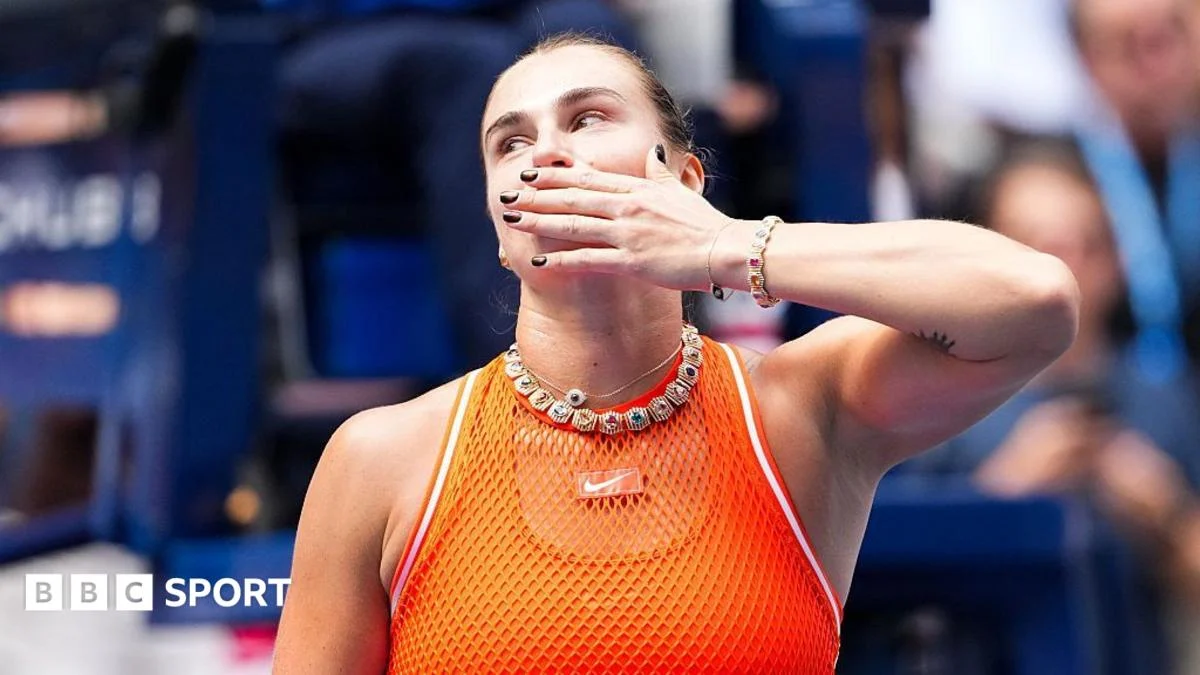
A pivotal match at the 2026 US Open saw top seed Aryna Sabalenka’s progression to the fourth round momentarily disrupted by the pervasive aroma of cannabis, a recurring issue that highlights the unique challenges faced by the tournament within its urban New York City setting. The incident unfolded during her dominant straight-sets victory over Uzbekistan’s Kamilla Rakhimova, underscoring the complex interplay between local recreational cannabis laws and the stringent environment of professional sport.
The unexpected interlude occurred early in the first set on Louis Armstrong Stadium, with Sabalenka already commanding a 3-0 lead. The Belarusian athlete, renowned for her powerful game and focused demeanor, visibly reacted to a distinct and potent scent permeating the court. She promptly communicated her concern to the chair umpire, Eva Asderaki-Moore, unequivocally stating the presence of a strong marijuana odor and requesting official intervention. Asderaki-Moore, acknowledging the player’s complaint, engaged with tournament officials via her headset and made a gesture indicative of smoking to personnel situated off-court. Despite the brief pause and communication, the contest soon resumed without further direct action, allowing Sabalenka to maintain her concentration and secure a decisive 6-3, 6-4 triumph.
This victory marked another confident step for Sabalenka, the reigning two-time champion at Flushing Meadows, as she continues her formidable pursuit of what could be her fifth Grand Slam singles title. Her post-match reflections provided further insight into the disruptive nature of the incident. Sabalenka expressed uncertainty regarding the precise origin of the smell, acknowledging it could have emanated either from spectators within the stadium or drifted in from external areas, carried by the prevailing winds. She articulated the inherent difficulty of maintaining peak competitive focus under such circumstances, emphasizing the need for greater mindfulness from all involved. While the US Open explicitly prohibits smoking of any kind within the official venue grounds, the adjacent Corona Park and the legal status of adult-use cannabis in New York State present a unique environmental challenge, allowing the scent to occasionally permeate the sprawling tennis complex.
The issue of cannabis aroma affecting play is far from unprecedented at the US Open. Several athletes in previous tournaments, including prominent figures like Novak Djokovic and Alexander Zverev, have voiced similar complaints. In the current edition, Britain’s Katie Boulter previously described the scent as a significant distraction, with fellow British players Harriet Dart and Francesca Jones also reporting detection of the odor. This recurring pattern underscores a systemic challenge for the United States Tennis Association (USTA), which hosts the tournament. The legal framework in New York permits recreational cannabis use for adults aged 21 and over, creating a delicate balance between public liberty and the sanctity of professional athletic competition.
From a physiological and psychological perspective, the impact of such olfactory distractions on elite athletes cannot be underestimated. Tennis demands extreme levels of concentration, precision, and physical endurance. A strong, unexpected odor can disrupt an athlete’s focus, potentially affecting their breathing rhythm, mental clarity, and overall performance. While the direct physiological effects of secondhand cannabis smoke on outdoor athletes in a large stadium setting are likely minimal, the psychological disturbance is a significant factor. Athletes train meticulously to control every variable within their competitive environment, and an uncontrollable external element like a pervasive smell introduces an unwelcome and unpredictable variable. This can lead to frustration, a break in concentration, and potentially impact strategic decision-making during critical points in a match. The subjective experience of the smell can also vary greatly among individuals, with some finding it more disruptive than others.
The incident involving Sabalenka brings to the forefront a broader discussion about tournament integrity and fan conduct in an evolving legal landscape. While the US Open has clear rules against smoking on-site, enforcing these rules against a scent that could originate from outside the immediate perimeter presents a complex regulatory dilemma. The USTA faces the challenge of upholding its policies while navigating the realities of New York State law and the behavior of attendees, both inside and outside the venue. Potential mitigation strategies could include enhanced air purification systems in enclosed or semi-enclosed stadiums, more stringent monitoring and enforcement within the stadium grounds, or public awareness campaigns educating fans about the impact of such odors on athlete performance and the overall tournament experience. However, given the open-air nature of many courts and the prevailing winds, a complete eradication of such external influences remains a formidable task.
The US Open, often celebrated for its vibrant, high-energy atmosphere that distinguishes it from other Grand Slams, also inherently embraces its identity as a major event deeply embedded within the fabric of New York City. This urban integration, while contributing to its unique appeal, also exposes it to elements of city life that other, more secluded venues might not encounter. The challenge for the USTA is to preserve this distinct atmosphere while ensuring an optimal and fair competitive environment for the world’s elite tennis players. The incident serves as a pertinent reminder that as societal norms and legal frameworks surrounding substances like cannabis continue to evolve, major sporting organizations must adapt their policies, infrastructure, and communication strategies to address these emergent issues effectively. The long-term implications could lead to innovative solutions in venue management and spectator engagement, setting precedents for other sporting events held in jurisdictions with similar cannabis legislation.
Beyond the olfactory interruption, the women’s singles draw continued to deliver high-stakes drama and significant results. American third seed Jessica Pegula demonstrated formidable resilience, keeping her aspirations for a maiden Grand Slam title alive by overcoming a set deficit against the tenacious Canadian 31st seed, Leylah Fernandez. Pegula, a finalist at Flushing Meadows two years prior where she ultimately lost to Sabalenka, rallied impressively after dropping the opening set 1-6. She showcased greater patience and strategic depth in the subsequent sets, securing a 6-4, 6-3 victory. Fernandez, a finalist herself in 2021, displayed flashes of her former brilliance in the opening frame, but Pegula’s composure and ability to seize crucial moments, including a decisive break aided by a net cord, proved pivotal. Reflecting on her slow start, the 32-year-old Pegula acknowledged her initial lack of footwork and "lazy" play, expressing satisfaction at her ability to "dig deep" and engineer a turnaround. Her path forward in the tournament now leads to a fourth-round clash with Romanian 16th seed Sorana Cirstea, who efficiently dispatched Italian 19th seed Jasmine Paolini in a commanding 6-3, 6-3 performance.
Elsewhere in the draw, the tournament witnessed an upset as Czech seventh seed Karolina Muchova, competing in her first event since undergoing minor surgery following her run to the Wimbledon final in July, was eliminated. Muchova fell to American 26th seed Emma Navarro in straight sets, 6-3, 7-5, marking a premature end to her Grand Slam comeback. Navarro’s impressive run continues, setting up a fourth-round encounter against either Ukrainian ninth seed Elina Svitolina or Russian 21st seed Anna Kalinskaya.
Ukrainian 11th seed Marta Kostyuk also secured her passage to the last-16, delivering a dominant 6-3, 6-2 performance against Ekaterina Alexandrova. Kostyuk’s next challenge will be a compelling matchup against the reigning Wimbledon champion, Linda Noskova. In the women’s doubles competition, the British pairing of Harriet Dart and Maia Lumsden successfully navigated their opening round, defeating the Croatian-Ukrainian duo of Petra Marcinko and Oleksandra Oliynykova 7-5, 6-3, to advance to the second round. These results collectively illustrate the intense competition and varied narratives unfolding across the US Open, even as the broader administrative challenges surrounding player environment persist.


 Aura Kasih
 Safa Marwah
 Ayu Aulia