Lisa Mariana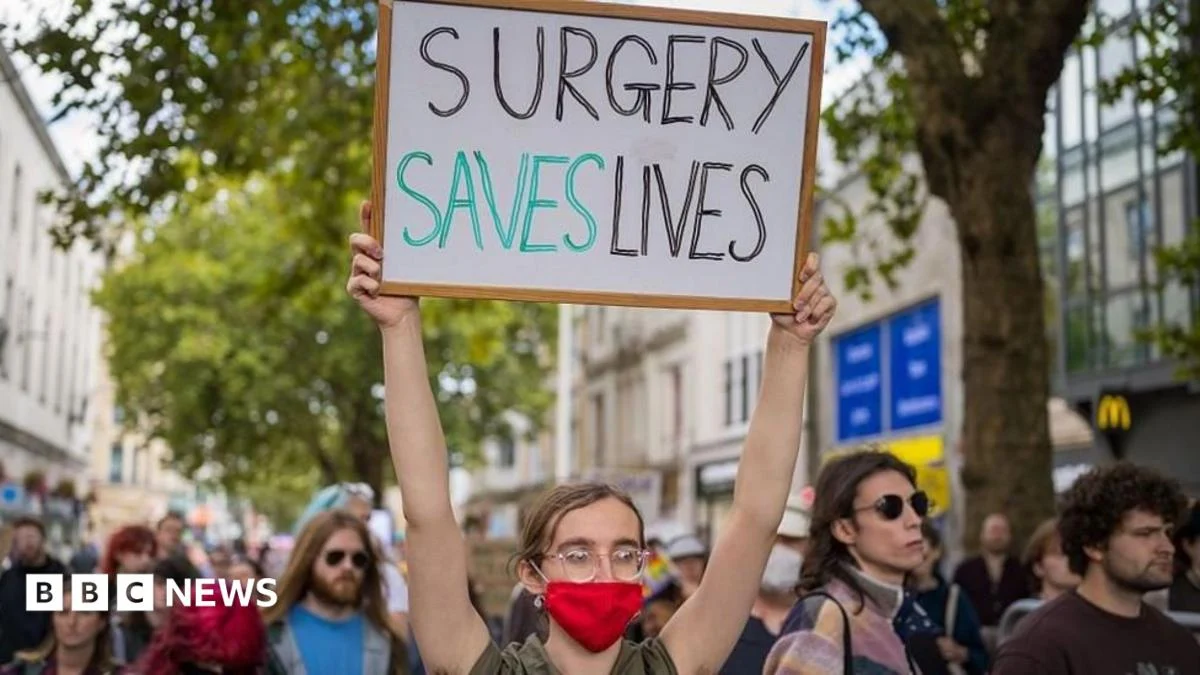
The provision of gender-affirming surgical interventions in Wales has been temporarily suspended following a critical review by the National Welsh Joint Commissioning Committee (NWJCC), which identified significant concerns regarding the thoroughness and appropriateness of patient assessments leading up to these complex procedures. This unprecedented halt underscores a broader re-evaluation of clinical governance within gender identity services, aiming to ensure that individuals undergoing such life-altering treatments receive care underpinned by the most rigorous standards and comprehensive evaluations.
The NWJCC, a pivotal body responsible for commissioning specialized health services across Wales, articulated several key deficiencies that precipitated the decision. Foremost among these was the observation that a cohort of patients referred for surgery did not meet fundamental clinical prerequisites. A recurring issue highlighted was the presence of an unsuitable body mass index (BMI), a crucial metric derived from an individual’s height and weight, which can significantly impact surgical outcomes, anaesthetic risks, and post-operative recovery. Beyond this specific physiological parameter, the committee also voiced apprehensions about the holistic consideration of patients’ broader health profiles, raising questions about whether pre-existing conditions or other medical complexities had been adequately addressed or factored into surgical suitability determinations.
Furthermore, the NWJCC’s internal audit revealed disquiet among certain clinical professionals regarding the integrity and robustness of the referral assessment processes. These clinicians expressed reservations about whether initial evaluations were conducted with the necessary depth and adherence to established guidelines, suggesting potential gaps in the pathway from initial consultation to surgical recommendation. Such concerns point to a potential systemic issue in ensuring consistent, high-quality, and multidisciplinary assessments for individuals seeking gender-affirming surgeries.
In response to these findings, the NWJCC has committed to commissioning an independent review of the service. This comprehensive external examination is designed to scrutinize all facets of the current provision, from initial patient contact and psychological assessment to medical suitability and surgical referral pathways. The committee emphasized its proactive engagement with seasoned gender specialists to expedite the commencement of this critical review, signaling an urgent commitment to rectifying identified shortcomings and restoring confidence in the service’s operational integrity.
The political ramifications of this decision were immediately evident. Health Minister Mabon ap Gwynfor and Deputy First Minister Sioned Williams participated in a crucial meeting with the NWJCC to discuss the implications. Following this deliberation, the Welsh government issued a statement designed to allay fears within the transgender community, providing explicit assurances that the decision represented a temporary "pause" rather than a definitive "stop." This communication emphasized a commitment to reviewing each affected case individually, with a pledge that once robust and appropriate clinical assessment protocols are firmly re-established, individuals would progress to surgery with minimal further delay. This governmental stance seeks to balance the imperative for clinical excellence with the recognition of patients’ urgent and legitimate healthcare needs.
The catalyst for this decisive action last week was the emergence of compelling statistical data indicating a significantly elevated rate of referral for gender-affirming surgery within Welsh services compared to their English counterparts during the 2025-26 period. This disparity prompted an immediate internal review by the health board, signaling a potential anomaly that required deeper investigation. First Minister Rhun ap Iorwerth had previously underscored the necessity of a swift resolution to the review into surgical services. While acknowledging that the NWJCC’s decision was rooted in legitimate concerns over service quality, the First Minister stressed the importance of achieving a prompt and effective resolution, minimizing prolonged uncertainty for patients.
The suspension has, however, ignited a fierce debate across the Welsh political spectrum and within the transgender community. Prior to the NWJCC meeting, a letter endorsed by 26 of Plaid Cymru’s 28 backbench Senedd members was dispatched to Ian Green, the chairman of the NWJCC. This communication conveyed "profound disappointment" with the decision, articulating the considerable "distress, fear and a deep sense of uncertainty" it had engendered within the trans community. The letter contextualized this sentiment within a broader environment where the rights and dignity of transgender individuals across the United Kingdom are perceived to be under increasing scrutiny and pressure. This intervention highlights the delicate balance healthcare authorities must strike between clinical governance and the societal implications of their decisions on vulnerable populations.
Conversely, political parties such as Reform UK and the Welsh Conservatives voiced their support for the decision to halt surgeries. Dan Thomas, the Welsh leader for Reform UK, suggested that "sensible-minded people in Wales" would welcome the suspension, advocating for further measures to ensure a comprehensive review of the service. Natasha Asghar, the Welsh Conservative spokesperson for health, echoed these sentiments, having previously called for a review of the service herself, stating that canceling surgeries was "absolutely the right thing to do." These divergent political reactions underscore the complex and often polarized nature of discussions surrounding gender identity healthcare.
The global landscape of gender-affirming care has seen a significant evolution over recent decades, marked by an increasing demand for services and a continuous refinement of clinical guidelines. Best practices, such as those advocated by the World Professional Association for Transgender Health (WPATH), emphasize a multidisciplinary approach to assessment, encompassing psychological evaluation, medical readiness, and informed consent. Thorough assessment is critical not only for ensuring surgical safety but also for optimizing long-term patient satisfaction and psychological well-being. Factors like BMI are directly linked to surgical risks such as infection, wound healing complications, and even the feasibility of certain procedures. Similarly, a comprehensive evaluation of wider health needs ensures that co-morbidities, including mental health conditions, cardiovascular issues, or endocrine imbalances, are adequately managed before embarking on irreversible surgical interventions. The Welsh decision, therefore, can be viewed as an alignment with, or reinforcement of, these international standards of rigorous patient selection and preparation.
The implications of this moratorium are multifaceted. For patients awaiting surgery, the pause introduces an indefinite period of uncertainty, potentially exacerbating existing distress and impacting their mental health. Access to gender-affirming care is often described as medically necessary and life-saving, and delays can have profound psychological tolls. Healthcare providers, meanwhile, face the challenge of navigating revised protocols and potentially re-evaluating numerous patient cases, demanding significant administrative and clinical resources. The independent review itself will be a pivotal moment, with its findings expected to shape the future architecture of gender identity services in Wales. It is anticipated to provide detailed recommendations on assessment criteria, multidisciplinary team composition, training requirements for clinicians, and pathways for referral.
Looking ahead, the independent review’s findings will be crucial in determining the specific modifications required for the Welsh gender-affirming surgical service. This could range from enhanced training for assessors, revised eligibility criteria, or the establishment of new, more robust multidisciplinary assessment panels. The Welsh government’s commitment to ensuring a "pause, not a stop" suggests an intent to improve the service rather than dismantle it, aiming for a system that is both clinically sound and ethically responsible. This process will undoubtedly contribute to the broader discourse across the UK regarding the provision of gender identity services, particularly in light of ongoing reviews and evolving understanding in this complex field. The ultimate goal remains to deliver high-quality, patient-centered care that meets stringent clinical standards while addressing the unique and critical needs of the transgender community in Wales.




 Aura Kasih
 Safa Marwah
 Ayu Aulia