Lisa Mariana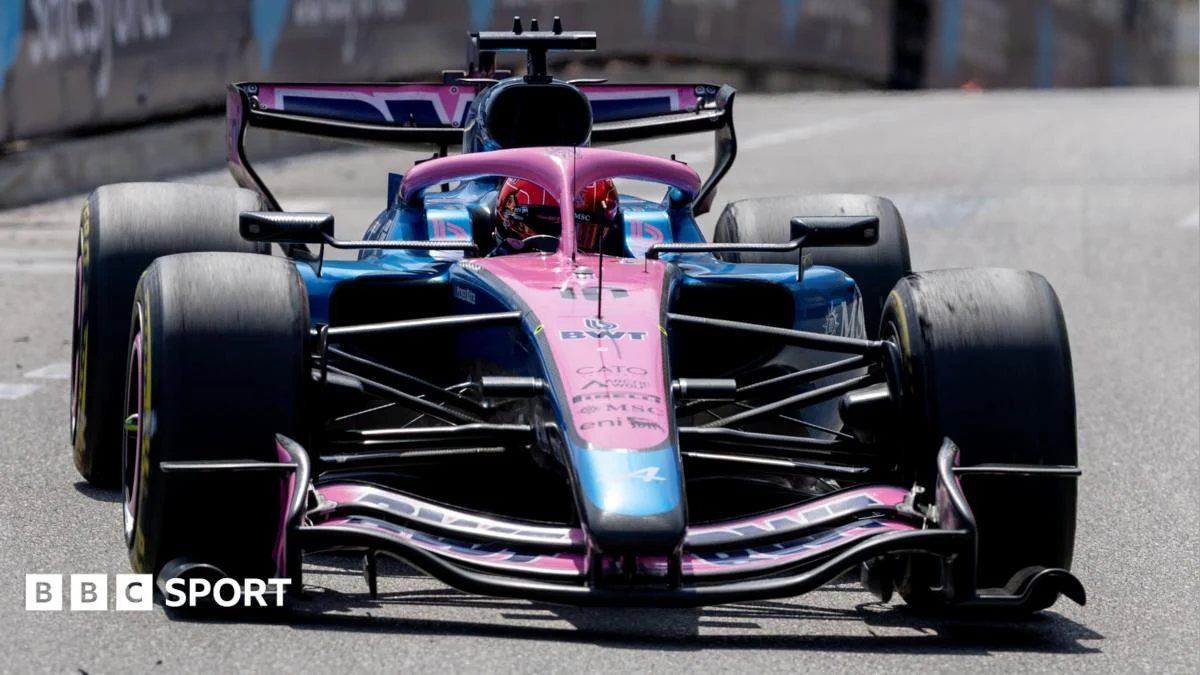
A pivotal decision by the FIA’s International Court of Appeal has dramatically reconfigured the final standings of the recent Monaco Grand Prix, retroactively stripping Alpine driver Pierre Gasly of his hard-won third-place finish. This ruling upholds appeals lodged by McLaren and Red Bull Racing, definitively settling a contentious dispute rooted in inconsistencies surrounding pit lane speed limit enforcement and measurement parameters, thereby reverting the race classification to its initial post-race configuration for key positions. The verdict underscores the critical importance of established procedural clarity in motorsport and the principle of not altering fundamental technical parameters retrospectively, even in the face of subsequent findings of potential discrepancies.
The controversy originated during one of Formula 1’s most iconic and challenging events: the Monaco Grand Prix. Renowned for its tight street circuit, minimal overtaking opportunities, and demanding pit lane entry and exit, Monaco places an extraordinary premium on precision and adherence to regulations. Drivers navigate a narrow pit lane where a strict 60 km/h speed limit is enforced through electronic timing loops. During the race, multiple competitors, including Gasly, Oscar Piastri of McLaren, and George Russell of Mercedes, were flagged for exceeding this limit, incurring five-second penalties that significantly impacted their race outcomes and final classifications.
The initial round of appeals saw Alpine successfully challenge the penalties levied against Pierre Gasly. Their argument centered on a crucial technical detail: a 77-centimetre discrepancy between the officially designated measurement points for the pit lane speed limit and the actual shortest path a car could take. Alpine presented evidence suggesting that, when measured along this shortest achievable line, Gasly’s car had not, in fact, exceeded the 60 km/h threshold. This revelation led to the overturning of Gasly’s two five-second penalties, elevating him from his provisional seventh place to an unexpected third, securing a coveted podium finish for the French team. This initial decision sent ripples through the paddock, raising questions about the validity of numerous other penalties issued under the same measurement parameters.
However, this resolution proved to be a temporary one. McLaren and Red Bull Racing, whose drivers had been directly impacted by Gasly’s elevation, subsequently lodged their own appeals. McLaren’s protest was driven by competitive interests, as Piastri had lost valuable championship points due to his own served pit lane speeding penalty and Gasly’s subsequent promotion. Red Bull’s appeal similarly sought to restore the original order, which saw their driver Isack Hadjar finish ahead of Gasly. Both teams contended that the principle of sporting fairness demanded consistency in the application of rules, especially concerning technical parameters communicated to all competitors before and during a race weekend.
The International Court of Appeal, a judicial body within the FIA’s framework, convened to address these appeals. Their ultimate verdict rested on a fundamental tenet of sporting governance: the sanctity of established parameters once communicated and adopted by competitors. The court concluded that while a discrepancy between the officially measured distance and a potentially shorter route might have been identified post-race, this finding did not invalidate the official measurement used throughout the event. Crucially, the court stated that "sporting fairness absolutely precludes the retrospective replacement" of an established calibration parameter "by a different geometric or measurement approach for the purpose of re-adjudicating an individual competitor’s result." This ruling emphasizes that competitors must rely on the information provided to them at the start of a Grand Prix weekend, and any changes to these foundational parameters cannot be applied retroactively to alter race outcomes.
The immediate consequence of this decision is a significant reshuffling of the Monaco Grand Prix’s top positions. Pierre Gasly is now demoted from his third-place podium finish back to seventh in the official standings. Conversely, Red Bull’s Isack Hadjar is reinstated to third place, earning a significant career milestone. McLaren’s Oscar Piastri moves up to fourth, recouping lost championship points. Further adjustments see Racing Bulls’ Liam Lawson and Arvid Lindblad each gaining a position, now classified fifth and sixth respectively. This outcome restores the competitive hierarchy as it stood immediately after the race, prior to Alpine’s initial successful appeal.
Despite the clarity provided for Gasly’s situation, the Court of Appeal’s verdict does not fully address the broader implications of the pit lane measurement controversy. The ruling specifically focused on the McLaren and Red Bull appeals against the decision to rescind Gasly’s penalty, rather than a comprehensive review of all pit lane speeding penalties issued during the race. This leaves lingering questions about the fundamental correctness of other penalties, such as those applied to Mercedes’ George Russell and Ferrari’s Lewis Hamilton, under the originally established measurement parameters. Mercedes, for instance, maintains that Russell never physically exceeded the 60 km/h limit, even under the initial measurement system.
Russell’s case highlights another layer of complexity. While he was initially penalized for pit lane speeding, his eventual demotion out of the points, to 12th place, stemmed from a subsequent procedural error by his team. Mercedes failed to correctly serve his initial five-second penalty at a later pit stop, an infraction that incurred a more severe drive-through penalty. This sequence of events further illustrates how a single initial technical ambiguity can cascade into multiple, compounding penalties with significant race-altering consequences.
The implications of this judicial saga extend beyond individual driver classifications. For Alpine, the loss of a podium represents a significant blow, both in terms of championship points and team morale. A podium finish in Monaco is a rare and prestigious achievement, offering a substantial boost to a team’s narrative and sponsor value. Alpine, through a public statement, expressed their disagreement with the decision, reiterating their belief that Gasly had not exceeded the speed limit at any point. However, they acknowledged the court’s ruling and stated their focus remains on future performance in a competitive championship. The team has confirmed sending the third-place trophy to Red Bull’s Milton Keynes base, acknowledging the formal change in classification.
Looking ahead, Alpine has indicated they are considering their options regarding further legal recourse. The most likely path for such an escalation would be an appeal to the Court of Arbitration for Sport (CAS). CAS is an independent institution established to settle sports-related disputes through arbitration or mediation. Taking a case to CAS would be a significant step, involving considerable legal expense and a potentially lengthy process, with no guarantee of a different outcome. Such a move would underscore Alpine’s deep conviction in their original technical assessment and their commitment to upholding what they perceive as sporting justice.
This entire episode serves as a stark reminder of the intricate balance between technical precision, regulatory enforcement, and sporting fairness in elite motorsport. The FIA, as the governing body, faces the ongoing challenge of ensuring absolute clarity and consistency in its technical regulations and their application. Such controversies, while perhaps rare, can undermine trust in officiating and create unnecessary distractions for teams and drivers. The incident highlights the need for robust, unambiguous measurement protocols that are universally understood and beyond reproach, preventing future ambiguities from clouding race outcomes and forcing complex, high-stakes judicial interventions. The resolution, while definitive for Gasly’s podium, may well spur a re-evaluation of how such precise parameters are established, communicated, and monitored across the sport to prevent similar disputes from arising in the future.



 Safa Marwah
 Ayu Aulia
 Aura Kasih