
 Lisa Mariana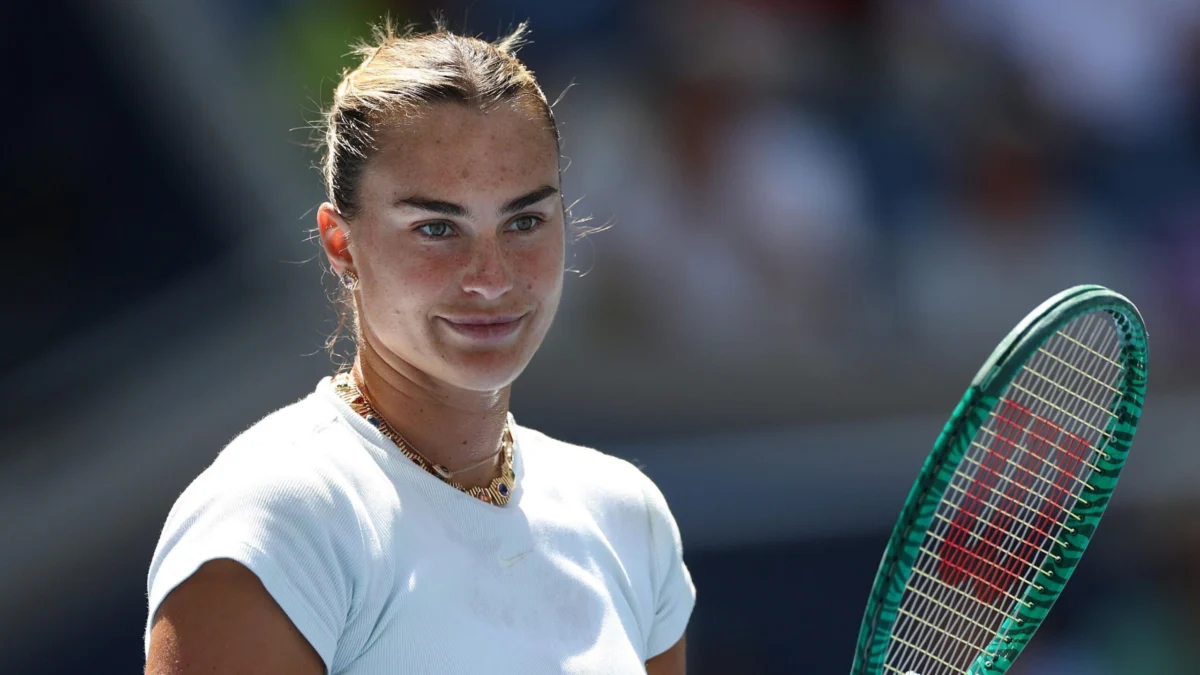
The impending commencement of the 2026 US Open in Flushing Meadows heralds a period of profound intrigue and significant strategic challenges for the world’s elite tennis players, with both the women’s and men’s singles draws poised for compelling narratives surrounding form, fitness, and the relentless pursuit of Grand Slam glory.
The Enigma of Aryna Sabalenka: A Quest for Resurgence
Aryna Sabalenka’s trajectory through the early part of the current tennis season was nothing short of spectacular, culminating in a rare and highly coveted "Sunshine Double." This exceptional achievement, securing titles at Indian Wells and Miami consecutively, cemented her status as the preeminent force on the WTA Tour, establishing a commanding 3,000-point lead atop the global rankings. Such a dominant opening to the year positioned her as a seemingly unassailable figure, prompting widespread speculation of an extended reign at the pinnacle of women’s tennis.
However, the subsequent months have introduced a perplexing shift in her performance metrics, signaling a period of unexpected vulnerability for the 28-year-old Belarusian. Since her triumph in Miami, Sabalenka has compiled a match record of 17 wins against 7 losses, a statistical dip that is markedly below the standard expected of a four-time major champion. This downturn includes a decisive quarter-final exit at Roland Garros and a dispiriting fourth-round defeat at Wimbledon, results that have progressively eroded her once-substantial lead. As she prepares to defend her back-to-back US Open titles, her hold on the world No. 1 ranking hangs precariously, with Kazakhstan’s Elena Rybakina narrowing the gap to a mere 434 points. To extend her remarkable 99-week tenure at the summit, Sabalenka must once again conquer the hard courts of New York.

The genesis of this recent struggle appears multifaceted. While her powerful, aggressive baseline game remains a formidable weapon, observers have noted intermittent lapses in mental fortitude during crucial junctures of matches. This was particularly evident in her recent Cincinnati Open fourth-round encounter against 20-year-old Czech talent Sara Bejlek, where Sabalenka squandered significant leads in both sets, ultimately succumbing 7-6 (9-7) 6-4. Similar patterns of unraveling under pressure manifested in her Toronto last-16 loss to Ekaterina Alexandrova, characterized by a faltering serve, and earlier capitulations during the clay-court swing against Hailey Baptiste, Sorana Cirstea, and most notably, Diana Shnaider at the French Open. These instances suggest a recurring challenge in maintaining composure and strategic discipline when facing resilient opposition.
Despite these recent setbacks, Sabalenka’s confidence in her ability to regain her competitive edge on her favored hard courts remains outwardly robust. Her Grand Slam successes – two Australian Open and two US Open titles – underscore her exceptional prowess on this surface, where her aggressive style, potent serve, and commanding groundstrokes are optimally leveraged. Her public statements, emphasizing "tough lessons" and a commitment to "reset my mind," reflect a recognition of the internal work required. The implications of her performance in New York extend beyond mere tournament victory; they will profoundly influence her psychological momentum, her ranking stability, and ultimately, her narrative within the sport’s history. For a player whose consistency on the major stage is almost unparalleled among her contemporaries – despite a record of four major finals and six semi-final losses – rediscovering her "mojo" at Flushing Meadows is not just about defending a title, but about reaffirming her dominant identity.
The Women’s Field: A Battle for Supremacy and the Pinnacle Position
The fluctuations in Sabalenka’s form have effectively blown open the race for the world No. 1 ranking, transforming the women’s singles draw into a high-stakes strategic battle. Elena Rybakina, who famously defeated Sabalenka in the Australian Open final earlier this year, stands as the immediate challenger. Rybakina’s powerful serve and flat groundstrokes make her a formidable opponent on hard courts, and her relatively fewer ranking points to defend position her advantageously. However, her campaign is shadowed by an ankle injury sustained in the Cincinnati quarter-finals, introducing an element of uncertainty regarding her physical readiness and endurance over a grueling two-week tournament. The complex ranking permutations mean Rybakina could ascend to the top spot even without winning the title, provided her primary rivals – Sabalenka, Jessica Pegula, and Coco Gauff – do not claim the championship. Conversely, a semi-final berth would be sufficient for Rybakina if Sabalenka successfully defends her title, highlighting the intricate mathematics of the WTA rankings.
Beyond the immediate contenders for the top spot, the women’s field presents a compelling array of talent. Jessica Pegula, at 32, embodies remarkable consistency, having maintained a high level of performance for several seasons without yet securing a major title. Her journey to the 2024 US Open final, coupled with recent strong runs to the finals in Washington and Cincinnati, suggests a player on the cusp of a significant breakthrough. Her strategic maturity, all-court game, and unwavering focus make her a perennial threat.

Coco Gauff, the 2023 US Open champion, returns to her home Grand Slam with a renewed sense of purpose and significantly improved form. Last year, her game was marked by periods of inconsistency, particularly with her serve. However, her recent triumph over Pegula in the Cincinnati final underscores a significant evolution in her game, characterized by greater fluidity in her serve, enhanced shot selection, and a more robust mental approach. The fervent home crowd support in New York could provide an additional psychological advantage for the 22-year-old American.
The broader landscape of the WTA Tour reinforces the notion of unprecedented depth. Beneath the leading quartet, the remaining top-10 players boast an impressive collective resume of Grand Slam or WTA 1000 titles. This cohort includes French Open winner Mirra Andreeva, Wimbledon champion Linda Noskova, and six-time major winner Iga Swiatek. Each of these athletes possesses the tactical acumen, physical prowess, and competitive drive to challenge for the title. Andreeva, a rising star, brings youthful fearlessness and aggressive baseline play. Noskova, fresh off her Wimbledon victory, will be looking to prove her major win was no fluke. Swiatek, known for her clay-court dominance, has also shown significant improvements on hard courts, making her a constant threat. The strategic implications of this depth are profound, ensuring that every round will present a formidable challenge and making predictions exceptionally difficult. The tournament promises a dynamic interplay of power, precision, and psychological resilience, with multiple players harboring legitimate aspirations for the ultimate prize.
Men’s Singles: A Landscape Altered by Injury and Enduring Greatness
The men’s singles draw at the 2026 US Open arrives with a distinctly altered competitive landscape, primarily shaped by the absence of one dominant figure and the uncertain return of another. For the third consecutive Grand Slam, the highly anticipated rivalry between Jannik Sinner and Carlos Alcaraz – dubbed "Sincaraz" – has been put on hold. These two prodigious talents had collectively swept all eight major titles across 2024 and 2025, with Alcaraz extending that remarkable streak by clinching this year’s Australian Open. Their absence from direct Grand Slam competition profoundly impacts the narrative of the men’s tour.
Carlos Alcaraz, the 23-year-old Spaniard, makes his long-awaited comeback in New York after a four-month layoff due to a debilitating wrist injury, which forced him to miss both the French Open and Wimbledon. The challenge of returning from such a significant injury, particularly one affecting a primary hitting arm, cannot be overstated. While Alcaraz possesses an explosive, all-court game characterized by breathtaking athleticism and powerful shot-making, the typical recovery curve for wrist injuries often involves a gradual return to full match fitness and confidence. Questions will inevitably arise regarding his movement, forehand power, and ability to withstand the physical demands of best-of-five-set matches over two weeks. Realistic expectations for his performance should factor in the psychological pressure of a return, balancing his immense talent with the imperative for cautious progression. His candid remark about the extended separation from Sinner on the court underscores the personal impact of these injury setbacks.

Just a day after Alcaraz announced his return, the news broke that Jannik Sinner would be sidelined with a knee injury, further fracturing the "Sincaraz" duopoly. Sinner’s absence significantly opens up the top half of the draw, removing a major obstacle for other contenders and fundamentally reshaping tactical considerations for many players.
In this altered environment, the enduring figure of Novak Djokovic looms large. At 39 years old, the Serbian maestro continues to defy conventional career timelines, refusing to put an "expiry date" on his extraordinary journey. A 24-time Grand Slam champion, Djokovic is intensely motivated to secure a standalone record 25th major title, which would elevate him above Margaret Court on the all-time list. His strategic brilliance, unparalleled consistency, and mental toughness remain potent weapons. While he has reached at least the semi-finals in six of the past seven Grand Slams, his last major triumph was the 2023 US Open. His straight-sets loss to Alcaraz in last year’s semi-finals here provides a point of analysis regarding the potential shifting of the guard, yet his ability to consistently reach the latter stages of majors underscores his continuing threat, particularly on the hard courts where his game thrives.
Leading the seedings is Germany’s Alexander Zverev, who has enjoyed a breakthrough season, securing his maiden Grand Slam title at the French Open before reaching the Wimbledon final, where he ultimately fell to Sinner. Zverev’s powerful serve, improved forehand, and heightened confidence position him as a formidable contender. His quest for a third consecutive major final appearance speaks volumes about his current form and mental strength.
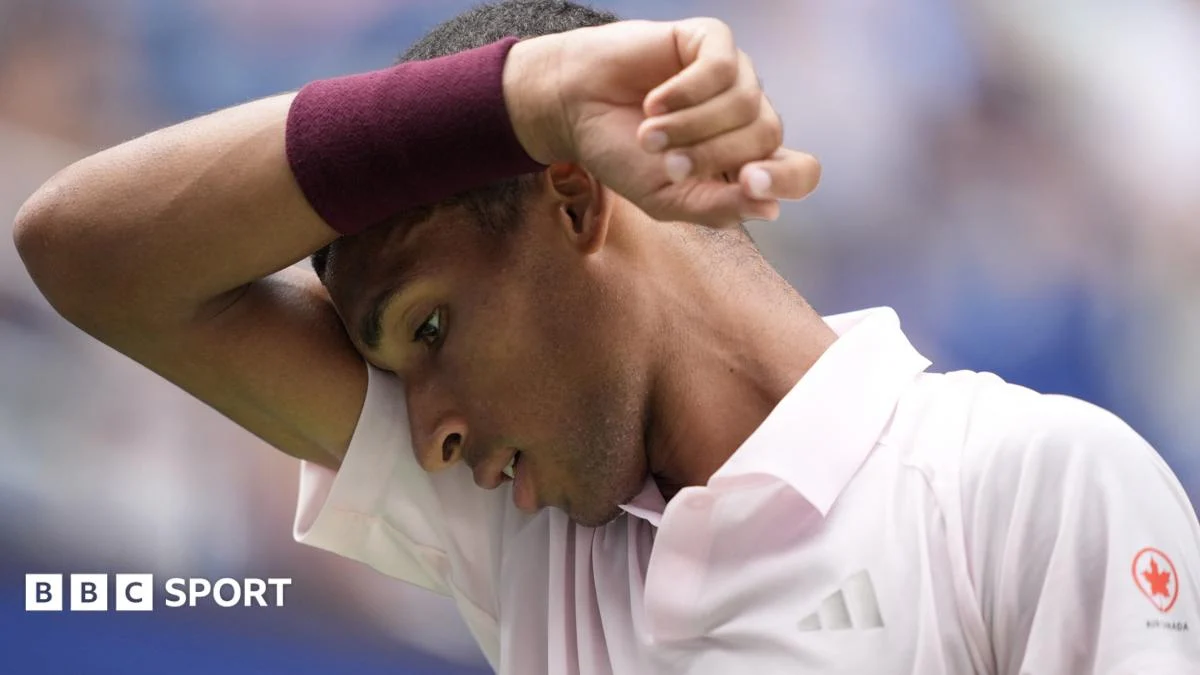
The home crowd will undoubtedly rally behind a strong American challenge. Ben Shelton, fresh off his Canadian Open victory, and Cincinnati finalist Frances Tiafoe lead the charge, bringing youthful exuberance and explosive tennis. Taylor Fritz, the 2024 finalist, represents another significant hope for ending the 23-year wait for a homegrown men’s champion. These players, alongside other American talents, possess the hard-court acumen and the motivational boost of playing on home soil. Beyond these prominent names, players like Daniil Medvedev, a former US Open champion known for his tactical prowess on hard courts, Felix Auger-Aliassime, and Alex de Minaur, consistently hover in the contender conversation, capable of disrupting the established order. The broader trend of top male players grappling with injuries also highlights the immense physical demands of the modern game, shaping the dynamics of competitive balance across the tour.
Strategic Imperatives and Future Outlook

The 2026 US Open is thus set to be a crucible of pressure, adaptability, and resilience. For Aryna Sabalenka, it is a definitive test of her ability to recalibrate her mental and physical game under intense scrutiny, with her world No. 1 ranking hanging in the balance. Her performance will not only dictate her immediate standing but also provide crucial insights into her long-term trajectory as a dominant force. For Carlos Alcaraz, the tournament represents a delicate balance between championship aspirations and the prudent management of a return from injury, with every match serving as a barometer of his recovery and adaptation.
The hard courts of Flushing Meadows, known for their speed and demanding conditions, will heavily influence playing styles and outcomes. Players who can consistently serve big, absorb pace, and transition effectively from defense to offense will find an advantage. The psychological aspect, particularly in the later rounds, will be paramount, as demonstrated by Sabalenka’s recent struggles. The ability to maintain composure, execute under pressure, and manage physical fatigue over seven best-of-three or best-of-five matches will distinguish the champions.
The outcomes of this tournament will inevitably cast a long shadow over the remainder of the tennis season and potentially reshape the narratives of several key careers. Will Sabalenka reclaim her invincible aura? Can Alcaraz defy the typical challenges of an injury comeback to immediately contend? Will Djokovic add another historic chapter to his unparalleled career? And will a new Grand Slam champion emerge from the deep and talented fields? These questions underscore the profound unpredictability and captivating drama inherent in Grand Slam tennis, ensuring that the 2026 US Open will be an event watched with bated breath by enthusiasts worldwide.


 Aura Kasih
 Ayu Aulia

 Safa Marwah