
 Lisa Mariana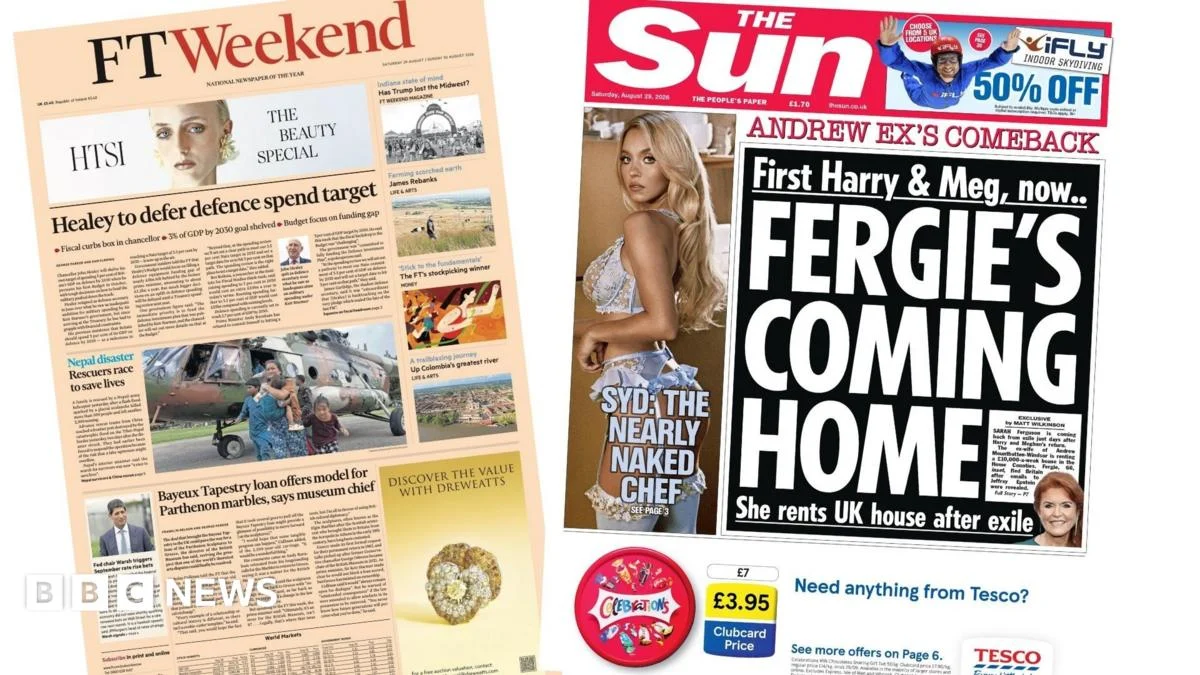
The United Kingdom’s economic agenda is poised for a significant reorientation as the Chancellor signals a pragmatic adjustment to ambitious defence spending targets, a move that underpins the challenging fiscal landscape confronting the government. This recalibration, alongside intense debates on taxation and public expenditure, forms the backdrop for the upcoming autumn Budget, while concurrent developments concerning a pivotal social legislation and notable royal family movements also capture public interest.
Strategic Defence Commitments Under Scrutiny
A significant shift in the government’s fiscal strategy is anticipated with reports indicating that the Chancellor is set to defer the long-held aspiration of dedicating 3% of Gross Domestic Product (GDP) to defence by the year 2030. This projected deferment, expected to be a key element of the Chancellor’s inaugural Budget in October, suggests a pragmatic acknowledgment of current economic realities and competing demands on public finances. Official sources within the administration have indicated that more substantial determinations regarding an uplift in defence expenditure are likely to be postponed until a comprehensive Treasury review is concluded next year, allowing for a more thorough assessment of economic capacity and strategic priorities.
This proposed delay has immediately drawn sharp criticism, with some commentators labeling the Chancellor as disingenuous. Accusations of hypocrisy have emerged, largely stemming from the Chancellor’s prior resignation from a shadow cabinet defence portfolio, a decision reportedly motivated by his conviction that insufficient resources were being allocated to the armed forces. This historical context provides a potent political weapon for detractors, highlighting a perceived incongruity between past advocacy and present policy decisions. The perceived shift underscores the inherent tension between an opposition politician’s ability to articulate ideals and a serving Chancellor’s responsibility to manage the nation’s accounts within strict budgetary constraints. The fiscal realities of government often necessitate a more measured and incremental approach than might be advocated from the opposition benches, particularly when faced with a complex array of economic challenges.
The potential ramifications of this deferral extend beyond domestic political discourse, posing a tangible risk to international alliances. Washington, a crucial strategic partner, is reportedly exploring various mechanisms to encourage the United Kingdom to bolster its defence spending. One particularly striking measure under consideration is the potential for the United States to reassess its historical stance on British sovereignty over the Falkland Islands. This diplomatic leverage, if applied, would represent a significant point of tension in the ‘special relationship,’ underscoring the strategic importance placed by the US on allied defence contributions, particularly in a period of heightened global instability. The Falklands issue, deeply emotive in the UK, serves as a powerful illustration of the potential diplomatic costs of perceived underinvestment in defence, and signals the seriousness with which the US views its allies’ commitments. Such a move by the US would not be without precedent in terms of diplomatic pressure, but its application to a long-settled territorial dispute would mark a notable escalation.
The broader context for this defence spending debate is multifaceted. Globally, geopolitical tensions have surged, notably following the protracted conflict in Eastern Europe and escalating instability in other regions. NATO allies have faced increasing pressure to meet or exceed the 2% GDP defence spending target, with calls for greater contributions to collective security. The UK, historically a leading defence spender, has often prided itself on its global reach and military capabilities. A delay in reaching the 3% target, therefore, could be interpreted by allies as a weakening of resolve or a strategic miscalculation, potentially impacting the UK’s influence on the international stage and its capacity to project power. Internally, the armed forces face ongoing challenges relating to recruitment, retention, equipment modernization, and readiness, all of which are directly impacted by budgetary allocations. The forthcoming Treasury review will therefore need to meticulously balance these domestic operational requirements with international strategic imperatives and the overarching economic health of the nation.
Economic Policy Crossroads: Taxation and Public Expenditure Debates
As the Chancellor meticulously prepares the inaugural Budget, a vigorous debate on fundamental economic policy choices is unfolding, with prominent figures offering divergent advice on taxation and public spending. A former economic adviser to a leading political figure has publicly cautioned against any move to increase taxes on wealth, specifically referencing capital gains tax. This adviser articulated that such a measure would be "ill-conceived," arguing it would serve as a disincentive for entrepreneurial activity and potentially prompt wealth creators to relocate their businesses and capital abroad, thereby diminishing the nation’s economic dynamism. This perspective aligns with arguments often made by proponents of lower taxation on capital, who contend that such policies foster investment, job creation, and overall economic growth.
Conversely, influential voices within the political establishment are reportedly advocating for an uplift in capital gains tax, viewing it as a mechanism to generate much-needed revenue and address wealth inequality. The debate surrounding capital gains tax is a perennial one in advanced economies. Proponents argue that taxing capital gains more robustly can contribute to a fairer distribution of wealth, provide additional funds for public services, and reduce the incentive for individuals to shift income into capital gains to avoid higher income tax rates. Opponents, however, frequently cite the risk of capital flight, reduced investment in productive assets, and the complexity of administering such taxes without inadvertently harming legitimate business activity. The Chancellor faces the unenviable task of navigating these ideologically charged arguments while seeking to balance fiscal responsibility with the imperative of fostering economic growth and social equity.
Adding another layer to the fiscal discussion, a former director of a highly respected fiscal studies institute has suggested that the government ought to prioritize a reduction in the "substantial" amount currently allocated to welfare benefits. This recommendation underscores the significant strain that public expenditure on benefits places on the national budget, particularly in an era of rising living costs, demographic shifts, and increased demand for social support services. The institute’s past analysis has consistently highlighted the growing scale of welfare spending and its implications for long-term fiscal sustainability. While calls for efficiency and better targeting of benefits are common across the political spectrum, any concrete proposals to reduce overall spending in this area typically face intense scrutiny due to their direct impact on vulnerable populations. The government’s approach to welfare reform will inevitably be a contentious element of the Budget, requiring a delicate balance between fiscal prudence and social protection. The broader economic context of the UK, characterized by fluctuating inflation, modest growth, and a significant national debt, amplifies the pressure on the Chancellor to make difficult choices across all spending departments and revenue streams.
Social Legislation: The Assisted Dying Bill
In the realm of social policy, a significant legislative development concerns the ongoing debate surrounding assisted dying. The Prime Minister’s decision to maintain a neutral stance on the upcoming vote on the Assisted Dying Bill has been noted, signaling a conscious choice not to influence the legislative process in either direction. This approach is frequently adopted by political leaders on matters considered to be issues of conscience, allowing individual Members of Parliament to vote according to their personal moral and ethical convictions rather than party lines.
A major national newspaper has welcomed the Prime Minister’s commitment to neutrality, suggesting that this position will "offer reassurance" to campaigners who advocate for a change in the existing law. Proponents of assisted dying argue for individual autonomy and the right to choose the timing and manner of one’s death, particularly for those suffering from incurable and debilitating conditions. They often highlight compassion and dignity as central tenets of their argument. Conversely, opponents raise profound ethical, moral, and religious objections, citing concerns about the sanctity of life, the potential for coercion, the vulnerability of certain patient groups, and the role of medical professionals. The debate is deeply polarized, encompassing complex legal, medical, and societal implications. The Prime Minister’s neutrality ensures that the parliamentary debate will likely be characterized by robust discussion and a genuine free vote, reflecting the diverse perspectives within society itself. The outcome of this legislative endeavor will undoubtedly have far-reaching societal and ethical consequences, irrespective of whether the bill passes into law.
Royal Family Developments: Return from Exile and Royal Condolences
Beyond the political and economic spheres, the Royal Family continues to draw public attention with two notable developments. A prominent tabloid newspaper has enthusiastically reported the impending return of Sarah Ferguson, the Duchess of York, to the United Kingdom, describing it as an end to her period of "exile." This follows her departure from the UK after the disclosure of emails exchanged with the late Jeffrey Epstein. The Duchess has previously acknowledged her association with Epstein as a "profound error of judgment," an admission that underscored the controversial nature of her connection to the disgraced financier. Her return from a self-imposed absence is likely to reignite public interest in her personal life and her complex relationship with the Royal household. The term "exile" used by some media outlets, while perhaps hyperbolic, reflects the intense public scrutiny and reputational damage she experienced in the wake of the revelations, and the perceived distance she maintained from the UK for a period. Her re-emergence into the public eye will undoubtedly be subject to significant media coverage and public commentary, further shaping her narrative within and outside the Royal Family.
In a separate development, King Charles III has extended his personal condolences to the families of two police officers who tragically lost their lives in a road accident on the A66 last weekend. A close source within royal circles indicated that the monarch was "deeply affected by the harrowing circumstances." This act of personal outreach by the King underscores the traditional role of the monarchy as a symbol of national unity and a source of comfort during times of collective grief and tragedy. Such gestures serve to connect the Royal Family with the everyday lives and profound sorrows of the nation’s citizens, reinforcing the institution’s enduring relevance as a compassionate figurehead. The King’s prompt and personal response reflects a commitment to upholding this symbolic duty, offering solace and recognition to those impacted by devastating events.
In summation, the nation finds itself at a pivotal juncture, grappling with significant fiscal adjustments, contentious policy debates, and evolving social and royal narratives. The Chancellor’s imminent Budget will provide crucial insights into the government’s strategic priorities and its approach to navigating a complex domestic and international landscape, while the parallel developments in social legislation and royal affairs continue to engage the public imagination.




 Aura Kasih
 Ayu Aulia

 Safa Marwah