
 Lisa Mariana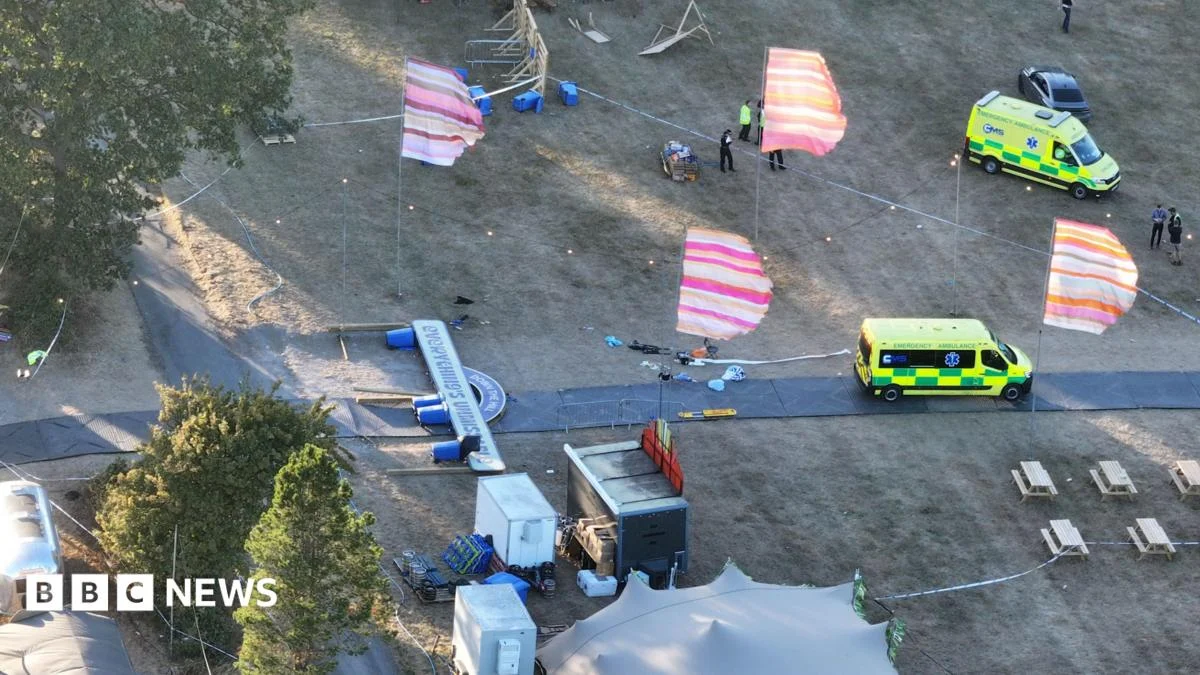
Six individuals sustained injuries following the unexpected collapse of a large directional sign at a prominent Christian festival held on the historic Wiston Estate, prompting immediate emergency response and a comprehensive site management operation. The incident, attributed to severe wind gusts that swept through the West Sussex region, cast a somber shadow over what is typically a celebratory communal event, triggering urgent safety protocols and widespread concern among attendees and authorities alike.
The event, known as the Big Church Festival, an annual fixture in the Christian calendar, was underway when the structural failure occurred. Eyewitness accounts suggest a sudden and forceful squall, consistent with reports of adverse weather conditions in the local vicinity throughout the afternoon, contributed directly to the sign’s collapse. Emergency services, including paramedics and potentially fire and rescue units, were swiftly on the scene to assess the situation, provide medical aid to the injured, and secure the affected area. The immediate aftermath involved rapid triage and transportation of those requiring further medical attention, though the precise nature and severity of their injuries were not immediately disclosed.
Andrew Griffith, the Member of Parliament for Arundel and South Downs, promptly acknowledged the gravity of the situation, expressing profound concern regarding the reported casualties at the Wiston event. His statement underscored the significant wind activity observed in the locale, suggesting a direct meteorological link to the incident. As a constituency representative, Mr. Griffith’s immediate thoughts turned to those directly impacted and the dedicated professionals engaged in the emergency response. The role of an MP in such circumstances extends beyond mere expression of sympathy; it often involves liaising with local authorities, emergency services, and event organizers to ensure a thorough investigation into the causes, advocate for the welfare of constituents, and push for any necessary policy or regulatory reviews to prevent future occurrences. His involvement signals the incident’s elevation to a matter of public and political concern, potentially leading to questions about event safety standards and weather preparedness for large outdoor gatherings.
In a demonstration of spiritual solidarity and community support, the Diocese of Chichester issued a statement extending prayers to all individuals affected by the accident and to the emergency personnel engaged in the arduous task of response and recovery. This spiritual outreach highlights the broader impact of the incident on the faith community, offering comfort and collective reflection during a challenging time. Diocesan leaders often play a crucial role in providing pastoral care and mobilizing support networks for members of their community, particularly in the wake of unexpected tragedies that affect communal gatherings. Their statement serves as a reminder of the underlying purpose of the festival – to foster community and faith – which, despite the incident, remains a core tenet for many attendees.
The festival organizers themselves moved swiftly to implement emergency procedures and communicate with the thousands of attendees present. Their initial public statements confirmed close cooperation with emergency services and relevant authorities, indicating a coordinated effort to manage the unfolding situation. Further announcements were promised as more concrete information became available, demonstrating a commitment to transparency and timely updates. A key element of their immediate response involved instructing all day visitors to evacuate the site, a critical step in managing crowd safety and allowing emergency responders unimpeded access. For campers, who represent a significant portion of the festival’s demographic, the directive was to return to their designated campsites and await further instructions, though they were also given the option to depart the site if they so wished. This tiered approach to site evacuation and management reflects established protocols for large-scale events, balancing safety imperatives with logistical realities and individual autonomy. The organizers also conveyed gratitude for the understanding, patience, and prayers of their community, a sentiment that underscores the collective nature of the festival and the spirit of mutual support expected within such a gathering.
The Big Church Festival itself is a major annual gathering that draws thousands of Christians from across the United Kingdom and beyond to the picturesque Wiston Estate. It is celebrated for its blend of worship, live music, inspirational speakers, and family-friendly activities, offering a unique opportunity for spiritual enrichment and community building in an outdoor setting. The festival typically hosts numerous temporary structures, including stages, tents, food stalls, and various signage, all integral to its operation and attendee experience. The Wiston Estate, a sprawling historic property known for its natural beauty and expansive grounds, provides an ideal backdrop for such a large-scale event, capable of accommodating extensive camping areas and multiple activity zones. The annual planning for such an event is a monumental undertaking, involving meticulous logistical arrangements, stringent safety assessments, and coordination with local councils and emergency services. The incident will undoubtedly prompt a comprehensive review of these planning processes.
The specific meteorological conditions, characterized by "strong gusts of wind," are a critical aspect of this incident. Outdoor festivals are inherently vulnerable to weather changes, and while comprehensive weather monitoring is standard practice, sudden, localized squalls can be difficult to predict with absolute precision. The design and installation of temporary structures, especially large signs exposed to wind loading, require careful engineering to withstand anticipated environmental forces. This incident raises questions about the specific wind resistance ratings of the collapsed sign, the adequacy of its anchoring, and whether the prevailing weather conditions exceeded design parameters. Such factors will be central to any official investigation, likely involving structural engineers and meteorological experts.
From an expert analysis perspective, this incident highlights several crucial areas concerning event management and public safety. Firstly, the emphasis on rigorous risk assessment for outdoor events cannot be overstated. This includes not only crowd management and medical provisions but also detailed structural integrity checks for all temporary installations, with particular attention to potential wind loads, ground stability, and anchoring mechanisms. Regulatory bodies, often including local authority licensing departments and the Health and Safety Executive (HSE), play a vital oversight role in ensuring these assessments are robust and implemented effectively. Any failure to meet these standards could have significant legal and reputational ramifications for the organizers and potentially for contractors involved in erecting the structures.
Secondly, emergency preparedness and communication protocols are paramount. The festival’s swift action in directing day visitors to leave and providing clear instructions to campers demonstrates a degree of readiness. However, the efficacy of these communications, particularly during a chaotic and potentially distressing event, will be scrutinized. How quickly information was disseminated, the clarity of instructions, and the availability of multiple communication channels (e.g., public address systems, social media, staff on the ground) are all critical factors in managing a crisis of this nature. The coordination between festival staff and external emergency services is also vital, ensuring a seamless and efficient response.
Looking ahead, the implications for the Big Church Festival and similar large outdoor gatherings are substantial. There will undoubtedly be an exhaustive investigation into the precise cause of the sign’s collapse. This will likely involve forensic examination of the structure, analysis of meteorological data, and interviews with personnel involved in its installation and oversight. The findings of such an inquiry will inform future safety protocols, potentially leading to revised standards for temporary structures at outdoor events, enhanced weather monitoring requirements, and updated emergency response plans. Organizers of other festivals will be closely watching these developments, learning lessons to bolster their own safety measures.
Beyond the immediate physical injuries, there is also the potential for psychological impact on attendees who witnessed the incident, particularly children. Providing appropriate support services for those affected, both physically and emotionally, will be an important consideration in the aftermath. The festival’s reputation, built over years of successful gatherings, will also be a factor in how it navigates this challenge. Demonstrating a clear commitment to learning from the incident, implementing necessary changes, and ensuring the highest standards of safety will be crucial for maintaining trust and ensuring the long-term viability of this significant Christian event. This incident serves as a stark reminder of the inherent risks associated with large public gatherings, particularly in outdoor environments, and the continuous need for vigilance, preparedness, and adaptation in event management.




 Aura Kasih
 Ayu Aulia

 Safa Marwah