Ayu Aulia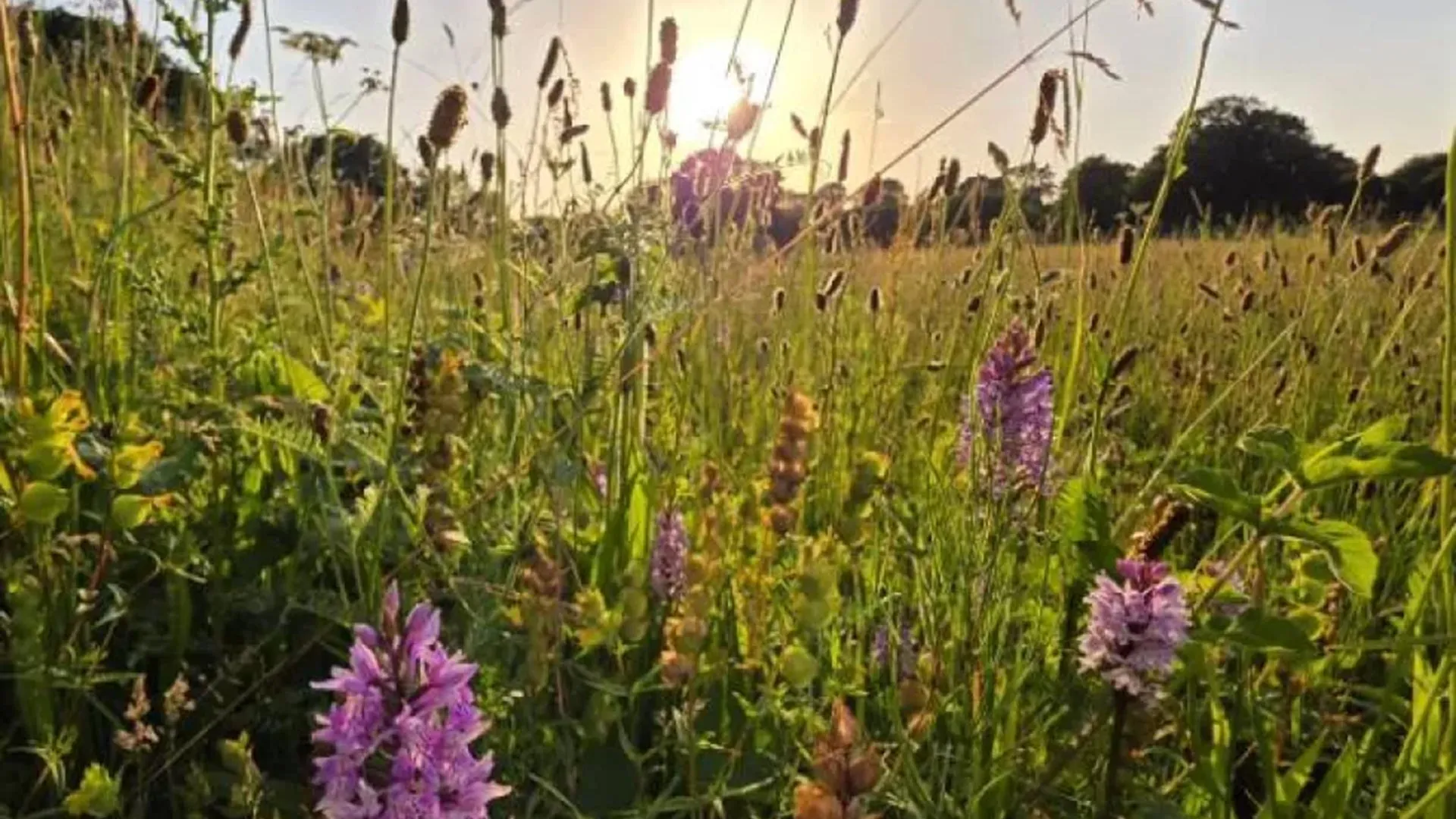
A groundbreaking ecological study spanning over a decade reveals the remarkable capacity of former agricultural land to spontaneously regenerate into vibrant, species-rich wildflower meadows, offering a compelling alternative to expensive, intervention-heavy habitat restoration methods and redefining strategies for large-scale biodiversity recovery. This long-term research, spearheaded by Professor Carl Sayer from UCL Geography, provides robust evidence published in Restoration Ecology, demonstrating that simply allowing nature to reclaim abandoned fields, with minimal human interference, can yield extraordinarily rich and diverse ecosystems, raising profound questions about the prevailing approaches to ecological restoration.
The investigation meticulously tracked the botanical evolution of a two-hectare field situated in North Norfolk, United Kingdom, over an eleven-year period, from 2011 to 2022. Having ceased intensive farming operations after its final crop cycle in 2005, the parcel of land was subsequently managed with a singular, traditional intervention: an annual hay cut. Beyond this routine agricultural practice, the field was left largely undisturbed, becoming a living laboratory for natural ecological succession. The findings present a powerful testament to the resilience and self-organizing capabilities of natural systems.
Within a mere decade to fifteen years following the cessation of conventional agriculture, the once-monoculture arable field had undergone a profound metamorphosis, evolving into a complex and thriving wildflower meadow characterized by an exceptional array of plant species. The observed increase in both the quantity and diversity of flora was sustained over the study period, culminating in the establishment of several species considered locally rare or significant, including the southern marsh orchid (Dactylorhiza praetermissa), greater tussock-sedge (Carex paniculata), yellow rattle (Rhinanthus minor), and common centaury (Centaurium erythraea). The dramatic resurgence of these indicator species underscores the success of this non-interventional approach.
These results directly challenge a widely held assumption within the ecological restoration community: that the successful establishment of species-rich grasslands inherently necessitates the introduction of commercial seed mixes or other resource-intensive and costly interventions. The researchers propose that by trusting and facilitating natural ecological processes, not only can biodiversity be effectively restored, but the vital genetic diversity of plant populations already adapted to the local environmental conditions can be preserved and fostered. This approach stands in stark contrast to the potential homogenization and genetic dilution that can accompany the use of non-local or commercially sourced seeds.
Professor Carl Sayer, a distinguished expert in Limnology and Freshwater Ecology, emphasized the strategic implications of these findings. "Our investigation underscores that embracing a ‘hands-off’ approach, allowing natural regeneration to guide the process, merits far greater consideration in wildflower meadow restoration initiatives," Professor Sayer articulated. He further elaborated on the inherent advantages of natural plant recovery, stating, "This method inherently safeguards genetic diversity more effectively than seeding, ensuring the flourishing of indigenous species and consequently creating meadows that are ecologically distinct rather than generically uniform. Given the pressing imperative for extensive, rapid nature recovery across the UK, our study compels us to critically evaluate: should we not, more frequently, prioritize patience over the proliferation of seed packets?" This statement encapsulates the core argument for re-evaluating established restoration methodologies.
The timely release of these findings holds particular relevance for policymakers and environmental strategists across the UK and continental Europe, where governments are actively seeking scalable and efficacious strategies to reverse biodiversity decline across vast tracts of former agricultural land. Species-rich grasslands are acknowledged as critical habitats, providing essential resources and shelter for a diverse array of pollinating insects, avian species, and terrestrial mammals. Beyond their direct faunal support, these biodiverse ecosystems contribute significantly to overall ecosystem resilience, bolstering the capacity of landscapes to adapt to the escalating challenges posed by climate change, including extreme weather events and altered hydrological cycles. They play roles in carbon sequestration, water filtration, and soil stabilization, functions often overlooked in conventional land management.
The rarity of long-term ecological studies focused on the unassisted recovery of grasslands underscores the unique value of this research. Such investigations demand sustained commitment and consistent monitoring over extended periods, a logistical challenge that often deters their undertaking. The study focused on a specific site known as Sayer’s Meadow, located in Bodham, North Norfolk, a property owned by Professor Sayer’s father and co-author, Derek Sayer. This familial connection provided a stable foundation for the project, enabling the sustained, multi-year observation essential for robust scientific conclusions. Professor Sayer, in collaboration with Pete Robinson, systematically conducted detailed vegetation surveys every two to three years. These rigorous assessments involved the meticulous identification and cataloging of every plant species present across the meadow, alongside the tracking of dynamic changes within established permanent survey plots, thereby ensuring data integrity and longitudinal comparability.
Quantifiable data from the study vividly illustrate the progressive enhancement of biodiversity. Over the eleven-year observation period, the average number of distinct plant species recorded within each survey plot effectively doubled, ascending from approximately ten species in 2011 to nearly twenty by 2022. This numerical increase is a clear indicator of successful ecological enrichment. As the meadow matured and diversified, a striking phenomenon was the spontaneous establishment of thousands of orchid specimens, transforming the landscape into a botanical spectacle. Concurrently, populations of yellow rattle experienced significant proliferation. Both the burgeoning orchid populations and the increased presence of yellow rattle are widely recognized by ecologists as robust indicators of successful and healthy meadow restoration, signifying a return to a vibrant, functioning grassland ecosystem.
The researchers posit that the arrival and establishment of some of the site’s more unusual and rare plant species occurred without direct human intervention, likely facilitated by natural dispersal mechanisms. Wildlife, such as deer, are hypothesized to have played a crucial role in the long-distance transport and deposition of seeds, effectively acting as biological vectors for plant colonization. This observation profoundly underscores the inherent capacity of natural landscapes to regenerate and self-organize, provided they are afforded the necessary time and space for intrinsic ecological processes to operate unfettered. It highlights the often underappreciated role of animal-mediated seed dispersal in driving biodiversity gains.
Reflecting on the genesis and evolution of the project, Professor Sayer offered a personal perspective: "The field is part of our family’s landholding. Following an oilseed rape harvest in 2005, we made the decision to cease cultivating it due to persistent drainage difficulties. My strong desire was to cultivate a wildflower meadow, and while the prevailing advice universally suggested seeding, I consciously resisted that temptation. I have always maintained a deep-seated interest in nature’s intrinsic ability to recover and heal itself." He continued, recounting the early successes: "When the initial orchid specimens began to appear in our surveys, we were immensely gratified. Today, the meadow has attained an unbelievable level of diversity, featuring thousands of orchids that bring immense joy to local residents in the village. Our study provides compelling evidence of what can be achieved through a combination of traditional hay cutting practices and the brilliant, spontaneous power of nature. A visit to this meadow is akin to stepping back in time, offering a glimpse into a bygone era of natural abundance." This personal narrative intertwines with the scientific rigor, lending a powerful human dimension to the research.
The broader implications of this research extend far beyond the confines of a single North Norfolk field. It demonstrates how rigorous geographical studies can fundamentally reshape practical strategies for the restoration of degraded landscapes on a much wider scale. The evidence unequivocally supports the notion that nature-led recovery can make a substantial contribution to achieving ambitious biodiversity restoration targets, simultaneously reducing both the financial cost and the logistical complexity typically associated with rehabilitating degraded land to ecological health. This paradigm shift towards a more patient, observant, and less interventionist approach could unlock significant potential for widespread ecological recovery.
Moreover, the study encourages a re-evaluation of current grant schemes and funding mechanisms for environmental land management. If passive restoration proves equally, or even more, effective than active intervention in certain contexts, then financial incentives could be reoriented to support landowners in simply setting aside land and managing it minimally, rather than investing heavily in expensive seed mixes or complex planting schemes. This could democratize access to nature recovery efforts, making them accessible to a broader range of landowners and farmers.
However, it is crucial to acknowledge that while highly promising, the "patience over seed packet" approach may not be universally applicable. The success observed in Sayer’s Meadow likely benefited from specific initial conditions, such as the proximity to existing semi-natural habitats that could serve as seed sources, and a soil history that, while agricultural, might not have been excessively depleted or contaminated. Future research should explore the efficacy of passive restoration in more severely degraded landscapes, or those isolated from natural seed banks. Nevertheless, for a vast proportion of former agricultural land, particularly in regions with a history of diverse landscapes, this study offers a compelling and economically attractive blueprint for fostering ecological resurgence. It champions a deeper respect for natural processes and a strategic shift towards facilitating, rather than dictating, nature’s recovery trajectory.



 Lisa Mariana
 Aura Kasih
 Safa Marwah