
 Lisa Mariana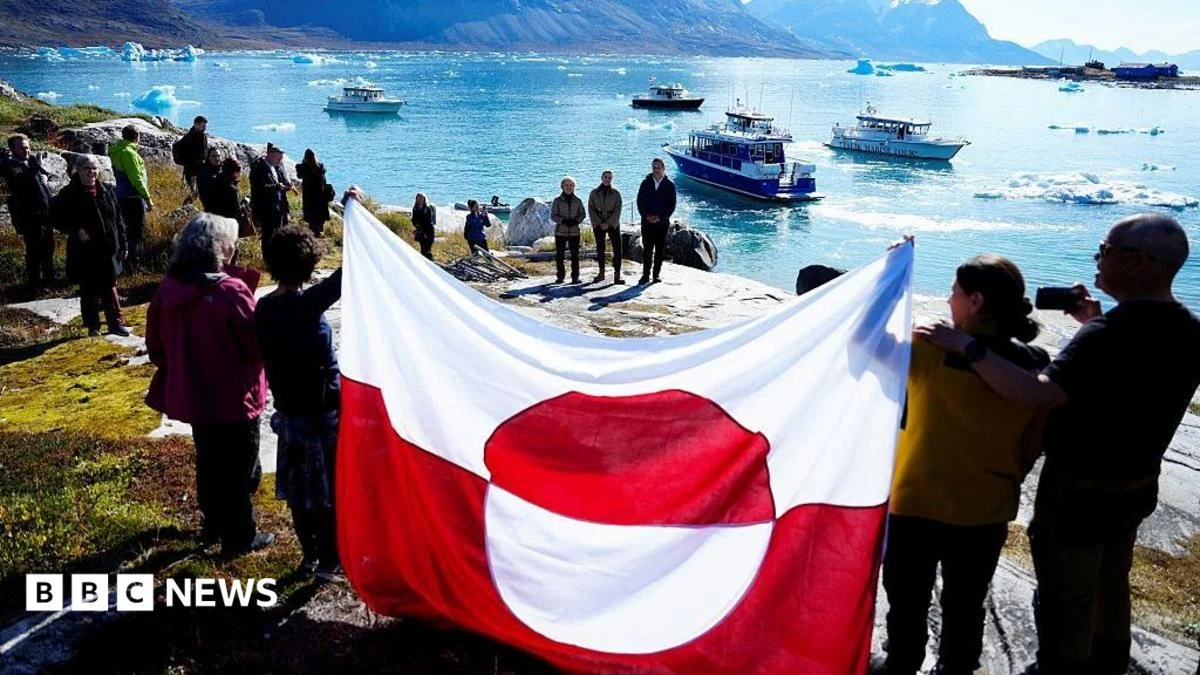
In a significant development poised to reshape strategic alignments in the High North, the United States and Denmark have finalized an expansive security agreement concerning Greenland, an autonomous territory within the Kingdom of Denmark. This comprehensive pact, slated for formal signing at the forthcoming United Nations General Assembly, is designed to fortify regional stability and address evolving geopolitical dynamics, particularly in the strategically vital Arctic domain. The accord emerges from a period of heightened diplomatic activity and underscores a mutual commitment to safeguarding interests in a region increasingly recognized for its geopolitical and economic significance.
The announcement of this agreement represents a culmination of intensive negotiations and a strategic recalibration in the face of burgeoning international interest in the Arctic. While specific textual details of the accord remain confidential pending its official signing and subsequent parliamentary review, public statements from key figures offer initial insights into its scope and intended impact. The President of the United States has characterized the agreement as granting Washington "permanent control over security, and all other needs" pertaining to Greenland, emphasizing a foundational principle of "no cost to the United States" and the inherent capability "to do what is necessary" to ensure Greenland’s security. This expansive assertion further includes a prohibition on any US adversary maintaining a military presence or making "sensitive investments" in Greenland without explicit written approval from the United States.
Conversely, the Prime Minister of Denmark has framed the deal as a vital instrument to "strengthen security in the Arctic and the North Atlantic area," while simultaneously affirming Greenland’s sovereignty, territorial integrity, and the fundamental right of its people to self-determination. This nuanced presentation by Copenhagen highlights the delicate balance between transatlantic security imperatives and the inherent autonomy of Greenland within the Danish Commonwealth. The Chairman of the Greenland Government has also voiced satisfaction, noting that the agreement "ensures and strengthens the security" of all parties and "recognizes Greenland’s interests and our place in international co-operation." The divergent emphasis in these initial pronouncements underscores the complex layers of national interest and political sensitivities embedded within this strategic arrangement.
Historical Context and Greenland’s Enduring Strategic Value
Greenland’s strategic importance is not a contemporary phenomenon but rather a historical constant, magnified by modern geopolitical shifts. During World War II, the island served as a critical staging ground for Allied operations in the North Atlantic, culminating in the establishment of key military installations like Thule Air Base, which remains a cornerstone of North American aerospace defense. Throughout the Cold War, Thule was indispensable for ballistic missile early warning systems, forming a crucial link in the defensive architecture against potential intercontinental threats. The island’s vast, largely uninhabited landmass and its commanding position between the North American and European continents have long rendered it an unparalleled strategic asset.
In the contemporary era, Greenland’s significance has been amplified by two primary factors: climate change and resource competition. The rapid melting of Arctic ice caps is progressively opening new shipping lanes, such as the Northeast and Northwest Passages, promising to revolutionize global maritime trade. This accessibility, however, also presents new challenges for security, surveillance, and environmental protection. Concurrently, Greenland possesses vast, largely untapped reserves of critical minerals, including rare earth elements, uranium, and zinc – resources vital for advanced technologies, renewable energy, and defense industries. The global competition for these strategic commodities has intensified, drawing increased attention from major powers seeking to secure supply chains and reduce reliance on single-source suppliers. These converging factors have elevated Greenland from a peripheral outpost to a central arena in the unfolding great power competition.
Drivers Behind the Accelerated Agreement
From the US perspective, the impetus for this security agreement stems from a multifaceted assessment of evolving threats and strategic vulnerabilities. The discernible increase in Russian military activity in the Arctic, including the modernization of Soviet-era bases and the deployment of advanced weaponry, has prompted Washington to reassess its northern flank defenses. Similarly, China’s escalating engagement in the Arctic, framed as a "Polar Silk Road" initiative involving investments in infrastructure, resource extraction, and scientific research, is viewed with increasing apprehension by US strategists. While Beijing asserts purely economic and scientific motives, the potential for dual-use technologies and long-term strategic influence raises concerns about potential challenges to regional stability and the established international order. Securing Greenland against such perceived encroachments becomes paramount for safeguarding existing US military assets, primarily Thule Air Base, and ensuring unhindered access and operational freedom in the High North.
The deal also reflects a broader US foreign policy emphasis on strengthening alliances and projecting influence in critical regions. The agreement with Denmark, a longstanding NATO ally, reinforces transatlantic security ties and underscores a commitment to collective defense. The prior efforts by the previous US administration to outright purchase Greenland, though diplomatically controversial, undeniably catalyzed a renewed focus on the island’s strategic value and the imperative of securing US interests through diplomatic means. The current agreement can be seen as a pragmatic response to those earlier ambitions, achieving substantial security guarantees without triggering the intense political backlash associated with a proposed acquisition.
For Denmark, the agreement is an affirmation of its long-standing role as a responsible steward of a strategically vital territory and a key contributor to NATO security. Copenhagen recognizes the imperative of balancing Greenlandic autonomy with the overarching security interests of the Kingdom and its allies. The deal offers an opportunity to embed Greenland more deeply into Western security architectures, potentially attracting much-needed investment and infrastructure development, while mitigating the risks of becoming a passive bystander in great power competition. The emphasis on recognizing Greenlandic sovereignty and self-determination in the Danish Prime Minister’s statements is crucial, signaling Copenhagen’s commitment to upholding the rights of the Greenlandic people and ensuring their interests are central to any future arrangements. This aspect is particularly important given Greenland’s aspirations for greater autonomy, and potentially, eventual full independence.
Analyzing the Discrepancies and Implications
The initial public statements reveal a careful rhetorical dance, particularly between the more expansive claims of the US President and the more circumspect, sovereignty-focused language from Copenhagen and Nuuk. The US assertion of "permanent control over security, and all other needs" raises questions about its practical interpretation in light of Denmark’s emphasis on Greenlandic sovereignty and self-determination. Does "all other needs" imply a degree of oversight that could impinge on Greenland’s self-governance or its ability to forge independent economic partnerships? Similarly, the prohibition on "sensitive investments" by US adversaries, while clearly aimed at China and Russia, will require precise definitions to avoid stifling legitimate economic development opportunities for Greenland.
The absence of the official text necessitates a degree of speculation, yet the implications of these stated principles are profound. If the agreement indeed grants the US a veto over specific foreign investments or military presences, it would effectively designate Greenland as a strategic US security zone, significantly limiting the scope for independent foreign policy and economic engagement by Nuuk. This would be a substantial evolution from existing defense agreements, potentially mirroring aspects of a protectorate relationship in certain domains, while formally respecting Danish and Greenlandic sovereignty. The balance struck within the final text between these competing narratives – US security imperatives versus Greenlandic autonomy – will be the ultimate determinant of the deal’s success and its long-term viability.
Broader Geopolitical Ramifications
This security accord is poised to send ripples across the international geopolitical landscape, particularly within the Arctic Council nations and among great powers. For the United States, the agreement solidifies its strategic footprint in the Arctic, providing a crucial bulwark against perceived threats and reinforcing its leadership role in regional security. It serves as a clear signal to Russia and China that attempts to challenge the existing security order in the High North will be met with decisive counter-measures.
Russia, which has consistently advocated for military-free zones in the Arctic while simultaneously bolstering its own military capabilities in its northern territories, is likely to view this agreement as a further step towards the militarization of the region. Moscow might interpret it as a direct challenge to its strategic interests and could respond by accelerating its own Arctic military modernization programs or increasing its naval and air patrols.
For China, the agreement poses a direct challenge to its "Polar Silk Road" ambitions. The explicit prohibition on "sensitive investments" by US adversaries could significantly curtail Beijing’s ability to pursue infrastructure projects, mining ventures, or scientific collaborations that might be deemed to have dual-use potential or strategic implications. This could force China to re-evaluate its Arctic strategy, potentially leading to increased diplomatic pressure or a search for alternative avenues of influence.
Within NATO, the agreement is likely to be welcomed as a strengthening of the alliance’s northern flank. It underscores the importance of Article 5 commitments in the Arctic and reinforces the collective defense posture against potential aggressors. Other Arctic nations, such as Canada, Norway, Iceland, Finland, and Sweden, will closely scrutinize the agreement’s details for its implications on regional stability, resource management, and indigenous rights. There is a delicate balance to be maintained between robust security and cooperative governance in the Arctic, and this deal will undoubtedly influence that dynamic.
Challenges and the Path Forward
The implementation of this agreement faces several significant hurdles. Foremost among these is the requirement for parliamentary approval in both Denmark and Greenland. While the Danish government is expected to secure ratification, the process in Greenland could be more complex. Greenlandic political parties and the public are highly sensitive to issues of sovereignty, self-determination, and the economic benefits derived from their natural resources. Any perception that the deal unduly restricts Greenland’s future development or compromises its path towards greater autonomy could generate significant domestic opposition, potentially delaying or even jeopardizing its full entry into force. The details regarding compensation, investment opportunities, and shared governance will be crucial in securing Greenlandic buy-in.
Furthermore, the practical definition and enforcement of terms like "permanent control," "all other needs," and "sensitive investments" will require ongoing diplomatic engagement and potentially, the establishment of new joint committees or oversight bodies. Ambiguity in these areas could lead to future disputes or misinterpretations. The transparency of the agreement’s full text, once it is finalized and submitted for parliamentary review, will be vital for fostering trust and ensuring accountability.
Looking ahead, this security accord represents more than a mere bilateral arrangement; it signifies a recalibration of the geopolitical calculus in the Arctic. It underscores the region’s transformation from a remote frontier to a vital theater of great power competition, where economic interests, national security, and environmental concerns intersect. The success of this agreement will ultimately depend on its ability to provide enduring security without undermining the legitimate aspirations of the Greenlandic people and without unduly escalating tensions in an already sensitive region. It demands continued diplomatic dexterity, a commitment to multilateral dialogue, and a clear understanding of the complex interplay of interests that define the High North. The world will be watching as this landmark agreement unfolds, its implications poised to shape the future of Arctic governance and international relations for decades to come.




 Aura Kasih
 Ayu Aulia

 Safa Marwah