Lisa Mariana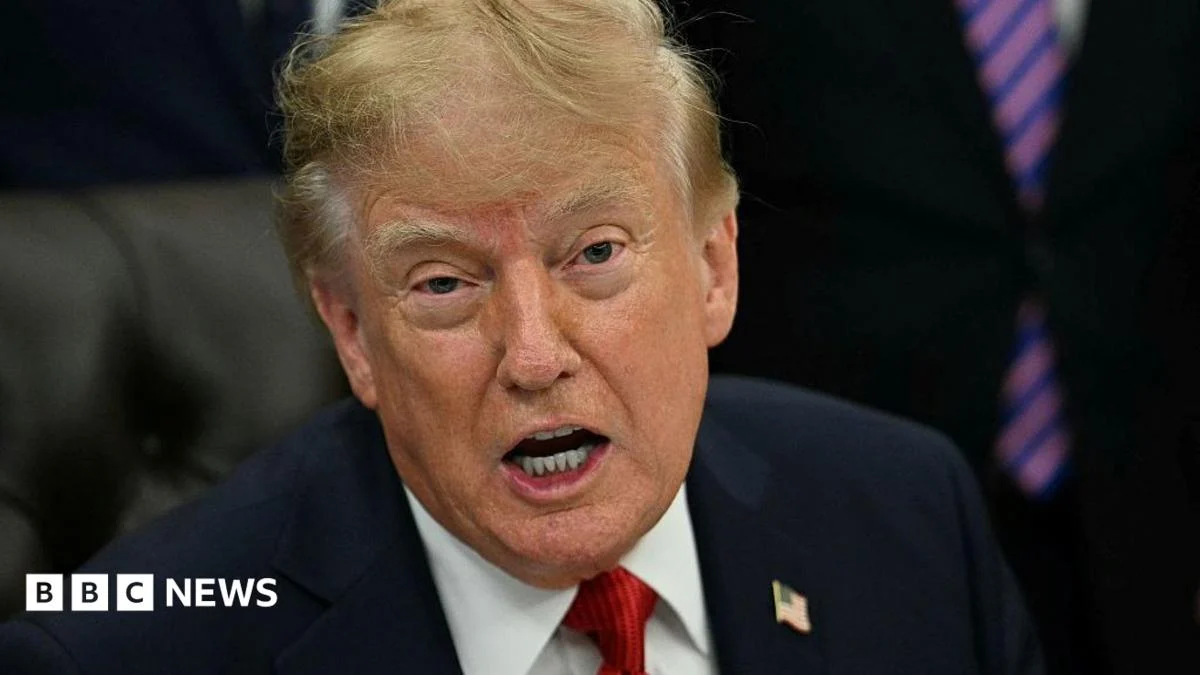
The administration of President Donald J. Trump has announced an immediate prohibition on White House access for several prominent news organizations, marking a significant escalation in the ongoing friction between the executive branch and a segment of the press corps. The unprecedented declaration, targeting CNN, MS NOW, and Politico, was conveyed by President Trump via his Truth Social platform on a recent Friday, attributing the decision to a pattern of what he termed "fiction and lies" in their reporting, though specific instances were not publicly enumerated. This development instantly ignited a robust debate regarding the parameters of press freedom, governmental authority, and the fundamental role of an independent media in a democratic society.
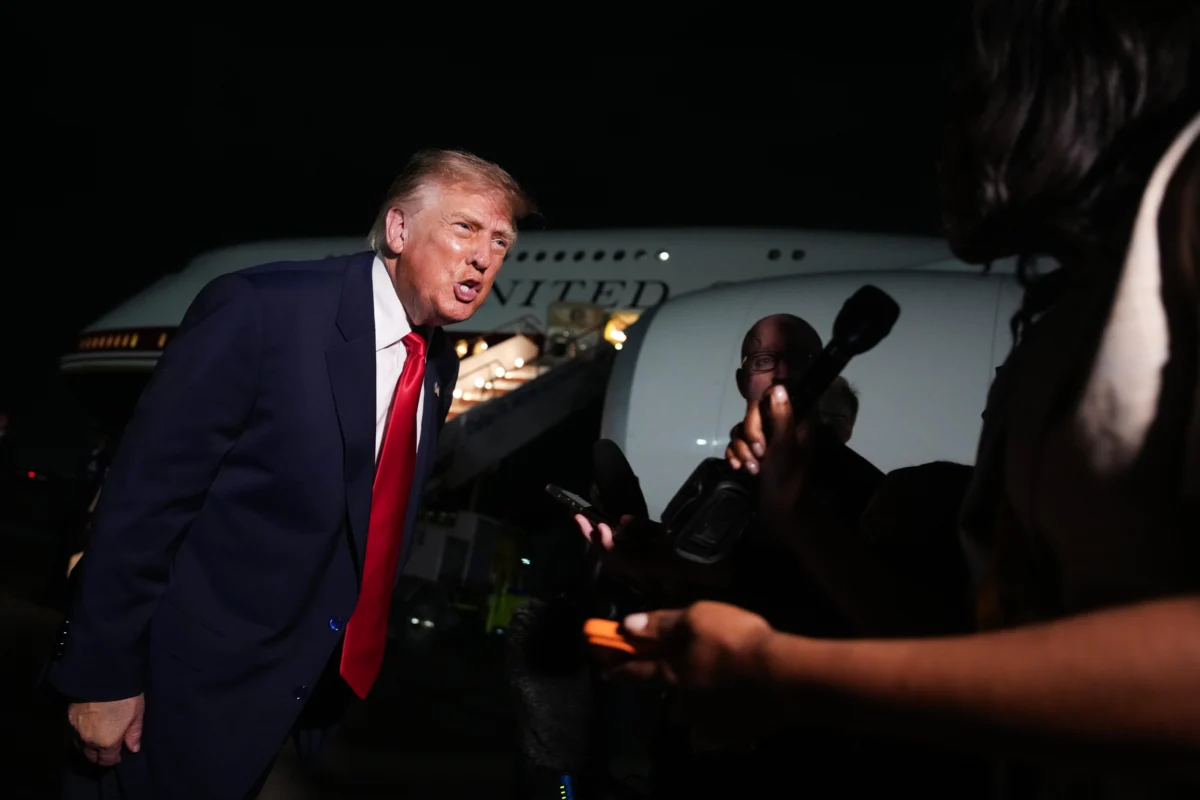
President Trump characterized the directive as a "very simple ban" during subsequent remarks, yet offered no detailed operational framework for its implementation. The ambiguity surrounding the practical execution of such a ban—specifically, whether it would entail denying entry to White House grounds for employees of these outlets or merely restrict their access to specific briefings and events—remains a critical point of uncertainty. This lack of clarity has only intensified the apprehension among journalistic organizations and civil liberties advocates.
In the immediate aftermath of the announcement, CNN issued a forceful denunciation, labeling the measure an "illegal assault" on the bedrock principles of American press freedoms. The network affirmed its unwavering commitment to its White House reporting team, asserting the constitutional right to conduct journalism without governmental interference. Such a ban, CNN contended in its statement, would represent an unconstitutional infringement upon these fundamental protections. Politico echoed this sentiment, declaring its resolve to continue its objective reporting on the current and future administrations and pledging to vigorously defend its First Amendment rights against any attempts at restriction. MS NOW, formerly known as MSNBC, notably abstained from public comment on the matter.
Curiously, reports from the White House grounds shortly after the presidential decree indicated that journalists affiliated with both CNN and Politico were still present and performing their duties. Furthermore, a CNN news crew was observed traveling with Vice-President JD Vance for an event in Iowa, underscoring the immediate practical challenges and apparent disconnect between the presidential pronouncement and the realities on the ground. When questioned about the timing of the announcement, President Trump stated there was "no reason" for it being made on Friday afternoon, attributing it to a cumulative exasperation with reporting over several years. He also hinted at the possibility of other news organizations eventually joining the list of those barred, adding a layer of uncertainty to the future landscape of White House press coverage. While acknowledging the high likelihood of legal challenges, President Trump appeared unperturbed, remarking that it was "good to point it out, whether it survives or doesn’t."
The current administration’s relationship with the media has been notably contentious since President Trump’s return to office in January 2025. This latest move is not an isolated incident but rather the culmination of a series of actions and rhetorical battles that have systematically reshaped the dynamic between the executive branch and the press. From the outset of his second term, the President and his officials have frequently engaged in public clashes with members of the White House press corps. A discernible strategy has emerged, aiming to alter the composition and control of media access points within the White House. This includes a concerted effort to integrate conservative bloggers, social media influencers, and alternative media personalities into the press briefing room, ostensibly to foster "diverse perspectives" for the American public. Critics, however, view this as an attempt to cultivate a more sympathetic media environment and dilute the influence of traditional news organizations.
A pivotal shift occurred in February when the White House asserted direct control over the presidential press pool. For over a century, this critical mechanism, which grants a small group of reporters limited access to the President for sharing information with the broader media, had been managed by the White House Correspondents’ Association (WHCA). The administration’s unilateral decision to seize control of the pool was met with significant concern, as it centralized authority over who gains proximity to the President, thereby potentially enabling viewpoint-based discrimination in access.
Further illustrating this escalating tension, the same month witnessed the administration’s move to prohibit Associated Press (AP) reporters and photographers from certain limited-access venues, such as the Oval Office and Air Force One. This particular restriction stemmed from the AP’s continued use of the geographical term "Gulf of Mexico" rather than the administration’s preferred "Gulf of America." The Associated Press swiftly responded by filing a lawsuit, which remains ongoing, highlighting the legal battles that have become a hallmark of this administration’s interactions with the press. These incidents underscore a pattern of the President frequently engaging in confrontational exchanges with journalists, often employing pejoratives such as "fake news" and "rude" to characterize their reporting and demeanor.
The current situation also evokes memories of a similar confrontation during President Trump’s first term, when CNN correspondent Jim Acosta was temporarily stripped of his White House credentials. That incident culminated in a successful lawsuit by CNN, which led to the reinstatement of Acosta’s access, establishing a significant legal precedent regarding the parameters of presidential authority over press access. CNN’s pivotal role as one of only five U.S. news organizations providing video for the White House pool, alongside the BBC’s contribution to the radio pool, further amplifies the potential impact of this latest ban on the broader dissemination of presidential news. The pool system is designed to ensure that even with limited access, crucial visual and auditory information from presidential events is shared across a wide array of media outlets. Disrupting this arrangement for a key participant like CNN therefore has ramifications beyond just the affected outlet.
The announcement was met with immediate and widespread condemnation from leading advocacy organizations dedicated to the protection of press freedom. The Knight First Amendment Institute at Columbia University issued a strong statement, observing that "with so many courts having ruled against him on exactly this point, you’d think President Trump would have learned this lesson by now." Jameel Jaffer, the institute’s executive director, articulated the constitutional vulnerabilities of the proposed ban, particularly if it targets journalists within the White House press pool. He explained that the press pool, much like the broader White House briefing room, functions as a "public forum" under the First Amendment. This designation imposes stringent limitations on the government’s ability to exclude individuals based on their viewpoints or the content of their expression, rendering such exclusions "doubly unconstitutional."
Similarly, the Reporters Committee for Freedom of the Press, a prominent legal services group for the media, expressed its expectation that the ban would be swiftly overturned by the judiciary due to its unequivocally unconstitutional nature. Bruce Brown, the group’s president, emphasized that "the First Amendment is clear that once the White House invites in some journalists, it can’t ban others because it doesn’t like their reporting." He characterized the potential ban as "textbook viewpoint discrimination," a legal term for governmental action that disfavors or favors speech based on the message it conveys.
The legal and constitutional challenges that loom large are rooted in the fundamental protections afforded by the First Amendment. The freedom of the press is not merely a privilege but a cornerstone of American democracy, designed to ensure that the public remains informed and that those in power are held accountable. Judicial precedent, particularly following the Jim Acosta case, has consistently affirmed that while the President retains some discretion over White House access, this discretion is not absolute and cannot be exercised in a manner that discriminates based on the content or viewpoint of a news organization’s reporting. The courts have generally recognized that public spaces within the White House, especially those designated for press interaction, operate under principles akin to a public forum, where viewpoint-based restrictions are subject to strict scrutiny and are rarely upheld.
Should the administration proceed with enforcing these bans, immediate legal challenges in federal courts are almost certain. These lawsuits would likely seek injunctive relief to prevent the White House from implementing the restrictions, arguing irreparable harm to press freedom and the public’s right to information. Given the established legal precedents and the strong constitutional arguments, legal experts widely anticipate that such bans would face significant hurdles and likely be struck down by the judiciary. The potential for injunctions would mean that even if a ban were announced, its practical enforcement could be halted pending a full legal review, potentially leading to a protracted legal battle that consumes significant resources and attention from both the administration and the affected news organizations.
Beyond the immediate legal battles, the implications of this action are far-reaching. It signals a further erosion of traditional norms governing the relationship between the presidency and the press, potentially emboldening future administrations to adopt similar tactics against critical reporting. The perception of an executive branch actively attempting to curate or control the information flow from the White House risks undermining public trust in both governmental institutions and the media itself. For the affected news organizations, it presents a logistical challenge, forcing them to explore alternative avenues for covering the presidency, potentially through legal action or by relying more heavily on pooled reports if they are not entirely excluded from the grounds.
Ultimately, this latest move by the Trump administration represents a critical moment for press freedom in the United States. It forces a re-evaluation of the boundaries of executive power in managing media access and reinforces the vital role of the judiciary in safeguarding constitutional rights. The outcome of the impending legal confrontations and the long-term impact on the landscape of White House journalism will undoubtedly shape the future of media-government relations for years to come, offering a stark reminder of the continuous struggle to uphold the principles of an independent and unfettered press in a vibrant democracy. The international community will also be observing closely, as such actions by a leading democratic nation can set precedents or inspire similar restrictions in other countries.

 Aura Kasih
 Safa Marwah
 Ayu Aulia