Ayu Aulia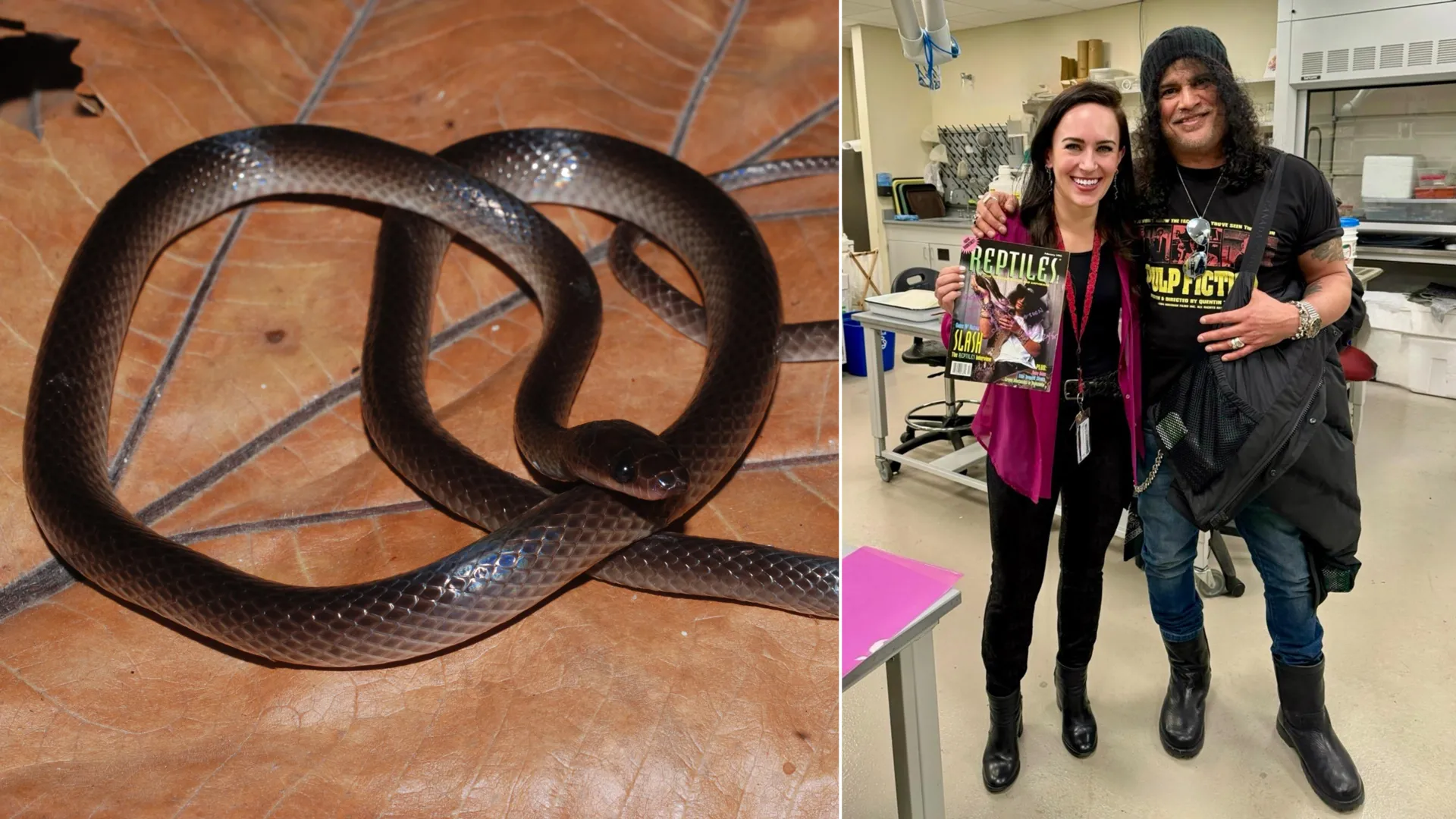
A previously undocumented species of snake, native to the biodiverse rainforests of New Guinea, has been formally recognized by scientists and bestowed with a name honoring the renowned guitarist Saul "Slash" Hudson, celebrated globally for his pivotal role in the legendary rock band Guns N’ Roses. This distinctive reddish-brown reptile, now scientifically designated Lielaphis slashi, or Slash’s groundsnake, represents a significant addition to the known herpetofauna of one of Earth’s most ecologically complex regions, simultaneously acknowledging the musician’s lifelong dedication to reptile advocacy and natural history preservation.
Beyond his electrifying guitar solos and iconic top hat, Slash has cultivated a profound, lifelong fascination with reptiles. This deep-seated interest has transcended mere personal curiosity, manifesting in sustained support for zoological institutions, natural history museums, and various conservation initiatives dedicated to understanding and protecting the planet’s diverse reptilian inhabitants. His public platform has frequently been leveraged to champion the cause of these often-misunderstood creatures, fostering greater public awareness and appreciation. The decision by the scientific community to immortalize his name within the Linnaean taxonomy of a newly described species serves as a unique tribute to his genuine passion and contributions, elevating it from a personal hobby to a recognized influence within the realm of scientific discovery and conservation.
The Genesis of a Scientific Honor
The formal naming of a new species is a rigorous process governed by international codes, typically involving detailed morphological and genetic analyses followed by publication in peer-reviewed scientific journals. However, the selection of a specific epithet—the second part of the scientific name—often carries cultural or personal significance. In this instance, the choice of slashi was deeply personal for Dr. Sara Ruane, Associate Curator of Herpetology at the Field Museum and a senior author of the descriptive paper published in the esteemed journal Zootaxa.
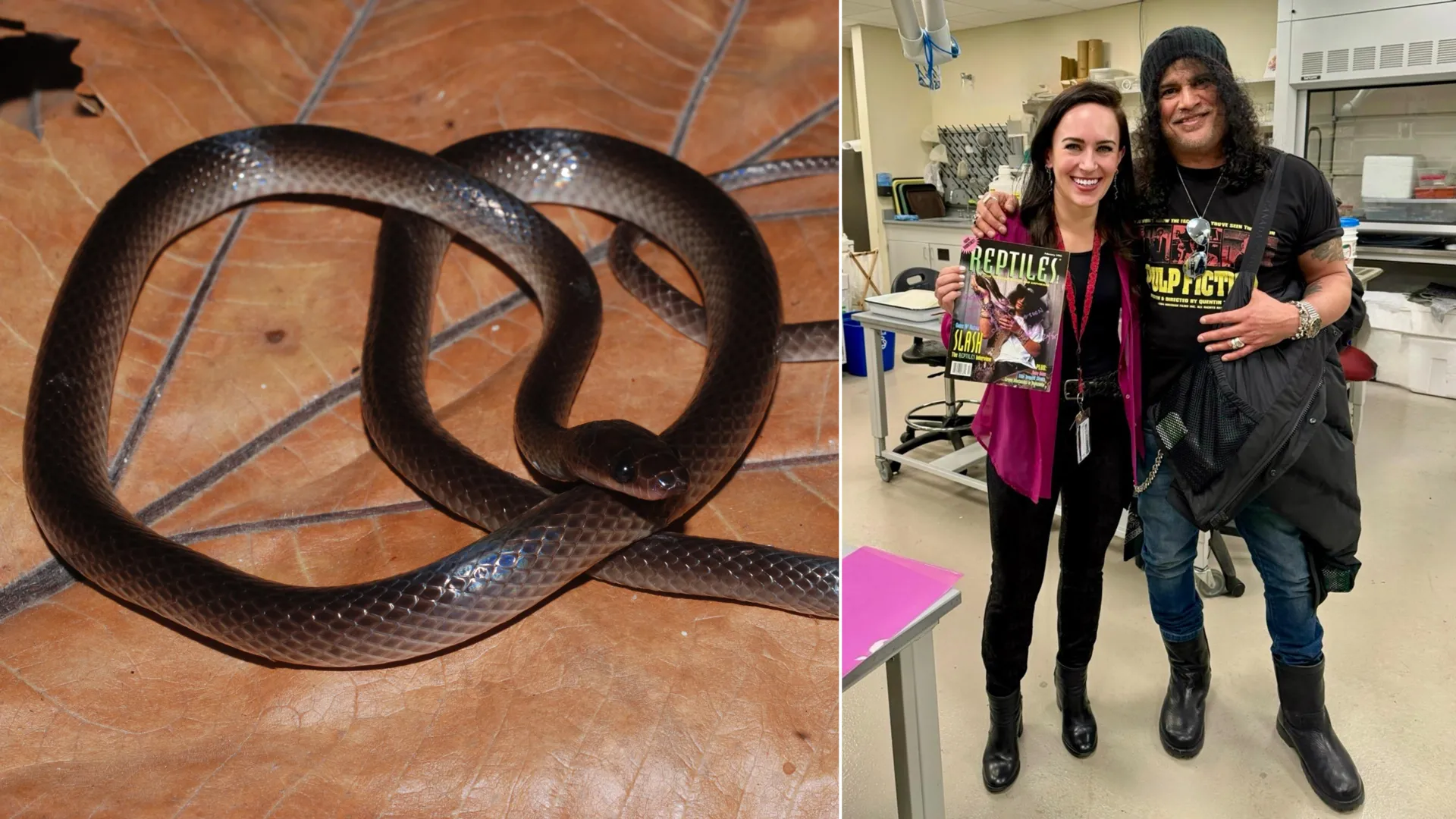
Dr. Ruane’s journey into herpetology, the scientific study of reptiles and amphibians, began at an exceptionally young age. She recounts a formative experience during her elementary school years, where a nascent interest in herpetology blossomed into a clear career aspiration. This ambition was uniquely intertwined with her admiration for Guns N’ Roses, a band that captivated her during her formative years. A pivotal moment arrived in her early adolescence when she encountered an image of Slash on the cover of Reptiles Magazine, holding a pet reticulated python. This striking visual cemented an impression of the musician as an individual whose passions mirrored her own burgeoning scientific interests. For Dr. Ruane, this unexpected confluence of rock music and reptile enthusiasm created a compelling connection, illustrating how diverse cultural touchstones can inspire scientific vocations.
Years later, as a seasoned scientist with the rare privilege of officially naming newly recognized species, Dr. Ruane revisited that early inspiration. She meticulously reviewed past interviews with Slash, noting his consistent articulation of reverence for natural history institutions—museums and zoos—and his childhood recollections of actively searching for snakes in the wild. These anecdotes resonated profoundly with her own experiences and professional ethos, affirming her conviction that Slash’s authentic dedication to the natural world made him an exceptionally fitting namesake for a novel reptilian species. This thoughtful approach underscores that scientific nomenclature, while primarily descriptive, can also serve as a powerful medium for acknowledging and promoting public engagement with the natural sciences.
Unveiling a Mystery from New Guinea
The island of New Guinea stands as the world’s second-largest landmass, trailing only Greenland in sheer expanse. Geographically situated north of Australia, its territory is politically divided between Indonesia and Papua New Guinea. This colossal island is a veritable crucible of biological diversity, characterized by vast expanses of tropical rainforests, soaring mountain ranges, and intricate river systems. Its ecosystems harbor an extraordinary array of flora and fauna, a significant proportion of which remains largely uncatalogued and scientifically undocumented, presenting both immense opportunities and formidable challenges for researchers. The sheer scale of its biodiversity makes New Guinea a critical focus for global conservation efforts and a frontier for new biological discoveries.
The specific specimen that would eventually become Lielaphis slashi was first encountered during a nocturnal fieldwork expedition in 2006 by Dr. Chris Austin, a distinguished professor and curator of herpetology at the Louisiana State University Museum of Natural Science. Operating under the cover of darkness is often imperative for locating many of New Guinea’s ground-dwelling snake species, which are predominantly nocturnal. These elusive serpents are typically observed shortly after sunset, frequently at the base of large trees, where they forage for prey. Fieldwork in such environments demands extreme caution, as many highly venomous species inhabiting New Guinea share superficial resemblances with their non-venomous counterparts, necessitating expert identification skills and rigorous safety protocols.
Dr. Ruane later collaborated with Dr. Austin at LSU in 2016, following the completion of her doctoral studies. Their shared interest in New Guinea’s understudied ophidian populations led to a sustained partnership aimed at elucidating the complex taxonomy and ecology of the region’s snakes. This collaborative framework was instrumental in the subsequent detailed investigation of the enigmatic snake specimen initially collected by Dr. Austin, ultimately leading to its formal scientific description.
The Rigor of Scientific Validation: Genetics and Morphology
Initial visual examination of the collected snake did not immediately suggest it represented a species entirely new to science. The morphological characteristics were somewhat consistent with known members of the genus. However, the definitive classification of a new species often necessitates a more profound investigation, transcending mere external appearance. This is where advanced laboratory techniques become indispensable, revealing distinctions imperceptible to the naked eye.
The scientific team, led by Dr. Tianqi Huang, the study’s first author and a postdoctoral researcher working with Dr. Ruane at the Field Museum, employed a suite of sophisticated genetic analyses. These cutting-edge molecular techniques, including DNA sequencing and phylogenetic analyses, provided irrefutable evidence that Lielaphis slashi possesses a distinct genetic signature, diverging significantly from other phenotypically similar snakes within the same genus. Such genetic distinctiveness is a cornerstone of modern species delineation, offering insights into evolutionary relationships and historical isolation.
In conjunction with molecular data, the researchers meticulously examined various physical characteristics. Subtle yet consistent differences in meristic counts, such as the number and arrangement of scales along the body, head, and tail, were observed when L. slashi was compared against closely related species. This combinatorial approach, integrating both genetic and morphological evidence, solidified the conclusion that the specimen represented an entirely novel species. Furthermore, the team utilized ecological modeling techniques to predict and delineate the preferred habitat of L. slashi. These models indicated that the new species occupies a distinct ecological niche, favoring specific environmental parameters that differentiate it from other members of its genus. This ecological separation further reinforces its status as a distinct biological entity, highlighting the intricate partitioning of resources and habitats within complex ecosystems.
Ecological Profile and Predatory Adaptations
Despite its formal scientific description, detailed knowledge regarding the behavior and ecology of Lielaphis slashi in its natural habitat remains limited. Observing these elusive, nocturnal snakes in the wild presents considerable challenges, as their cryptic nature and rapid movements often preclude prolonged study. Consequently, much of what is currently understood about L. slashi‘s lifestyle and feeding habits is inferred from its anatomical features and comparisons with congeneric species.
Snakes within the Lielaphis genus are frequently characterized by the presence of enlarged teeth situated towards the posterior of their mouths. This specific dentition suggests a specialized feeding strategy, likely adapted for subduing particular types of prey. Dr. Ruane posits that New Guinea groundsnakes, including L. slashi, may utilize these specialized teeth to effectively grasp and consume small, often slippery-scaled lizards or the eggs of other reptiles. This contrasts sharply with the constricting methods employed by larger serpents like boa constrictors, illustrating the diverse predatory adaptations within the ophidian lineage. While the band Guns N’ Roses is famously dubbed "the most dangerous band in the world," its reptilian namesake, L. slashi, poses no significant threat to humans. The species is not equipped with venom potent enough to cause serious harm to people, distinguishing it from many of the more perilous snakes that inhabit New Guinea.
The Imperative of Conservation in a Threatened Landscape
While Lielaphis slashi presents no danger to human populations, the very human activities that shape the modern world pose substantial threats to the survival of this newly discovered species and countless other organisms inhabiting New Guinea’s fragile forests. The primary anthropogenic pressures identified include widespread land conversion for agricultural expansion, such as coffee farming, and large-scale extractive industries like mining.
The proliferation of coffee farming, while economically significant, often leads to extensive deforestation and habitat fragmentation. This agricultural encroachment directly destroys the primary forest habitats upon which species like L. slashi depend, simultaneously introducing pesticides and other chemical pollutants into delicate ecosystems. Similarly, mining operations, whether for gold, copper, or other valuable minerals, inflict profound environmental damage. These activities involve massive landscape alteration, habitat destruction, soil erosion, and the contamination of water sources with heavy metals and other toxic byproducts. The cumulative impact of these industries is a rapid degradation of New Guinea’s pristine environments, jeopardizing its unparalleled biodiversity.
Dr. Ruane emphasizes the critical importance of species description in the face of these escalating threats. The formal identification and documentation of species like L. slashi are not merely academic exercises; they form the foundational baseline for all subsequent conservation efforts. It is impossible to effectively protect organisms whose existence remains unknown to science. By accurately cataloging biodiversity, researchers can construct a clearer, more comprehensive understanding of how ecosystems function, identify areas of high endemism or vulnerability, and inform evidence-based conservation strategies. This knowledge is indispensable for policymakers and conservation practitioners seeking to implement protective measures, establish protected areas, and mitigate the adverse impacts of human development. The discovery of Lielaphis slashi, therefore, serves as a poignant reminder of the vast, uncharted biological wealth that still exists and the urgent need to preserve it before it is irrevocably lost.
This collaborative study, culminating in the description of Lielaphis slashi, was a testament to inter-institutional scientific cooperation. Key contributors included Tianqi Huang (Field Museum and Rutgers University), Chris Austin (Louisiana State University Museum of Natural Science), Justin Bernstein (Slippery Rock University and the American Museum of Natural History), Bulisa Iova (Papua New Guinea National Museum and Art Gallery), Jackson Roberts (Virginia Museum of Natural History), Jeffrey Frederick (University of Kentucky), and Sara Ruane (Field Museum), each playing a vital role in advancing our understanding of New Guinea’s hidden biological treasures. The naming of this snake not only honors a cultural icon but also underscores the enduring connection between human creativity, scientific discovery, and the profound responsibility to protect our planet’s invaluable natural heritage.



 Aura Kasih
 Safa Marwah