Lisa Mariana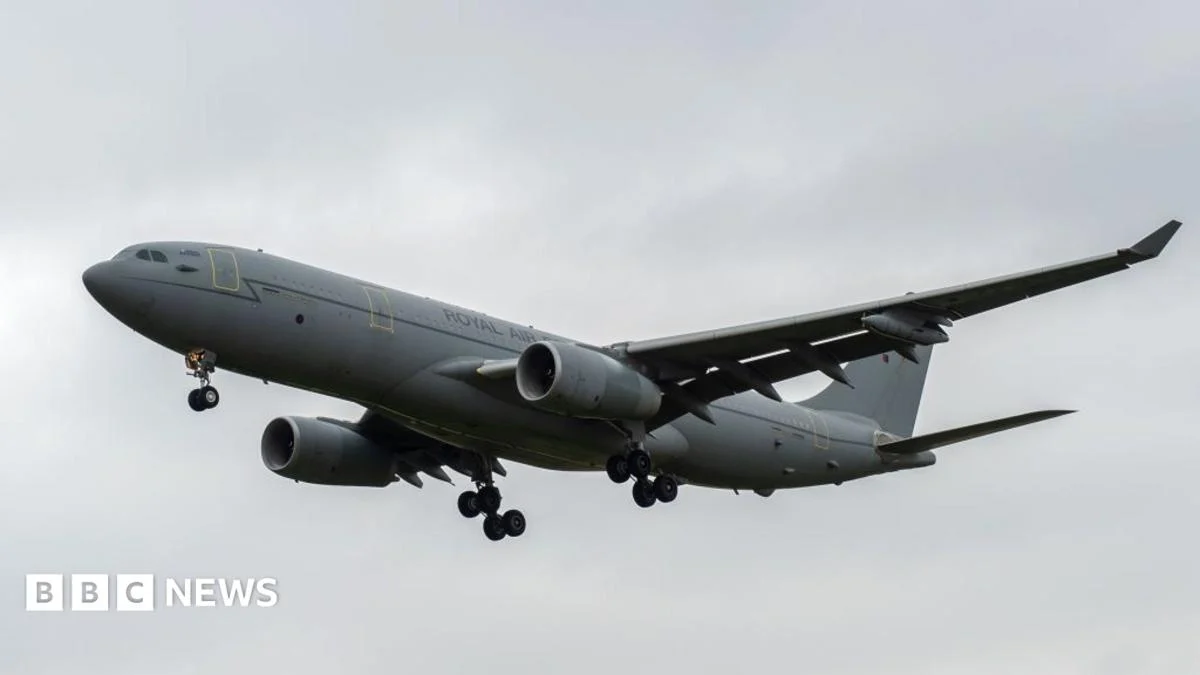
The United Kingdom has announced its intention to provide "defensive air-to-air refuelling" support to Saudi Arabia, a strategic move designed to reinforce the Kingdom’s aerial defense posture against persistent drone and missile attacks orchestrated by the Iran-aligned Houthi movement operating from Yemen. This initiative underscores a significant enhancement of British engagement in maintaining regional stability and securing vital global trade arteries, particularly in the Red Sea.
The decision to deploy a single British Voyager aircraft, operating from RAF Akrotiri in Cyprus, is anticipated to commence within days. This deployment follows a direct request from Riyadh for military assistance, which was formally endorsed by the British Prime Minister after consultation with key cabinet ministers, including the Secretary of State for Defence and the Foreign Secretary. Officials have characterized the offer as a precisely "time-limited" engagement, projected to span several weeks in its initial phase, signaling a targeted and responsive intervention rather than an open-ended commitment.
The ongoing conflict in Yemen, now in its ninth year, pits the internationally recognized government, substantially backed by a Saudi-led coalition, against the Houthi rebels. This protracted civil war has profound regional implications, often viewed through the lens of a broader proxy confrontation between Saudi Arabia and Iran. Recent escalations have seen Houthi forces execute a series of sophisticated drone and ballistic missile strikes targeting critical Saudi infrastructure, including the capital city of Riyadh and key energy installations situated along the strategically significant Red Sea coastline. These actions represent a direct challenge to Saudi national security and contribute to the broader instability impacting global energy markets and maritime commerce.
The nature of the British support is explicitly defined as "defensive," focusing on augmenting the Saudi Air Force’s capacity to intercept and neutralize incoming aerial threats, such as missiles and unmanned aerial vehicles (UAVs). Air-to-air refuelling is a force multiplier, significantly extending the patrol endurance and operational reach of fighter jets, thereby enabling them to maintain a more continuous and effective air defense umbrella over vulnerable targets. The Voyager aircraft, a versatile multi-role tanker transport, is an integral component of the Royal Air Force’s strategic lift and refuelling capabilities, with a core fleet complemented by additional assets available for rapid military deployment if required.
Speaking on the strategic rationale behind this commitment, the British Prime Minister emphasized the nexus between regional security and domestic economic stability. He articulated a clear linkage between the security challenges faced by Saudi Arabia and the broader "cost-of-living pressures" impacting British citizens, highlighting the imperative to "secure the interests of Britain and the wider region." This perspective underscores the interconnectedness of global supply chains and energy markets, where disruptions in critical regions can cascade into global economic ramifications. The Red Sea, in particular, represents a crucial maritime choke point, facilitating a substantial portion of international trade and energy shipments. The recent Houthi seizure of the strategic port city of Mokha and Perim Island, which commands the Bab el-Mandeb Strait—the southern gateway to the Red Sea—further exacerbates concerns over maritime security and freedom of navigation.
The decision by the United Kingdom is not an isolated development but rather a continuum of international efforts to address Houthi aggression. Earlier this year, the UK, in conjunction with the United States, initiated targeted airstrikes against Houthi military installations across Yemen. These operations were framed as acts of self-defense, aimed at deterring attacks on international shipping, including British naval vessels, and safeguarding commercial maritime traffic. The Energy Minister had previously acknowledged the UK’s provision of "air defense support" to Saudi Arabia through established defense partnerships, though details of operational military activity remained undisclosed at the time. This latest deployment of refuelling assets represents a more explicit and direct form of operational assistance.
The broader international context also suggests a growing consensus among Western allies regarding the necessity of bolstering regional security. Remarks from the NATO Secretary-General last week hinted at potential coordinated European support for Saudi Arabia, suggesting ongoing high-level discussions among allies to formulate a collective response to the escalating threats. Such diplomatic overtures underscore a shared recognition of the strategic importance of the Arabian Peninsula and the Red Sea region to global stability.
Background and Context: The Yemen Conflict and Regional Geopolitics
To fully appreciate the significance of the UK’s intervention, it is essential to delve into the intricate layers of the Yemen conflict. Originating in late 2014 with the Houthi takeover of the capital Sana’a, the conflict quickly escalated into a full-scale civil war by March 2015 when a Saudi-led coalition intervened to restore the internationally recognized government. The Houthis, a Zaydi Shia movement, have long felt marginalized within Yemen and have capitalised on widespread discontent and state fragility. Their rise is often attributed to a combination of indigenous grievances and alleged material and ideological support from Iran, though the extent of direct Iranian command and control remains a subject of debate.
For Saudi Arabia, the conflict represents a critical national security imperative. Yemen shares a long, porous border with the Kingdom, and a Houthi-controlled Yemen is perceived as a direct threat to its southern flank, particularly given the Houthis’ anti-Saudi and anti-Western rhetoric. The proliferation of ballistic missiles and armed drones within Houthi arsenals, allegedly supplied or developed with Iranian assistance, has allowed them to project power deep into Saudi territory, targeting critical infrastructure and population centers. This capability has fundamentally altered the dynamics of the conflict, transforming it from a localized civil war into a significant regional security challenge.
The Red Sea, bordering Yemen, is one of the world’s most vital maritime choke points, linking the Suez Canal to the Indian Ocean. An estimated 12% of global trade and a significant portion of the world’s oil supply transits these waters annually. Houthi control over key coastal areas and islands, coupled with their demonstrated willingness to target shipping, poses an existential threat to this critical artery of global commerce. Disruptions here translate directly into increased shipping costs, higher insurance premiums, and ultimately, elevated consumer prices globally – a direct link to the "cost-of-living pressures" cited by the British Prime Minister.
Strategic Analysis and Implications of UK Support
The deployment of a Voyager aircraft for air-to-air refuelling is a highly specialized form of military support with specific strategic benefits. It is a non-kinetic intervention, meaning British personnel and aircraft are not directly engaged in combat operations, which helps manage political risk and potential for direct escalation. However, its impact on the operational tempo and effectiveness of Saudi air defense is substantial. By enabling Saudi fighter jets to remain airborne for extended periods, the refuelling capability enhances their ability to patrol, detect, and intercept Houthi projectiles. This effectively widens the defensive perimeter and increases the chances of successful interdiction, thereby improving the overall security posture of Saudi Arabia.
From the UK’s perspective, this intervention serves multiple strategic objectives. Firstly, it reaffirms Britain’s commitment to regional security and its long-standing defense relationship with Saudi Arabia, a key partner in the Gulf. This relationship extends beyond military cooperation to include significant economic ties, particularly in the defense sector. Secondly, it contributes directly to the stability of global energy markets and maritime trade routes, which are paramount to the UK’s own economic prosperity. By mitigating threats to Saudi infrastructure and Red Sea shipping, the UK is safeguarding its economic interests and contributing to the resilience of global supply chains.
Thirdly, the "time-limited" nature of the deployment suggests a calibrated response. It allows the UK to provide immediate, targeted assistance without committing to a prolonged, open-ended military engagement, thereby offering flexibility and allowing for reassessment based on evolving circumstances. This approach also seeks to balance the strategic imperative of addressing Houthi aggression with the political sensitivities surrounding military involvement in the Yemen conflict, which has been associated with a dire humanitarian crisis.
Potential Outcomes and Future Outlook
The immediate outcome of the UK’s enhanced support is likely to be an improved capacity for Saudi air defense. This could potentially lead to a reduction in successful Houthi attacks on Saudi territory, thereby bolstering confidence in the Kingdom’s defensive capabilities. However, the broader impact on the conflict dynamics remains complex. While defensive support may deter some attacks, it might also be perceived by the Houthis as an escalation, potentially prompting them to seek new ways to circumvent or overwhelm enhanced defenses, possibly with increased external assistance.
The humanitarian situation in Yemen, already one of the worst in the world, is a constant concern. While the UK’s support is defensive in nature and aimed at protecting civilian areas and infrastructure, any intensification of the conflict, regardless of its origin, risks exacerbating the crisis. The international community continues to call for a comprehensive political solution to the conflict, and military interventions, even defensive ones, must be carefully weighed against their potential impact on peace efforts.
Looking ahead, this intervention signals a robust commitment from the UK to play an active role in maintaining stability in a critical geopolitical region. It aligns with a broader pattern of Western engagement aimed at countering Iran-backed proxies and securing vital global commons. The success of this limited deployment will likely be assessed not only by its immediate operational effectiveness but also by its contribution to broader deterrence and its integration into a coherent long-term strategy for Red Sea security and regional de-escalation. The future could see further multilateral efforts, potentially involving other European allies, as the strategic imperative to safeguard global trade and energy security intensifies. This British move, while focused and tactical, carries significant weight in the complex geopolitical chess game playing out across the Middle East.




 Aura Kasih
 Safa Marwah
 Ayu Aulia