
 Ayu Aulia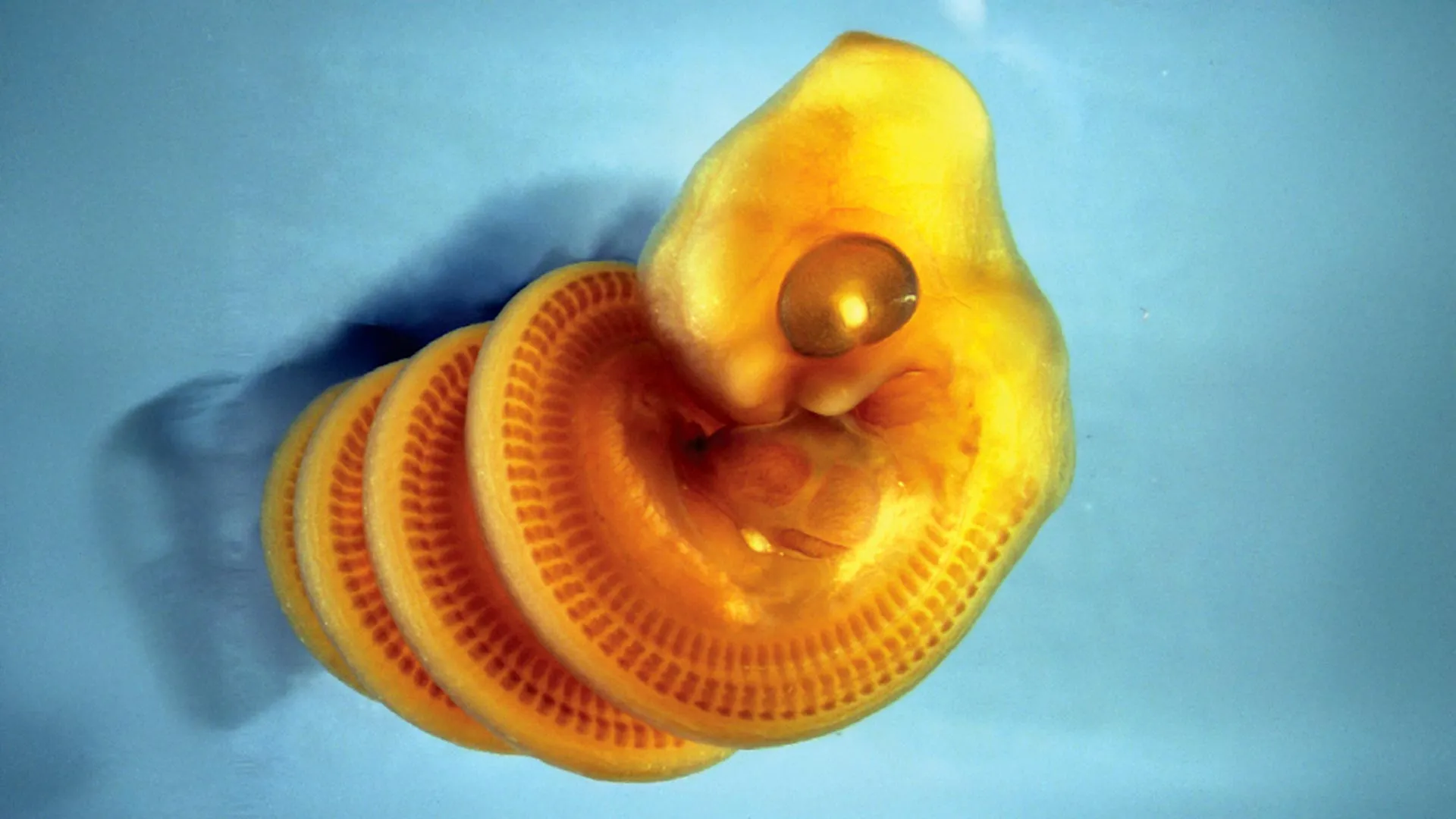
A recent international collaborative study has illuminated a fundamental developmental mystery: the distinctive spiral coiling of snake embryos. This groundbreaking research, spearheaded by Canadian scientists, posits that this intricate helical formation is not merely a curious byproduct but a crucial adaptive mechanism, enabling these unique reptiles to accommodate their extraordinary body elongation—a defining characteristic that sets them apart from virtually all other vertebrates. The findings suggest a profound interplay between rapid growth and internal mechanical constraints, providing a novel perspective on the physical forces that sculpt life.
Published in a leading scientific journal, the investigation postulates that the characteristic right-handed helical configuration emerges as the embryonic body undergoes rapid longitudinal expansion while simultaneously being anchored by its internal gut structure. This differential growth and physical tethering induce a buckling and twisting phenomenon, compelling the nascent serpent into its characteristic coiled form. The elegance of this explanation lies in its simplicity, drawing parallels to everyday mechanics where an elongated, constrained object naturally buckles and twists under tension. Dr. Tetsuto Miyashita, a prominent evolutionary biologist and senior author from the Canadian Museum of Nature, likened the process to the spontaneous twisting observed when adjusting a strap to a shorter length, causing the excess material to form a loop that naturally spirals.
The Enigma of Elongation: An Evolutionary Challenge
Snakes represent a remarkable evolutionary triumph, having diversified into an astonishing array of forms adapted to virtually every terrestrial and many aquatic environments. Central to this success is their highly elongated, limbless body plan, which facilitates unique modes of locomotion, prey capture, and habitat navigation. However, achieving such extreme elongation presents significant developmental challenges. Embryos must develop an extraordinarily long axis within the confined space of an egg, necessitating efficient spatial packing. This physiological requirement has long intrigued developmental biologists and evolutionary morphologists, prompting inquiries into the biomechanical strategies employed by serpentine embryos to manage their unique growth trajectory. The recent study offers a compelling answer, highlighting the spiral as a critical solution to this spatial dilemma.
Unveiling Nature’s Spirals: A Universal Fascination
The discovery places snake embryos within a vast and diverse tapestry of naturally occurring helical and spiral structures that continue to captivate scientific inquiry. From the majestic sweep of spiral galaxies to the microscopic intricacies of DNA, and from the logarithmic spirals of mollusk shells to the tendrils of climbing plants and the helical folds of the human intestine, spirals are ubiquitous across scales and kingdoms. Alexandra Weber, the lead author and now a graduate student in zoology at the University of British Columbia, emphasized the persistent allure of these shapes. "There is an inherent mystery to spirals," Weber noted, "and we are only beginning to decipher the underlying mechanisms that generate these forms in biological systems." Dr. Miyashita further elaborated on the profound impact of these natural forms, observing that "these puzzles intrinsically beckon our curiosity. After all, spiral forms in nature have profoundly inspired human creations, from the practical design of rotini pasta and the symbolic barber’s pole to the mythic portrayals of the biblical ‘Tower of Babel’." This inherent fascination underscores the broader significance of understanding the genesis of such fundamental patterns in biology.
A Serendipitous Inquiry Born from Constraint
The genesis of this significant project itself emerged from an unusual set of circumstances. In the unprecedented environment of the 2020 COVID-19 pandemic lockdown, Dr. Miyashita found himself working remotely, seeking research questions that his students could rigorously investigate without requiring access to traditional laboratory facilities or extensive museum collections. It was during this period of introspection that an epiphany occurred. Having inherited a profound fascination for asymmetries in animal forms from his PhD advisor, Miyashita recalled consistently noticing images of snake embryos in scientific literature. A simple yet profound question repeatedly surfaced: were these coiled embryos predominantly right-handed or left-handed in their helical configuration? This fundamental observational query, seemingly straightforward, became the bedrock upon which the entire study was constructed.
A Rigorous Examination of Embryonic Handedness
To address this foundational question, Miyashita enlisted Weber, then affiliated with Carleton University, alongside two undergraduate students from the University of Ottawa. Their task was meticulous: to systematically scour published scientific research and extensive museum databases for photographic documentation of developing snake embryos. This exhaustive search yielded a statistically robust dataset comprising over 900 embryonic images, encompassing 39 distinct species of snakes and other limbless squamates. The sheer volume and diversity of the sample provided an unprecedented opportunity to identify definitive patterns in embryonic coiling.
A clear and consistent pattern swiftly emerged from this comprehensive analysis. During the initial several weeks following oviposition (egg-laying), the embryos consistently exhibited a dextral coiling pattern, meaning they invariably coiled to the right when viewed from head to tail. This early developmental stage is characterized by the absence of functional musculature, rendering active movement impossible. Consequently, the researchers deduced that these embryonic coils must be the product of passive physical forces rather than deliberate muscular action. Weber explained, "At these stages, the embryos lack the muscular development necessary for active movement, compelling us to investigate the underlying physical forces responsible for this consistent right-handed coiling." The critical challenge then became to identify the precise mechanisms driving this inherent handedness.
The Unveiling of an Internal Tether: Insights from CT Scans
The pivotal breakthrough in deciphering this mechanism arrived through the collaborative efforts of Dr. Raul Diaz, a distinguished researcher at California State University Los Angeles. Dr. Diaz employed advanced computed tomography (CT) imaging techniques to scrutinize snake embryos with unparalleled anatomical resolution. These high-definition scans revealed a previously unobserved and crucial internal arrangement within the developing serpentine form.
"Raul’s CT scans of a snake embryo exposed a structure we had never before encountered in such detail – a distinct pillar of gut material extending through the very core of the spiraling body," Miyashita recounted. He further elucidated the morphology: "This was an intestine, seemingly detached from the primary body wall, intricately enveloped by a network of delicate blood vessels originating from the yolk sac." This precise anatomical observation provided the critical missing piece of the puzzle, illuminating the mechanical mechanism that the research team had been diligently seeking.
The explanation that crystallized from this discovery is elegantly biomechanical. Snake embryos are compelled to undergo exceptionally rapid longitudinal growth to achieve their characteristic elongated adult morphology. However, the internal gut structure does not proliferate at the same accelerated rate. This inherent disparity in growth rates establishes a significant mechanical constraint. The slower-growing gut, now functioning as a tether, anchors the rapidly lengthening embryonic body. As the body continues its accelerated growth, the physical constraint imposed by the gut causes the body to buckle and subsequently twist into a coil. The process is further guided by the consistent anatomical positioning of the yolk sac, which invariably lies to the left side of the developing embryo. Consequently, the buckling force is inherently directed away from the yolk, compelling the embryo to initiate its coiling in a consistently right-handed, or dextral, direction.
The Dynamic Nature of Coiling: A Shift in Control
The initial, mechanically imposed right-handed coiling, however, does not persist throughout the entirety of embryonic development. As the embryo matures, several transformative changes occur. The yolk sac progressively diminishes in size, providing the embryo with increased internal spatial freedom. Concurrently, the embryonic musculature undergoes significant development, enabling the nascent snake to engage in active, deliberate movements. This maturation marks a crucial transition from passive, mechanically dictated positioning to active, neuromuscular control.
As a result, the fixed dextral coiling observed in earlier stages begins to diversify. Weber explained, "While some embryos maintain their initial right-handed helical orientation, a significant proportion actively recoil, adopting a left-handed configuration." By the later stages, immediately prior to hatching, approximately half of the embryos exhibit right-handed coiling, while the other half display left-handed coiling. This observed shift strongly supports the hypothesis that the earliest directionality of coiling is primarily governed by intrinsic developmental anatomy and the powerful influence of physical forces, rather than by the active, voluntary muscular movements that characterize later developmental stages.
A New Paradigm for Understanding Biological Forms
For Dr. Miyashita, this discovery transcends the specific case of snake embryos, illustrating a broader epistemological principle in scientific inquiry: that deceptively simple observational questions can often yield profound and far-reaching biological insights. He contrasted this approach with the prevalent trend in modern biological research. "Scientists have long been captivated by the evolutionary trajectory of snakes and the mechanisms underlying their unique body plan. To address these complex questions, research often delves into highly sophisticated genetic investigations, focusing on Hox genes, enhancers, and intricate regulatory networks," he observed. "These avenues have indeed led to key discoveries. Yet, born out of the constraints of the COVID lockdown, we uncovered a fundamental secret of snake development through a startlingly straightforward approach – a meticulous review of an album of snake embryo images, recording their coiling direction, combined with a detailed examination of their gross anatomy."
The researchers firmly believe that this newly articulated general model of growth disparity and mechanical tethering could serve as a foundational framework for future investigations into other spiral-shaped structures observed across the spectrum of living organisms. "We are now opening the exciting possibility to further develop this model to elucidate the formation of other diverse spiral forms found in nature," Miyashita affirmed. Weber echoed this sentiment, stating, "This entire project began with a simple curiosity about whether snakes exhibit ‘handedness.’ It has been an incredibly exciting journey to follow that initial question to such deep insights concerning their evolutionary and developmental biology."
The international collaboration that underpinned this research, involving scientists, students, and professors from the Canadian Museum of Nature, the University of British Columbia, Carleton University, the University of Ottawa, California State University Los Angeles, and the University of Helsinki, underscores the power of interdisciplinary and cross-institutional endeavors in advancing fundamental scientific understanding. This study not only illuminates a specific aspect of snake development but also offers a compelling new lens through which to explore the elegant biomechanical principles that shape life itself.




 Lisa Mariana
 Aura Kasih


 Safa Marwah