Safa Marwah
Threat actors are increasingly leveraging trusted administrative software, specifically the Faronics Deploy endpoint management solution, as a conduit to infiltrate corporate networks and establish persistent control via remote access tools like ScreenConnect. This sophisticated attack vector underscores a growing trend where cybercriminals "live off the land" by co-opting legitimate IT infrastructure to evade traditional security defenses and achieve their malicious objectives.
Faronics Deploy stands as a prominent cloud-based platform designed to streamline IT operations for organizations globally. Its core functionality empowers administrators to efficiently manage a diverse array of endpoints, facilitating tasks such as software deployment, system configuration, patch management, and script execution across an entire fleet of computers. For legitimate IT departments, Faronics Deploy represents a powerful tool for maintaining system integrity, ensuring compliance, and delivering swift technical support. However, its inherent capabilities for remote command and control, when weaponized, present a significant advantage for adversaries seeking deep access to target environments. The platform’s robust feature set, intended for efficiency and control, paradoxically makes it an attractive target for misuse, as it allows attackers to masquerade their illicit activities within the guise of legitimate administrative traffic and processes.
Similarly, ConnectWise ScreenConnect (formerly ScreenConnect), a widely adopted remote support application, serves as a cornerstone for many IT service providers and internal helpdesks. It enables technicians to securely connect to remote devices, diagnose issues, provide support, and perform maintenance tasks with high levels of interactive control. Its ubiquity and the trust placed in its operational necessity mean that ScreenConnect installations are often whitelisted by network firewalls and endpoint security solutions, making it an ideal post-exploitation tool for threat actors. By deploying ScreenConnect, attackers can establish a redundant, highly interactive, and often less scrutinized channel for persistent access, distinct from the initial Faronics Deploy compromise. This dual-pronged approach ensures a robust foothold, offering flexibility and resilience against detection and remediation efforts.
The recent campaign, meticulously observed over a concentrated period from late July to late August, demonstrated a calculated and multi-stage attack methodology. Initial compromise was orchestrated through highly convincing phishing emails, designed to mimic critical business communications such as invoices, tax documentation, or other seemingly urgent financial or administrative files. These lures, crafted with a high degree of social engineering sophistication, were distributed broadly, reaching an estimated 457 or more distinct endpoints. The sheer volume of targeted systems highlights the scale of this operation and the broad impact potential. The objective of these emails was to entice recipients into clicking embedded malicious links, initiating the subsequent stages of the attack chain.

Upon clicking the malicious link, potential victims were redirected to a meticulously crafted website. This landing page was not a simple download portal; it incorporated an intelligent profiling mechanism. Before presenting any downloads, the site would meticulously analyze various attributes of the visitor’s environment, including their browser type, operating system, and potentially even the presence of security analysis tools. This reconnaissance phase allowed the attackers to tailor their response. If the site detected indicators of a security research environment or sandbox, it would deploy a decoy routine, typically displaying a benign error message. This tactic is a hallmark of advanced persistent threats (APTs) and sophisticated criminal groups, designed to frustrate security analysts and preserve the efficacy of their exploit infrastructure by avoiding early detection and analysis.
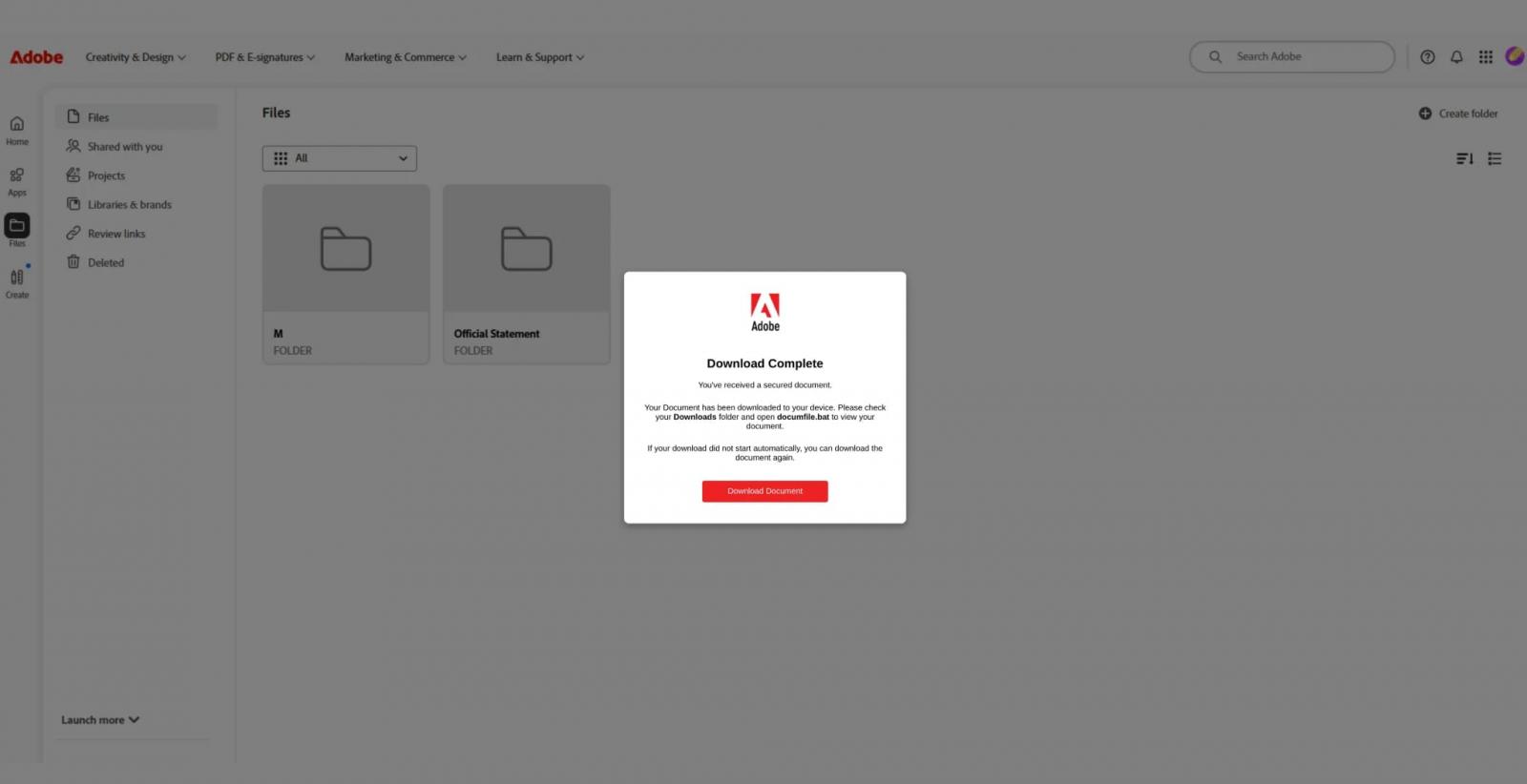
For legitimate targets, the website would proceed to prompt the download and execution of a file cleverly disguised as a widely recognized and trusted application, such as an Adobe document reader or a plugin update. Crucially, the file offered for download was not a malicious executable in the traditional sense, but rather a legitimate and cryptographically signed Faronics Deploy installer. This subversion of trust is a significant aspect of the attack’s sophistication. The file, often named intuitively like "Adobe.exe," exploited users’ reliance on familiar branding and the perceived safety of signed software. When the victim executed this seemingly innocuous installer, their computer was covertly enrolled into a Faronics deployment infrastructure that was entirely controlled by the attackers. This step effectively handed administrative power over the victim’s machine directly to the malicious actors, leveraging the legitimate capabilities of the Faronics platform against its unsuspecting users.
With the victim’s endpoint enrolled in their malicious Faronics deployment, the threat actors then exploited Faronics’ remote-deployment functionality to its full extent. This allowed them to execute arbitrary PowerShell scripts on the compromised computer without requiring any further user interaction. PowerShell, a powerful scripting language built into Windows, is frequently abused by attackers due to its versatility and its ability to execute commands and download additional payloads while often blending in with legitimate system processes. The scripts used in this campaign were designed to retrieve supplementary tools from various sources, including attacker-controlled infrastructure and external legitimate platforms like GitHub. These subsequent payloads ultimately culminated in the installation of ConnectWise ScreenConnect, solidifying the attackers’ control. The methods for delivering these scripts varied, showcasing the attackers’ adaptability; some scripts utilized curl or mshta for content retrieval, while others invoked msiexec to install payloads hosted on their command-and-control servers.
The strategic decision to install ScreenConnect after gaining initial access via Faronics Deploy is critical. ScreenConnect provides attackers with an entirely separate and independent channel for remote access. This redundancy is invaluable; should the malicious Faronics deployment be identified and its agent removed by defenders, the attackers would still retain access through ScreenConnect. Furthermore, ScreenConnect offers a more interactive and user-friendly interface for hands-on keyboard control, which is often preferred by attackers for intricate post-exploitation activities such as data exfiltration, lateral movement, or the deployment of further malicious software like ransomware. Its presence also allows attackers to blend their activities with legitimate remote support operations, potentially delaying detection.
This incident highlights a critical paradigm shift in the cybersecurity landscape: the increasing weaponization of legitimate IT and remote management tools. This "living off the land" (LOTL) technique poses a profound challenge for traditional security mechanisms that primarily focus on identifying known malicious signatures or behaviors associated with dedicated malware. When attackers leverage trusted, signed software and established protocols, their activities can bypass static defenses, blend into normal network traffic, and appear as routine administrative tasks. This makes behavioral analytics, advanced endpoint detection and response (EDR) solutions, and proactive threat hunting indispensable components of a robust security posture. Organizations must evolve their defenses to not only detect the presence of tools but also scrutinize the context and intent behind their usage.
The implications of such attacks are far-reaching. Beyond the immediate compromise, unauthorized access via legitimate tools can lead to severe consequences, including extensive data breaches, deployment of ransomware, intellectual property theft, financial fraud, and significant operational disruption. The reputational damage to affected organizations can also be substantial. The reliance on legitimate tools also complicates incident response, as forensic investigators must differentiate between legitimate administrative actions and malicious ones executed through the same platforms.
Prompt action following the discovery of this campaign played a crucial role in mitigating its impact. Upon receiving detailed findings from threat intelligence researchers on August 5, the vendor, Faronics, acted swiftly. They confirmed the observed malicious activity and immediately implemented additional anti-abuse measures within their platform to counter the attack vector. Furthermore, Faronics proactively engaged with organizations identified as potential victims, notifying them of the compromise and providing guidance for remediation. This rapid and collaborative response between threat researchers and the vendor proved highly effective, as evidenced by a significant drop in malicious activity observed starting August 21, indicating that the implemented countermeasures were successful in disrupting the attack chain.
For administrators seeking to identify potential compromise within their environments, several indicators of compromise (IOCs) have been provided. It is recommended to examine the C:ProgramDataFaronicsLogs directory for the presence of a ScriptRunner.log file. This log often preserves critical information, including the names of remotely executed scripts and the URLs from which additional payloads were downloaded. Another key indicator is the ck parameter found in Faronics configuration requests, which identifies the associated customer deployment. Anomalies or unknown values in this parameter can help pinpoint compromised endpoints or malicious accounts controlling the Faronics deployment. Beyond Faronics-specific indicators, organizations should meticulously monitor for any unauthorized installations of ScreenConnect, particularly in locations where it is not typically deployed or managed by the legitimate IT department.
Moving forward, the cybersecurity landscape will likely continue to witness an escalation in the abuse of legitimate administrative and remote management tools. Threat actors are continuously refining their tactics to exploit trust, hide in plain sight, and leverage existing infrastructure. Organizations must therefore adopt a multi-layered defense strategy that extends beyond perimeter security. This includes rigorous employee training on phishing awareness, advanced email gateway security, robust endpoint protection with behavioral analytics, and strict application control policies. Implementing the principle of least privilege for all administrative tools and conducting regular security audits of endpoint management platforms are also paramount. Ultimately, fostering an environment of continuous monitoring, rapid threat intelligence sharing, and agile incident response will be critical in defending against these evolving and sophisticated attack methodologies. The challenge of detecting and blocking attacker actions once initial access is gained remains a significant hurdle, emphasizing the imperative for advanced post-compromise detection capabilities and proactive threat hunting.




 Lisa Mariana
 Aura Kasih
 Ayu Aulia