
 Ayu Aulia
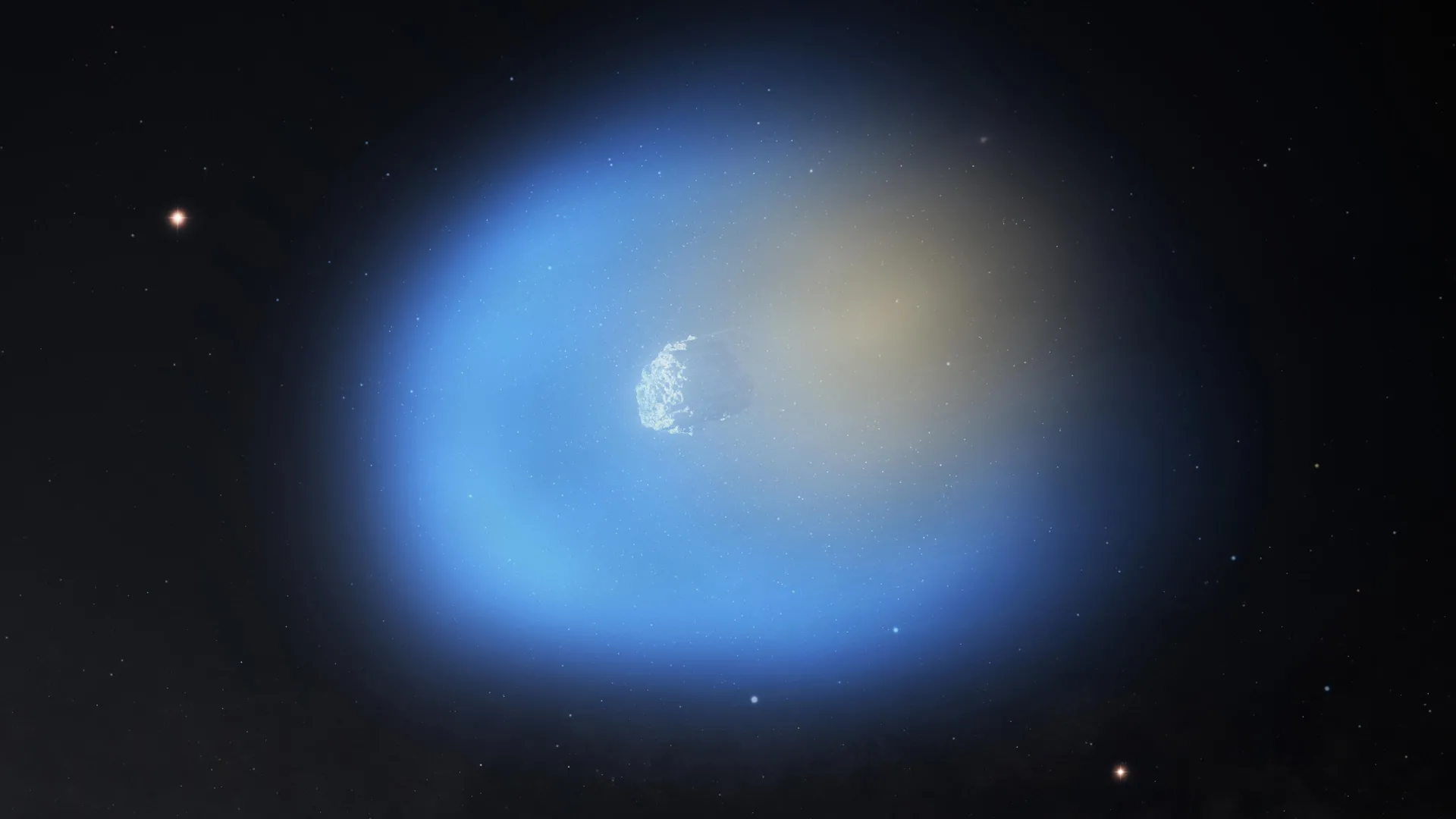
Recent astronomical investigations have revealed that comet 3I/ATLAS, a celestial visitor from beyond our solar system, possesses an exceptionally high concentration of methanol, significantly surpassing levels typically observed in comets originating within our own cosmic neighborhood, thereby providing a unique spectroscopic window into the chemical composition and formation processes of other stellar systems. This remarkable discovery, facilitated by the advanced capabilities of the Atacama Large Millimeter/submillimeter Array (ALMA), a global collaboration including the U.S. National Science Foundation National Radio Astronomy Observatory (NSF NRAO), marks a pivotal moment in understanding the diverse chemical inventories that populate the wider galaxy. The extraordinary chemical signature of 3I/ATLAS suggests that it formed under conditions distinctly different from those prevalent in the early solar nebula, offering a tangible sample of an alien cosmic environment for detailed study.
Comets, often referred to as "dirty snowballs," are primordial relics from the earliest epochs of planetary system formation. They preserve frozen gases, dust, and organic molecules, essentially acting as time capsules that capture the chemical conditions of their birthplaces. While astronomers routinely study comets originating from the Kuiper Belt and Oort Cloud within our solar system, the arrival of an interstellar comet like 3I/ATLAS presents an unparalleled opportunity. These rare cosmic interlopers carry chemical "fingerprints" from distant stellar nurseries, providing direct evidence of the building blocks available for planet formation around other stars. Analyzing their composition allows scientists to compare the chemical evolution of our solar system with that of countless others across the Milky Way.
The recent findings, spearheaded by research lead Nathan Roth, a professor at American University, emphasize the unparalleled nature of 3I/ATLAS’s composition. "Examining 3I/ATLAS is akin to obtaining a detailed compositional profile from a completely different stellar system," Roth remarked, highlighting the scientific significance. "The intricate molecular data indicates a profound abundance of methanol, a characteristic rarely encountered in the cometary population native to our solar system." This statement underscores the primary conclusion: the interstellar comet’s chemical makeup is fundamentally distinct, offering a direct contrast to the familiar comets within our cosmic backyard.
Observations conducted with the Atacama Large Millimeter/submillimeter Array (ALMA), specifically its Atacama Compact Array situated in Chile, during late 2025, captured critical data as 3I/ATLAS progressed closer to the Sun. As solar radiation impinged upon the comet’s icy surface, volatile materials sublimated, creating an expansive, luminous envelope of gas and dust known as a coma around its solid nucleus. The unique spectral capabilities of ALMA, operating at submillimeter wavelengths, enabled astronomers to meticulously analyze the molecular species present within this coma. By deciphering these faint spectroscopic signatures, researchers could precisely determine the chemical constituents embedded within the cometary material. Given 3I/ATLAS’s extrasolar origin, these precise measurements furnish an invaluable opportunity to explore the initial conditions and subsequent evolution of small icy bodies formed in an alien planetary system, all without requiring interstellar travel.
The investigative focus concentrated on the subtle submillimeter emission lines emanating from two key molecules: methanol (CH₃OH), a simple alcohol, and hydrogen cyanide (HCN), a nitrogen-bearing organic molecule frequently identified in cometary spectra. Methanol is of particular interest to astrobiologists as a fundamental organic compound, often considered a precursor to more complex prebiotic molecules. Its presence and abundance can offer insights into the temperature and density conditions of the molecular cloud and protoplanetary disk where the comet originated. Hydrogen cyanide, conversely, serves as a common reference molecule due to its relative stability and consistent detection in comets, providing a baseline for comparing the relative abundances of other volatile species.
ALMA’s observations unequivocally revealed that 3I/ATLAS harbors an extraordinarily elevated concentration of methanol relative to hydrogen cyanide. Across two distinct observation periods, scientists measured methanol-to-HCN ratios approximating 70 and 120. To contextualize these figures, typical solar system comets generally exhibit methanol-to-HCN ratios that are significantly lower, often in the single digits or low tens. The values obtained for 3I/ATLAS position it among the most methanol-rich comets ever subjected to detailed spectroscopic analysis, whether from within our solar system or beyond. This pronounced chemical distinction immediately flags 3I/ATLAS as an object of unique interest, challenging existing paradigms of cometary formation.
The unprecedented methanol enrichment strongly suggests that the icy matrix constituting 3I/ATLAS either formed under, or was subsequently exposed to, environmental conditions markedly different from those experienced by the vast majority of comets that coalesced within our own solar system. This could imply a formation environment characterized by extremely low temperatures, where methanol ice could efficiently condense onto dust grains without significant thermal processing or photodissociation. Such conditions might prevail in the outer, colder regions of a very dense protoplanetary disk, or in a different type of stellar nursery with a distinct chemical heritage.
Earlier observations conducted with the James Webb Space Telescope (JWST) had already indicated that 3I/ATLAS possessed a coma predominantly composed of carbon dioxide while it was still at considerable distances from the Sun. The present ALMA measurements, now adding a substantial abundance of methanol, further expand the growing inventory of unusual chemical characteristics exhibited by this interstellar visitor. Both carbon dioxide and methanol are relatively volatile molecules, requiring very cold conditions to remain frozen within a cometary nucleus. Their combined high abundances point towards a formation environment that was profoundly cold and potentially shielded from intense stellar radiation, preserving these delicate molecular species. This reinforces the hypothesis of a unique evolutionary path for 3I/ATLAS, divergent from the chemical pathways common to our solar system’s formative stages.
Beyond merely identifying the chemical composition, ALMA’s superior spatial resolution for imaging allowed astronomers to precisely track the release mechanisms and dispersion patterns of different molecules from the comet. The observations unveiled a striking disparity in the outgassing behavior of methanol and hydrogen cyanide. Hydrogen cyanide, consistent with observations of most solar system comets, appeared to originate predominantly from the comet’s central nucleus. This indicates that HCN is deeply embedded within the main icy body and sublimes directly from its surface.
Methanol, however, displayed a more complex release pattern. It was observed to emanate not only from the nucleus but also from discrete ice particles suspended within the expansive coma itself. These minute icy grains, essentially acting as "mini-comets," contribute significantly to the overall methanol budget of the coma. As 3I/ATLAS continued its trajectory towards the Sun and ambient temperatures incrementally rose, the ice encapsulated within these smaller grains sublimated, converting into gas and releasing additional methanol into the surrounding cometary atmosphere. This distributed outgassing mechanism is a fascinating physical process, indicating a heterogeneous structure within the comet or a unique evolutionary history that has allowed these methanol-rich grains to persist.
While astronomers have previously documented similar outgassing behaviors in a select few comets from our solar system, this instance represents the first time researchers have been able to meticulously trace the detailed physical dynamics of this specific type of molecular release within an object unequivocally originating from interstellar space. This observation is crucial because it suggests that while the chemical compositions of interstellar objects may differ significantly, some of the fundamental physical processes governing cometary activity—such as the fragmentation and outgassing from icy grains—might be universal across diverse planetary systems. This provides valuable comparative data for refining models of cometary evolution and activity.
Comet 3I/ATLAS holds the distinction of being only the third confirmed object ever observed entering our solar system from interstellar space, following the enigmatic 1I/’Oumuamua and the more cometary 2I/Borisov. Each of these interstellar voyagers has presented astronomers with a unique set of perplexing characteristics. ‘Oumuamua, for instance, baffled scientists with its extremely elongated shape and an absence of a detectable coma, leading to widespread speculation about its nature. 2I/Borisov, while exhibiting more typical cometary activity, still presented a distinct chemical profile. The successive discoveries of these objects are not merely curiosities; they are foundational elements for an emerging field of comparative planetology and astrobiology, allowing direct sampling of the chemical diversity across the galaxy.
As astronomical surveys become increasingly sophisticated and powerful—with future observatories like the Vera C. Rubin Observatory poised to dramatically increase the rate of discovery—the detection and study of more interstellar objects are anticipated. Each new interstellar visitor offers an unparalleled opportunity to contrast the chemical and physical characteristics of our solar system with those of planetary systems elsewhere in the Milky Way. The unusual chemistry of 3I/ATLAS, particularly its extraordinary methanol abundance and unique outgassing mechanisms, contributes another profound and intriguing piece to the intricate mosaic of how planets, comets, and other small celestial bodies form and evolve around distant stars. This ongoing exploration of interstellar objects is rapidly transforming our understanding of the cosmic context in which our own solar system, and potentially life itself, came into being. The data from 3I/ATLAS enriches the universal narrative of planetary formation, suggesting a far greater chemical diversity in the galaxy than previously conceived.




 Aura Kasih

 Safa Marwah

 Lisa Mariana