
 Aura Kasih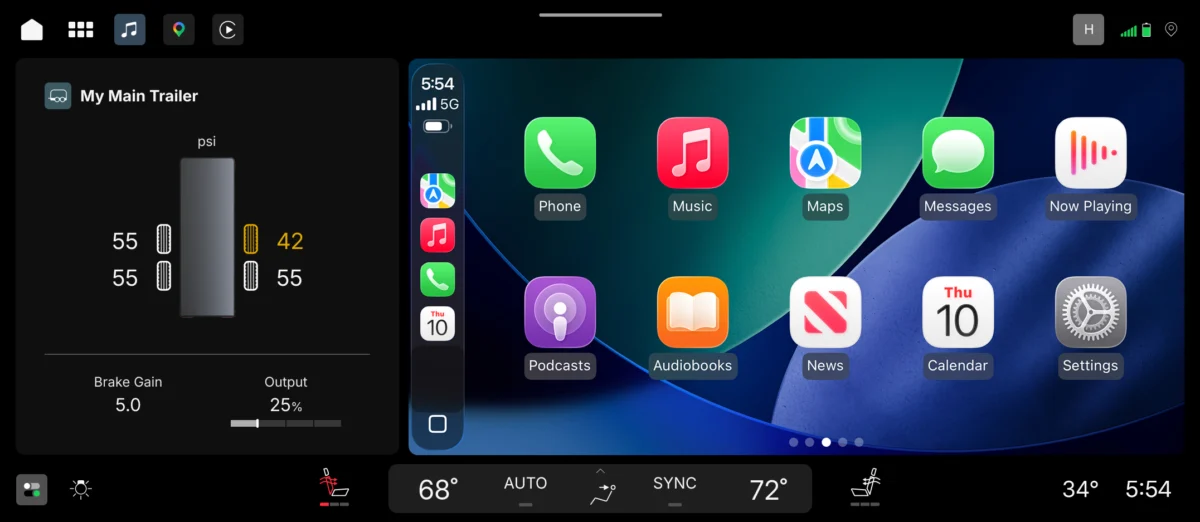
General Motors has recently unveiled an updated software interface for its Chevrolet Silverado and GMC Sierra pickup trucks, featuring enhanced integration for Apple CarPlay and Android Auto. This development has sparked widespread discussion and some misinterpretations, leading many to believe the automotive giant is "bringing back" these popular smartphone mirroring technologies. However, a closer examination reveals that GM never entirely abandoned these systems; rather, their approach has been nuanced and is now evolving, particularly concerning their electric vehicle (EV) strategy versus their internal combustion engine (ICE) offerings.
For years, the automotive industry has grappled with the integration of smartphone technology into vehicle infotainment systems. Apple CarPlay and Android Auto, developed by Apple and Google respectively, offer drivers a familiar and often more intuitive interface for accessing essential apps like navigation, music, and messaging directly through their vehicle’s touchscreen. This convenience has made them a highly sought-after feature by consumers. GM’s recent software update for its Silverado and Sierra trucks, which includes a refreshed user interface that accommodates both CarPlay and Android Auto, has been widely reported as a significant policy shift. Publications have framed it as a capitulation to consumer demand or a strategic about-face, particularly given GM’s previous stance on restricting these functionalities in its electric vehicle lineup.
The perception of GM "bringing back" CarPlay and Android Auto stems from a period where the automaker began to restrict these familiar smartphone interfaces in its new electric vehicles. Since 2023, GM has notably omitted support for CarPlay and Android Auto in its entire portfolio of EVs. This includes models such as the Chevrolet Equinox EV, Blazer EV, Bolt EV/EUV, and the Silverado EV, as well as Cadillac’s Lyriq, Optiq, Vistiq, and Escalade IQ, and GMC’s Sierra EV and Hummer EV SUV and Truck. The strategic decision behind this exclusion was rooted in GM’s commitment to its proprietary in-house software ecosystem, which is built upon the Android Automotive operating system. This platform is often integrated with Google Automotive Services (GAS), providing native access to Google Maps, Google Assistant, and other Google applications directly within the vehicle. The intention was to create a seamless, integrated digital experience that GM believed would be superior to relying on external smartphone mirroring.
However, the narrative surrounding GM’s infotainment strategy has been complex and prone to misinterpretation. While GM has indeed implemented its native Google-based system in its EVs, it never removed CarPlay and Android Auto from its extensive range of gasoline-powered vehicles. Tens of thousands of customers continue to utilize these smartphone projection services regularly in their ICE-powered GM trucks and SUVs without interruption. The recent announcement regarding the Silverado and Sierra trucks, which includes an upgraded user interface that prominently features improved picture-in-picture functionality for CarPlay and Android Auto, signifies an enhancement rather than a reinstatement for these specific models. This development suggests GM is actively working to refine its approach to smartphone integration, seeking a more harmonious coexistence with these widely adopted technologies.
The confusion surrounding GM’s strategy was exacerbated by comments made by GM CEO Mary Barra in late 2025. During an appearance on the "Decoder" podcast, Barra defended the company’s decision to exclude CarPlay from its EVs and hinted that this policy might eventually extend to GM’s gasoline-powered fleet as well. This statement ignited significant concern among consumers, particularly truck and SUV owners who rely on the familiarity and functionality of CarPlay and Android Auto. The prospect of losing these capabilities in their existing and future ICE vehicles was met with considerable backlash. Following this public outcry, GM issued clarifications to various media outlets, stating that Apple CarPlay and Android Auto would remain available in its gasoline-powered vehicles "for the foreseeable future." The recent software update for the Silverado and Sierra trucks aligns with this assurance, indicating a continued commitment to offering these features in its core product lines.
To gain deeper insight into GM’s evolving stance on smartphone integration, a conversation with Colin McCormick, Group Product Manager for Google Built-in, Projection, and Profiles at GM, provides valuable context. McCormick articulated GM’s perspective on the development of its infotainment strategy: "We were one of the early adopters of CarPlay and Android Auto when it first came out," he stated. "And we do have a small segment of EVs right now that don’t offer that, but there is a large majority of our vehicles that do offer that. And our big position on this is that it shouldn’t be two competing systems. So as we work together with Apple and Google to provide solutions that we think are best for the customer, this is what we’re representing in this new UI design. So I think we’re landing in a spot where… we don’t have a customer that has to decide, ‘Oh, I’m going to use projection,’ or, ‘Oh, I want to use the native system.’ That’s our sweet spot for us. And that’s where we want to live.”
This statement underscores GM’s underlying objective: to create an integrated experience where the distinction between native vehicle software and smartphone mirroring becomes less pronounced, ideally offering the best of both worlds to the consumer. GM appears to recognize that its prior attempts to strictly delineate between proprietary systems and third-party mirroring have not been met with universal approval. The widespread popularity of CarPlay and Android Auto is largely attributable to their user-friendly interfaces, consistent performance, and the deep familiarity consumers have with their smartphones. For many drivers, these systems provide a more reliable and accessible gateway to essential digital functions compared to the often inconsistent and underdeveloped native infotainment systems found in many modern vehicles.
The current landscape of automotive infotainment systems is characterized by a wide disparity in quality and user experience. While some manufacturers, such as Rivian and Tesla, have made significant strides in developing sophisticated and intuitive proprietary systems, even these premium offerings are not immune to occasional functional challenges. Issues with profile logins, messaging synchronization, and other core features can still arise, prompting owners to express a desire for the seamless integration offered by smartphone mirroring. The dependability and familiarity of CarPlay and Android Auto, despite their own occasional connectivity or performance quirks, often position them as a superior alternative for a significant segment of the driving public.
GM’s strategic pivot can be interpreted as a pragmatic response to consumer sentiment and market realities. The company’s previous insistence on steering users away from smartphone mirroring in its EVs, while ideologically driven, encountered significant resistance. The updated approach, which emphasizes a more collaborative integration of CarPlay and Android Auto, particularly in its high-volume truck and SUV segments, is a clear indication that GM is prioritizing customer satisfaction and market share. The enhanced picture-in-picture functionality in the Silverado and Sierra represents a tangible step towards achieving the "sweet spot" McCormick described – a scenario where the user experience is optimized without forcing customers to choose between native systems and their preferred smartphone interface.
Looking ahead, GM’s infotainment strategy will likely continue to evolve. The company’s commitment to Android Automotive as the foundation for its EV software platform suggests a long-term vision for a deeply integrated digital experience. However, the company’s recent actions demonstrate a willingness to adapt and incorporate established, consumer-favored technologies like CarPlay and Android Auto where they add demonstrable value. The challenge for GM, and indeed for the entire automotive industry, lies in striking the right balance between proprietary innovation and the integration of universally adopted consumer technologies. The success of this approach will ultimately be measured by customer adoption, satisfaction, and the seamlessness with which drivers can access their digital lives while on the road. The recent enhancements in the Silverado and Sierra trucks serve as a significant indicator of GM’s ongoing efforts to navigate this complex technological landscape.




 Safa Marwah
 Lisa Mariana

 Ayu Aulia