Safa Marwah
A severe unauthenticated SQL injection vulnerability, identified as CVE-2026-9586, within the Sangoma Switchvox enterprise Voice over IP (VoIP) platform is currently being aggressively exploited by malicious actors to achieve remote code execution and establish persistent command-and-control access. This critical flaw poses an immediate and substantial threat to organizations relying on the affected systems for their internal and external communication infrastructure, with security analysts warning that a significant portion of internet-exposed Switchvox instances have already been compromised or are imminent targets.
Sangoma Switchvox serves as a cornerstone for business communication, providing a comprehensive platform for managing and monitoring enterprise phone systems. Its capabilities extend from call routing and voicemail to advanced unified communications features, making it an indispensable asset for many organizations. The compromise of such a central component can have far-reaching implications, potentially disrupting critical business operations, exposing sensitive communications, and serving as a gateway for broader network infiltration. The active exploitation of CVE-2026-9586 underscores the persistent challenge of securing specialized enterprise software that often operates at the periphery of traditional network defenses, yet holds keys to core business functions.
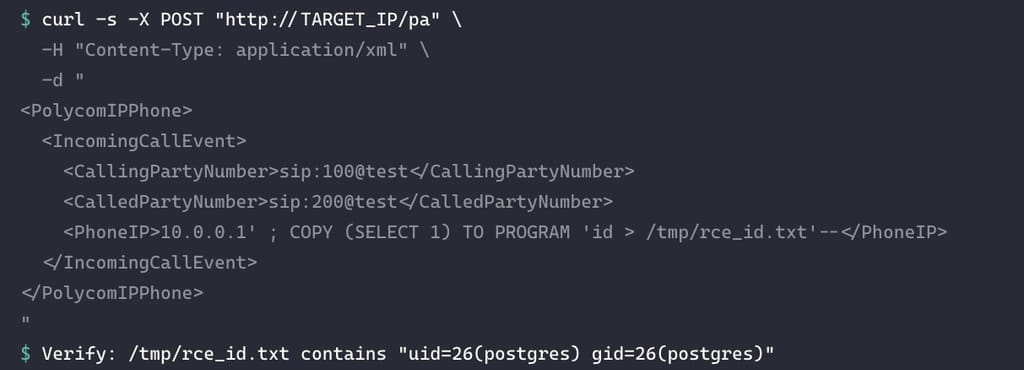
The technical genesis of CVE-2026-9586 lies in an unauthenticated SQL injection vulnerability residing within the /pa HTTP endpoint of the Sangoma Switchvox application. This endpoint is designed to handle specific interactions, particularly parsing XML messages related to events like incoming or outgoing calls, to facilitate communication between phone systems. The core of the flaw is rooted in how the system processes the PhoneIP field embedded within these XML messages. Instead of employing parameterized queries, which are a standard security practice to prevent SQL injection, the value extracted from the PhoneIP field is directly concatenated into an unparameterized SQL query. This insecure coding practice creates a gaping aperture for attackers. By crafting a malicious XML message, an adversary can inject arbitrary SQL commands into the database query.
The severity escalates dramatically because this SQL injection can be leveraged to achieve remote code execution (RCE). In essence, successful exploitation allows an attacker to execute operating-system commands directly on the underlying server hosting the Switchvox platform. This is often achieved by injecting SQL commands that invoke database functions capable of writing files to disk or executing system utilities. For instance, an attacker might use SQL commands to write a web shell to an accessible directory or trigger a command execution through a database-specific function. The ability to execute arbitrary code provides adversaries with complete control over the compromised system, effectively transforming it into a staging ground for further malicious activities.
The discovery of this critical vulnerability, alongside eleven other less severe flaws, was initially made by a team of dedicated security researchers. These findings were responsibly disclosed to Sangoma on April 10, initiating the vendor’s remediation process. Sangoma subsequently addressed these vulnerabilities with the release of Switchvox version 8.4.0.2 on July 14. This timeline highlights a common but precarious gap: the period between a vulnerability’s discovery and patching, and the eventual widespread deployment of those patches by end-users. It is within this window that opportunistic attackers frequently operate, rapidly reverse-engineering patches to develop exploits before organizations can fully update their systems.
Active exploitation of CVE-2026-9586 was first detected on August 30, when security honeypots began observing a rapid succession of exploit attempts originating from a singular source IP address (176.65.148.184). The primary objective of these initial attacks was the establishment of a reverse shell. A reverse shell is a persistent connection initiated from the compromised target system back to an attacker-controlled server, effectively bypassing common firewall rules that often block incoming connections. This mechanism grants the attacker interactive command-line access, enabling continuous control over the compromised Switchvox instance.
Following the successful establishment of a reverse shell, observed post-exploitation activities included the execution of an initial payload designed to gather intelligence about the compromised system. Specifically, attackers were seen collecting information about the top processes running on the Switchvox system. This data, which provides insight into the system’s operational context and potential for further exploitation or lateral movement, was then exfiltrated to a remote server in a base64-encoded format. Base64 encoding is a common technique used by attackers to obfuscate data and bypass basic intrusion detection systems, as it transforms binary data into an ASCII string that can be easily transmitted over various protocols, including HTTP.
The rapid succession of exploit attempts across multiple honeypots from a single source IP address indicates a highly automated and targeted campaign. Security analysts project that this swift and aggressive targeting suggests a high probability that most internet-exposed Switchvox instances have already been subjected to compromise attempts or will be in the very near future. The scale of the potential impact is significant, with approximately 4,000 Switchvox devices identified as internet-exposed through public search engines like Shodan, a majority of which are concentrated within the United States. This geographical concentration implies a substantial risk to US-based businesses and organizations.
The motivation behind targeting VoIP platforms like Sangoma Switchvox is multifaceted. These systems often handle sensitive call data, including recordings, metadata, and user credentials, which can be valuable for espionage, competitive intelligence, or identity theft. Furthermore, a compromised VoIP system can be leveraged for various nefarious activities, such as making fraudulent calls, rerouting communications, or injecting malicious content into voice streams. Beyond the immediate disruption, a successful breach of a core communication platform can serve as an entry point for lateral movement within an organization’s broader network, providing attackers with a foothold to access other critical systems and data. The control over enterprise communication infrastructure represents a high-value target for a diverse array of threat actors, from financially motivated cybercriminals to state-sponsored entities.
In light of the active exploitation, immediate and decisive action is imperative for all organizations utilizing Sangoma Switchvox. The foremost recommendation is to upgrade to Switchvox version 8.4.0.2 or any subsequent patched version without delay. This update addresses CVE-2026-9586 and the other eleven identified vulnerabilities, thereby closing the critical attack vector. Given the confirmed exploitation, a proactive stance on patching is no longer sufficient; a reactive incident response strategy must be simultaneously engaged.
System administrators must also actively hunt for indicators of compromise (IoCs) to ascertain whether their systems have already been targeted. Specific signs of compromise include suspicious statements or unexpected entries within the /var/log/switchvox/db-quirks.log file. This log often records database-related activities, and unusual entries could signify successful SQL injection attempts. Furthermore, network connections originating from the observed attacker IP address (176.65.148.184), particularly on port 39323, should be considered highly suspicious and indicative of a reverse shell connection or data exfiltration. Comprehensive network traffic analysis and endpoint detection and response (EDR) solutions can aid in identifying these connections and potential payloads.
Beyond immediate patching and IoC scanning, a robust long-term security posture is critical. This includes implementing stringent network segmentation for VoIP systems, isolating them from other critical business assets to contain potential breaches. Regular vulnerability scanning and penetration testing should be conducted to proactively identify and address weaknesses. Comprehensive logging and monitoring of all Switchvox-related activity, coupled with integration into a Security Information and Event Management (SIEM) system, will enhance detection capabilities. Organizations should also consider deploying web application firewalls (WAFs) or intrusion prevention systems (IPS) configured to detect and block common SQL injection patterns and suspicious outbound connections. Adherence to the principle of least privilege for all user accounts and services interacting with the Switchvox platform is also essential to minimize the impact of a potential compromise. Finally, maintaining regular, tested backups of configuration and data will facilitate rapid recovery in the event of a successful attack.
The ongoing exploitation of CVE-2026-9586 serves as a stark reminder of the evolving threat landscape and the critical importance of diligent vulnerability management for specialized enterprise software. While patching is the immediate solution, the broader implications demand a holistic approach to security that encompasses proactive threat intelligence, robust incident response planning, and continuous vigilance. Organizations must recognize that specialized systems, though often overlooked in general security audits, frequently represent high-value targets for sophisticated adversaries. The imperative for swift action and a fortified defense against such pervasive threats to communication infrastructure cannot be overstated.




 Lisa Mariana
 Aura Kasih
 Ayu Aulia