
 Lisa Mariana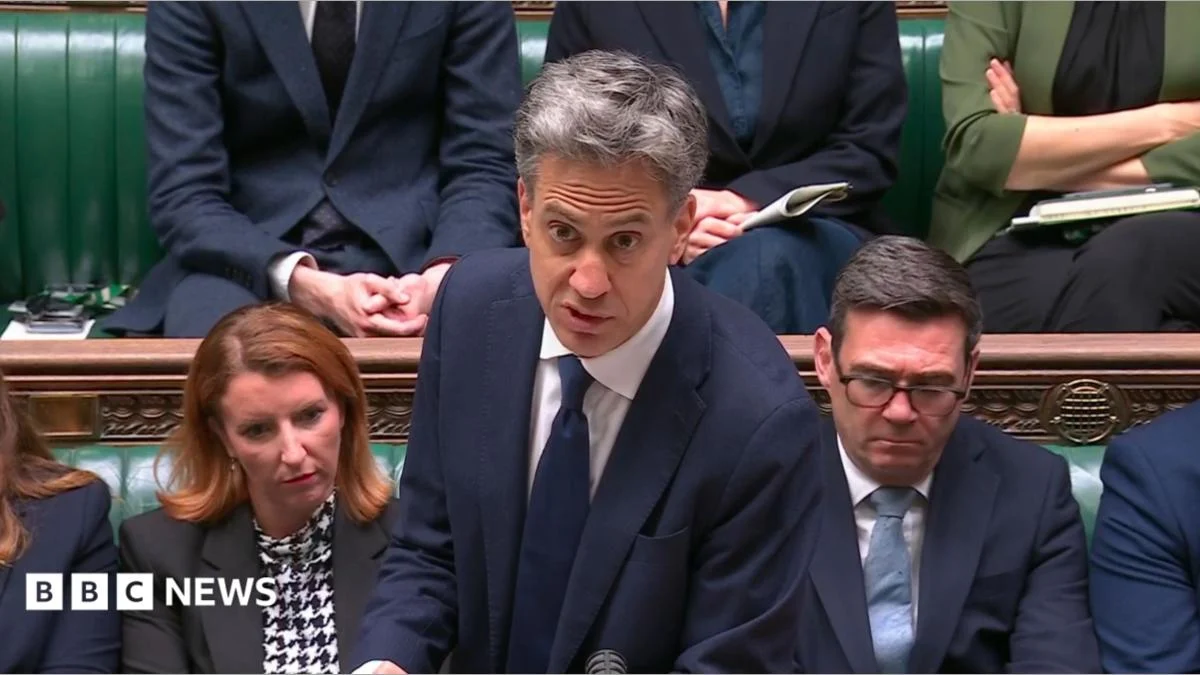
In a significant pivot in its Middle East policy, the United Kingdom, in concert with key international partners, has announced a stringent new sanctions regime targeting illegal Israeli settlements in the West Bank, a move that has immediately triggered an unprecedented and furious diplomatic backlash from Jerusalem, escalating tensions in an already volatile region.
The landmark decision, unveiled by UK Foreign Secretary David Miliband, signals a concerted effort by London, alongside France and Canada, to safeguard the viability of a two-state solution, which they assert is increasingly imperiled by the persistent expansion of Israeli settlements. The trilateral statement underscored this collective action as a "further turning point" in their strategic approach to the Israeli-Palestinian conflict. Settlements, widely recognized as illicit under international jurisprudence, have been a longstanding point of contention, with recent months witnessing a documented escalation in violence perpetrated by settlers against Palestinian communities in the West Bank.
Foreign Secretary Miliband, addressing the House of Commons, delivered a detailed and unusually stark assessment of the situation, asserting that the British government concurs with the view that "ethnic cleansing of Palestinians in areas of the West Bank, perpetrated by settler terrorists," is occurring. He meticulously cited the United Nations’ definition of ethnic cleansing as a "purposeful policy designed by one ethnic or religious group to remove by violent means another ethnic or religious from certain areas," lending gravity to the UK’s position. Miliband further accused the Israeli government of frequently disregarding this violence, and, in some instances, having "members of it… made statements and taken actions to support the forced displacement of Palestinians."
The Foreign Secretary elaborated on the UK’s official stance regarding the Israeli occupation of the West Bank, declaring it unlawful. This unlawfulness, he explained, stems from the "entrenchment of its control, its intention to extend permanent sovereignty, and its expansionist agenda via illegal settlements." This perspective, Miliband noted, aligns with a 2024 advisory opinion issued by the International Court of Justice. Consequently, he announced that this foundational position would necessitate a re-evaluation of the UK’s "economic relationship" with the occupied West Bank. Over the subsequent six to nine months, the UK is set to implement a "new comprehensive sanctions regime," specifically designed to target "illegal settlements and settlement expansion, not Israel itself." Complementing these measures, Miliband also declared a prohibition on advertising illegal West Bank settlements within the United Kingdom.
Prime Minister Andy Burnham later reinforced the government’s narrative, clarifying that these targeted measures were "aimed not at the Israeli people, but in support of the two-state solution," emphasizing the policy’s strategic rather than punitive intent against the Israeli populace. The immediate catalyst for this robust intervention, according to Miliband, was Israel’s recent decision to open tenders for the construction of approximately 1,200 new settlement homes in the E1 area, a highly sensitive and strategically critical zone east of Jerusalem. These plans, which have previously faced decades of international pressure preventing their advancement, were described by Miliband as rendering a two-state solution "unviable" by effectively "cutting through the heart of Palestine."
The British announcement was not isolated; it was made in conjunction with 11 other nations, forming a significant international bloc. This group, comprising France, Canada, Denmark, Spain, Finland, Ireland, Iceland, Norway, Poland, Portugal, and Sweden, issued a joint statement affirming their unequivocal commitment to the two-state solution. Furthermore, they pledged to either introduce national measures or support broader European Union restrictions on trade involving goods originating from West Bank settlements, signaling a wider, coordinated international pushback against settlement expansion.
The Israeli response was swift, scathing, and deeply retaliatory. Foreign Minister Saar, in a press conference, announced the immediate closure of the UK consulate, which serves as Britain’s diplomatic representation in Jerusalem, the West Bank, and Gaza. Saar characterized the UK’s Labour government as "hostile" and consistently operating "against the State of Israel," asserting that its actions left Israel "no choice but to respond." In a dramatic escalation, he also declared that 11 prominent UK Members of Parliament, including former Labour leader Jeremy Corbyn, veteran MP Diane Abbott, and all five sitting Green Party MPs, would be barred from entering Israel. Saar accused these MPs of engaging in "antisemitic and anti-Israel activity." Further retaliatory measures included the removal of British representatives from the International Gaza Support Center in Kiryat Gat, southern Israel, and the termination of UK activities aimed at training Palestinian Authority forces in Judea and Samaria, the Israeli government’s nomenclature for the West Bank.
Israeli President Isaac Herzog weighed in, expressing profound disappointment and stating that the UK’s decision would "fall on the wrong side of history." Herzog warned that such a move constituted a "gross interference in the democratic elections of a sovereign nation" and would directly harm Palestinians. He urged foreign governments to prioritize "constructive dialogue" and cooperation over sanctions, which he deemed "not a solution." Israeli leaders have consistently and vehemently rejected allegations of genocide, crimes against humanity, and war crimes, insisting that their forces operate strictly in accordance with international law.
Domestically within the UK, the sanctions announcement drew immediate and sharp criticism from various quarters. Chief Rabbi Sir Ephraim Mirvis described it as "truly a dark day for British Jews," dismissing the sanctions as "little more than political flag bearing for mendacious anti-Israel rhetoric." He expressed concern that such policies would embolden individuals who "use hatred as a weapon against Jews." The Board of Deputies of British Jews also conveyed "deep regret" and urged both the UK and Israeli governments to "avoid pursuing what appear to be party interests over national interests." In the House of Commons, Conservative Shadow Foreign Secretary Tom Tugendhat claimed that ministers were "enacting policies that the Foreign Office knows won’t work." While acknowledging the wrongfulness of illegal settlements and the "hateful propaganda and incitement" indulged in by some Israeli ministers, Tugendhat criticized the government for "reducing the complexity of the region to a single sentence." Foreign Minister Saar later revealed that he had spoken with Tugendhat and Conservative leader Kemi Badenoch, thanking them for their "firm opposition to the hostile Labour government’s announcement."
The international community’s reaction was mixed. The US Secretary of State, Marco Rubio, maintained a cautious stance, stating the White House had "no comment on the joint action," while explicitly adding, "obviously we’re not going to do what the UK did." This indicated a divergence in policy, with the US opting not to join the UK-led initiative. However, former US Ambassador to Israel Mike Huckabee, associated with the Trump administration, warned of potential "huge economic impact on British businesses" and suggested that individual US states, as well as the federal government, could take retaliatory action against the UK. Conversely, the Palestinian presidency warmly welcomed the UK’s decision, hailing it as "an important step towards confronting Israel’s colonial system and its violations against the Palestinian people."
Foreign Secretary Miliband’s statement also included other significant foreign policy announcements, notably sanctions against the financing arm of Lebanon’s Hezbollah, the Iran-backed armed group, and new sanctions on Iran itself, aligning with existing US and European Union measures. These broader sanctions suggest a comprehensive review of the UK’s regional foreign policy.
The UK’s policy shift follows nearly a year after Sir Keir Starmer’s government officially recognized a state of Palestine, articulating a moral responsibility to support a peaceful future for both Israelis and Palestinians. The fundamental disagreement over the two-state solution remains a core challenge. While the UK, its European allies, and the Palestinian Authority unequivocally support a two-state framework, Israel rejects statehood as a precondition, insisting that any final settlement must emerge from direct negotiations with the Palestinians. The Palestinian armed group Hamas, for its part, fundamentally opposes the existence of Israel, although it has previously indicated a willingness to accept an interim Palestinian state based on 1967 de facto borders, provided refugees are granted the right of return, without officially recognizing Israel.
The historical context for the current tensions is critical. Since its occupation of the West Bank and East Jerusalem during the 1967 Middle East war, Israel has constructed approximately 160 settlements, housing an estimated 700,000 Jewish settlers. These settlements exist alongside approximately 3.3 million Palestinians. The recent surge in settler attacks against Palestinians and their property in the West Bank, particularly since the Hamas-led attack on southern Israel on October 7, 2023, which ignited the Gaza war, has exacerbated the humanitarian crisis and fueled international condemnation.
Miliband also addressed the broader conflict, acknowledging that the October 7 Hamas attack carried "terrible echoes of the centuries of persecution of the Jewish people" and affirmed Israel’s "right to protect its people and defend its territory." However, he emphatically added that this right "cannot justify what has happened in Gaza." He underscored the clear rules imposed by international humanitarian law on states engaged in conflict, including ensuring access to food and medical supplies, avoiding mass displacement of civilians, and refraining from targeting civilians. Miliband stated that "serious and international violations of this law, if proven, amount to war crimes," citing examinations by organizations such as the UN Independent International Commission of Inquiry. He concluded that the findings of these reports represent "increasing evidence that war crimes appear to have been committed" and affirmed the UK’s support for legal processes to determine culpability, leaving it to international courts to determine if Israel had committed genocide in Gaza.
In a poignant opening to his address, Miliband referenced his Jewish roots and childhood experiences visiting Israel, alongside recent antisemitic attacks in the UK. He proudly identified as "a proud British Jew" and articulated his steadfast support for the state of Israel, stating: "My personal story and that of thousands of British Jews is one of the many reasons why I say to anyone here or around the world who questions Israel’s right to exist as a homeland for the Jewish people – you are wrong, and we will call you out whenever you engage in this attempt at the erasure of Israel." This personal framing underscored the gravity and internal complexity of the policy decision for the British government.
The UK’s imposition of sanctions marks a significant and potentially paradigm-shifting moment in its diplomatic engagement with the Israeli-Palestinian conflict. It elevates rhetorical condemnation of settlements to tangible economic and political action, aligning Britain more closely with a segment of European opinion that advocates for robust measures to preserve the two-state solution. The severe Israeli reaction, encompassing diplomatic expulsions and travel bans for UK parliamentarians, signifies a deep breakdown in bilateral relations, risking a protracted period of estrangement.
Expert analysis suggests that while the immediate economic impact of UK-only sanctions on Israeli settlements may be limited, the broader coalition of 12 nations, particularly if joined by the European Union, could exert more substantial pressure. The symbolic weight, however, is immense. It signals a shift away from what some perceive as a passive approach, potentially emboldening other nations to adopt similar policies. The timing, amid the ongoing Gaza conflict and heightened settler violence, amplifies the perceived urgency and necessity of such actions from the UK’s perspective.
The US stance, while not aligning with the UK’s sanctions, indicates a complex balancing act. Washington remains Israel’s staunchest ally, but it too has expressed concerns over settlement expansion and settler violence. The potential for US retaliatory measures, as warned by former Ambassador Huckabee, underscores the diplomatic tightrope walk for the UK. Such actions could strain the transatlantic relationship, particularly under a potentially re-elected Trump administration.
Looking ahead, the effectiveness of these sanctions will depend on several factors: the extent of international participation, the Israeli government’s willingness to re-evaluate its settlement policies, and the sustained commitment of the UK and its allies to enforce the new regime. The diplomatic fallout is likely to be profound, potentially recalibrating the UK’s influence in the Middle East and redefining its relationships with both Israel and the Palestinian Authority. The crisis also highlights the growing divergence between some Western allies on how best to address the core issues of the Israeli-Palestinian conflict, with London now taking a notably more assertive and interventionist posture. The coming months will reveal whether this "turning point" genuinely alters the trajectory of the conflict or merely intensifies the diplomatic standoff.



 Aura Kasih
 Ayu Aulia
 Safa Marwah