Lisa Mariana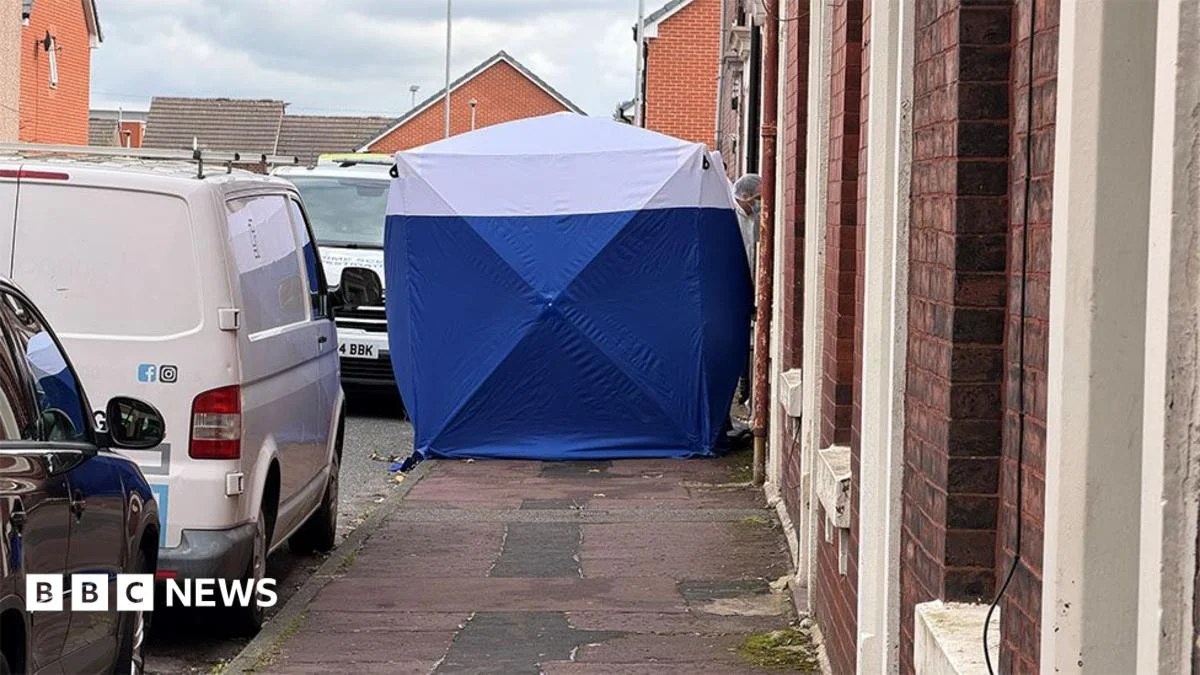
A major homicide investigation has been initiated in Blackburn after two individuals were found deceased within a residential property, leading to the prompt detention of a suspect on suspicion of murder. The incident, which has sent ripples of concern throughout the local community, underscores the gravity of serious crime and the meticulous processes involved in its resolution by law enforcement agencies.
Authorities from Lancashire Police were dispatched to a residence on Hardman Street in Blackburn at approximately 08:20 BST following reports that led to the discovery of a man and a woman who had tragically passed away. Upon arrival, emergency services confirmed the fatalities at the scene. The swift progression of the inquiry led to the arrest of a man, identified as being in his 40s, on suspicion of murder. This immediate action highlights the decisive initial response by police in critical situations, aiming to secure potential evidence and prevent further risk.
While formal identification of the deceased individuals is pending, and official confirmation regarding their ages has not yet been released by the authorities, anecdotal reports from local residents suggest the victims were elderly. If substantiated, this detail could add another layer of complexity and sorrow to the narrative, raising questions about vulnerability within communities and the profound impact on a demographic often perceived as being most susceptible to such heinous acts. The police have refrained from disclosing further personal details about the victims, adhering to standard protocols that prioritize the notification of next of kin and the integrity of the ongoing investigation.
The immediate aftermath of the discovery saw Hardman Street transformed into an active crime scene, with extensive cordons established to preserve crucial evidence. This necessary measure, while disruptive for local residents, is fundamental to a thorough forensic examination. A dedicated team of officers has been assigned to the case, signifying the establishment of a Major Investigation Team (MIT), which is standard procedure for serious crimes of this nature. These specialized units comprise experienced detectives, forensic experts, and support staff, all working in concert to systematically gather intelligence and evidence.
The investigative methodology now encompasses several critical avenues. Officers are meticulously conducting house-to-house inquiries, canvassing the neighborhood for potential witnesses or anyone who may possess information, however seemingly insignificant, that could shed light on the circumstances leading to the deaths. This involves engaging directly with residents, seeking to establish timelines, identify any unusual activity, or uncover any pre-existing tensions in the area. Simultaneously, a comprehensive review of CCTV footage from both public and private sources is underway. The ubiquity of surveillance cameras in modern urban environments often provides invaluable visual evidence, helping to track movements, identify vehicles, and corroborate witness statements, thereby constructing a clearer picture of events preceding and following the incident.
Forensic examination of the property itself is perhaps the most critical component of the early investigation. Specialized forensic teams, equipped with advanced scientific tools, are meticulously processing the crime scene. This intricate process involves the identification, collection, and analysis of trace evidence such as DNA, fingerprints, hair, fibers, and potential weapon residues. Every detail, from the positioning of furniture to the smallest biological sample, is meticulously documented and cataloged. The goal is to reconstruct the sequence of events, identify potential entry and exit points, and establish any links between the suspect and the crime scene or the victims. The findings from these examinations will be pivotal in building a robust case and understanding the precise nature and cause of the fatalities.
The impact of such a severe incident on the local community of Blackburn cannot be overstated. Hardman Street, a typical residential thoroughfare, has been plunged into an atmosphere of profound disquiet and sorrow. Neighbors, many of whom have lived in the area for decades and fostered a sense of community, are grappling with the shock and fear that a violent crime of this magnitude has occurred on their doorstep. The visible presence of law enforcement, while reassuring in its purpose, also serves as a stark and constant reminder of the tragedy, unsettling the routine and perceived safety of the neighborhood. Community leaders and local authorities will undoubtedly be working to offer reassurance and support to residents affected by the psychological toll of these events.
From a broader societal perspective, double homicides, particularly within a residential context, remain relatively uncommon, making this incident particularly alarming. While statistics on violent crime fluctuate, incidents involving multiple fatalities within a single domestic setting often point to complex underlying circumstances, which could range from domestic disputes to other deeply personal conflicts. The rarity of such occurrences often magnifies their impact, generating widespread media attention and intensifying public demand for answers and justice.
The legal process following an arrest on suspicion of murder is rigorously defined. The arrested individual is currently held in police custody, where detectives have a limited period, typically 24 to 36 hours before they must either charge the suspect, release them on bail, or apply for an extension to their detention for further questioning. During this period, the suspect will be interviewed under caution, and any evidence gathered will be presented to inform the decision-making process regarding formal charges. Concurrently, post-mortem examinations will be conducted by a pathologist to officially determine the cause and precise time of death for both victims, providing crucial medical evidence for the investigation.
The challenges inherent in a major homicide investigation are substantial. They require an immense allocation of resources, not just in terms of personnel but also specialized equipment and forensic capabilities. Investigators face the complex task of piecing together fragmented information, corroborating witness accounts, sifting through digital evidence, and ensuring every procedural step adheres to strict legal guidelines to maintain the integrity of any subsequent prosecution. The meticulous nature of police work in these circumstances is paramount to ensuring that justice can be served.
As the investigation progresses, authorities will likely issue further appeals for information from the public. Even seemingly minor observations made in the vicinity of Hardman Street in the days leading up to the discovery could prove vital. Residents are often the eyes and ears of a community, and their cooperation with law enforcement can be instrumental in resolving complex cases. The police emphasis on maintaining an open line of communication with the public, while carefully managing the release of sensitive information, is critical in fostering trust and encouraging assistance.
In conclusion, the Blackburn community finds itself at the centre of a profound and tragic event. The ongoing murder investigation, characterized by its methodical and comprehensive approach, is in its critical early stages. While a suspect has been detained, the full narrative of what transpired on Hardman Street remains to be meticulously uncovered. The coming days and weeks will undoubtedly bring further clarity as law enforcement continues its relentless pursuit of truth and justice for the deceased, offering much-needed answers and potentially beginning the long process of healing for a community deeply affected by this distressing incident.




 Aura Kasih
 Safa Marwah
 Ayu Aulia