Ayu Aulia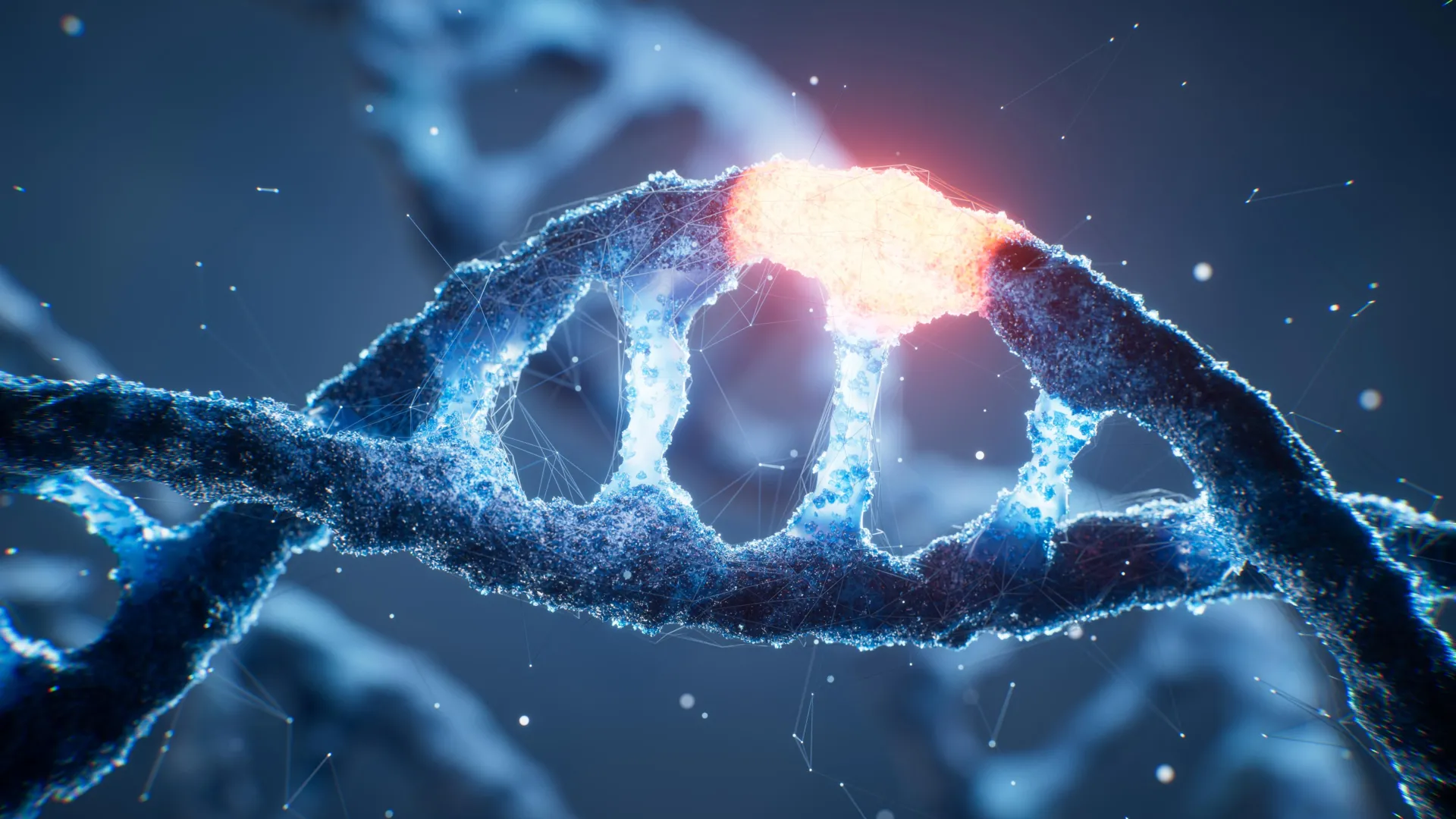
For eons, all known terrestrial organisms have universally relied upon a fundamental four-nucleotide alphabet to encode the entirety of their genetic blueprint; however, a groundbreaking investigation by scientists at the University of California San Diego has now demonstrated that a crucial biological enzyme possesses the remarkable capacity to accurately interpret and transcribe an extensively enlarged, eight-letter genetic system. This pivotal discovery signifies a profound advancement in synthetic biology, indicating that the intricate molecular machinery inherent to cellular life can be reprogrammed to process and act upon novel forms of synthetic genetic information, thereby charting a course toward the creation of biological systems with unprecedented functionalities and the biosynthesis of compounds not found within nature’s existing repertoire.
The Immutable Language of Terrestrial Life
At the core of all biological processes lies deoxyribonucleic acid, or DNA, the molecule that serves as the hereditary material in nearly all living organisms. Its structure, famously a double helix, is composed of repeating units called nucleotides. Each nucleotide contains a sugar, a phosphate group, and one of four nitrogenous bases: adenine (A), guanine (G), cytosine (C), and thymine (T). The specific sequence of these four bases dictates the genetic instructions for developing, functioning, growing, and reproducing. This canonical four-letter alphabet, often referred to as A, T, C, G, has been the sole medium for encoding life’s vast complexity for billions of years, a testament to its efficiency and evolutionary robustness. The mechanism by which this information is accessed and utilized within a cell is governed by the central dogma of molecular biology, which posits that genetic information flows from DNA to RNA (ribonucleic acid) and then to protein. This intricate ballet of molecular interactions ensures the faithful replication of genetic material and the accurate synthesis of proteins, the workhorses of the cell.
The Vision of an Augmented Genetic Code
For decades, scientists in the burgeoning field of synthetic biology have harbored ambitions to transcend the inherent limitations of the natural genetic code. The impetus behind this pursuit is manifold: to expand the information storage density of genetic material, to engineer novel biological functions not achievable with the existing four bases, and to facilitate the production of entirely new classes of molecules, including proteins with unnatural amino acids or bespoke pharmaceutical compounds. The concept of an expanded genetic alphabet, often termed a "xenonucleic acid" (XNA) system, involves the incorporation of additional, non-natural base pairs into the DNA double helix. Early pioneering efforts successfully demonstrated the replication of DNA strands containing these synthetic bases, proving that the basic structural integrity of the double helix could accommodate foreign components. However, a significant hurdle remained: could the sophisticated enzymatic machinery of a living cell, specifically the enzymes responsible for transcribing genetic information into RNA, recognize and process these synthetic additions with accuracy and efficiency? Overcoming this challenge is paramount for any expanded genetic system to transition from an in vitro curiosity to a truly integrated biological tool.
Transcriptional Validation: A Leap Forward
The recent work spearheaded by researchers at the University of California San Diego directly addresses this critical question. Their investigation centered on RNA polymerase, an enzyme of immense biological significance that acts as the primary molecular scribe, reading the DNA template and synthesizing a complementary RNA strand—the initial and crucial step in gene expression. To ascertain RNA polymerase’s adaptability to an expanded genetic lexicon, the team meticulously orchestrated a series of biochemical experiments, complemented by the unparalleled precision of high-resolution cryo-electron microscopy (cryo-EM). This advanced imaging technique allowed the scientists to visualize the enzyme’s structural dynamics at atomic resolution, providing unprecedented insight into its interactions with both natural and synthetic genetic components.
Through these detailed analyses, the researchers successfully captured real-time structural snapshots of Escherichia coli (E. coli) RNA polymerase as it encountered and incorporated two distinct synthetic base pairs, elements entirely absent in any naturally occurring DNA. The visual evidence was compelling: the RNA polymerase identified and processed these artificial nucleotides by leveraging many of the same biochemical and structural cues it employs for its natural counterparts. This striking observation offers a mechanistic explanation for the enzyme’s remarkable ability to accurately copy information encoded within an expanded genetic alphabet, effectively demonstrating the enzyme’s inherent plasticity and compatibility with novel informational units. The success of this transcription process is not merely a technical feat; it signifies that the fundamental machinery of life possesses an innate capacity for broader informational processing than previously understood.
Further reinforcing these findings, a related investigation by the same research group, published in PNAS, revealed an even more astonishing degree of enzymatic flexibility. This study demonstrated that RNA polymerase could also recognize and transcribe another pair of synthetic base pairs, despite these artificial bases conspicuously lacking the hydrogen bonds that are typically essential for stabilizing the interaction between natural DNA base pairs. This finding underscores the enzyme’s sophisticated recognition mechanisms, suggesting that its ability to accurately read and process genetic information is not solely dependent on conventional hydrogen bonding but can adapt to other molecular forces, such as hydrophobic interactions, to maintain fidelity.
Unlocking New Frontiers in Biological Engineering
The implications of these studies extend far beyond a deeper theoretical understanding of DNA and enzymatic function. By demonstrating, at a molecular level, the precise mechanisms by which RNA polymerase can read and transcribe non-natural DNA letters, this research establishes a robust foundational framework for a new generation of technologies predicated on expanded genetic codes.
-
Enhanced Information Storage and Processing: An eight-letter alphabet fundamentally increases the theoretical information density of DNA. While the canonical four bases allow for 4^n possible sequences of length n, an eight-letter system expands this to 8^n. This exponential increase in coding capacity could enable the storage of vastly more complex instructions within a smaller genetic footprint, opening avenues for more sophisticated genetic programming.
-
Novel Protein Synthesis and Biocatalysis: Perhaps one of the most transformative applications lies in the potential to create proteins with unnatural amino acids. The genetic code translates triplets of DNA/RNA bases into specific amino acids. By expanding the genetic alphabet, scientists could theoretically create new codons (three-base sequences) that direct the incorporation of novel, non-standard amino acids into proteins. These "designer proteins" could exhibit entirely new catalytic properties, enhanced stability, or specific functionalities previously unattainable, revolutionizing drug discovery, industrial enzyme production, and advanced materials science.
-
Advanced Diagnostics and Therapeutics: The researchers themselves cited earlier work where expanded genetic alphabets were utilized to construct synthetic DNA molecules capable of specifically recognizing liver cancer cells. This specificity arises from the greater diversity of sequences possible with an expanded alphabet, allowing for the design of highly selective molecular probes. Such advancements could lead to ultra-sensitive diagnostic tools capable of detecting diseases at earlier stages, or highly targeted therapeutic agents that precisely identify and act upon diseased cells while sparing healthy tissue, minimizing side effects.
-
Bio-manufacturing and Materials Science: The ability to engineer biological systems with expanded genetic codes opens up unprecedented opportunities in bio-manufacturing. Imagine bacteria or yeast programmed to synthesize novel polymers with tailored properties, or to produce industrial chemicals more efficiently and sustainably. This could lead to biodegradable plastics with superior characteristics, new types of biosensors, or even self-assembling materials with intricate nanoscale architectures.
-
Re-evaluating the Nature of Life: On a more theoretical plane, this research contributes to the broader scientific discourse on the fundamental properties of life. If Earth’s genetic machinery can readily adapt to an expanded alphabet, it prompts questions about the universality of the four-base code. Could life on other planets have evolved with different, perhaps more extensive, genetic alphabets? This line of inquiry broadens our conceptual understanding of biological possibility and the diverse forms life might take across the cosmos.
Challenges and the Path Ahead
Despite the profound implications, the full realization of technologies built upon expanded genetic codes still faces significant scientific and engineering challenges. The current studies predominantly demonstrate enzymatic activity in vitro. A crucial next step involves successfully integrating these expanded genetic systems into living cells, ensuring their stable replication, transcription, and translation without compromising cellular viability or introducing undesirable mutations. Furthermore, the entire cellular machinery—from DNA repair mechanisms to ribosomal translation—must be adapted to reliably process this augmented information.
Ethical considerations also warrant careful deliberation as these powerful technologies advance. The responsible development and deployment of organisms with synthetic genetic codes will necessitate robust biosafety protocols and a transparent public discourse on the societal implications of fundamentally redesigning life’s informational foundation.
The work led by Dong Wang, PhD, a professor at the UC San Diego Skaggs School of Pharmacy and Pharmaceutical Sciences, published in Nature Communications (Sept. 2, 2026) and PNAS (Aug. 12, 2026), represents a seminal achievement. By meticulously detailing the structural basis of RNA polymerase’s interaction with an eight-letter "hachimoji" alphabet and its surprising flexibility regarding base-pairing hydrogen bonds, these studies provide not just proof-of-concept, but a detailed mechanistic blueprint. This research is not merely an incremental step; it is a conceptual leap, pushing the boundaries of what is biologically possible and offering a tantalizing glimpse into a future where the language of life can be written and rewritten with an expanded lexicon, enabling unprecedented control and innovation in the realm of biological engineering.




 Lisa Mariana
 Aura Kasih
 Safa Marwah