Ayu Aulia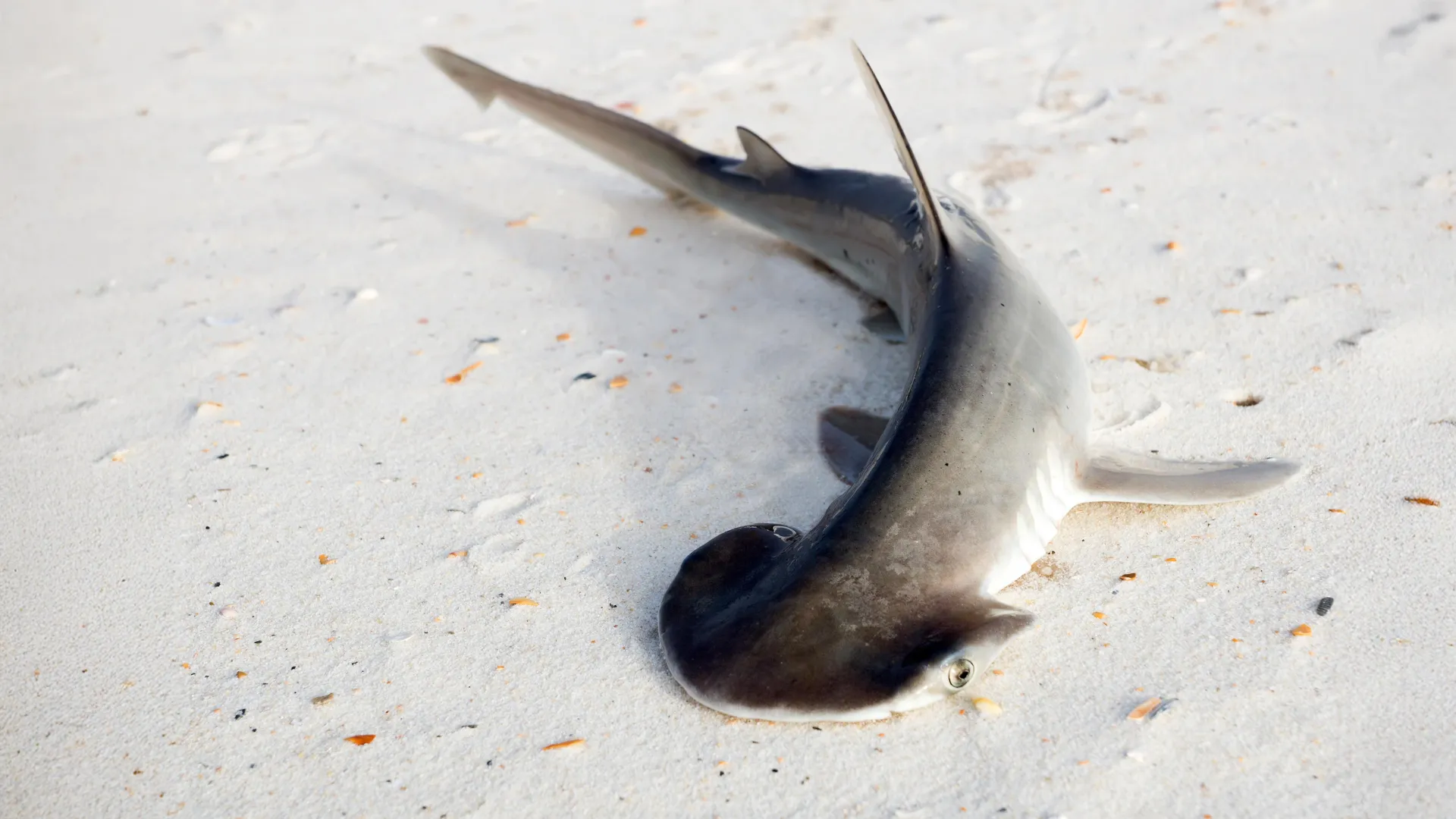
A groundbreaking study into the unique head morphology of bonnethead sharks (Sphyrna tiburo) has fundamentally reconfigured scientific understanding of how these animals develop their famously unusual cranial features, effectively discrediting a long-held explanation and narrowing the potential drivers behind their striking sexual dimorphism. This comprehensive investigation, drawing data from two disparate Florida populations, reveals that the characteristic pointed snout is a trait of juvenile sharks, gradually becoming more rounded with age in both sexes, a transformation especially pronounced in females, thereby overturning the previous assumption that a pointed head signifies male sexual maturity.
The bonnethead shark, a smaller relative within the expansive hammerhead family (Sphyrnidae), presents one of the most intriguing examples of sexual dimorphism among cartilaginous fishes. Unlike most shark species where males and females exhibit subtle differences in size or fin shape, bonnetheads display a pronounced divergence in their cephalofoil, the distinctive flattened, wing-like head structure that gives hammerheads their iconic appearance. For decades, it was commonly posited that male bonnetheads developed a more acutely pointed snout as they approached reproductive maturity, distinguishing them from the generally smoother, more rounded heads of adult females. This morphological divergence has long perplexed marine biologists, prompting speculation about its adaptive significance, particularly concerning foraging strategies or reproductive advantages.
The recent findings, spearheaded by researchers from the University of Miami Rosenstiel School of Marine, Atmospheric, and Earth Science, meticulously challenge this prevailing narrative. Through an extensive analysis of bonnethead populations across Florida’s diverse coastal ecosystems, the study reveals a dynamic developmental trajectory for head shape that fundamentally reinterprets the observed dimorphism. Rather than a feature emerging in mature males, the pointed cephalofoil is now understood as a characteristic of younger, less mature individuals of both sexes. As these sharks grow and age, their heads undergo a progressive rounding, a process that is significantly more pronounced in females. This age-related change, rather than a sex-specific maturation event, appears to be the primary driver of the observed differences, fundamentally shifting the baseline understanding of this unique biological trait.
The research employed a rigorous, multi-faceted approach to gather and analyze data, focusing on both the precise morphology of the sharks’ heads and their dietary ecology. To ensure the robustness and generalizability of their findings, scientists sampled bonnethead sharks from two geographically distinct regions of Florida: Biscayne Bay on the Atlantic coast and Tampa Bay on the Gulf coast. This dual-location strategy allowed the team to assess whether developmental patterns were consistent across populations inhabiting different environmental conditions and food webs, thus strengthening the universal applicability of their conclusions.
Between May 2022 and May 2023, the field teams meticulously collected data from a substantial number of individuals, tagging and releasing 105 bonnethead sharks in Biscayne Bay and an additional 39 in the Tampa Bay region. Capture methods were adapted to local conditions, utilizing research longlines in Biscayne Bay and scientific gillnets in Tampa Bay, ensuring efficient and responsible collection. Upon capture, each shark underwent a standardized protocol: precise measurements of body length and other morphometric data were recorded, a small, non-lethal muscle tissue sample was collected for dietary analysis, and crucially, high-resolution photographs of both sides of the animal’s head were taken against a specially designed grid board. This photographic technique, coupled with sophisticated image analysis software like ImageJ, enabled researchers to quantify the curvature and precise geometry of each shark’s cephalofoil with unprecedented detail and accuracy, minimizing handling time and stress on the animals before their swift release.
A critical component of the investigation involved a thorough examination of the sharks’ feeding ecology. Previous hypotheses often linked the distinct head shapes to differential foraging behaviors or dietary preferences between males and females. To test this, researchers analyzed muscle tissue samples from 137 sharks for stable isotope signatures of carbon and nitrogen. This advanced analytical technique provides a long-term dietary record, integrating an animal’s diet over weeks to months, unlike stomach content analysis which only reflects recent meals. Carbon isotopes indicate the primary energy source at the base of the food web, revealing whether an animal feeds in coastal marshes, seagrass beds, or open water. Nitrogen isotopes, conversely, provide insights into an animal’s trophic level, indicating its position within the food chain.
The stable isotope analysis yielded several significant insights. It confirmed that bonnethead populations in Biscayne Bay and Tampa Bay indeed occupied distinct food webs, reflecting the differing environmental baselines and prey availabilities of the two coastal ecosystems. Furthermore, the analysis revealed that individual bonnetheads experienced dietary changes as they grew, a common phenomenon known as ontogenetic diet shifts, where an animal’s diet evolves with its size and life stage. However, and critically for the study’s central hypothesis, the results demonstrated no significant differences in the isotopic signatures between males and females within the same bay. This indicates that, regardless of their sex, bonnetheads inhabiting the same local environment largely depended on similar food sources and occupied comparable trophic niches.
This robust dietary evidence directly contradicted the long-standing assumption that sex-specific foraging differences might drive the observed head shape dimorphism. As stated by Kathy Liu, the lead author who conducted this research during her master’s degree at the Rosenstiel School, "Our findings provided no evidence that differences in diet or foraging were driving the development of the sharks’ sex-specific head shapes." This exclusion of diet as a primary driver represents a significant step forward in narrowing the range of possible explanations for this perplexing biological trait. Catherine Macdonald, a co-author and associate professor at the Rosenstiel School, emphasized this point, noting that the study "helps narrow the drivers of a biological trait that has puzzled scientists," suggesting that "there is another cause behind the differences in head shape between male and female bonnetheads."
With diet largely ruled out, the fundamental question of why bonnetheads possess their unique cephalofoil, particularly the pointed variant seen in juveniles, remains. The researchers propose an intriguing new hypothesis: the pointed head shape could offer a hydrodynamic advantage to younger, smaller sharks, potentially aiding in more efficient swimming or maneuverability. As females grow larger to accommodate the physiological demands of reproduction and gestation—bonnetheads are viviparous, giving birth to live young—this potential hydrodynamic benefit might become less critical or even yield to other selective pressures. A larger, rounder head might, for instance, be less energetically costly to maintain or provide a different adaptive advantage for adult females. This shift in adaptive priority could explain the more pronounced rounding observed in mature females.
This hypothesis opens fertile ground for future scientific inquiry. Subsequent research will need to delve into the biophysics of swimming performance, specifically examining how variations in cephalofoil morphology impact drag, lift, and maneuverability across different sizes and sexes. Experimental studies, perhaps utilizing computational fluid dynamics or flume tank experiments, could quantify these hydrodynamic trade-offs. Additionally, investigations into the embryonic development of bonnetheads are crucial to pinpoint precisely when the initial differences in head shape between males and females begin to manifest. Understanding the timing and underlying genetic or hormonal mechanisms of this development could provide further clues to its evolutionary drivers.
Beyond the specific mechanics of bonnethead head shape, the methodologies developed and refined in this study hold broader implications for marine biology and conservation. The non-invasive photographic morphometric technique, for instance, can be readily applied to study bonnethead populations across their extensive geographic range, from the western Atlantic to the eastern Pacific. Comparative studies across diverse regions could reveal additional variations in head shape, potentially indicating localized adaptations or even identifying cryptic populations that might warrant distinct conservation strategies. By combining precise morphological measurements with detailed trophic ecology data, scientists are better equipped to test competing hypotheses about the development and evolution of unusual biological traits. Such an integrated approach is vital for understanding the complex interplay between an organism’s form, function, and its environment, ultimately contributing to more informed management and conservation efforts for these fascinating sharks and their ecosystems. The ongoing quest to understand the bonnethead’s unique cephalofoil underscores the dynamic nature of scientific discovery, continually refining our knowledge of the natural world.




 Lisa Mariana
 Aura Kasih
 Safa Marwah