Aura Kasih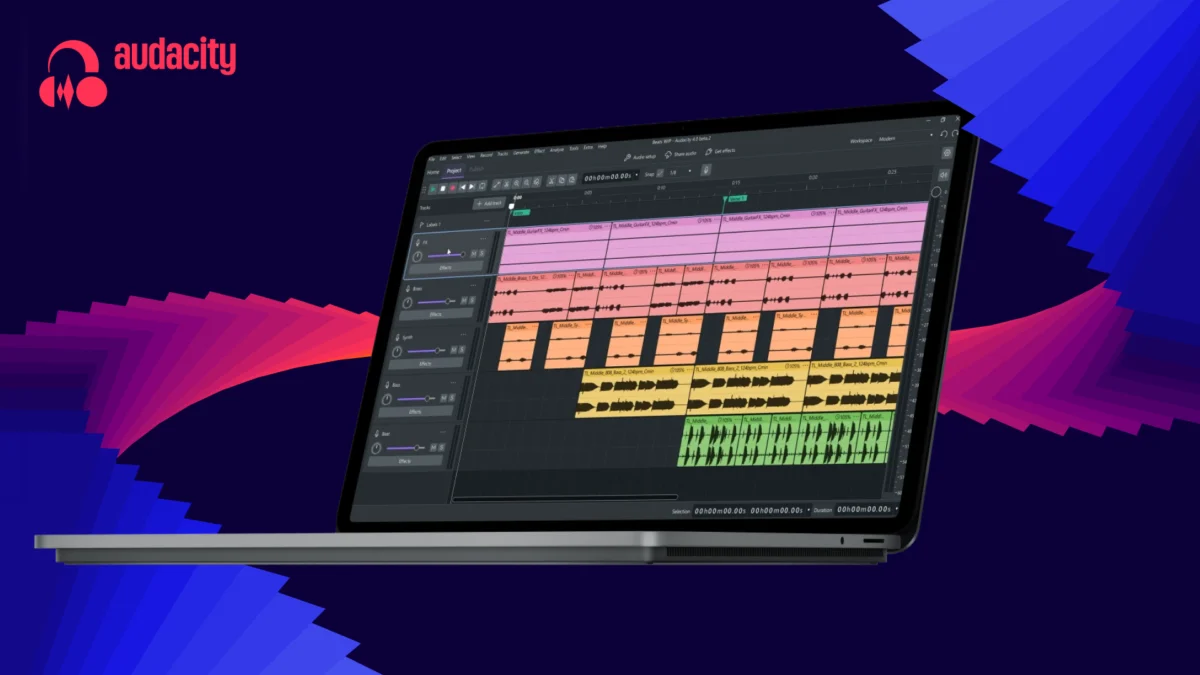
The venerable audio editing and recording application, Audacity, has undergone a transformative modernization with the release of its latest iteration, Audacity 4, marking a significant departure from its long-standing, albeit sometimes cumbersome, interface and workflow. This comprehensive redesign aims to elevate the software from a functional, free tool to a powerful, contemporary digital audio workstation (DAW) capable of meeting the demands of a broader user base, from hobbyists to seasoned professionals.
For over two decades, Audacity has occupied a unique position in the audio software landscape. Since its inception in 2000, it has been lauded for its accessibility, offering a robust suite of features entirely free of charge. This democratizing aspect has cemented its status as arguably the "world’s most popular" audio editor, empowering countless individuals to record podcasts, edit music, clean up voiceovers, and engage in a myriad of audio manipulation tasks without the prohibitive cost often associated with professional-grade software. However, this popularity has historically been accompanied by a user interface that, while familiar to its dedicated community, often felt dated and unintuitive to newcomers. Features were frequently added as afterthoughts, leading to a sometimes fragmented and challenging user experience, particularly when attempting complex editing maneuvers.
Audacity 4 directly addresses these long-standing criticisms with a fundamental shift towards a non-destructive editing paradigm. This is perhaps the most significant and impactful change in the software’s history. In previous versions, editing operations were largely destructive, meaning that once an audio segment was altered – trimmed, cut, or manipulated – the original data was often overwritten, making it difficult or impossible to revert to an earlier state without undoing a series of steps. The introduction of non-destructive editing fundamentally alters this dynamic. Users can now make precise edits, such as trimming the beginning or end of an audio clip, and retain the ability to easily extend that clip back to its original length by simply dragging its edge. This granular control dramatically enhances flexibility, allowing for experimentation and revisions without the fear of irrevocably losing audio data.
The implications of non-destructive editing extend beyond simple trimming. Audacity 4 now permits audio clips to overlap. This capability is a game-changer for complex arrangements and mixing. Previously, attempting to place one audio clip over another would result in the software either refusing the operation or automatically overwriting the underlying audio, necessitating meticulous planning and cut-and-paste maneuvers. With overlapping clips, users can now freely layer and adjust audio segments, confident that they can fine-tune the timing and arrangement post-placement. This facilitates more fluid workflows, particularly for tasks like layering sound effects, harmonizing vocals, or constructing intricate musical arrangements. The ability to seamlessly drag audio around the timeline without encountering hard stops or requiring constant cutting and pasting significantly accelerates the editing process and fosters a more creative and iterative approach.
Furthermore, the ability to split clips with ease in Audacity 4 provides a more granular level of control for segmenting and rearranging audio content. This feature allows users to precisely divide longer audio files into smaller, manageable units, which can then be individually manipulated, moved, or deleted. This is invaluable for tasks such as isolating spoken phrases for editing, breaking down musical sections for reordering, or preparing audio for precise synchronization with visual media.
Beyond the core editing mechanics, Audacity 4 boasts a comprehensive visual and functional refresh. The user interface has undergone a significant aesthetic makeover, aligning it more closely with modern design principles and the visual language of other products within the MuseScore family, such as the namesake music notation software and Audio.com. This includes the introduction of customizable themes, allowing users to tailor the software’s appearance to their personal preferences and reduce eye strain during extended editing sessions. This visual modernization not only makes Audacity more aesthetically pleasing but also improves its discoverability and usability, making it more approachable for users accustomed to contemporary software interfaces.

The developers have also paid considerable attention to the organization and management of projects. The introduction of a revamped home screen with enhanced project organization tools aims to streamline the process of managing multiple audio files and ongoing work. This is crucial for users who juggle numerous projects simultaneously, providing a clearer overview and more efficient access to their creative endeavors.
The refresh extends to the software’s built-in effects and clip envelopes. While specific details on the enhancements to these components are still emerging, the commitment to modernizing these core audio processing tools suggests improvements in their quality, usability, and integration within the new workflow. Clip envelopes, which control parameters like volume and panning over time, are particularly critical for dynamic audio shaping, and their refresh indicates a move towards more sophisticated control.
The journey to Audacity 4 has not been without its challenges. Last year, an early iteration of a redesigned logo generated considerable discussion, with some initial renditions proving unpopular within the user community. However, the final version of the icon has reportedly been refined to a more universally accepted aesthetic. This minor controversy underscores the passionate engagement of Audacity’s user base and the high stakes involved in updating such a beloved and widely used application. The successful integration of these significant changes, from non-destructive editing to a modern interface, demonstrates the development team’s commitment to evolving Audacity while respecting its heritage.
The transformation of Audacity 4 positions it more squarely as a direct competitor to established digital audio workstations (DAWs) in the market, such as Ableton Live, Logic Pro, and Pro Tools, albeit while retaining its core advantage of being free and open-source. This democratization of professional-grade audio editing capabilities is a powerful proposition. It lowers the barrier to entry for aspiring audio engineers, musicians, podcasters, and content creators, allowing them to hone their skills and produce high-quality audio without financial constraints.
The implications for the broader audio production ecosystem are significant. With a more capable and user-friendly Audacity, a larger segment of the population will have access to sophisticated audio tools. This could lead to an explosion of new content, increased innovation in audio production techniques, and a more diverse range of voices and sounds reaching audiences. Furthermore, the open-source nature of Audacity means that its development will continue to be driven by community contributions, ensuring its adaptability and responsiveness to future technological advancements and user needs.
Looking ahead, the successful implementation of Audacity 4 sets a strong foundation for continued development. The focus on a non-destructive workflow and a modernized interface suggests a trajectory towards further integration of advanced features commonly found in professional DAWs. This could include more sophisticated routing options, advanced plugin support, real-time processing capabilities, and enhanced collaboration tools. The commitment to a free and open-source model ensures that Audacity will likely remain at the forefront of accessible audio technology, continuing its legacy as a vital tool for creators worldwide. The evolution from a functional but dated editor to a powerful, modern DAW signifies a pivotal moment for Audacity, solidifying its position as an indispensable resource for audio professionals and enthusiasts alike.


 Lisa Mariana
 Safa Marwah
 Ayu Aulia