Ayu Aulia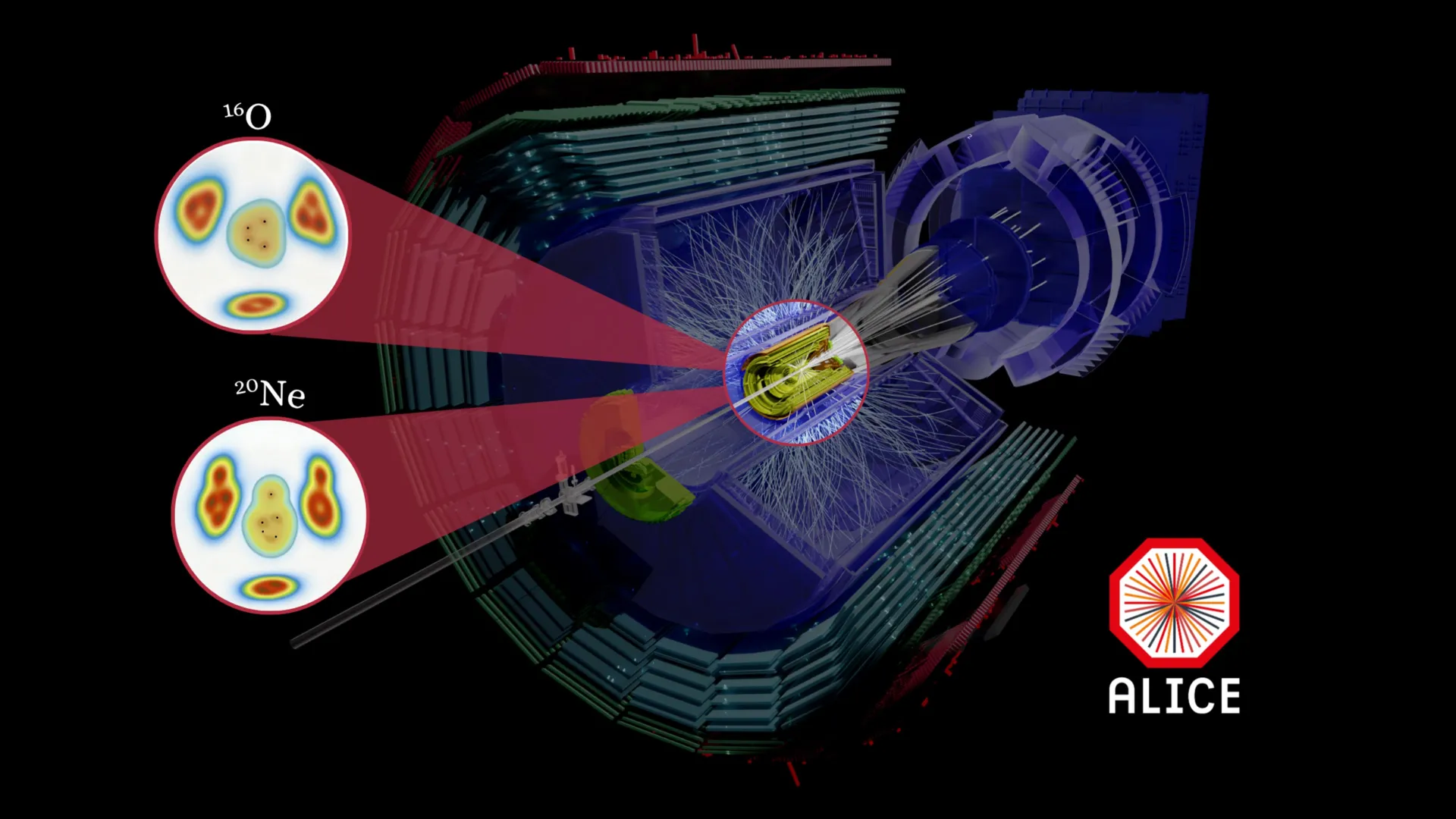
Groundbreaking experimental work at the world’s most powerful particle accelerator has successfully recreated the fundamental state of matter that permeated the cosmos in its earliest moments, achieving this feat through collisions of atomic nuclei significantly lighter than previously deemed possible. This remarkable development offers an unprecedented window into the Universe’s formative epoch and simultaneously provides a novel methodology for probing the intricate architecture of atomic nuclei, bridging two seemingly disparate domains of physics.
The quest to comprehend the genesis of the Universe and the fundamental forces governing matter has long driven physicists to explore extreme conditions. Before the emergence of stars, galaxies, planets, or even stable atoms, the nascent cosmos existed in a state utterly alien to our present understanding. For decades, the European Organization for Nuclear Research (CERN), home to the Large Hadron Collider (LHC) in Switzerland, has served as a crucible for such investigations. Researchers, particularly those collaborating within the ALICE experiment, endeavor to replicate the immense temperatures and pressures that prevailed shortly after the Big Bang, thereby synthesizing the Universe’s primordial substance: quark-gluon plasma (QGP).
The Cosmic Dawn: Recreating Quark-Gluon Plasma
Quark-gluon plasma represents an extraordinary, ephemeral phase of matter theorized to have filled the Universe during its first few microseconds. In this superheated, ultradense environment, the fundamental constituents of protons and neutrons – quarks and gluons – were not confined within individual particles but moved freely, forming a dynamic "soup." As the Universe rapidly expanded and cooled, these quarks and gluons underwent a phase transition, binding together to form protons and neutrons, which subsequently assembled into atomic nuclei, and eventually, the atoms that constitute all visible matter today. Understanding the properties and evolution of this plasma is paramount to charting the Universe’s trajectory from its singularity to its current complexity.
Historically, the scientific consensus held that the immense energy density required to generate QGP in laboratory settings necessitated collisions between exceptionally heavy atomic nuclei, such as those of lead or gold. These massive nuclei, when accelerated to velocities approaching the speed of light and smashed together, were believed to provide the critical volume and interaction strength to overcome the strong force’s confinement of quarks and gluons, thereby deconfining them into a plasma state. Experiments utilizing lead-lead collisions at the LHC have indeed successfully produced QGP, confirming theoretical predictions and offering insights into its properties.
However, a recent breakthrough by an international team, spearheaded by researchers formerly at the Niels Bohr Institute at the University of Copenhagen and part of the ALICE collaboration, has challenged this long-standing assumption. Their innovative experiments demonstrated that QGP can be formed not only from collisions of heavy nuclei but also from significantly lighter ones. Specifically, they achieved QGP creation by colliding oxygen-16 and neon-20 nuclei. This discovery dramatically expands the understood parameter space for QGP formation, suggesting that the fundamental conditions required for matter to transition into this exotic state are broader than previously conceived.
According to Associate Professor You Zhou, a leading figure in the experiment, this achievement signifies a critical advancement: "We have redefined the lower limit for the size of atomic nuclei capable of generating this primordial matter, effectively creating what we term a ‘Little Big Bang.’ This new understanding provides crucial data points regarding the foundational requirements for matter to enter this extreme phase." The implications for both cosmology and nuclear physics are profound, potentially refining models of the early Universe’s evolution and deepening our grasp of the strong force. The findings, a product of the extensive ALICE experiment, have been peer-reviewed and published in the esteemed journal Physical Review Letters.
Deciphering the Aftermath: The Geometric Fingerprint of Collisions
The direct observation of quark-gluon plasma is an experimental impossibility due to its extraordinarily short lifespan—mere fractions of a second—before it expands and cools, re-hadronizing into a shower of more stable particles. Consequently, physicists rely on indirect methods, meticulously analyzing the characteristics of these emergent particles to reconstruct the properties of the transient plasma from which they originated. This approach involves studying the collective motion patterns, or "flow," of the thousands of particles produced in each high-energy collision.
The latest results reveal a remarkable connection between the geometric configuration of the colliding nuclei and the subsequent movement patterns of the particles. When two atomic nuclei collide, the region of overlap—the "initial state geometry"—is not always symmetrical. If the colliding nuclei are perfectly spherical, their overlap tends to be more uniformly rounded. However, if one or both nuclei possess an inherently deformed or asymmetric shape, the initial overlap region will reflect this asymmetry. The new experiments vividly demonstrated this principle: collisions between two relatively spherical oxygen nuclei generated a more rounded, isotropic particle flow pattern, whereas collisions involving the intrinsically deformed neon nuclei produced a distinctly anisotropic, "bowling-pin-shaped" pattern in the final particle distribution.
Postdoctoral Researcher Emil Gorm Dahlbæk Nielsen, a co-author of the study from the Niels Bohr Institute, elucidates this phenomenon: "The collective movement of particles emanating from the primordial matter directly encodes information about the initial geometric morphology of the atomic nuclei involved. A collision between two spherical nuclei yields one specific pattern, while one involving nuclei shaped like bowling pins results in another. By meticulously mapping these particle movement patterns after the collision, we gain insights into atomic nuclei that are exceedingly challenging to obtain through conventional methods." He further likens this process to indirect observation: "It is analogous to inferring the shape of an unseen object by observing its shadow. The object itself remains hidden, but its projected form reveals its geometry. In a similar vein, the post-collision trajectories of particles unveil the intrinsic geometric shapes of the atomic nuclei present at the moment of impact." This technique leverages the hydrodynamic expansion of the QGP, where initial spatial anisotropies are converted into momentum anisotropies in the outgoing particles, a phenomenon known as collective flow.
A Novel Perspective on Nuclear Architecture
The study of atomic nuclei—their internal structure, shape, and the forces binding them—has been a cornerstone of physics for over seven decades. The Niels Bohr Institute, in particular, boasts a rich legacy in this field, with Aage Bohr receiving the Nobel Prize in Physics in 1975 for his seminal contributions to understanding nuclear structure. The precise shape of a nucleus is not merely a geometric curiosity; it provides crucial insights into how protons and neutrons arrange themselves within the nuclear confines and, critically, offers a window into the enigmatic nature of the strong force.
The strong force is one of the four fundamental interactions of nature, responsible for binding quarks into protons and neutrons, and subsequently, binding these nucleons into atomic nuclei. Despite its immense strength—it is the most powerful of all fundamental forces—its complex behavior at various energy scales continues to present formidable theoretical challenges. Traditionally, physicists have explored nuclear structure through low-energy experiments, such as electron scattering, spectroscopy, and studies of nuclear rotation and vibration. These methods involve gently probing nuclei to deduce their properties, akin to meticulously examining a static object.
The novel approach pioneered by the ALICE collaboration represents a radical departure from this established methodology. Instead of delicate, low-energy investigations, the researchers employ the most violent collisions imaginable, smashing nuclei together at nearly the speed of light. The subsequent reconstruction of their initial geometric shapes from the "imprint" left on the expanding QGP offers an entirely new avenue for nuclear structure determination. "A precise understanding of nuclear structure is indispensable for unraveling the mysteries of the strong force," states You Zhou. "Rather than carefully examining nuclei at low energies, we are now able to collide them at the highest possible energies and extract their fundamental shapes from the collective flow of the resulting plasma."
This innovative technique holds the potential for a paradigm shift in nuclear physics. If refined and further developed, it could furnish scientists with an unparalleled tool to investigate the shapes and internal configurations of atomic nuclei that remain poorly understood. This is particularly relevant for exotic nuclei, those far from the valley of stability, which often exhibit unusual shapes and provide critical tests for nuclear models.
Charting the Future: The Limits of the "Little Big Bang"
A significant frontier in this line of research involves precisely defining the smallest possible collision system capable of producing quark-gluon plasma. Understanding this boundary is crucial for several reasons: it tests the limits of Quantum Chromodynamics (QCD), the theory of the strong force, and challenges the applicability of hydrodynamic models that describe the collective behavior of QGP. As systems become progressively smaller, the transition from collective, fluid-like behavior to individual particle interactions becomes a central question.
The research team is already planning subsequent experiments utilizing even lighter atomic nuclei, including helium-4. These investigations aim to systematically explore the threshold for QGP formation, pushing the experimental envelope to its absolute limits. By meticulously mapping this boundary, physicists can refine theoretical models and gain a deeper understanding of the fundamental conditions under which the universe’s primordial matter could arise.
You Zhou encapsulates the profound interconnectedness of this research: "What is truly captivating is the dual utility of these experiments. We can simultaneously gain insights into the intricate structure of atomic nuclei and enhance our comprehension of the events that transpired during the Universe’s earliest moments. These two domains, though seemingly distinct, are proving to be far more intrinsically linked than initially perceived." This interdisciplinary synergy underscores the power of high-energy physics to illuminate both the grand cosmic narrative and the granular details of matter’s fundamental building blocks.
In conclusion, the creation of a miniature "Big Bang" using surprisingly small atomic nuclei marks a significant milestone in experimental physics. It not only refines our understanding of the Universe’s primordial state but also introduces a powerful new methodology for peering into the heart of atomic nuclei. This research exemplifies the ongoing pursuit of fundamental knowledge, demonstrating how extreme conditions can unlock secrets that span the vast scales from the subatomic to the cosmological. The journey to fully decipher the strong force and the cosmic dawn continues, propelled by such ingenious experimental endeavors.




 Lisa Mariana
 Aura Kasih
 Safa Marwah