Lisa Mariana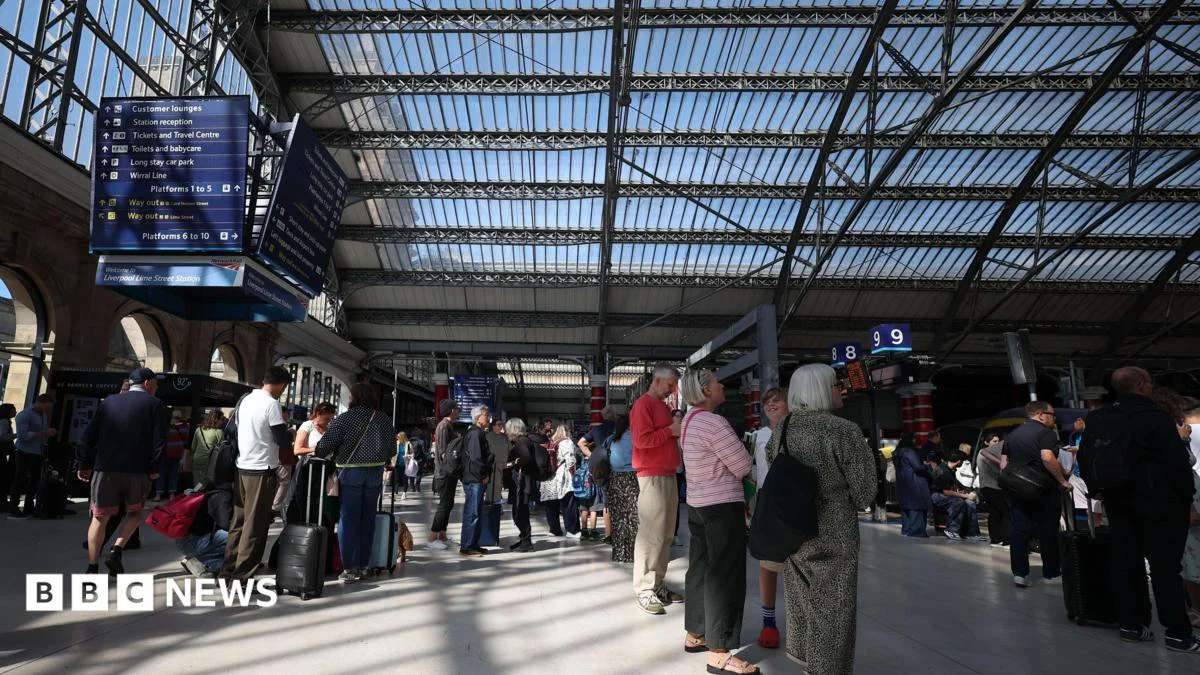
A severe operational failure, originating from an unforeseen power interruption at a central railway signalling facility, precipitated extensive disruption across the northern English rail network on Thursday, leading to significant delays, cancellations, and arduous journeys for a substantial number of commuters and intercity travellers.
The genesis of the widespread transportation gridlock was a fleeting, approximately 90-second power loss that affected the Manchester Rail Operating Centre (ROC) just prior to 14:00 BST. This facility, a cornerstone of regional rail infrastructure, houses the sophisticated control systems essential for the safe and efficient management of railway operations, including the intricate network of signals. The core issue was subsequently exacerbated by an observed delay in the activation of the ROC’s critical backup power systems. This failure of redundancy protocols meant that with primary power offline and secondary systems unresponsive, affected trains were compelled to halt, causing immediate and widespread operational paralysis as vital signalling capabilities ceased to function.
Network Rail, the custodian of the UK’s railway infrastructure, acknowledged the severity of the incident, with engineers rapidly deployed to address the underlying signalling issues. Despite these efforts, the organisation issued warnings predicting continued disruption well into Friday, underscoring the complex nature of restoring full operational capacity after such a systemic shock. By Thursday evening, the fallout had extended to impact at least eight distinct rail operators, illustrating the profound interconnectedness of the network and the cascading effects of a single point of failure within a critical control system.
Chris Wright, Route Director NW at Network Rail, emphasised the imperative for a thorough investigation into the incident. "We’ve got to really understand what’s gone wrong here, because clearly something has," he stated, highlighting the commitment to ascertain precisely why the expected restoration protocols failed to engage as designed. This inquiry is anticipated to delve deep into the technical specifics of the power supply architecture, the integrity of the backup systems, and the operational procedures in place for such contingencies.
The Manchester Rail Operating Centre, inaugurated in July 2014, represents a significant investment in modern railway control technology. Designed to centralise and streamline the management of rail movements across a vast geographical expanse, its operational control boundary spans from Crewe in the south to Carlisle in the north, and from Todmorden in the east to the Welsh border in the west. This extensive reach means that any significant malfunction at the centre has the potential to ripple across a substantial portion of the northern rail infrastructure, impacting services across multiple counties and major urban centres. The initial power outage on Thursday afternoon was part of a broader electrical supply interruption in the Ardwick area. However, it was the subsequent failure of the centre’s redundant power systems to seamlessly engage that transformed a localised power cut into a major regional transport crisis.
The human element of this disruption was profound, with thousands of passengers experiencing what many described as "nightmare" journeys. These individual stories collectively paint a vivid picture of the logistical and personal toll exacted by the system failure. Sarah Nelson, a remedial massage therapist, found her attempt to reach her workplace in Manchester thwarted, leading to an arduous five-hour round trip simply to return to her home in Blackpool. Her train became stranded at Horwich Parkway for over 90 minutes, illustrating the prolonged periods of uncertainty and immobility faced by countless travellers. Such unexpected delays not only cause significant personal inconvenience but also translate into lost productivity and potential income for individuals.
Similarly, Chris, a technology consultant on a business trip from Scotland, found his professional commitments severely impacted. Anticipating an inability to complete his journey, he faced the unenviable prospect of booking an unplanned hotel stay in Manchester, incurring additional expenses and disrupting his carefully planned itinerary. His experience underscored the "costly, inconvenient… frustrating" nature of the delays, highlighting how critical infrastructure failures can disrupt commercial activities and impose unforeseen financial burdens on business travellers.
The disruption extended even to those completing international travel. A couple, Matt and Sarah, returning from a trip to Gibraltar and landing at Manchester Airport, had planned to take a train home to Clitheroe, Lancashire. Instead, they were compelled to arrange an expensive Uber journey, facing substantial unexpected costs to complete the final leg of their journey. This scenario illustrates how a domestic infrastructure failure can disrupt broader travel plans, affecting passengers transitioning from international flights and highlighting the interconnectedness of various transport modes.
In a particularly striking instance, Stacey, a 38-year-old office worker travelling from Deansgate to Leyland, Lancashire, was among passengers evacuated from a train that came to an unexpected halt in Manchester due to the signalling failure. Her experience, which involved paying £60 for a taxi home, showcased the immediate financial impact on individuals. However, she also commended the "phenomenal" railway staff for their "calm and professional" conduct in organising a controlled evacuation from a viaduct, underscoring the critical role of frontline personnel in managing crisis situations with competence and reassurance. These personal accounts, while individual, are representative of the widespread chaos and frustration experienced by a multitude of passengers, transforming routine journeys into protracted ordeals.
The incident at the Manchester ROC serves as a critical case study in the vulnerabilities inherent in modern, centralised infrastructure systems, even those designed with redundancy in mind. Rail Operating Centres are fundamental to the efficiency and safety of contemporary railway networks. They consolidate control functions that were once dispersed across numerous signal boxes, allowing for greater oversight, faster decision-making, and improved traffic management. The expectation is that such facilities are built with multiple layers of resilience, including uninterruptible power supplies (UPS) and robust generator backup systems, to ensure continuous operation even in the event of primary power loss. The "delay to back-up systems kicking in" therefore represents a significant deviation from expected performance and raises serious questions regarding the design, maintenance, or operational protocols governing these critical safeguards.
From an analytical perspective, the cascading failure highlights several key points regarding critical infrastructure management. Firstly, the incident underscores the potential for a relatively brief, localised power outage to escalate into widespread systemic disruption when redundant systems fail to perform as designed. This implies a potential single point of failure within the power resilience architecture that warrants thorough investigation. Secondly, the geographical scope of the disruption – encompassing a vast swathe of northern England – illustrates the immense reach and influence of a single ROC. While centralisation offers efficiency benefits, it also concentrates risk. A failure at the heart of such a system can paralyse an entire region, impacting not only passenger travel but also freight movements, with potential knock-on effects for supply chains and regional commerce.
The economic implications of such an incident extend far beyond the direct costs borne by individual passengers. Businesses across the affected region would have experienced disruptions to employee commutes, missed meetings, and delayed deliveries. The cumulative economic cost, encompassing lost productivity, additional operational expenses for businesses, and the broader inconvenience to the regional economy, is substantial, even if difficult to quantify precisely in the immediate aftermath. For a region reliant on its rail network for both internal connectivity and links to the wider national economy, a systemic failure of this magnitude represents a significant impediment to economic activity.
Looking forward, the incident necessitates a comprehensive and rigorous investigation. This inquiry will likely encompass several critical areas:
- Power Supply Integrity: A forensic examination of the primary power supply to the ROC and the nature of the wider Ardwick area outage.
- Backup System Performance: A detailed analysis of why the backup power systems failed to activate seamlessly, including checks on battery health (for UPS), generator readiness, automatic transfer switches, and associated control logic.
- Maintenance Records: A review of maintenance logs and testing schedules for all power-related infrastructure at the ROC to ensure compliance with industry standards and best practices.
- Operational Protocols: An assessment of the procedures in place for managing power failures, including staff training, emergency response protocols, and communication strategies.
- System Design Review: A broader review of the ROC’s power architecture to identify any inherent design vulnerabilities or areas where resilience could be further enhanced.
The outcomes of this investigation will be crucial for informing remedial actions and preventing similar occurrences in the future. Potential responses could include significant upgrades to power redundancy systems, revised maintenance schedules, enhanced training for operational staff, and potentially a re-evaluation of critical infrastructure design principles to build in even greater levels of resilience.
Beyond the immediate technical fixes, the incident also has implications for passenger confidence in the reliability of the national rail network. Such widespread, unforeseen disruptions erode public trust and can deter travellers from choosing rail as a preferred mode of transport. For Network Rail and the affected operators, rebuilding this trust will require not only transparent communication about the causes of the failure and the steps being taken to prevent recurrence but also demonstrable improvements in operational resilience.
In an era where critical infrastructure is increasingly reliant on complex technological systems, ensuring robust and fault-tolerant operations is paramount. The Manchester ROC power failure serves as a stark reminder of the delicate balance between efficiency gains from centralisation and the need for absolute reliability in the face of diverse operational challenges, from routine power outages to more complex system malfunctions. The lessons learned from this incident will undoubtedly contribute to the ongoing evolution of railway infrastructure management, aiming to fortify the network against future disruptions and ensure a more resilient and dependable service for the millions who rely on it.




 Aura Kasih
 Ayu Aulia

 Safa Marwah