Safa Marwah
Cybersecurity analysts have identified a sophisticated campaign where threat actors are leveraging the trusted infrastructure of npm and its mirroring services to host deceptive web pages, primarily designed to facilitate phishing attacks. This tactic involves embedding malicious HTML content within seemingly innocuous npm packages, which are then mirrored across content delivery networks (CDNs) like UNPKG and npmmirror. By exploiting the direct file access capabilities of these mirror platforms, adversaries transform legitimate development resources into clandestine front-ends for distributing phishing redirects, thereby bypassing traditional security measures and enhancing the perceived legitimacy of their malicious payloads.
The methodology diverges from conventional software supply chain compromises, where malicious code directly infects a developer’s environment upon package installation. Instead, this strategy repurposes the open-source registry as a robust, globally distributed content delivery mechanism for static web pages. These pages, often crafted to mimic legitimate security verification prompts such as Cloudflare CAPTCHAs, serve as initial points of contact before surreptitiously redirecting unsuspecting users to attacker-controlled domains. The inherent trust associated with domains like unpkg.com—which typically hosts legitimate JavaScript libraries and assets—lends an air of authenticity to these phishing attempts, making them particularly difficult for end-users and automated security systems to detect.
Initial observations of this emergent threat were documented in July by independent security researchers, who uncovered a specific npm package, masquerading under a common airline name, that contained a fraudulent Cloudflare verification page. This page, upon interaction, initiated a redirect to a malicious external domain. Subsequent investigations by security firms further illuminated the scale of this exploitation, revealing at least two dozen distinct npm packages employing identical malicious HTML structures. This widespread deployment underscores a calculated effort by threat actors to establish a resilient and distributed infrastructure for their phishing endeavors.
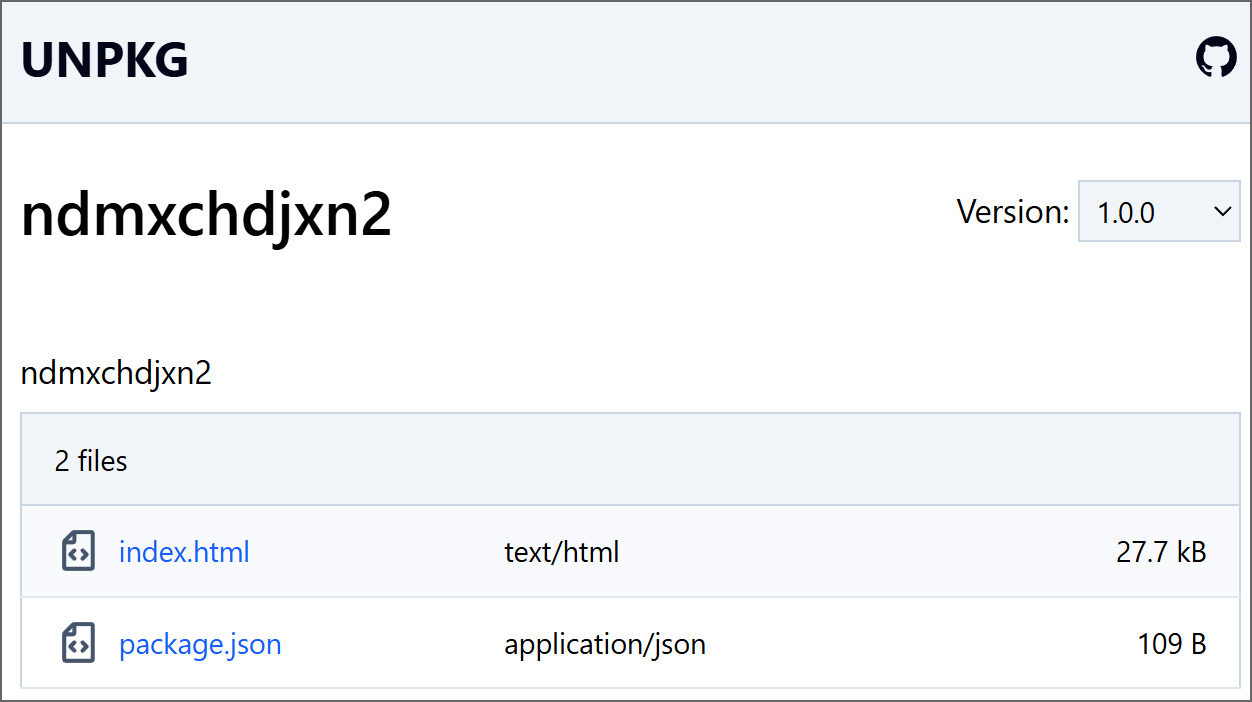
A key differentiator of this attack vector is its strategic avoidance of direct code execution on developer machines. The malicious components are confined to a single HTML file within the npm package, accompanied by a basic package.json file that designates the HTML as the package’s primary entry point. Consequently, merely downloading or installing these packages does not immediately compromise a developer’s system with malware or data-stealing payloads. The true danger materializes when the HTML file, hosted on a legitimate npm mirror, is accessed directly via a web browser. This transforms the mirror into an unwitting host for the attacker’s content, allowing the malicious page to render from a domain that is generally considered trustworthy and therefore less likely to be flagged by security software or browser warnings.
For instance, when an npm package containing such an HTML file is mirrored by a service like UNPKG, the HTML page becomes directly accessible through a URL formatted as https://unpkg[.]com/[package-name]@[version]/index[.]html. This direct access mechanism is pivotal to the attack’s efficacy. It enables the threat actor to serve their deceptive content from a globally recognized and highly reputable domain, lending a layer of credibility that is often absent in typical phishing campaigns originating from newly registered or suspicious domains. This technique effectively weaponizes the very infrastructure designed to facilitate rapid and reliable distribution of open-source software, transforming it into a "free frontend host" for malicious web pages.
The deceptive HTML pages themselves are meticulously crafted to impersonate genuine Cloudflare security challenges. They often embed legitimate components, such as Cloudflare’s Turnstile CAPTCHA service, to enhance their verisimilitude. This inclusion of authentic elements further blurs the lines between legitimate security checks and malicious traps. Irrespective of whether a user successfully completes the CAPTCHA, the page executes obfuscated JavaScript code designed to initiate a redirect to a pre-determined external website.

The redirection targets have evolved over time, reflecting the adaptability of the threat actors. Early iterations in July and August were observed redirecting users to domains like microcloud[.]homes and login[.]microsofte[.]live. While some of these initial redirects eventually pointed to legitimate services, such as the Microsoft Outlook mail login page, this could be a tactic to establish trust or to prepare for a switch to a malicious target. More recent analyses indicate a shift towards a more dynamic redirection mechanism, leveraging legitimate key-value storage platforms like api.keyval.org. In this advanced method, the malicious JavaScript retrieves an encrypted URL from the service, decrypts it within the user’s browser, and then executes the redirect.
This dynamic redirection capability represents a significant escalation in the sophistication of the attack. It grants the adversaries the ability to modify their redirect targets remotely and instantaneously, without needing to alter or republish the npm package itself. This agility allows them to adapt their campaign in real-time, sidestepping detection mechanisms that rely on static URL blocklists or pattern matching. For instance, researchers observed redirects pointing to the legitimate ChatGPT website during their investigation, which could be a temporary measure or a method to test the redirect functionality before switching to a more nefarious destination. The potential for these dynamically configurable URLs to point to credential harvesting sites, malware download pages, or other scam operations is a substantial concern.
The implications of this attack vector extend beyond immediate phishing risks. The persistent nature of package mirrors poses an additional challenge. Even if a malicious package is identified and removed from the official npm registry, its cached copies may continue to reside on various mirroring platforms for an extended period. This persistence ensures that the malicious HTML pages remain accessible and functional, long after their official source has been expunged, creating a lingering threat landscape.
From a broader cybersecurity perspective, this campaign highlights an increasing trend among threat actors to "live off the land" by co-opting legitimate infrastructure and services for their nefarious purposes. The inherent trust placed in widely used open-source ecosystems and their associated distribution networks makes them attractive targets for such abuse. Organizations and individual users must therefore adopt a more scrutinizing approach, recognizing that even domains typically associated with benign content delivery can be weaponized.
To mitigate the risks posed by such sophisticated attacks, several defensive strategies are paramount. For end-users, heightened vigilance regarding URLs, even those appearing to originate from trusted domains, is crucial. Any request for "security verification" or CAPTCHA completion, particularly if unexpected, should be met with extreme caution. Validating the full URL, rather than just the domain, and being wary of any redirects to unfamiliar sites are essential practices. For organizations, robust email and web filtering solutions, coupled with advanced threat intelligence feeds, can help detect and block access to known malicious redirect targets. However, the dynamic nature of these redirects necessitates a more adaptive defense.
For developers and maintainers of open-source platforms and mirroring services, the challenge lies in enhancing package vetting processes and implementing more aggressive monitoring for anomalous content. While distinguishing between legitimate and malicious static HTML content can be complex, behavioral analysis of package contents and proactive scanning for known phishing patterns or obfuscated JavaScript could provide early warnings. Furthermore, establishing rapid takedown procedures across mirror networks for identified malicious packages is critical to limit their exposure window. The security of the software supply chain is not solely about preventing code execution vulnerabilities; it also encompasses the integrity of the entire distribution ecosystem, including how static assets are hosted and delivered. As threat actors continue to innovate, a multi-layered defense strategy that addresses both code-level and infrastructure-level exploitation is indispensable. The ongoing cat-and-mouse game between defenders and attackers demands continuous adaptation and proactive security measures to safeguard the integrity of the digital landscape.


 Aura Kasih
 Lisa Mariana