
 Aura Kasih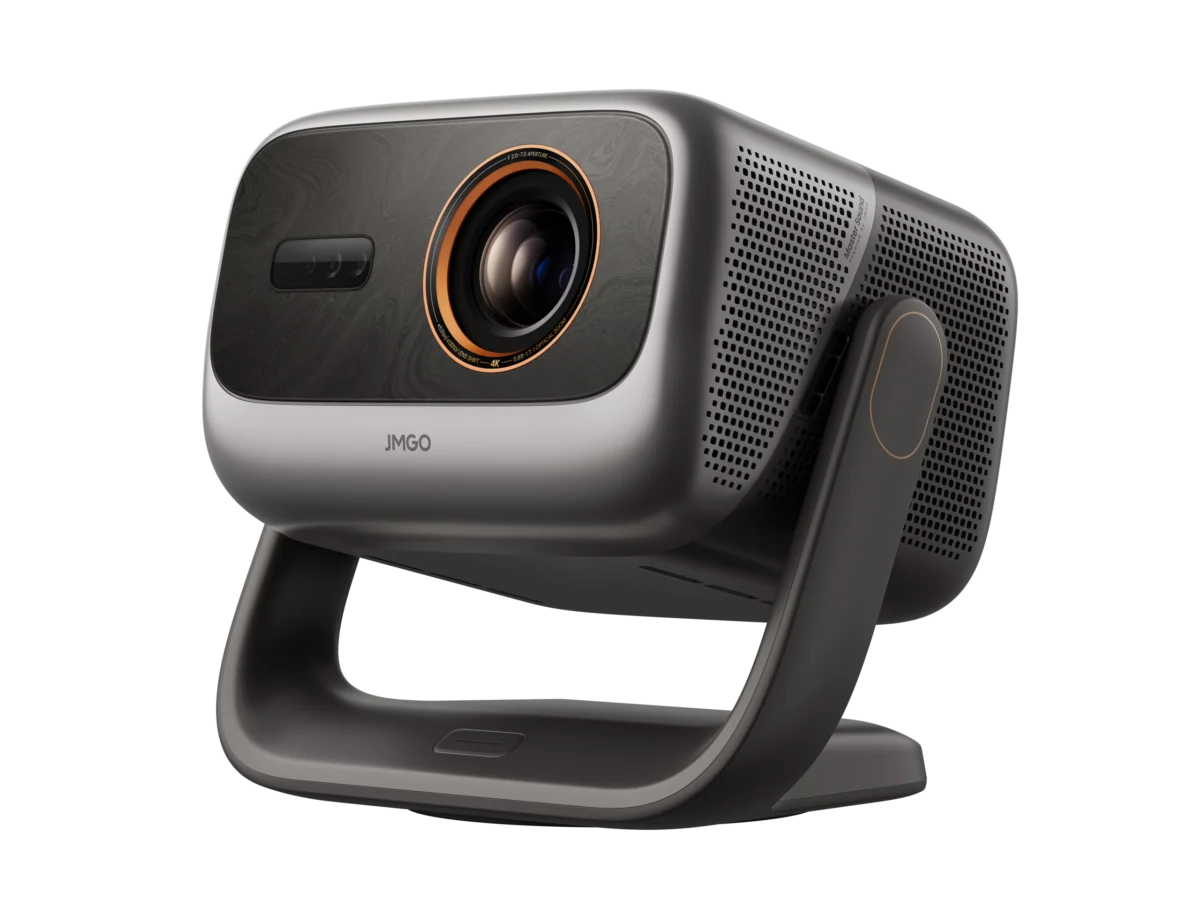
JMGO has officially launched its highly anticipated Iris Ultra Max projector in international markets, a device engineered to redefine the home viewing experience, particularly for enthusiasts of high-octane gaming and live sports. This sophisticated projector distinguishes itself through an innovative dual-iris system, a groundbreaking optical advancement that dramatically enhances contrast ratios to a native 10,000:1. This unique mechanism employs two distinct physical apertures strategically placed within the optical pathway, enabling unprecedented control over light scatter and brightness modulation, a critical improvement over traditional single-iris designs that have long been a compromise in projector technology. Powering this visual prowess is a potent triple-laser light engine, capable of projecting a remarkably bright 6,500 ISO lumen image, ensuring vibrant and impactful visuals even in ambient light conditions.
The projector’s technical specifications position it at the forefront of the home entertainment arena. The commitment to a 4K resolution, coupled with a fluid 120Hz refresh rate, is becoming an increasingly important benchmark for devices catering to fast-paced content. This combination is particularly crucial for gaming, where low latency and smooth motion are paramount for an immersive experience, and for sports broadcasts, where capturing every moment of action with clarity and precision is essential. Last year, achieving 6,000 lumens from an all-in-one projector represented a significant technological milestone. The Iris Ultra Max’s 6,500 lumen output suggests that the industry is rapidly advancing, with higher brightness becoming the new standard for premium home cinema solutions.
However, the pursuit of peak brightness in projectors can sometimes introduce unforeseen visual artifacts. It is prudent to acknowledge that past iterations of JMGO projectors have, in certain configurations, exhibited color distortion at maximum brightness, potentially impacting the viewing experience. Therefore, a cautious approach, awaiting comprehensive independent reviews of the Iris Ultra Max’s performance, is advisable to ascertain whether these past issues have been definitively resolved. The true measure of a projector’s capability lies not just in its raw specifications, but in the nuanced delivery of color accuracy, contrast fidelity, and overall visual harmony across its entire operational range.
A defining characteristic of the Iris Ultra Max, inherited from its predecessor, is its sophisticated motorized pan-and-tilt gimbal. This feature transforms the projector into a highly adaptable display solution, offering intuitive, almost remote-like control over its positioning. This robotic articulation, combined with a versatile 0.88-to-1.7:1 optical zoom lens and extensive lens shift capabilities (V ±130% and H ±53%), provides users with an exceptional degree of flexibility in image placement. This advanced setup not only simplifies installation in diverse room environments but also crucially maintains the integrity of the projected image’s optical quality, avoiding the degradation that can occur with digital keystone correction.

The integration of Variable Refresh Rate (VRR) and Auto Low Latency Mode (ALLM) further solidifies the Iris Ultra Max’s appeal to gamers. These technologies are instrumental in synchronizing the projector’s frame rate with that of the gaming console or PC, thereby minimizing input lag and eliminating screen tearing. This ensures a seamless and responsive gameplay experience, crucial for competitive or graphically intensive titles. Furthermore, the projector boasts support for Dolby Vision HDR at a native 4K resolution and 120Hz refresh rate. This signifies a commitment to delivering a superior high-dynamic-range experience, characterized by enhanced contrast, deeper blacks, brighter highlights, and a wider color spectrum, bringing cinematic quality to the home.
The Iris Ultra Max is positioned as a premium offering in the projector market. With a projected retail price of $3,499, it enters a segment that demands exceptional performance and advanced features. The current preorder price of $2,999, coupled with an anticipated shipping date of October 19th, presents a compelling early adoption opportunity for consumers eager to experience the latest in projection technology. This pricing strategy suggests JMGO’s intent to capture a significant share of the enthusiast market, offering a feature set that competes directly with established high-end home theater projectors.
The evolution of home entertainment projectors is intrinsically linked to advancements in display technologies and user demands. Historically, projectors were relegated to dedicated home theater rooms, requiring controlled lighting environments and complex calibration. However, the advent of brighter light sources, improved optical components, and integrated smart features has democratized projector ownership, making them viable alternatives to large-screen televisions for general living spaces. The Iris Ultra Max embodies this trend, aiming to provide a large-screen experience that is both visually stunning and practically adaptable.
The dual-iris system is a particularly noteworthy innovation. Contrast ratio, defined as the difference between the brightest white and the darkest black a display can produce, is a fundamental metric for image quality. A higher contrast ratio translates to images with greater depth, detail, and realism. In projectors, achieving high contrast is challenging due to the nature of light projection. Ambient light within the room can "wash out" the image, and internal light leakage can compromise black levels. By employing two irises, JMGO appears to be implementing a sophisticated form of dynamic light control. This could involve one iris adjusting for ambient light conditions and the other fine-tuning the light output for specific scenes, allowing for superior black levels and brighter highlights simultaneously. This level of optical engineering is typically found in much more expensive cinema-grade projectors.
The triple-laser light engine is another significant technological component. Laser projectors offer several advantages over traditional lamp-based projectors, including longer lifespans, greater brightness, wider color gamuts, and instant on/off capabilities. Triple-laser systems, which use separate lasers for red, green, and blue light, are capable of producing the most vibrant and accurate colors, often achieving near-perfect coverage of color spaces like Rec.2020, which is essential for delivering the full impact of HDR content. The 6,500 ISO lumen output from such a system suggests a device capable of overcoming significant ambient light, making it a more versatile option for various viewing scenarios.

The motorized gimbal and extensive lens shift capabilities are not merely convenience features; they are critical for maintaining image fidelity. Digital keystone correction, while easy to use, distorts the image geometry and can reduce sharpness and color accuracy. By allowing for physical adjustment of the lens and the projector’s orientation, the Iris Ultra Max ensures that the image remains perfectly rectangular and sharp, regardless of the projector’s placement relative to the screen. This is a hallmark of high-end projection systems, prioritizing optical integrity above all else.
The inclusion of VRR and ALLM, alongside Dolby Vision support at 4K 120Hz, clearly indicates that JMGO is targeting the discerning gamer and cinephile. These features collectively address the key requirements for a premium visual experience: smooth motion, low input lag, and stunning HDR fidelity. For gamers, the ability to play at high frame rates with minimal visual artifacts is transformative. For movie enthusiasts, Dolby Vision provides a richer, more immersive viewing experience with greater detail in both bright and dark scenes. The ability to deliver these features concurrently at 4K resolution and a 120Hz refresh rate is a testament to the projector’s advanced processing capabilities.
The market for projectors is becoming increasingly competitive, with manufacturers vying to offer the best combination of brightness, resolution, color accuracy, smart features, and usability at various price points. The Iris Ultra Max appears to be positioned to challenge established players in the premium segment by offering a comprehensive suite of cutting-edge technologies. Its success will likely depend on its ability to deliver on its ambitious specifications in real-world usage, particularly concerning color accuracy at peak brightness and the overall reliability of its advanced optical systems. As the home entertainment landscape continues to evolve, devices like the Iris Ultra Max are paving the way for truly immersive and versatile viewing experiences, blurring the lines between dedicated cinema rooms and everyday living spaces. The continued innovation in projector technology, driven by advancements in laser illumination, image processing, and optical design, promises an exciting future for consumers seeking to replicate the big-screen experience in their own homes.




 Lisa Mariana
 Ayu Aulia

 Safa Marwah