Safa Marwah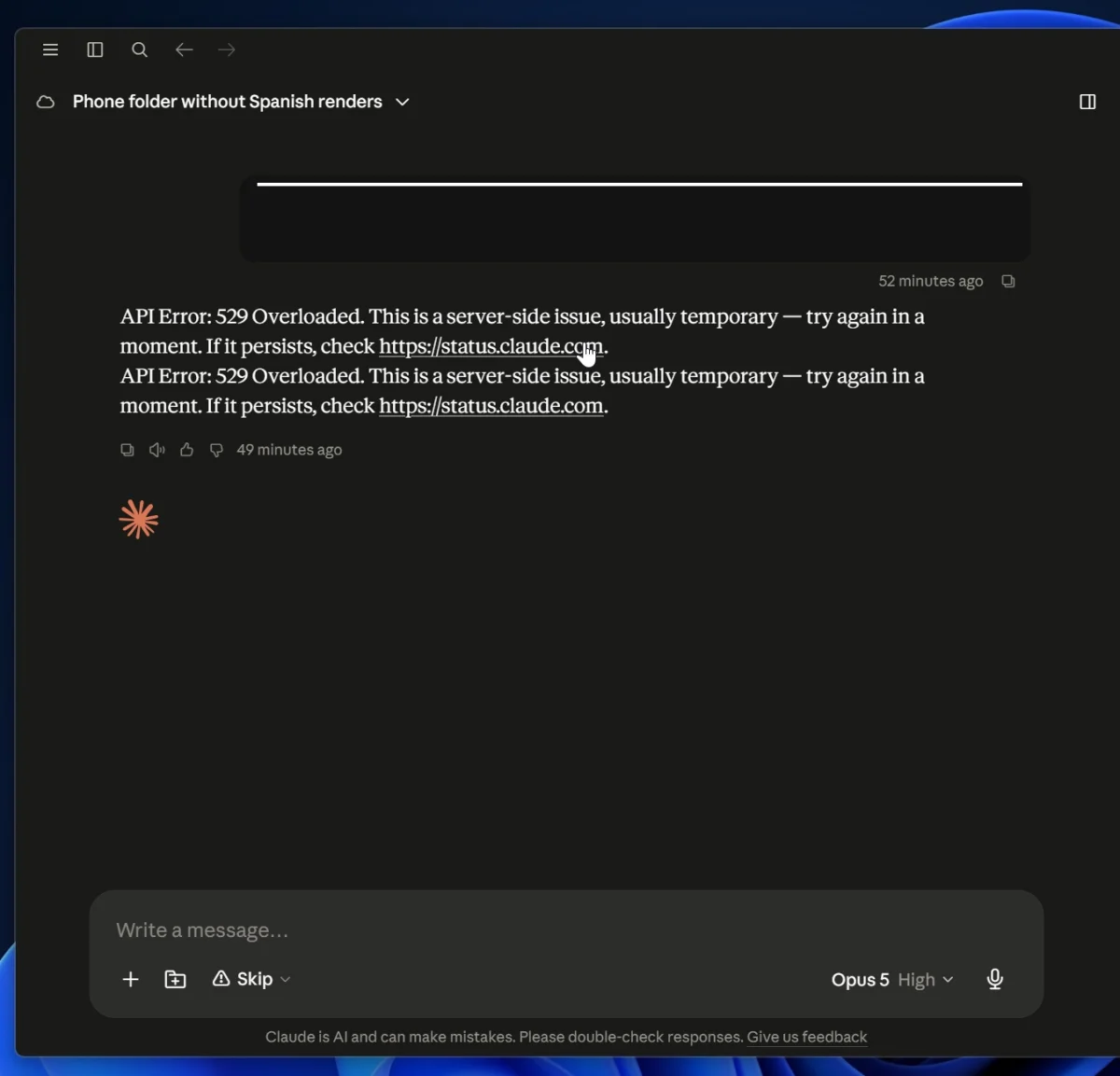
Anthropic, a prominent developer in the artificial intelligence sector, has acknowledged significant operational disturbances impacting its suite of Claude AI models, leading to extensive service unavailability and performance degradation experienced by users globally. The incident, characterized by an escalation of system errors, has rendered numerous AI-powered applications and direct user interactions with Claude unresponsive, signaling a critical infrastructure challenge for the rapidly expanding AI landscape.
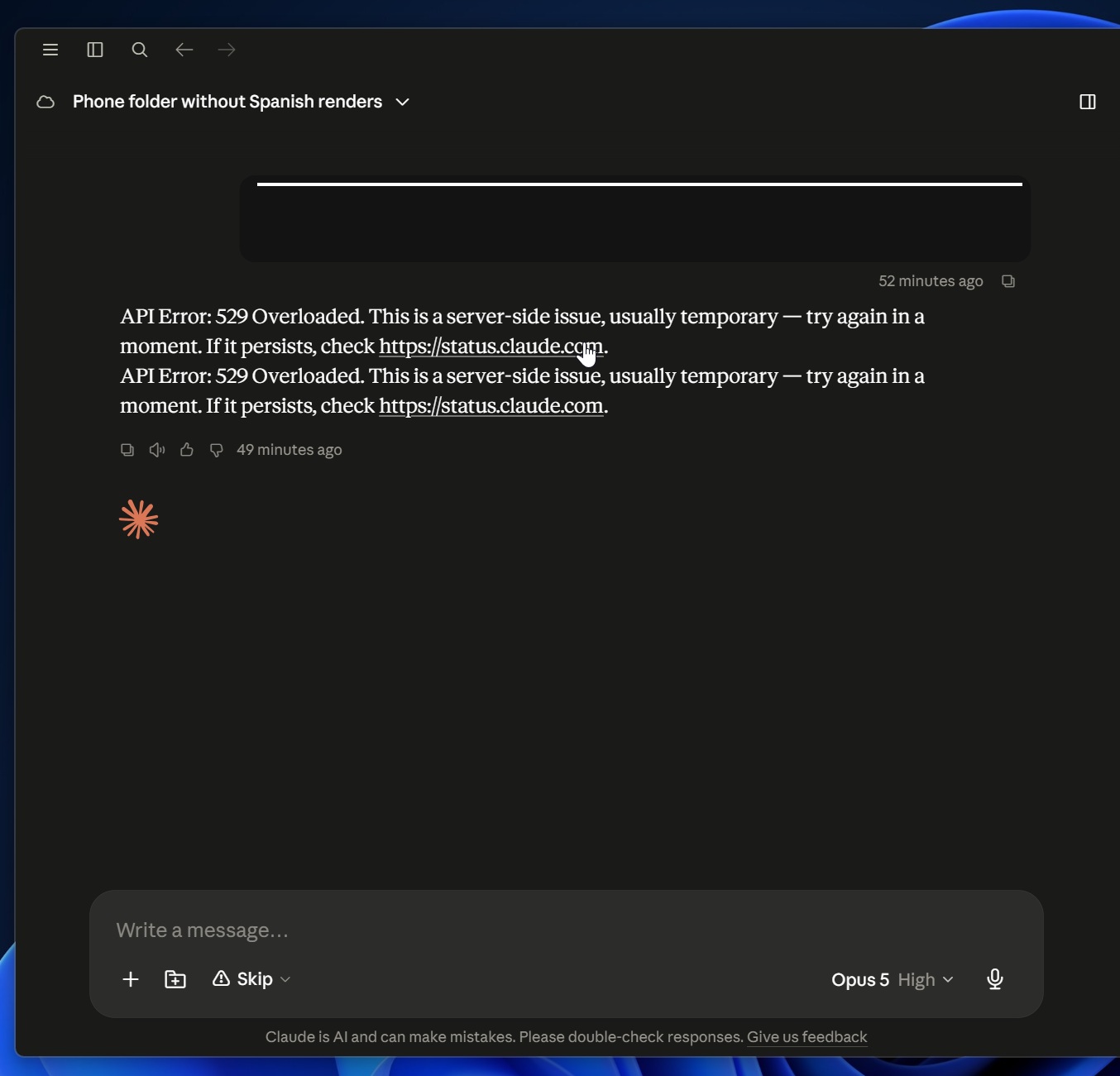
The core of the issue manifests as pervasive "529 Overloaded" error messages, indicating that the servers responsible for processing requests to Anthropic’s sophisticated AI models are currently overwhelmed by the volume of inbound traffic. This specific HTTP status code points directly to a server-side problem where the origin server, while capable of fulfilling the request, is simply unable to do so due to an internal overload or excessive load. The ramifications extend beyond direct user interfaces, impacting an array of tools and third-party integrations that leverage Claude’s Application Programming Interface (API), thereby disrupting a broader ecosystem reliant on Anthropic’s generative AI capabilities.
The service disruption commenced at approximately 7:49 p.m. Coordinated Universal Time (UTC) on July 29, prompting immediate investigation by Anthropic’s engineering teams. Within a relatively short timeframe, by 8:33 p.m. UTC on the same day, the company reported having successfully identified the root cause of the widespread service interruption. Despite this identification, Anthropic refrained from publicly disclosing the precise nature of the underlying problem or providing a definitive timeline for full service restoration, a common practice in ongoing incident management to avoid premature commitments. The iterative communication from Anthropic has indicated ongoing efforts to stabilize and recover service across its model portfolio, acknowledging that while some recovery is observed, residual issues and elevated latency persist for a segment of its user base.
The phenomenon of a "529 Overloaded" error within the context of large language models (LLMs) like Claude underscores the immense computational and networking demands inherent in operating such advanced AI systems at scale. Each interaction with an LLM, from a simple query to a complex content generation task, necessitates significant processing power, memory allocation, and data transfer capabilities. When the aggregate demand from millions of users and integrated applications surpasses the provisioned capacity of the underlying infrastructure, these systems become strained, leading to bottlenecks and ultimately, service degradation or complete unavailability. This type of error is a direct indicator of insufficient resource allocation or an unexpected surge in demand that outstrips the system’s ability to dynamically scale.
Anthropic occupies a pivotal position within the burgeoning generative AI industry, distinguished by its commitment to developing "Constitutional AI" – models designed with inherent safety principles and ethical guidelines. Its Claude models are direct competitors to offerings from tech giants like OpenAI (ChatGPT), Google (Gemini), and Meta (Llama), catering to a diverse clientele ranging from individual developers to large enterprise clients seeking advanced natural language processing, summarization, creative writing, and coding assistance. The company’s strategic focus on safety and reliability has been a key differentiator, making such a widespread outage particularly noteworthy within its operational narrative.
The increasing integration of sophisticated AI models into critical business workflows and daily personal tasks has significantly amplified the stakes associated with service reliability. Enterprises now depend on these AI platforms for data analysis, customer service automation, content creation, software development, and strategic decision-making. A prolonged or frequent outage can translate directly into substantial economic losses, operational inefficiencies, and missed opportunities for businesses across various sectors. The incident with Claude serves as a potent reminder of the inherent vulnerabilities in highly complex, distributed AI infrastructures and the growing reliance on these foundational technologies.
From an expert-style analytical perspective, several potential factors could contribute to an overload scenario in an AI service of this magnitude. A sudden, unanticipated spike in user traffic, perhaps driven by a new feature release, a viral trend, or even an outage affecting a competitor’s service, could overwhelm even robust systems. Alternatively, a subtle software bug, such as a memory leak or an inefficient algorithm introduced during a recent update, could progressively consume system resources until a critical threshold is breached. Hardware failures within data centers, network connectivity issues between distributed computing clusters, or even unforeseen complications during routine maintenance or infrastructure upgrades can also precipitate such events. While less common for a 529 error, a distributed denial-of-service (DDoS) attack aimed at overwhelming server capacity with malicious traffic cannot be entirely discounted as a contributing factor in some large-scale outages, although Anthropic’s specific error message points more towards organic overload.

The implications of this service disruption are multifaceted. Economically, businesses that have deeply integrated Claude’s API into their products or services face immediate operational hurdles, potentially leading to delays in project delivery, disruption of customer-facing applications, and a direct impact on revenue streams. For instance, a marketing firm relying on Claude for content generation might experience significant bottlenecks, while a customer support platform using Claude for automated responses would see a degradation in service quality. Reputational damage to Anthropic is also a significant concern. In a highly competitive market where reliability is a key differentiator, even temporary outages can erode user trust and prompt businesses to re-evaluate their dependency on a single AI provider, potentially exploring multi-vendor strategies or investing in fallback mechanisms. Furthermore, the incident can foster a perception of fragility within the broader AI industry, highlighting that even leading-edge technologies are susceptible to fundamental infrastructure challenges.
The persistent challenge of scalability in AI infrastructure remains a paramount concern for all major AI developers. Training and deploying LLMs requires enormous computing power, typically relying on thousands of high-performance Graphics Processing Units (GPUs) distributed across vast data centers. Ensuring seamless, high-availability service for millions of concurrent users demands not only massive hardware investment but also sophisticated load balancing, fault tolerance, and dynamic resource allocation mechanisms. As AI capabilities expand and adoption accelerates, the demand for these resources is projected to continue its exponential growth, placing continuous pressure on infrastructure providers and AI developers to innovate in areas such as energy efficiency, cooling systems, and network bandwidth.
In response to such incidents, Anthropic’s engineering teams are undoubtedly engaged in a multi-pronged recovery effort. This typically involves identifying and isolating the specific bottleneck, whether it’s a particular cluster of servers, a database, or a network segment. Strategies could include rerouting traffic to healthier servers, dynamically provisioning additional computational resources (if available), implementing temporary rate limiting to shed excess load, and deploying software patches to address any identified bugs. Concurrently, incident communication protocols are activated to keep stakeholders informed, even if precise details are limited during the critical phases of resolution.
For enterprises and individual users, such outages underscore the importance of implementing robust business continuity plans when integrating critical AI services. This might involve adopting a multi-AI vendor strategy, allowing for seamless failover to an alternative model or provider if one service experiences disruption. Developing in-house fallback mechanisms, such as less sophisticated rule-based systems or pre-generated content libraries, can provide a basic level of service during AI unavailability. For developers, building applications with resilient error handling and graceful degradation capabilities is crucial, ensuring that an API outage does not lead to a complete application failure but rather a reduced functionality state.
Looking to the future, the drive towards more reliable and robust AI systems will only intensify. This incident, like others before it in the cloud computing and AI spheres, serves as a catalyst for innovation in infrastructure design, operational resilience, and redundancy. We can anticipate continued advancements in distributed computing architectures, more efficient AI chip designs, and sophisticated automated systems for anomaly detection and self-healing. The competitive landscape in AI will likely see reliability emerge as an even more critical criterion alongside model performance and ethical alignment. Enterprises making significant investments in AI will increasingly prioritize providers that demonstrate not only cutting-edge capabilities but also a proven track record of operational stability and transparent incident management.
In conclusion, the confirmed service disruption affecting Anthropic’s Claude AI models highlights the persistent challenges inherent in scaling advanced artificial intelligence to meet global demand. While the prompt identification of the issue by Anthropic is a positive indicator, the incident underscores the intricate dependencies and formidable infrastructure requirements of modern AI. As AI continues its pervasive integration into society and industry, ensuring uninterrupted access and robust performance will remain a foundational imperative, shaping strategic investments and operational best practices across the entire technological ecosystem.




 Aura Kasih
 Ayu Aulia