Safa Marwah
A highly advanced cyberespionage operation, attributed to a prominent Russian state-aligned threat group, has been observed exploiting a previously unknown vulnerability in Microsoft Exchange’s Outlook Web Access to gain persistent and surreptitious access to targeted mailboxes across critical global sectors. This campaign, marked by its innovative "half-click" exploit technique and a sophisticated backdoor dubbed OWAReaper, represents a significant escalation in the capabilities and tradecraft employed by state-sponsored actors seeking long-term intelligence collection.
The threat actor, tracked by cybersecurity researchers under various designations including Laundry Bear, Void Blizzard, and TA488, is a well-established entity known for its strategic targeting and persistent efforts in cyber espionage. This particular campaign has cast a wide net, targeting a diverse array of organizations, including governmental bodies in both the United States and Europe, alongside key players in the telecommunications, financial services, hospitality, and aerospace industries. Such a broad scope underscores the group’s objective to gather intelligence from multiple vectors crucial to national security and economic interests.
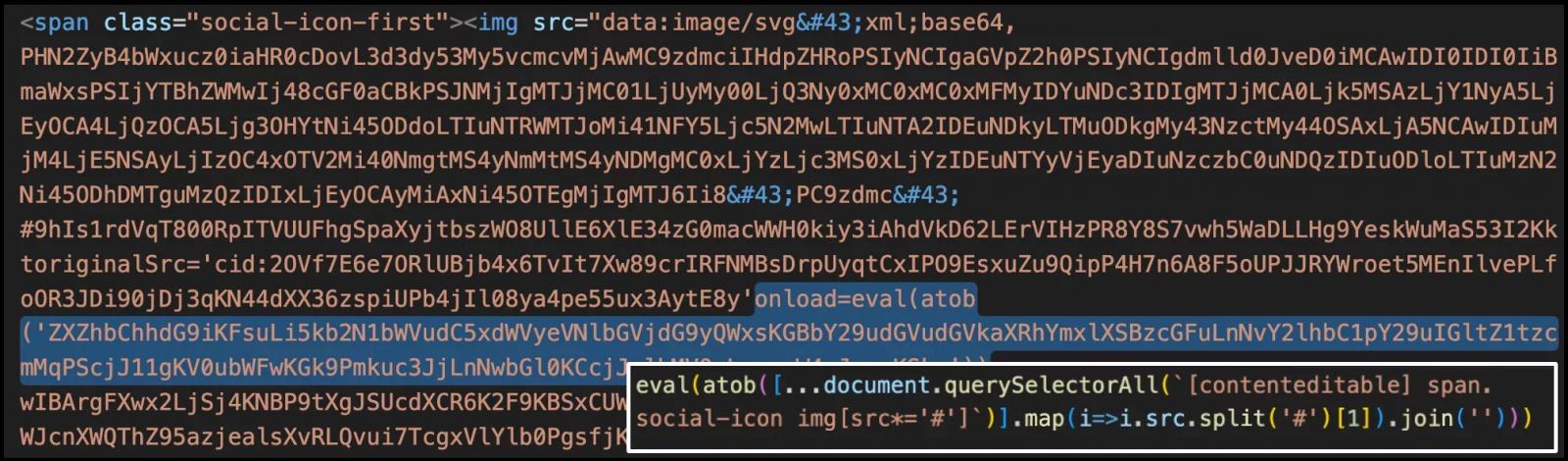
At the heart of this campaign lies the exploitation of CVE-2026-42897, a critical cross-site scripting (XSS) vulnerability embedded within the Exchange Outlook Web Access interface. XSS flaws arise when web applications fail to properly sanitize user-supplied input, allowing malicious scripts to be injected into web pages viewed by other users. In this instance, the vulnerability permits the execution of arbitrary JavaScript within the browser context of a user merely by opening a specially crafted email in their OWA application. This method bypasses traditional security layers that rely on suspicious links or attachments, presenting a formidable challenge for detection and prevention.
This form of compromise, where user interaction is minimized to simply viewing an email, has been aptly termed a "half-click exploit." Unlike conventional phishing attacks that demand a user to click a malicious link or open an infected attachment, the "half-click" mechanism reduces the friction for successful exploitation, dramatically increasing the likelihood of compromise even among security-conscious individuals. This tactical refinement reflects an ongoing trend among advanced persistent threat (APT) groups to lower the bar for initial access while simultaneously enhancing the stealth and sophistication of their post-exploitation activities.

The current OWA campaign is not an isolated incident but rather an evolution in the operational methodology of Laundry Bear. Previously, the same group demonstrated a similar modus operandi by exploiting another XSS vulnerability (CVE-2025-66376) as a zero-day in Zimbra email servers. That earlier operation utilized malware named ZimReaper to pilfer sensitive data, including email communications, two-factor authentication (2FA) codes, application passcodes, and user credentials. The transition from Zimbra to Exchange, two widely used enterprise email platforms, highlights the actor’s adaptability and their systematic approach to developing exploits for high-value targets across different technology stacks.
Researchers identified the core flaw in CVE-2026-42897 as improper HTML sanitization on the server side. When an email containing malformed HTML code is processed, the server fails to adequately strip out potentially dangerous elements, thereby allowing JavaScript to execute when the message is rendered in the OWA client. This lapse in input validation creates a critical pathway for attackers to inject and run their malicious scripts. The threat actor’s infrastructure for the OWAReaper campaign was established as early as March, nearly two months prior to public disclosure and Microsoft’s advisory regarding the zero-day exploitation, indicating a well-planned and pre-meditated operation.
The social engineering aspect of the campaign is particularly subtle. The malicious emails are designed with "banal" subject lines and lures, focusing on topics of seemingly legitimate interest to the target, such as supply-chain analyses, research updates, or performance indicators for tourism and gas markets. This strategy is deliberate; by presenting innocuous content without suspicious URLs or attachments, the attackers aim to bypass initial security scrutiny and encourage recipients to open and skim the messages. The goal is to trigger the vulnerability without raising immediate suspicion, ensuring that the malicious email is likely dismissed as junk rather than reported as a threat.
Upon successful exploitation, the injected JavaScript loader initiates the delivery of the OWAReaper backdoor. This malware is considered one of the most sophisticated backdoors ever observed in a "half-click" exploit scenario. OWAReaper operates entirely within the OWA reading pane, a testament to its stealth and technical prowess. Its initial actions include using Outlook APIs to rewrite the email on the Exchange server, effectively erasing the exploit content to cover its tracks. Concurrently, it disables OWA pop-ups and the right-click functionality while active, further hindering user detection and interaction.
OWAReaper’s capabilities extend beyond mere initial access. It meticulously collects the compromised account’s email address, username, and critical Outlook configuration settings. Furthermore, it employs a clever technique to harvest access credentials by dynamically creating invisible elements within the Document Object Model (DOM) and awaiting the browser’s automatic autofill function. This allows the malware to intercept credentials that users might have saved or that are automatically populated by their browser, granting the attackers deeper access into the user’s digital identity.

A defining characteristic of the OWAReaper backdoor is its suite of subtle yet highly effective persistence mechanisms, designed to maintain long-term access to the target’s mailbox regardless of traditional security countermeasures. One of the most alarming aspects is its server-side persistence. OWAReaper actively searches for installed Outlook add-ins that possess ReadWriteMailbox permissions. Leveraging these permissions, it steals OAuth tokens via the GetClientAccessToken operation request. Critically, it then calls UpdateFolder to grant itself Owner-level permissions to the ‘Default’ user – a low-permission preset alias present in all Microsoft Exchange tenants – across every mail folder. This allows the attackers to access the mailbox from any authenticated account within the organization, creating a highly resilient backdoor. The implications are profound: even if the compromised user’s credentials are rotated or their system is completely reimaged, the attackers’ access remains intact because these permissions are configured at the server level, independent of client-side changes.
In addition to server-side persistence, OWAReaper implements a second, client-side mechanism. It enables caching within OWA and injects a malicious iframe into the HTML of messages stored in OWA’s offline IndexedDB. This ensures that the malicious iframe executes every time the victim opens a poisoned email from their cache, providing an additional layer of persistence and resilience against detection. This dual-pronged approach to persistence underscores the actor’s determination to maintain covert access over extended periods, making detection and eradication significantly more challenging for security teams.
The OWAReaper malware further demonstrates its advanced design through redundant command-and-control (C2) and data exfiltration mechanisms. For C2, it utilizes two distinct channels. One method involves using legitimate platforms, specifically GitHub, to receive instructions. Every 24 hours, the malware queries GitHub’s Commit Search API for encrypted messages that conform to a specific format and include the target’s email address. This technique leverages a trusted service, making it difficult to differentiate malicious traffic from legitimate GitHub API calls. The second C2 mechanism involves parsing emails directly delivered to the target’s mailbox, checking the IndexedDB for message bodies containing a specific target_email_addressspaceBase64text structure. This email-based C2 provides a fallback that is inherently stealthy, as it operates within the compromised environment itself.
Similarly, OWAReaper employs multiple methods for data exfiltration, ensuring that collected intelligence reaches the attackers even if one channel is blocked. The primary method uses HTTPS, with data encrypted using AES-CTR and encoded within URI paths, often proxied through legitimate image content delivery network (CDN) domains to blend with normal web traffic. Should this primary method fail, a direct exfiltration channel to the attacker’s server, defined within the malware’s network session initialization function, serves as a robust fallback. As a final layer of redundancy, a DNS exfiltration method is implemented, where encrypted and Base32-encoded data is transmitted through DNS queries. DNS exfiltration is notoriously difficult to detect and block, as DNS traffic is often less scrutinized by network security solutions.
Attribution of this sophisticated campaign to the TA488 threat actor (Laundry Bear/Void Blizzard) is based on compelling behavioral overlaps with their previous ZimReaper activities. The consistent use of "half-click" XSS exploits targeting webmail viewers for the explicit purpose of espionage, coupled with the observed evolution in their malware and persistence techniques, firmly links these operations. The continuous refinement of their toolset demonstrates a long-term strategic investment in capabilities designed to exploit prevalent enterprise communication platforms.
The implications of this campaign are far-reaching. For organizations, it highlights the critical importance of robust email security solutions capable of advanced threat detection, including sophisticated HTML sanitization and real-time behavioral analysis. Even with rapid patching of known vulnerabilities, zero-day exploits like CVE-2026-42897 pose an immediate and severe risk. Defenders must enhance monitoring of OWA access logs, scrutinize unusual API calls, and implement comprehensive endpoint detection and response (EDR) capabilities to identify client-side anomalies. Furthermore, the server-side persistence mechanism necessitates a thorough review of Exchange mailbox permissions, particularly for default users and add-ins, to detect and revoke any unauthorized access. User awareness training, while always important, must now emphasize the dangers of merely opening emails, even those that appear benign.
In the broader threat landscape, this campaign underscores the relentless and evolving nature of state-sponsored cyber espionage. Email remains a primary vector for intelligence gathering due to its central role in organizational communication. The sophistication demonstrated by Laundry Bear in developing bespoke exploits, creating resilient backdoors, and employing multi-layered persistence and C2 mechanisms serves as a stark reminder of the advanced threats facing governments and critical infrastructure worldwide. Continuous vigilance, proactive threat intelligence, and a multi-layered security posture are imperative to counter such persistent and adept adversaries.




 Aura Kasih
 Ayu Aulia