
 Ayu Aulia
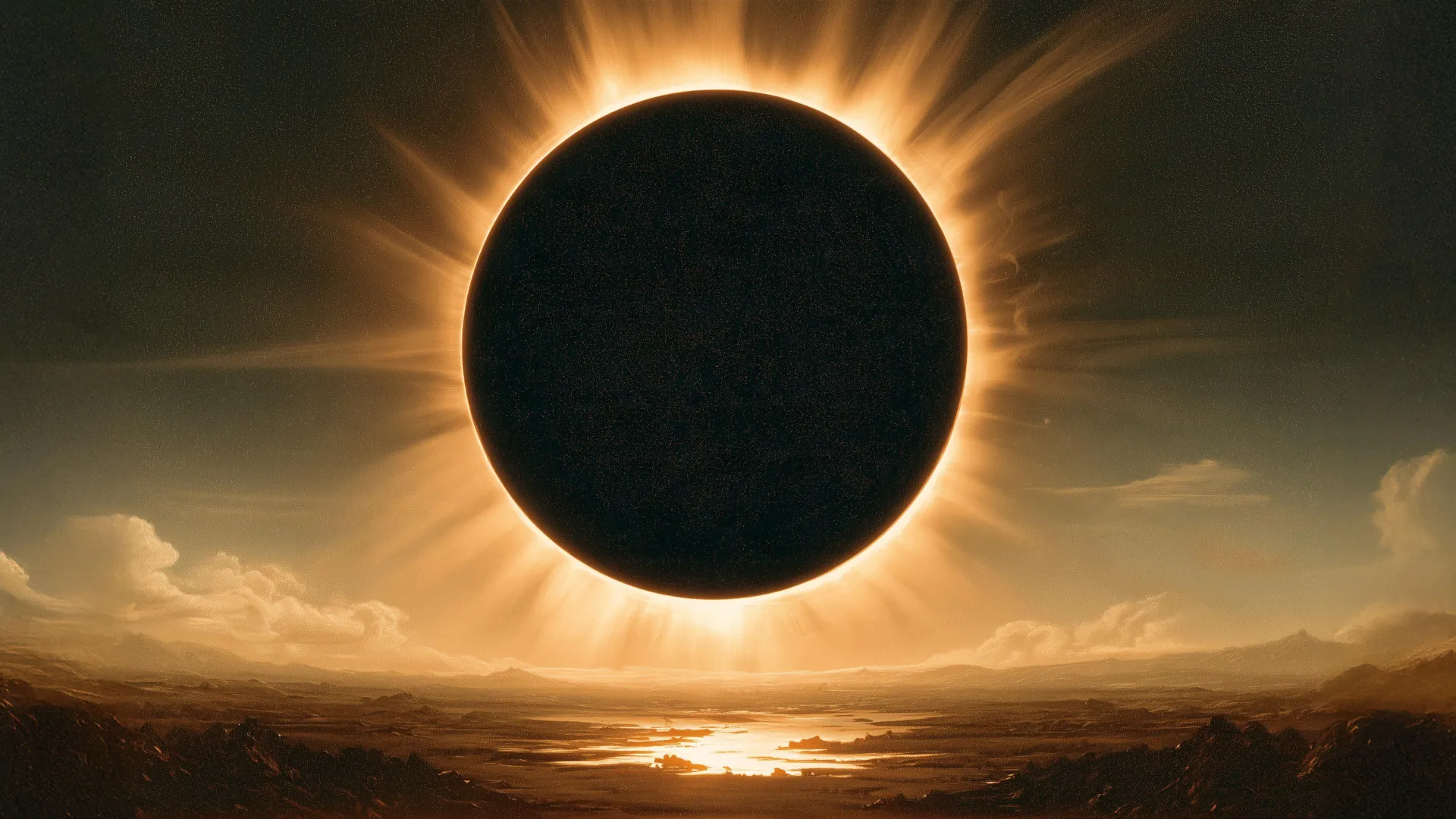
An international collaboration of researchers has meticulously re-examined one of humanity’s earliest precisely documented total solar eclipses, yielding unprecedented insights into the nuanced evolution of Earth’s rotational velocity over millennia and potentially illuminating a critical phase in the Sun’s activity cycle. By integrating advanced astronomical calculations with a thorough re-evaluation of historical geographical data, scientists successfully reconstructed the path of a celestial event that unfolded in 709 BCE, pinpointing its appearance from Qufu, the venerable capital of ancient China’s Lu Duchy.
This meticulous investigation not only refines our understanding of ancient chronology but also offers a compelling, albeit cautious, interpretation of an early descriptive passage that may refer to the Sun’s ethereal outer atmosphere, the corona. The analysis suggests that at the time of the eclipse, the Sun was likely transitioning back into a period of heightened activity, following an extended interval of unusual quiescence. Published in Astrophysical Journal Letters, these findings furnish more precise empirical data concerning Earth’s rotational speed during antiquity and provide potential corroboration for existing models of solar activity derived from independent paleoclimatic proxies.
The Enduring Legacy of Ancient Chinese Astronomical Records
The bedrock of this discovery rests upon an extraordinary observation made on July 17, 709 BCE, by court astronomers in the Lu Duchy. This profound celestial event, a total solar eclipse, was meticulously preserved within the "Spring and Autumn Annals," a foundational historical chronicle compiled several centuries after the fact. The original terse entry simply stated, "the Sun was totally eclipsed," a testament to its singular impact.
Adding another layer of intrigue, the "Hanshu" (Book of Han), a historical text written approximately seven centuries post-eclipse, contains an additional, remarkably detailed passage. This later account includes an unusual description that has long fascinated scholars: the eclipsed Sun was observed as "completely yellow above and below." This particular addendum has been traditionally hypothesized to describe the solar corona, the incandescent plasma crown that becomes spectacularly visible to the unaided eye only during the fleeting moments of a total solar eclipse. If this interpretation holds true, it represents one of the earliest known written depictions of this elusive solar feature, offering a rare glimpse into ancient observational prowess.
Hisashi Hayakawa, an assistant professor at Nagoya University’s Institute for Space-Earth Environmental Research and Institute for Advanced Research, and lead author of the study, emphasized the dual significance of this record. "What makes this record special isn’t just its age, but also a later addendum in the ‘Hanshu’ based on a quote written seven centuries after the eclipse. It describes the eclipsed Sun as ‘completely yellow above and below.’ This addendum has been traditionally associated with a record of a solar corona. If this is truly the case, it represents one of the earliest surviving written descriptions of the solar corona," Hayakawa noted, highlighting the extraordinary potential of this historical fragment.
Resolving Chronological Discrepancies through Geographic Precision
Initially, the historical eclipse account presented a puzzling contradiction when juxtaposed with modern astronomical calculations. Early attempts to model the eclipse’s trajectory, utilizing existing estimations of Earth’s ancient rotational speed, suggested that a total eclipse should not have been observable from the previously assumed coordinates of the Lu court in Qufu. This discrepancy created a significant hurdle in validating the historical record against contemporary scientific understanding.
The research team meticulously traced the source of this inconsistency to a subtle yet critical error in the geographical coordinates attributed to ancient Qufu. Through an exhaustive review of archaeological excavation reports and comprehensive historical geographic evidence, the researchers determined that previous calculations had erroneously positioned ancient Qufu approximately eight kilometers from its actual historical site. This seemingly minor spatial adjustment proved to be the linchpin in resolving the historical paradox.
Correcting this relatively small but impactful geographical misplacement enabled the research team to undertake a far more accurate reconstruction of the eclipse event. The precise alignment allowed for the extraction of invaluable data concerning Earth’s rotational dynamics and the Sun’s appearance during that distant epoch. Hayakawa, who possesses a unique dual expertise in solar physics and oriental history, elaborated on the transformative impact of this correction: "This correction allowed us to accurately measure the Earth’s rotation during the total eclipse, calculate the orientation of the Sun’s rotation axis, and simulate the corona’s appearance." This interdisciplinary approach underscores the intricate relationship between historical accuracy and scientific precision.
The Deep-Rooted Significance of Astronomy in Ancient China
The remarkable survival and meticulous detail of this ancient observation are not accidental; they reflect the profound importance ascribed to astronomy within ancient Chinese society. Throughout successive imperial dynasties, specialized scholars and court astronomers were employed to diligently monitor celestial phenomena. This practice was deeply intertwined with "omenology," a system of political and philosophical belief where unusual occurrences in the heavens—such as eclipses, comets, or auroras—were interpreted as potent omens, often signaling imperial displeasure or foretelling significant earthly events.
Consequently, any extraordinary astronomical event was meticulously documented by court astronomers, as such occurrences were sometimes perceived as direct warnings that an emperor had deviated from proper conduct or lost the "Mandate of Heaven." This rigorous observational tradition across centuries led to the compilation of some of the world’s most extensive and valuable historical archives for the study of ancient eclipses and other celestial phenomena. These records now serve as indispensable primary sources for modern scientific inquiry, providing empirical data spanning millennia.
It is crucial, however, to differentiate between the original record of the 709 BCE eclipse and the later description of the corona. While the 709 BCE event stands as one of the earliest securely dated and explicitly written records of a total solar eclipse, the interpretation of the "yellow above and below" passage as a description of the solar corona remains subject to careful academic scrutiny. The fact that this particular descriptive passage appears in a source written centuries after the event necessitates a degree of caution in its definitive interpretation. Nevertheless, the established timing and location of the eclipse provide a robust foundation for investigating Earth’s historical rotation, and the possible corona description offers a compelling point of comparison for other studies into ancient solar activity.
Unveiling Earth’s Ancient Rotational Velocity
The Earth’s rotation is not a perfectly constant phenomenon. Over vast geological timescales, its spin rate has gradually diminished, primarily due to the ongoing frictional effects of ocean tides generated by the Moon’s gravitational influence. Consequently, the Earth rotated at a slightly faster pace 2,700 years ago than it does in the contemporary era.
Leveraging the newly refined geographical coordinates of ancient Qufu, the researchers were able to establish significantly improved constraints on Earth’s rotational rate during the specific period spanning the eighth through sixth centuries BCE. Their intricate calculations yielded a value for delta T (ΔT)—a critical metric that quantifies the accumulated difference between universal time (derived from Earth’s rotation) and a uniform atomic time scale—ranging between 20,264 and 21,204 seconds for the 709 BCE eclipse.
Mitsuru Sôma of the National Astronomical Observatory of Japan, a coauthor of the study, emphasized the profound impact of these refined measurements. "This new dataset fixes coordinate errors in previous Earth rotation studies. Additionally, it improves the accuracy of dating and reconstructing historical astronomical events," Sôma stated. These precise measurements are instrumental for scientists striving to comprehend the long-term changes in the length of Earth’s day across thousands of years. Furthermore, they are vital for enhancing the accuracy of calculations predicting when and where other ancient astronomical events would have been observable, thereby refining our chronological understanding of historical occurrences.
Illuminating the Sun’s Awakening from a Prolonged Quietus
Beyond its revelations concerning Earth’s rotational history, the 709 BCE eclipse potentially offers compelling evidence of a significant transition in the Sun’s activity. Scientists have previously reconstructed ancient solar cycles by analyzing concentrations of radiocarbon preserved within tree rings. The enigmatic description of the solar corona from 709 BCE now presents an independent avenue for examining and potentially validating these paleoclimatic reconstructions.
Mathew Owens, a professor of space physics at the University of Reading and a coauthor, underscored the unique value of this historical addendum. "This unique historical addendum for the possible solar coronal structure is critical for providing a spot reference on solar activity reconstructions from tree rings and ice cores, as well as providing independent validation of solar activity models," Owens explained. Trees, through the process of photosynthesis, absorb carbon from the atmosphere, including minute quantities of radioactive carbon, known as radiocarbon (carbon-14). This radiocarbon becomes sequestered within the tree’s annual growth rings, forming a natural, millennia-long archive that researchers can later analyze.
The levels of radiocarbon in Earth’s atmosphere are inversely influenced by the flux of cosmic rays. When the Sun exhibits higher activity, its enhanced magnetic field generally acts as a shield, deflecting a greater proportion of cosmic rays away from Earth. This reduction in cosmic ray flux subsequently diminishes the production of radiocarbon in the upper atmosphere. By meticulously measuring variations in radiocarbon concentrations across successive tree rings, scientists can effectively reconstruct how solar activity fluctuated long before the advent of modern instrumental observations.
The Sun typically adheres to an approximately 11-year activity cycle, characterized by waxing and waning numbers of sunspots and corresponding fluctuations in solar magnetic activity. However, on occasion, the Sun enters protracted periods of significantly reduced activity, known as "grand minima." During these extended intervals, sunspots become exceptionally rare, and the characteristic 11-year cycle is either greatly attenuated or entirely absent. One such notable interval, termed the "Neo Assyrian Grand Minimum" or "Homer Grand Minimum," is understood to have spanned from approximately 808 BCE to 717 BCE.
Crucially, the 709 BCE eclipse occurred relatively soon after the termination of this prolonged quiet period. According to the researchers, the potential description of the solar corona, as detailed in the "Hanshu," is consistent with a Sun that had recommenced its regular activity cycles. Its apparent structure, suggesting substantial magnetic activity, indicates that the Sun may have been near the peak of its approximately 11-year cycle at the time of the eclipse. This interpretation aligns remarkably well with earlier solar activity reconstructions derived from radiocarbon measurements in tree rings. However, given the inherent uncertainty surrounding the historical corona description, it cannot be considered definitive proof, but rather a powerful corroborative datum.
The Interdisciplinary Nexus: Ancient Observations Informing Modern Science
The profound implications of these findings serve as a compelling testament to how observations meticulously preserved for thousands of years can continue to contribute fundamentally to contemporary scientific understanding and discovery. This research exemplifies the extraordinary power of interdisciplinary collaboration, bringing together historical documentation, archaeological findings, geographical research, and sophisticated astronomical modeling. Such a synergistic approach allows scientists to recover information that would otherwise be utterly impossible to measure directly, bridging vast temporal and disciplinary divides.
In this particular instance, a seemingly minor correction of just eight kilometers in geographical coordinates was pivotal. This precise adjustment transformed an ancient eclipse record from a historical curiosity into a more robust and precise source of information regarding Earth’s rotational dynamics. It also provided a potential, tantalizing window into the Sun’s distant past, offering insights into its long-term variability.
Dr. Meng Jin of the Lockheed Martin Solar and Astrophysics Laboratory, a coauthor, aptly summarized the essence of this endeavor: "Some of our ancestors were very skilled observers. When we combine their careful records with modern computational methods and historical evidence, we can potentially find new information about our planet and our star from thousands of years ago." This ongoing dialogue between ancient wisdom and modern science continues to unlock profound secrets about our universe, highlighting the enduring legacy of human curiosity and meticulous observation.




 Lisa Mariana

 Aura Kasih


 Safa Marwah
