Aura Kasih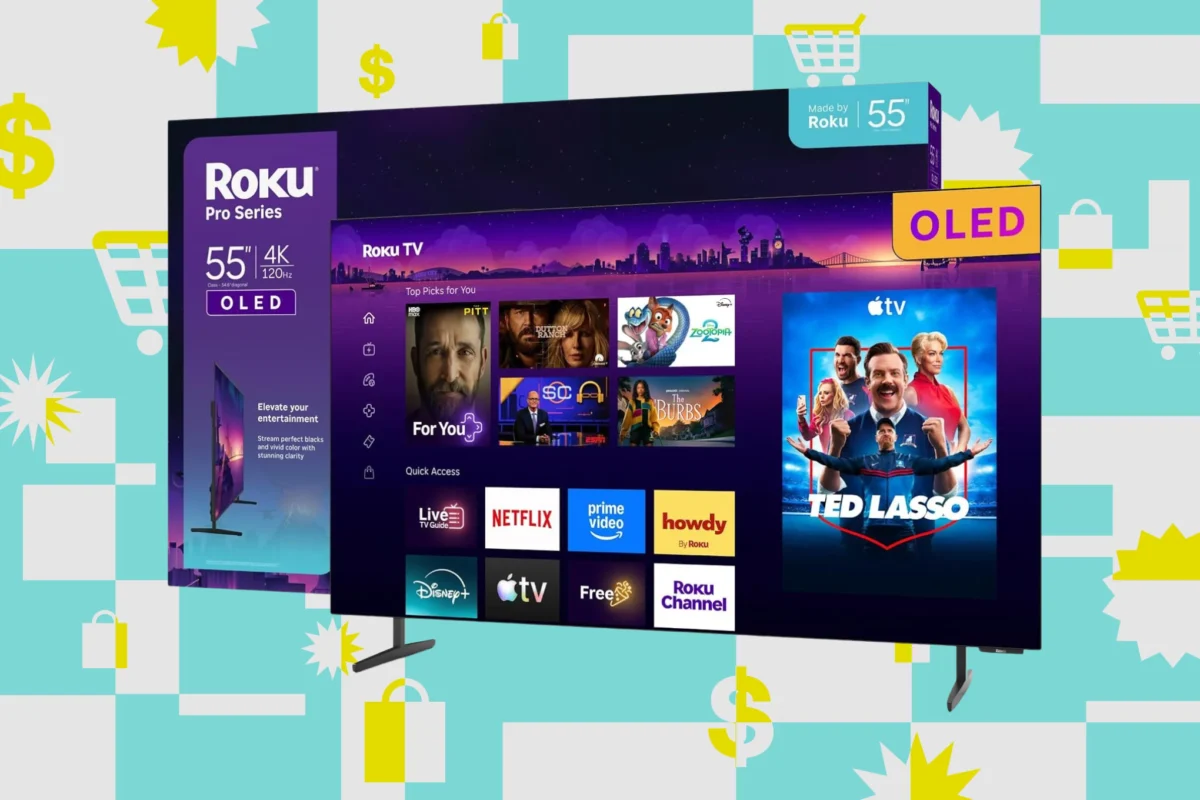
Roku, a dominant force in the streaming device market, has officially entered the premium television arena with the launch of its inaugural OLED models, now available at significantly reduced prices. This strategic move positions Roku to capture a larger share of the home entertainment ecosystem by offering advanced display technology at accessible price points, marking a pivotal moment for both the company and consumers seeking high-quality visual experiences without the traditional premium cost.
The introduction of Roku’s Pro Series OLED televisions represents a significant expansion for the company, moving beyond its well-established streaming dongles and integrated smart TV platforms into the realm of high-fidelity display manufacturing. Historically, OLED technology, known for its exceptional contrast ratios, true blacks, and vibrant color reproduction, has been positioned at the upper echelon of the television market, often commanding prices that placed it out of reach for a substantial segment of consumers. Roku’s aggressive pricing strategy for its debut OLED offerings suggests a deliberate attempt to democratize access to this cutting-edge visual technology, potentially disrupting established players in the premium TV space.
The 55-inch variant of the Pro Series OLED television, initially launched with a starting price of $999, has seen its cost reduced further through promotional offers. This model boasts a 120Hz refresh rate OLED panel, a feature highly sought after by both cinephiles and gamers for its ability to render motion with exceptional smoothness and clarity. Furthermore, the inclusion of four HDMI 2.1 ports is a critical specification, catering to the demands of modern gaming consoles and high-bandwidth AV equipment, facilitating features such as 4K resolution at higher frame rates, Variable Refresh Rate (VRR), and Auto Low Latency Mode (ALLM). Support for advanced HDR formats, including Dolby Vision and HDR10 Plus, ensures a richer and more dynamic viewing experience, capable of displaying a wider spectrum of colors and luminance levels.
The promotional discount, achieved by applying a specific code at checkout, effectively lowers the entry price for this 55-inch OLED TV, making it one of the most economically viable options for consumers looking to acquire a modern OLED television. This pricing strategy is particularly noteworthy, as it challenges the established price ceilings for OLED technology, which has often been associated with flagship models from established electronics manufacturers. By offering a feature-rich OLED panel at a sub-$700 price point (after discount), Roku is not merely competing but actively redefining the value proposition in the premium television segment.
For consumers who prefer larger screen sizes, Roku has also introduced a compelling offer on its 65-inch Pro Series OLED television. This larger model, initially priced at $1,299, is now available for $799 through a separate promotional code. This substantial $400 reduction further underscores Roku’s commitment to aggressive market penetration. The 65-inch model shares the core technological advantages of its smaller counterpart, including the high refresh rate OLED panel and comprehensive HDMI 2.1 connectivity, making it an attractive proposition for those seeking an immersive cinematic or gaming experience in a larger format.
While direct, independent performance reviews of these specific Roku OLED models are still emerging, the specifications alone indicate a strong contender in the market. The integration of Roku’s proprietary operating system is a significant advantage, offering a seamless and intuitive user interface that is familiar to millions of users worldwide. This built-in smart functionality eliminates the need for external streaming devices for many users, streamlining the setup process and reducing clutter. The inclusion of a backlit Roku remote enhances usability, particularly in low-light viewing environments.

The inclusion of gaming-centric features such as ALLM and VRR (specifically AMD FreeSync Premium) signals Roku’s intent to appeal to the growing demographic of gamers. These technologies are crucial for minimizing input lag and screen tearing, providing a competitive edge and a more fluid gaming experience, especially in fast-paced titles. The Pro Series’ foundational technological underpinnings suggest a serious effort to deliver a visually compelling and technically proficient television, aiming to bridge the gap between budget-friendly smart TVs and high-end OLED displays.
Beyond the current Pro Series, Roku has also announced the upcoming Pro Series LX, slated for an October release with a starting price of $1,299. This higher-tier model is engineered to offer enhanced performance, claiming to be twice as bright as the standard Pro Series. This increased brightness is likely achieved through advancements in panel technology or additional backlighting components, which can significantly improve HDR performance and viewing experience in well-lit rooms. The Pro Series LX will also feature a reflection-reducing polarizer, a valuable addition for mitigating glare from ambient light sources, and an even higher 144Hz refresh rate, further pushing the boundaries for smooth motion in gaming and high-frame-rate content.
The strategic implications of Roku’s entry into the OLED TV market are far-reaching. By leveraging its established brand recognition and vast user base, Roku is well-positioned to disrupt the traditional television hierarchy. The company’s success in the streaming device market was built on providing accessible and user-friendly technology, and this same philosophy appears to be guiding its television manufacturing endeavors. The aggressive pricing of its OLED televisions could pressure competitors to reassess their own pricing structures, potentially accelerating the adoption of OLED technology across a broader consumer base.
Furthermore, Roku’s integrated software approach offers a compelling alternative to the often fragmented smart TV ecosystems offered by other manufacturers. By controlling both the hardware and software experience, Roku can ensure a more cohesive and optimized user journey, from initial setup to daily use. This vertical integration is a key differentiator and a potential competitive advantage in an increasingly complex market.
The long-term outlook for Roku’s television division hinges on its ability to maintain this aggressive pricing while delivering consistent quality and reliable performance. The company’s experience in managing supply chains for its streaming devices will undoubtedly be an asset as it scales its television production. Continued investment in research and development, particularly in display technology and smart platform enhancements, will be crucial for sustained growth and market leadership.
In essence, Roku’s foray into OLED televisions, coupled with substantial introductory discounts, signifies a paradigm shift in the premium display market. It democratizes access to cutting-edge visual technology, offering consumers a compelling blend of advanced features, brand familiarity, and unprecedented affordability. As the company continues to expand its hardware offerings, its influence on the broader home entertainment landscape is poised to grow, setting new benchmarks for value and performance in the years to come. The convergence of streaming expertise and advanced display manufacturing positions Roku as a formidable contender, ready to redefine what consumers can expect from their television viewing experience.




 Lisa Mariana
 Safa Marwah