
 Ayu Aulia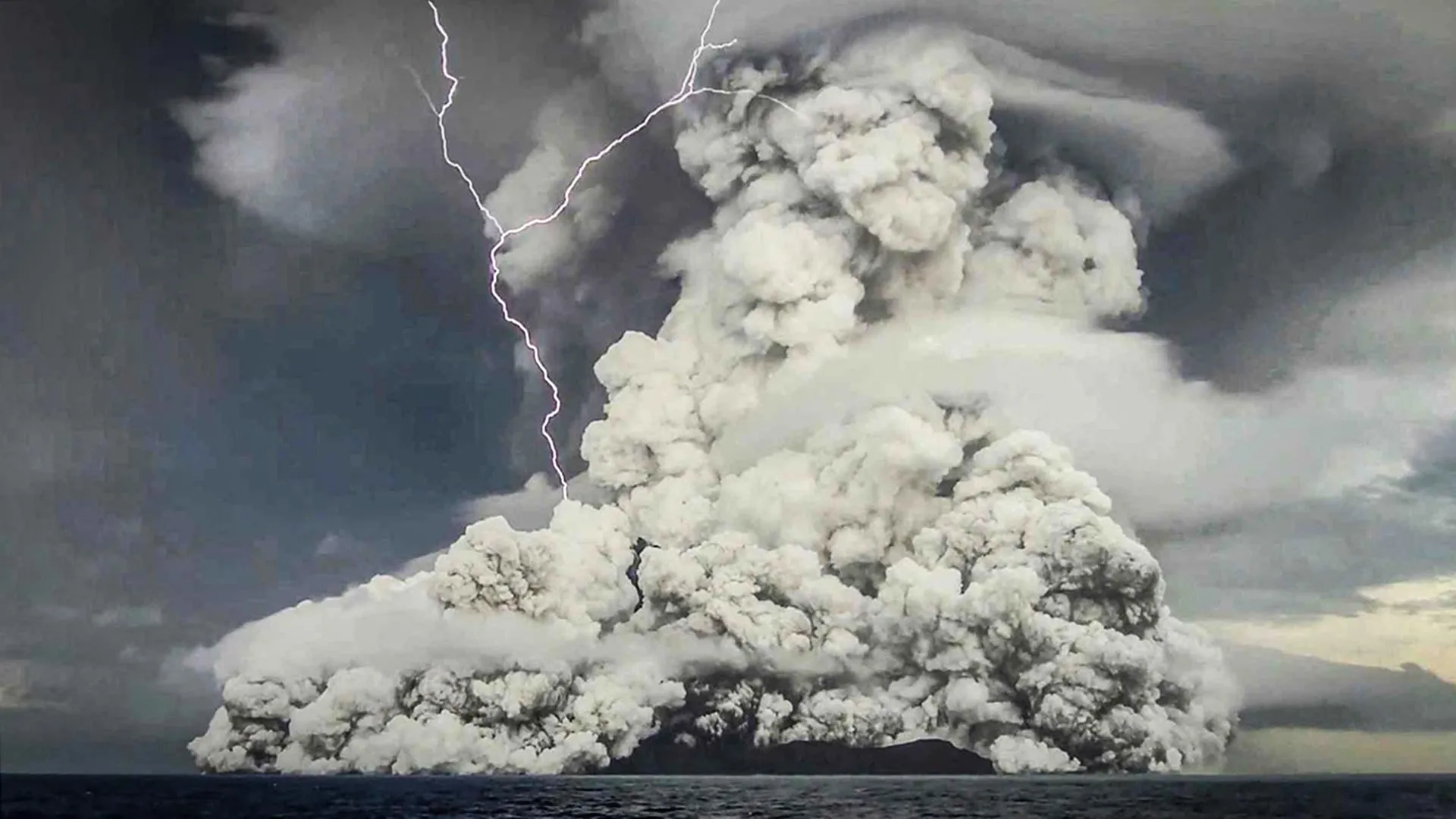
The colossal eruption of Hunga Tonga-Hunga Ha’apai in January 2022, a geological event of unprecedented scale in the modern era, has unveiled a startling atmospheric phenomenon: its immense volcanic cloud exhibited an unexpected capacity to degrade atmospheric methane, a potent greenhouse gas. This groundbreaking discovery fundamentally alters scientific perceptions of natural methane sinks and introduces novel considerations for climate modeling and potential geoengineering strategies.
The Unveiling of a Chemical Anomaly
The initial observations that led to this revelation were derived from advanced satellite monitoring of the prodigious plume ejected by the submarine volcano. Scientists identified extraordinarily elevated concentrations of formaldehyde within the volcanic cloud, a chemical signature that proved pivotal to understanding the ongoing atmospheric processes. Formaldehyde serves as a transient intermediate product in the chemical cascade that breaks down methane within Earth’s atmosphere. Its ephemeral existence means that unusually high and sustained levels of this compound act as a reliable indicator of active methane destruction.
Dr. Maarten van Herpen, a lead researcher from Acacia Impact Innovation BV and first author of the study published in Nature Communications, elaborated on the initial surprise. "Our analysis of the satellite imagery revealed a cloud displaying record-high formaldehyde concentrations. We were able to track this unique atmospheric feature for ten days, extending its trajectory across the Pacific towards South America. Given formaldehyde’s very short atmospheric lifetime, this sustained presence unequivocally demonstrated that methane degradation was continuously occurring within the cloud for over a week." This finding challenges prior assumptions, as volcanoes are recognized sources of methane emissions, but their role in actively mitigating this pollution was previously unrecognized.
The scale of the methane dynamics observed was substantial. According to detailed calculations by the research team, the Hunga Tonga eruption released an estimated 300 gigagrams (Gg) of methane into the atmosphere. To contextualize this immense volume, it approximates the annual methane emissions from over two million cattle. Concurrently, the volcanic plume was estimated to remove approximately 900 megagrams (Mg) of methane daily, a rate comparable to the daily output of two million cows. This dual action — both emitting and destroying — presents a complex but critical new facet of volcanic atmospheric interaction.
Mechanisms of Atmospheric Cleansing: Salt, Sunlight, and Unexpected Chemistry
The underlying chemical mechanism responsible for this methane destruction is believed to involve a unique interplay between volcanic ash, seawater, and solar radiation. This specific chemistry, while recently identified, was initially observed in an entirely different environmental context. Prior research in 2023 established that Saharan dust, transported across the Atlantic Ocean, could combine with sea salt particles generated by oceanic wave action. This interaction leads to the formation of microscopic airborne particles known as iron salt aerosols.
When these iron salt aerosols are exposed to sunlight, they facilitate chemical reactions that liberate highly reactive chlorine atoms. Chlorine, renowned for its reactivity, then efficiently targets and disassembles methane molecules. This discovery fundamentally enhanced scientific understanding of tropospheric chemistry, introducing a previously underappreciated pathway for methane breakdown in the lowest major atmospheric layer where most weather phenomena occur.
Professor Matthew Johnson from the University of Copenhagen’s Department of Chemistry, a key contributor to both the earlier and current research, underscored the profound novelty of the recent findings. "What is genuinely new and utterly surprising is the apparent occurrence of this identical mechanism within a volcanic plume situated high in the stratosphere, an atmospheric layer characterized by vastly different physical conditions than the troposphere."
The Hunga Tonga eruption created an unusually conducive environment for this particular chemistry. Being a submarine volcano, its explosive force propelled colossal quantities of salty seawater upwards, intermingled with volcanic ash and gases. A significant portion of this material ascended into the stratosphere, the atmospheric layer located above the troposphere, extending approximately 10 to 50 kilometers above Earth’s surface. Researchers hypothesize that the intense solar radiation encountered at stratospheric altitudes, interacting with this unique mixture of volcanic ash and ocean-derived salts, generated the highly reactive chlorine atoms. These nascent chlorine atoms subsequently reacted with the methane present within the plume, actively contributing to the gas’s destruction. The satellite-detected extraordinary formaldehyde levels provided compelling empirical evidence for this ongoing chemical process.
The Urgent Imperative of Methane Mitigation
Methane’s role in global warming is disproportionately significant. Despite its lower atmospheric abundance compared to carbon dioxide, methane is an exceptionally potent greenhouse gas. It accounts for approximately one-third of current anthropogenic warming. Over a 20-year timeframe, methane’s heat-trapping capacity is roughly 80 times greater than that of CO2.
Crucially, a key distinction between these two primary greenhouse gases lies in their atmospheric lifetimes. Methane typically persists in the atmosphere for approximately a decade before being chemically removed, whereas a substantial fraction of emitted carbon dioxide can influence the climate system for centuries or even millennia. This relatively short atmospheric residence time positions methane as an exceptionally attractive target for near-term climate action. Aggressive reductions in methane emissions today could yield discernible climate benefits within a single decade, offering a comparatively rapid avenue for mitigating warming.
For this reason, methane reduction is frequently characterized by climate scientists as an "emergency brake" on climate change. Swiftly lowering atmospheric methane concentrations has the potential to significantly reduce global warming trajectories over the coming decades, potentially diminishing the immediate risks associated with crossing critical climate tipping points. However, it is imperative to note that methane reduction is not a substitute for comprehensive decarbonization. Long-term climate stabilization and the avoidance of catastrophic warming scenarios unequivocally necessitate profound and sustained reductions in carbon dioxide emissions across all sectors.
Biogeochemical Implications: Reconsidering the Methane Budget
The findings from the Hunga Tonga eruption carry significant implications for the global methane budget, a critical accounting framework used by scientists to quantify the sources and sinks of atmospheric methane. This budget endeavors to balance the inputs of methane from natural and anthropogenic sources (such as wetlands, agriculture, fossil fuel extraction, and geological activity) with the amounts removed through various atmospheric chemical reactions and other processes.
According to the research team, atmospheric dust – specifically mineral dust from sources like volcanic eruptions – has not been adequately incorporated into these global methane budget calculations previously. If volcanic ash and other forms of mineral dust can indeed accelerate methane destruction at a scale indicated by the Hunga Tonga event, then current estimates of methane’s atmospheric cycle, including its residence time and removal rates, may require substantial revision. Professor Johnson emphasized this point: "We now understand that atmospheric dust, for instance from a volcanic eruption, exerts an impact on the methane budget – that is, the balance between methane added to and removed from the atmosphere. Since dust has not historically been factored into these calculations, it becomes critical to recalibrate the datasets and models upon which these global estimates are founded." Such adjustments could refine our understanding of natural methane feedbacks and improve the accuracy of future climate projections.
Bio-Inspired Solutions for Climate Intervention: Could Scientists Replicate Nature?
Beyond its fundamental scientific contributions, this discovery holds profound implications for the emerging field of atmospheric methane removal (AMR). This nascent area of climate research explores whether human-engineered chemical processes could safely and effectively enhance the natural rate at which methane already present in the atmosphere is broken down, rather than solely focusing on preventing new emissions. The Hunga Tonga event offers a dramatic, large-scale natural demonstration of one such potential mechanism.
The prospect of deliberately manipulating atmospheric chemistry to achieve climate benefits, however, is fraught with significant challenges and ethical considerations. A primary hurdle for any proposed AMR technology is rigorously proving its efficacy in removing methane from the vast expanse of the atmosphere. Detecting and attributing relatively small, localized changes in global methane concentrations with high confidence remains technically demanding.
Dr. Jos de Laat from the Royal Netherlands Meteorological Institute, the study’s senior author, addressed this methodological challenge: "How does one definitively prove that methane has been removed from the atmosphere? How do you ascertain that your chosen method is effective? These are inherently difficult questions. However, our study offers a crucial pathway by demonstrating that methane breakdown can, in fact, be observed and quantified using satellite remote sensing technologies." This capability could provide a vital tool for validating future human-led atmospheric intervention efforts.
Advanced Observational Capabilities: Satellites Watched the Chemistry Unfold
The critical data underpinning this research was acquired through TROPOMI (TROPOspheric Monitoring Instrument), an advanced sensor aboard the European Space Agency’s Sentinel-5P satellite. TROPOMI performs daily global scans of Earth’s atmosphere, meticulously monitoring trace gases linked to both air pollution and climate change.
However, detecting formaldehyde within a stratospheric volcanic plume pushed the instrument’s capabilities far beyond its conventional operating parameters. Standard TROPOMI measurements are typically optimized for tropospheric observations. Dr. Isabelle De Smedt from the Royal Belgian Institute for Space Aeronomy, a co-author, explained the analytical complexities: "Retrieving formaldehyde signals from TROPOMI within a stratospheric volcanic plume represents a significant departure from the instrument’s standard operational envelope. We had to implement rigorous corrections for the unusual altitude of the signal and account for potential interference from the exceptionally high concentrations of sulfur dioxide present. Ensuring the accuracy of these corrections was paramount to confirming the authenticity of our observations." These meticulous data corrections were essential to validate that the unusually strong formaldehyde signal was indeed genuine and could reliably serve as a tracer for methane destruction within the volcanic cloud.
A Possible Blueprint from Nature and Future Considerations
The research team posits that this unprecedented discovery could stimulate further investigation by engineers and scientists into whether the natural chemistry observed in the aftermath of Hunga Tonga can be safely and effectively replicated or leveraged. "It represents an obvious conceptual inspiration for industry to explore replicating this natural phenomenon – but only if its safety and efficacy can be definitively established," concluded Professor Johnson. "Our satellite-based methodology could offer a critical pathway to assess how human ingenuity might contribute to slowing global warming."
Any proposed large-scale atmospheric manipulation would necessitate exhaustive scientific scrutiny to fully comprehend potential unintended consequences, ecological impacts, and ethical implications. Nevertheless, the Hunga Tonga eruption has furnished researchers with an invaluable, real-world case study of methane destruction occurring on an immense scale, coupled with a demonstrated capability to monitor such complex atmospheric processes from space. This convergence of a natural phenomenon and advanced observation provides a compelling foundation for future inquiry into climate intervention strategies.




 Aura Kasih
 Safa Marwah

